Tang Yilin, Han Linlin, Bai Xiaochen, Liang Xiaoniu, Zhao Jue, Huang Fang, Wang Jian
Department of Neurology and National Clinical Research Center for Aging and Medicine, Huashan Hospital, Fudan University, Shanghai 200040, People's Republic of China.
The State Key Laboratory of Medical Neurobiology, The Institutes of Brain Science and the Collaborative Innovation Center for Brain Science, Shanghai Medical College, Fudan University, Shanghai 200032, People's Republic of China.
Neuropsychiatr Dis Treat. 2020 Jan 23;16:249-262. doi: 10.2147/NDT.S238646. eCollection 2020.
Stem cell transplantation is a promising strategy with great potential to treat Parkinson's disease (PD). Nevertheless, improving the cell delivery route and optimising implanted cells are necessary to increase the therapeutic effect. Herein, we investigated whether intranasal delivery of bone marrow stromal cells (BMSCs) has beneficial effects in a PD mouse model and whether the therapeutic potential of BMSCs could be enhanced by preconditioning with fasudil.
A PD mouse model was developed by intraperitoneally administering 1-methyl-4-phenyl-1,2,3,6-tetrahydropyridine (MPTP). Mice were treated intranasally with phosphate buffered saline (PBS), BMSCs, or BMSCs preconditioned with fasudil. One month later, the effects of BMSC treatment were analysed.
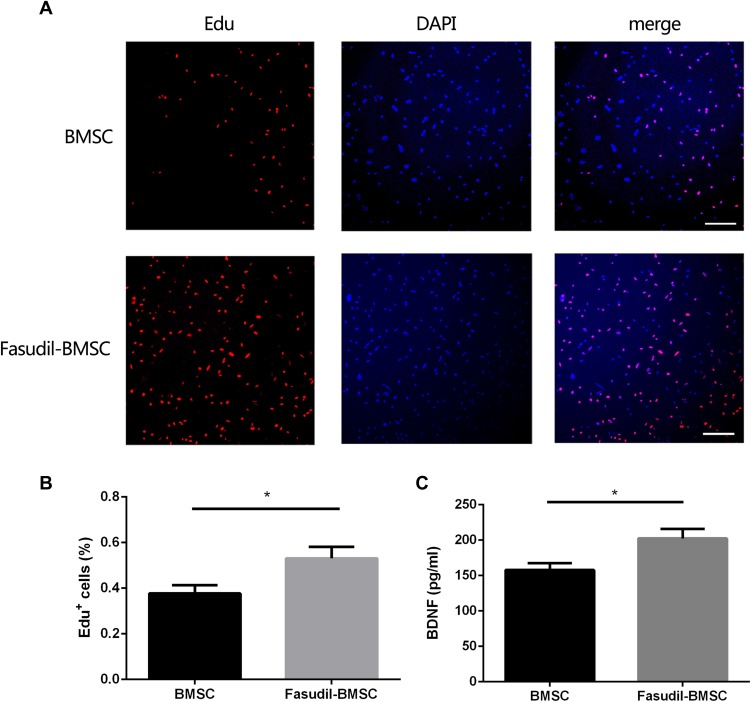
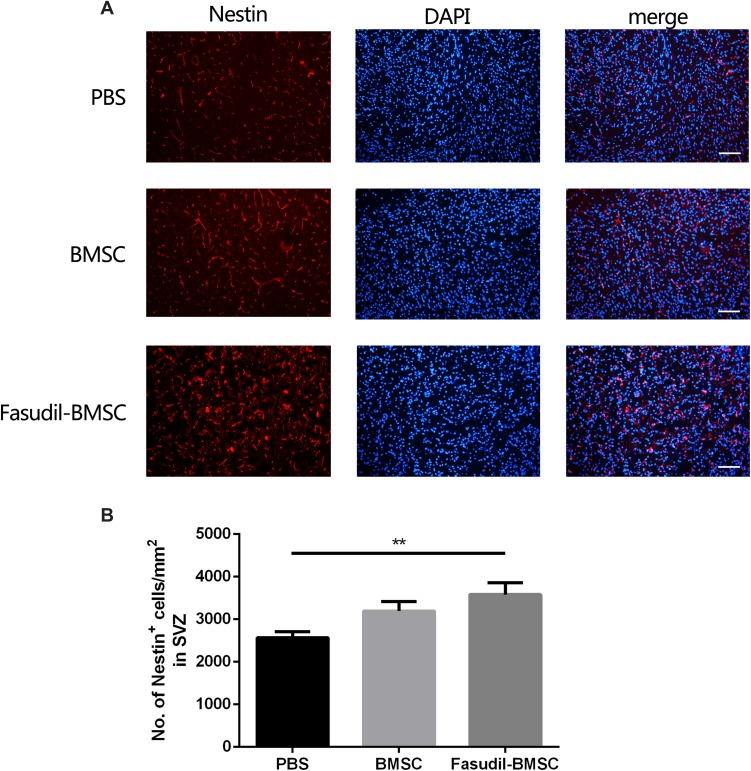
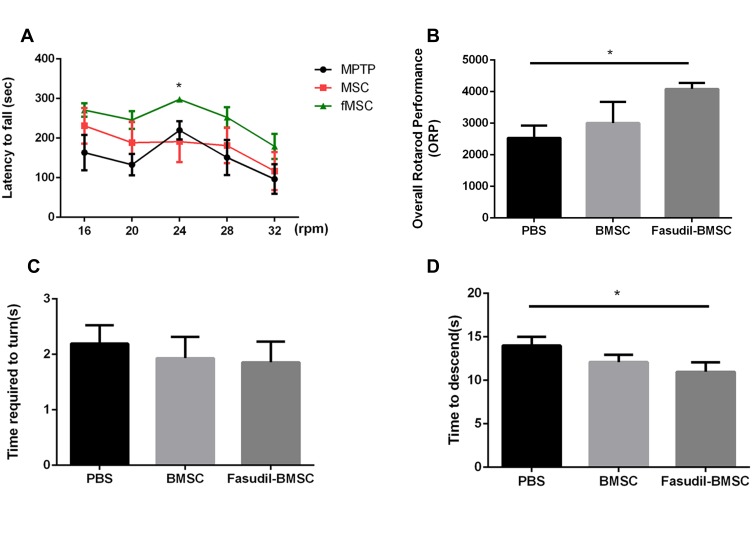
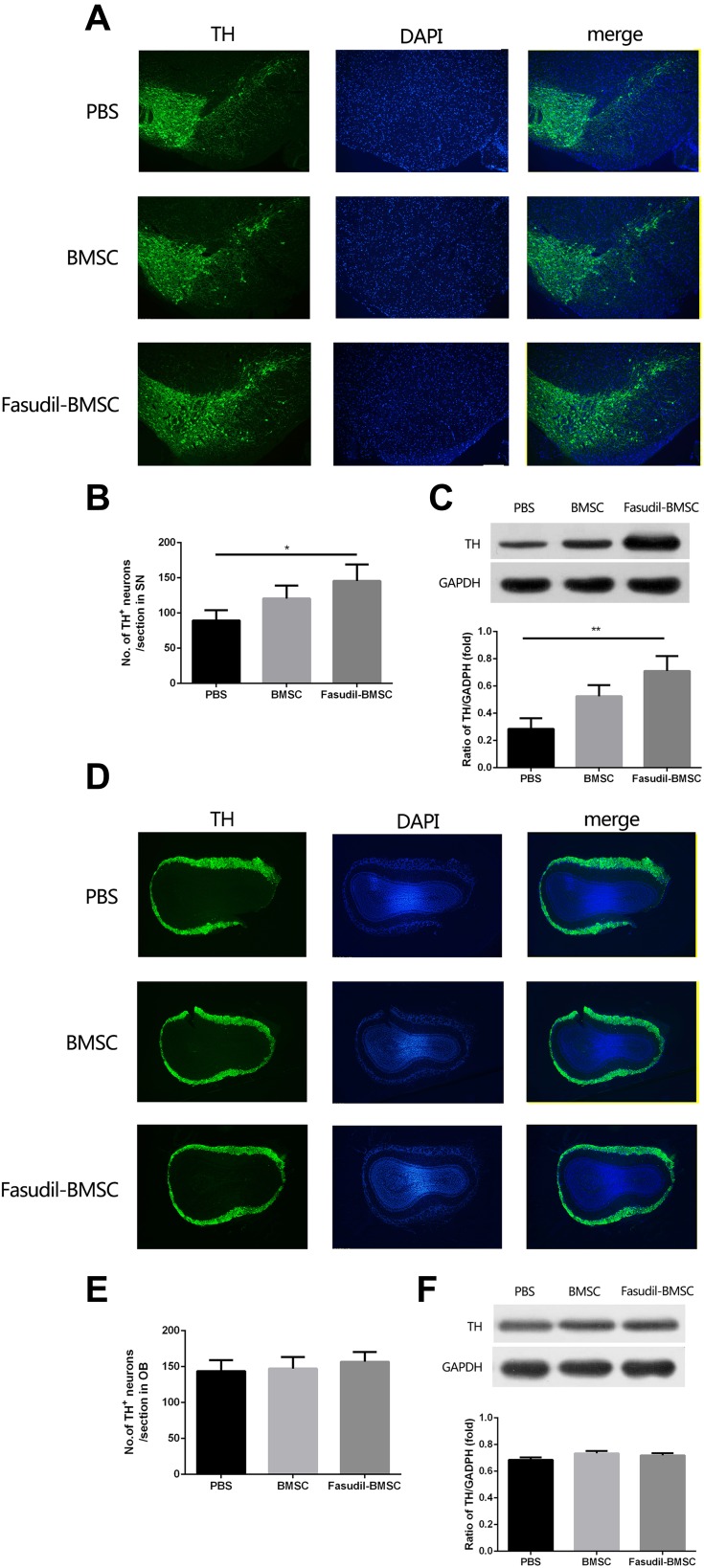
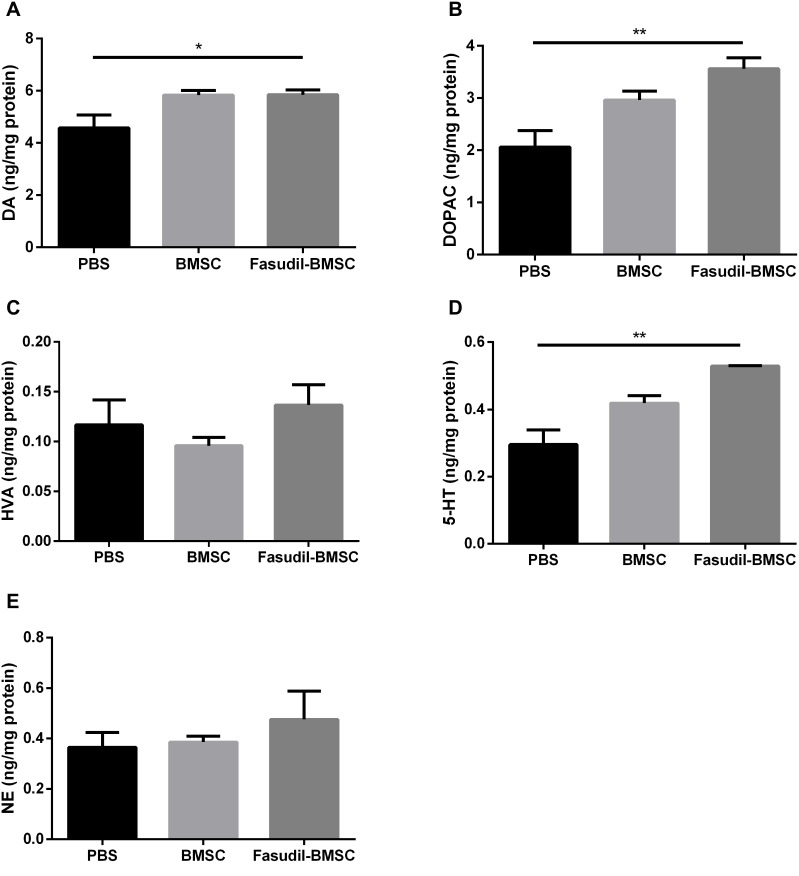
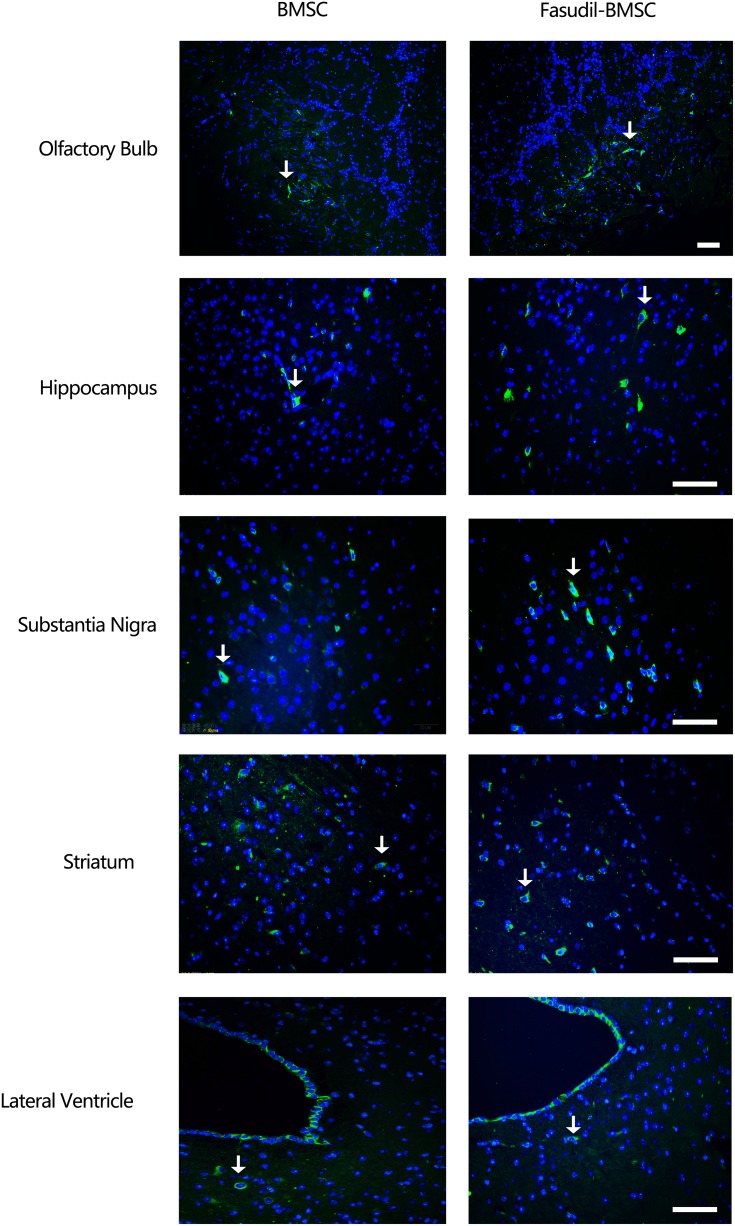
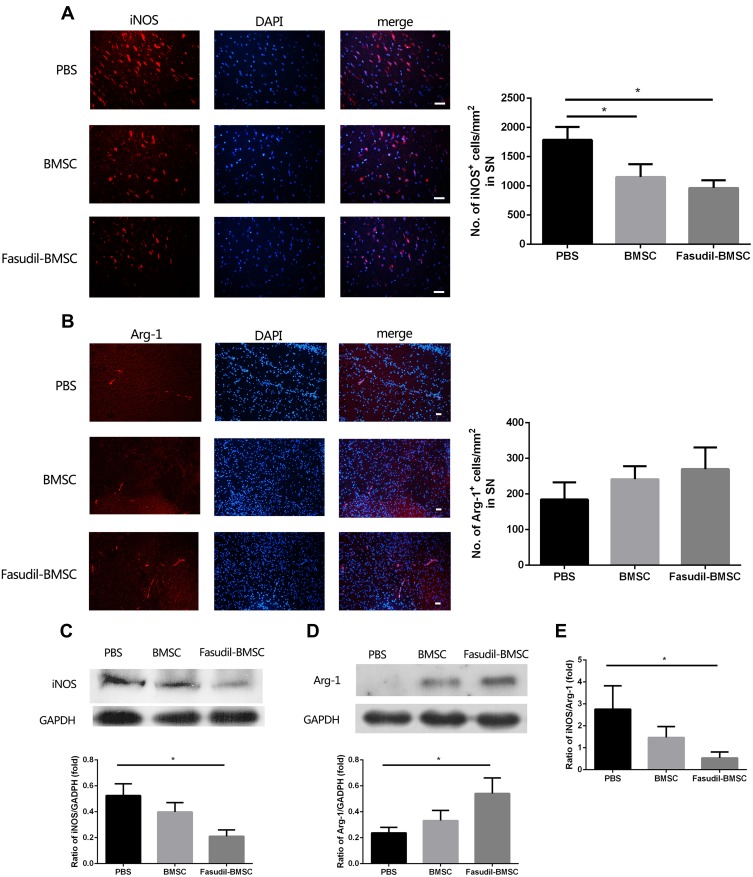
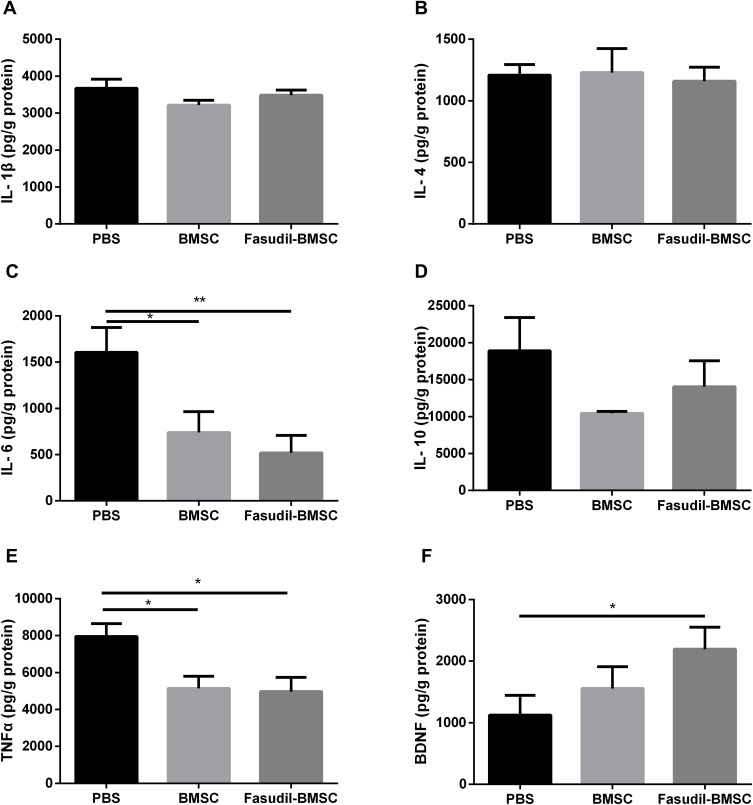
Our study showed that fasudil could accelerate the proliferation of BMSCs and promote brain-derived neurotrophic factor (BDNF) secretion in vitro. Intranasally administered BMSCs were capable of surviving and migrating in the brain. Intranasal delivery of BMSCs preconditioned with fasudil significantly improved motor function and reduced dopaminergic neuron loss in substantia nigra; treatment with BMSCs and PBS resulted in similar outcomes. Preconditioning with fasudil inhibited the activation and aggregation of microglia, suppressed immune response, and reinforced BDNF secretion in MPTP-PD mice significantly more than treatment with BMSCs alone.
The present study demonstrates that intranasally administering BMSCs preconditioned with fasudil is a promising cell-based therapy for PD.
干细胞移植是一种有前景的治疗帕金森病(PD)的策略,具有巨大潜力。然而,改善细胞递送途径和优化植入细胞对于提高治疗效果是必要的。在此,我们研究了经鼻递送骨髓间充质干细胞(BMSCs)在PD小鼠模型中是否具有有益作用,以及法舒地尔预处理是否能增强BMSCs的治疗潜力。
通过腹腔注射1-甲基-4-苯基-1,2,3,6-四氢吡啶(MPTP)建立PD小鼠模型。小鼠经鼻给予磷酸盐缓冲盐水(PBS)、BMSCs或经法舒地尔预处理的BMSCs。1个月后,分析BMSC治疗的效果。
我们的研究表明,法舒地尔在体外可加速BMSCs的增殖并促进脑源性神经营养因子(BDNF)的分泌。经鼻给药的BMSCs能够在脑内存活并迁移。经法舒地尔预处理的BMSCs经鼻递送可显著改善运动功能并减少黑质中多巴胺能神经元的损失;BMSCs和PBS治疗产生了相似的结果。与单独使用BMSCs治疗相比,法舒地尔预处理在MPTP-PD小鼠中更能显著抑制小胶质细胞的激活和聚集,抑制免疫反应并增强BDNF的分泌。
本研究表明,经鼻给予经法舒地尔预处理的BMSCs是一种有前景的基于细胞的PD治疗方法。