Li Qingzhong, He Rui, Zhang Fengmei, Zhang Jian, Lian Shihai, Liu Hongxia
Department of Clinical Pharmacy, School of Pharmacy, Binzhou Medical University, Yantai, China.
Shandong First Medical University & Shandong Academy of Medical Sciences, Taian, China.
Front Endocrinol (Lausanne). 2020 Feb 25;10:939. doi: 10.3389/fendo.2019.00939. eCollection 2019.
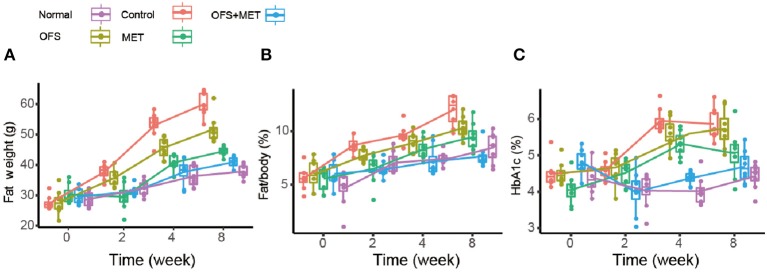
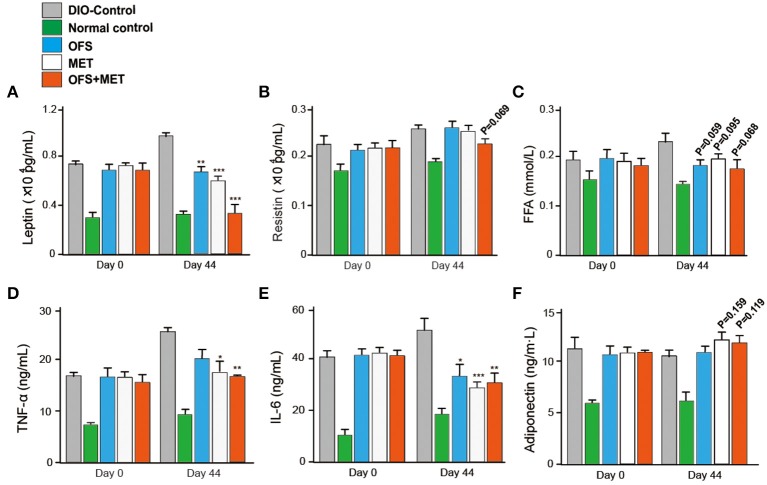
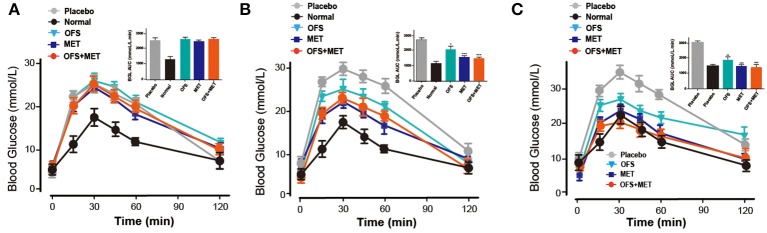
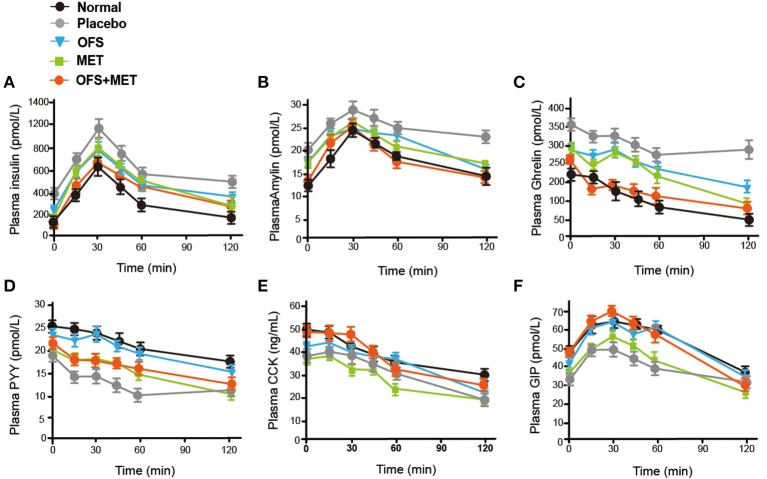
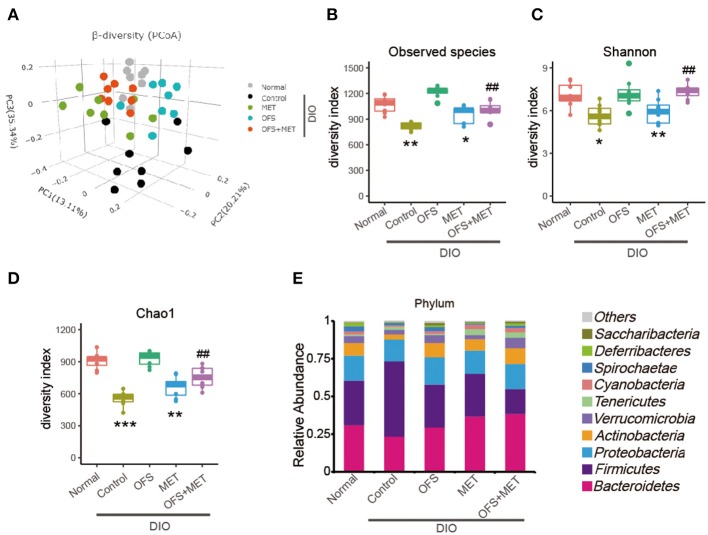
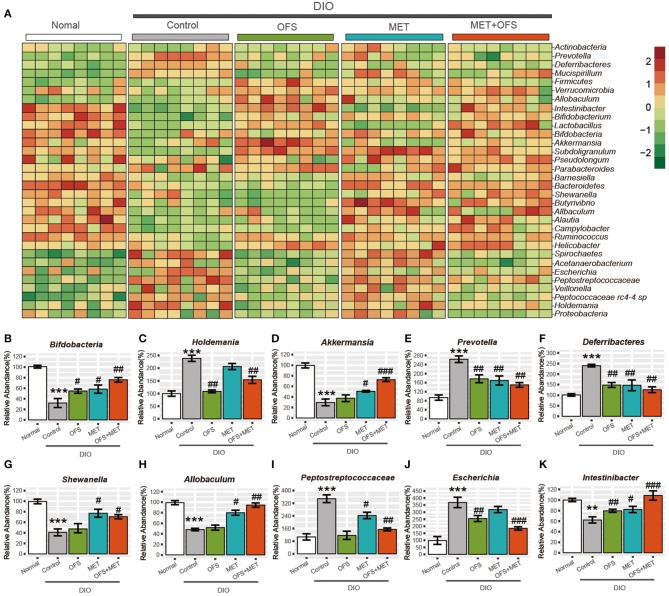
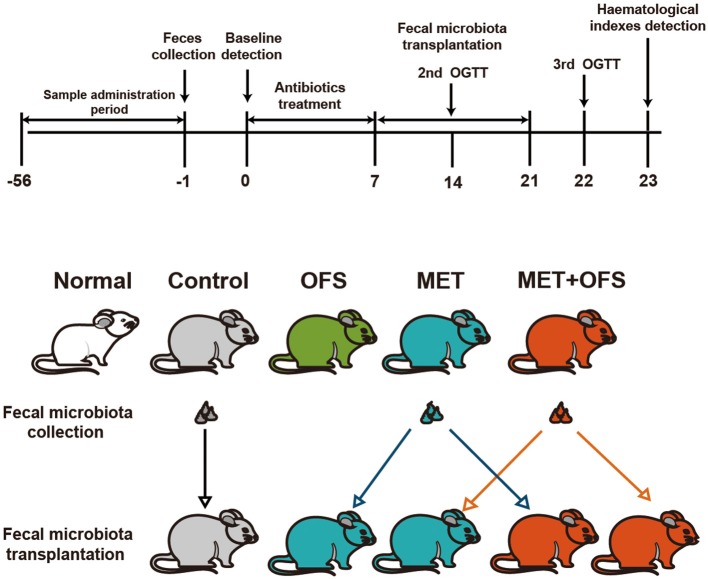
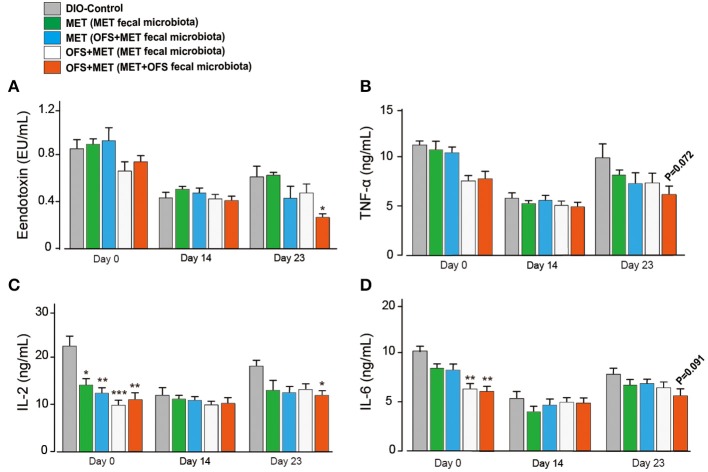
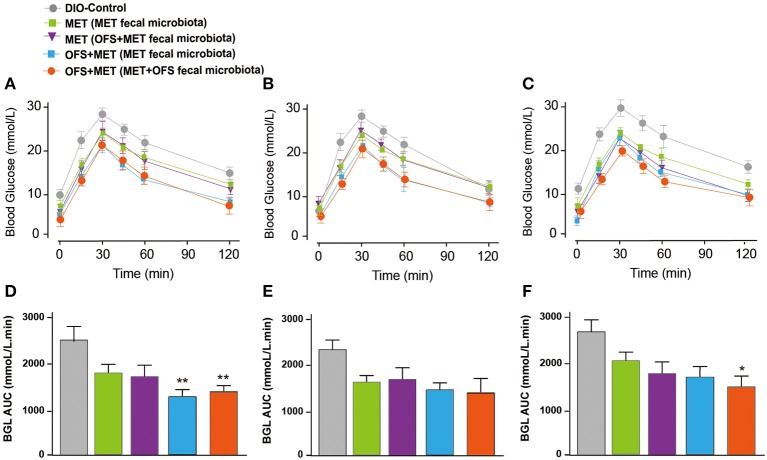
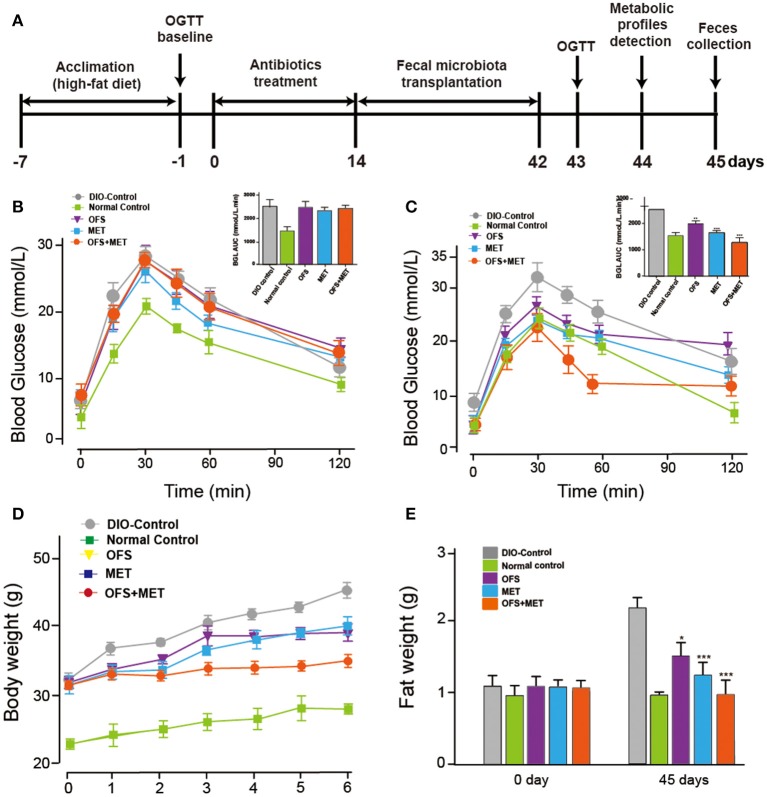
Accumulating studies implicate that the metformin (MET)- and oligofructose (OFS)-altered gut microbiota may play roles in the improvement of type 2 diabetes mellitus (T2DM) and obesity. However, whether the combined administration of OFS and MET could effectively affect the gut microbiota and improve metabolic profiles remains unknown. Here, we randomized diet-induced obesity (DIO) rats to OFS, MET, or MET+OFS for 8 weeks and demonstrated that the combined administration of OFS+MET possessed potentiated effects on the glycemia, body weight, and gut microbiome. In addition, fecal samples from the MET and MET+OFS group were exchanged and transferred to germ-free rats induced by antibiotics. Not surprisingly, the glucose tolerance and serum levels of endotoxin, free fatty acids (FFA), tumor necrosis factor-α (TNF-α), interleukin-2 (IL-2), and interleukin-6 (IL-6) were all sustainably improved among OFS+MET fecal microbiota-treated DIO rats while the MET fecal microbiota-treated ones presented a relatively reverse trend. Furthermore, transfer of fecal samples from the rats after 8 weeks of treatment to antibiotics-treated germ-free mice significantly improved metabolic profiles, including glucose tolerance and weight reduction in mice that received MET+OFS-altered microbiota. In conclusion, the present study illustrated that the effects of OFS and MET combined treatment on gut microbiota, especially for the MET-induced side effect-related ones, and host metabolism were of greater magnitude than individual OFS or MET treatment in obese rats and mice. Therefore, it is likely that combined administration of OFS and MET may offer a novel and promising strategy for reducing side effects induced by MET and improving metabolic outcomes, particularly glycemia control and weight reduction.
越来越多的研究表明,二甲双胍(MET)和低聚果糖(OFS)改变的肠道微生物群可能在改善2型糖尿病(T2DM)和肥胖方面发挥作用。然而,OFS和MET联合给药是否能有效影响肠道微生物群并改善代谢状况仍不清楚。在此,我们将饮食诱导肥胖(DIO)大鼠随机分为OFS组、MET组或MET+OFS组,持续8周,结果表明OFS+MET联合给药对血糖、体重和肠道微生物群具有增强作用。此外,将MET组和MET+OFS组的粪便样本交换并转移到由抗生素诱导的无菌大鼠体内。不出所料,在接受OFS+MET粪便微生物群处理的DIO大鼠中,葡萄糖耐量以及内毒素、游离脂肪酸(FFA)、肿瘤坏死因子-α(TNF-α)、白细胞介素-2(IL-2)和白细胞介素-6(IL-6)的血清水平均持续改善,而接受MET粪便微生物群处理的大鼠则呈现相对相反的趋势。此外,将治疗8周后的大鼠粪便样本转移到经抗生素处理的无菌小鼠体内,显著改善了代谢状况,包括接受MET+OFS改变的微生物群的小鼠的葡萄糖耐量和体重减轻。总之,本研究表明,在肥胖大鼠和小鼠中,OFS和MET联合治疗对肠道微生物群,尤其是与MET诱导的副作用相关的微生物群以及宿主代谢的影响比单独使用OFS或MET治疗更大。因此,OFS和MET联合给药可能为减少MET诱导的副作用并改善代谢结果,特别是血糖控制和体重减轻提供一种新的、有前景的策略。