Chaurasiya Shyambabu, Yang Annie, Kang Seonah, Lu Jianming, Kim Sang-In, Park Anthony K, Sivanandam Venkatesh, Zhang Zhifang, Woo Yanghee, Warner Susanne G, Fong Yuman
Department of Surgery, City of Hope National Medical Center, Duarte, CA, USA.
Oncoimmunology. 2020 Feb 24;9(1):1729300. doi: 10.1080/2162402X.2020.1729300. eCollection 2020.
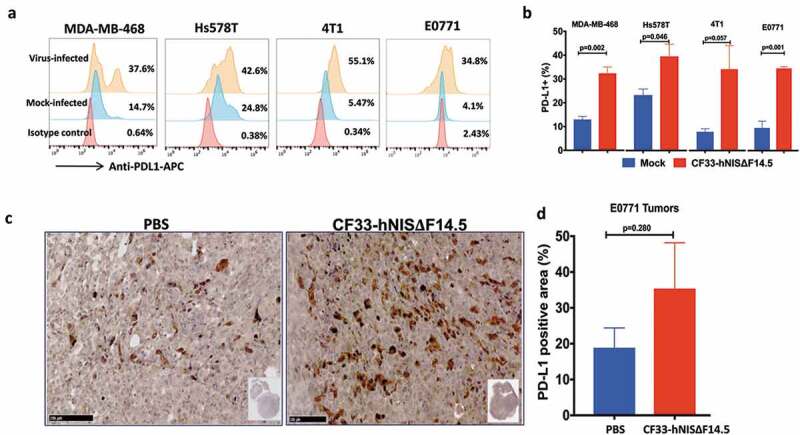
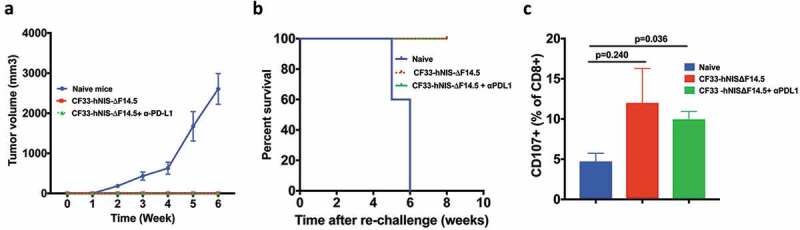
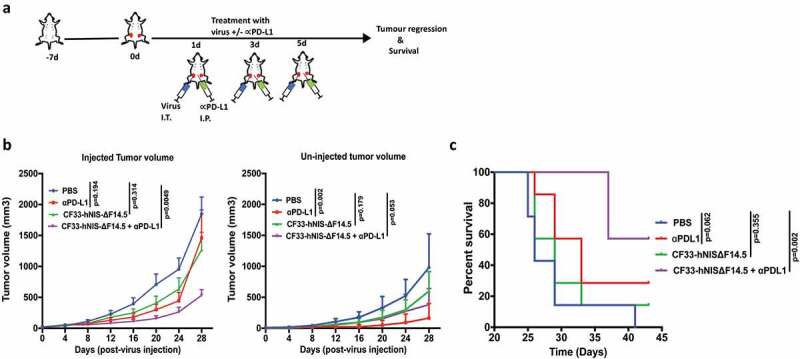
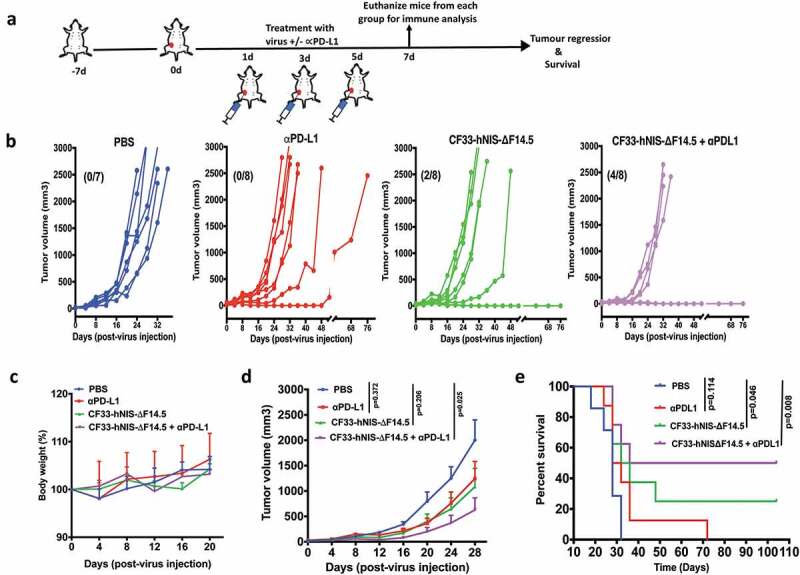
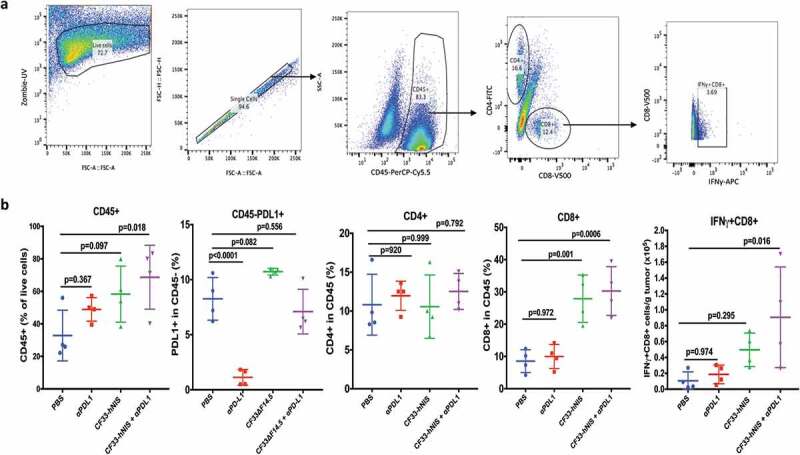
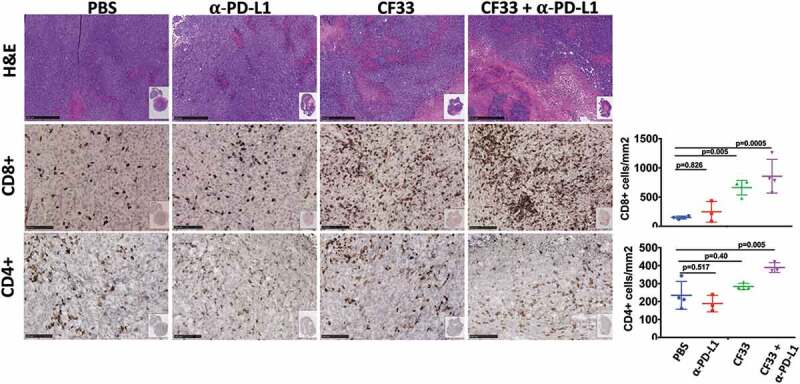
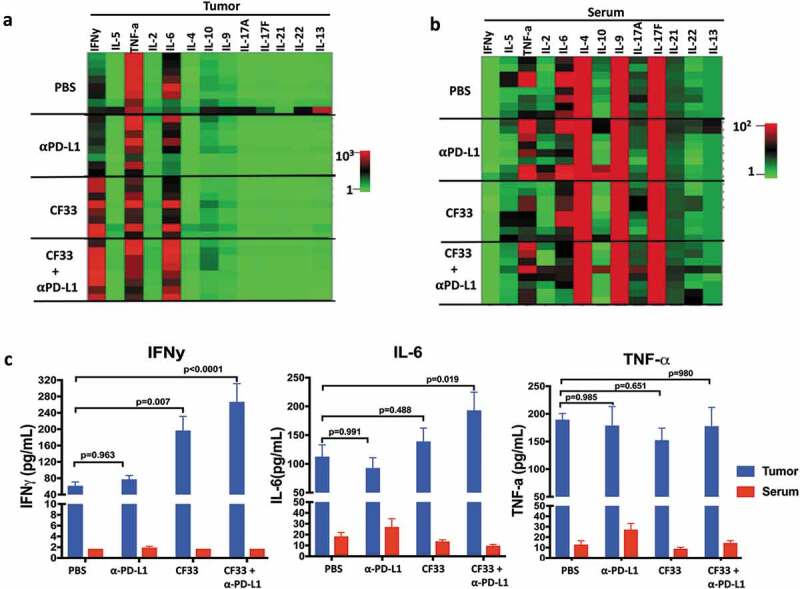
Triple-negative breast cancer is the most aggressive subtype of breast cancer and is difficult to treat. Breast cancer is considered to be poorly immunogenic and hence is less responsive to immunotherapies. We tested whether the oncolytic poxvirus CF33-hNIS-ΔF14.5 could modulate tumor immune microenvironment and make the tumors responsive to the immune checkpoint inhibitor anti-PD-L1. We found that virus infection causes the upregulation of PD-L1 levels on triple-negative breast cancer cells as well as in mice. In a mouse model of orthotopic triple-negative breast cancer, the virus was found to increase tumor infiltration by CD8+ T cells. Likewise, in mice treated with CF33-hNIS-ΔF14.5 high levels of proinflammatory cytokines IFNγ and IL-6 were found in the tumors but not in the serum. The levels of immune modulation were even higher in mice that were treated with a combination of the virus and anti-PD-L1 antibody. While CF33-hNIS-ΔF14.5 and anti-PD-L1 antibody failed to exert significant anti-tumor effect as a single agent, a combination of the two agents resulted in significant anti-tumor effect with 50% mice experiencing complete tumor regression when both agents were injected intra-tumorally. Furthermore, the 'cured' mice did not develop tumor after re-challenge with the same cancer cells suggesting that they developed immunity against those cancer cells. Taken together, our study shows that CF33-hNIS-ΔF14.5 favorably modulates tumor immune microenvironment in triple-negative breast cancer model making them responsive to the immune checkpoint inhibitor anti-PD-L1, and hence warrants further studies to determine the clinical applicability of this combination therapy.
三阴性乳腺癌是乳腺癌中最具侵袭性的亚型,难以治疗。乳腺癌被认为免疫原性较差,因此对免疫疗法的反应较小。我们测试了溶瘤痘病毒CF33-hNIS-ΔF14.5是否能调节肿瘤免疫微环境,并使肿瘤对免疫检查点抑制剂抗PD-L1产生反应。我们发现病毒感染会导致三阴性乳腺癌细胞以及小鼠体内PD-L1水平上调。在原位三阴性乳腺癌小鼠模型中,发现该病毒可增加CD8 + T细胞的肿瘤浸润。同样,在用CF33-hNIS-ΔF14.5治疗的小鼠中,肿瘤中发现了高水平的促炎细胞因子IFNγ和IL-6,但血清中未发现。在用病毒和抗PD-L1抗体联合治疗的小鼠中,免疫调节水平更高。虽然CF33-hNIS-ΔF14.5和抗PD-L1抗体作为单一药物未能发挥显著的抗肿瘤作用,但两种药物联合使用可产生显著的抗肿瘤作用,当两种药物瘤内注射时,50%的小鼠肿瘤完全消退。此外,“治愈”的小鼠在再次接种相同癌细胞后未发生肿瘤,这表明它们对这些癌细胞产生了免疫力。综上所述,我们的研究表明,CF33-hNIS-ΔF14.5在三阴性乳腺癌模型中可良好地调节肿瘤免疫微环境,使其对免疫检查点抑制剂抗PD-L1产生反应,因此有必要进一步研究以确定这种联合治疗的临床适用性。