Cho Raymond Y, Weng Jian, Lynch Kelsey, Ng Phoebe, Brown Chad, Hoens Alison M, Barry Kevin, Brunham Liam R, Pimstone Simon
MD Undergraduate Program, University of British Columbia, Vancouver, British Columbia, Canada.
Centre for Heart Lung Innovation Centre, University of British Columbia, Vancouver, British Columbia, Canada.
CJC Open. 2019 Mar 6;1(3):107-114. doi: 10.1016/j.cjco.2019.02.003. eCollection 2019 May.
Optimal design of clinical programs for patients with premature atherosclerotic cardiovascular disease (ASCVD) (men aged ≤ 50 years, women aged ≤ 55 years) requires an understanding of their priorities. We aimed to explore patient and family priorities for services in clinical programs.
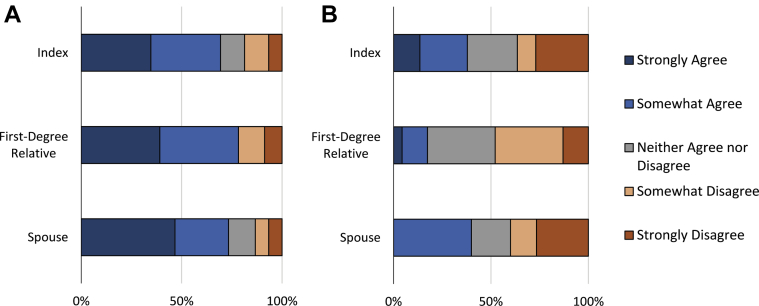
We co-designed this study with a Patient Partner Committee using a sequential exploratory mixed-methods design. In Phase I, we conducted semistructured interviews with participants from the tudy to void Cardioascular vents in ritish olumbia (SAVE BC) (n = 15). In Phase II, we designed a questionnaire based on Phase I data and distributed it to all current SAVE BC participants. We collected close-ended responses (n = 116) and stratified data using participant category (index, family member), age, sex, and number of clinic visits.
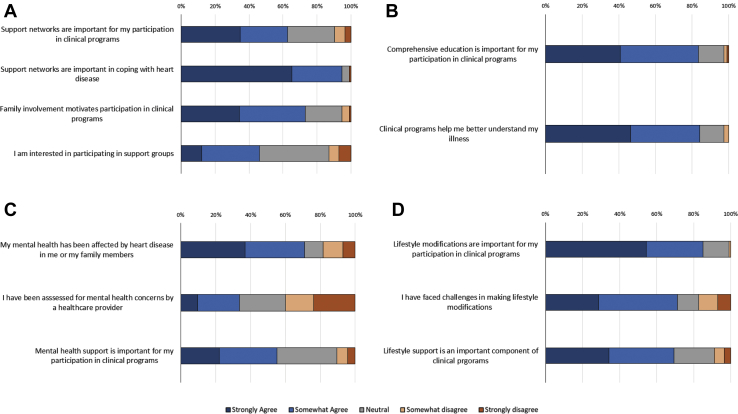
We identified 4 major priorities for services in clinical programs: social support (weight: 62.6%), patient education (weight: 83.5%), mental health (weight: 50.7%), and lifestyle changes (85.1%). To address these priorities, participants wanted ASCVD clinical programs to enable recruitment of their family members, establish a comprehensive education component (with research updates in research programs), deliver mental health screening and support after myocardial infarction, and provide longitudinal sessions to support maintenance of lifestyle modifications. These services were identified in Phase I and verified in Phase II.
We identified 4 priorities for services in clinical programs designed for patients with premature ASCVD and their families. Further research should be done to elucidate their outcomes and most effective methods to provide these services.
对于早发性动脉粥样硬化性心血管疾病(ASCVD)患者(年龄≤50岁的男性,年龄≤55岁的女性)临床项目的优化设计需要了解他们的优先事项。我们旨在探索患者及其家属对临床项目服务的优先事项。
我们与患者伙伴委员会采用序贯探索性混合方法设计共同开展了本研究。在第一阶段,我们对来自不列颠哥伦比亚省预防心血管事件研究(SAVE BC)的参与者进行了半结构化访谈(n = 15)。在第二阶段,我们根据第一阶段的数据设计了一份问卷,并将其分发给所有SAVE BC的现有参与者。我们收集了封闭式回答(n = 116),并使用参与者类别(索引、家庭成员)、年龄、性别和门诊就诊次数对数据进行分层。
我们确定了临床项目服务的4个主要优先事项:社会支持(权重:62.6%)、患者教育(权重:83.5%)、心理健康(权重:50.7%)和生活方式改变(85.1%)。为满足这些优先事项,参与者希望ASCVD临床项目能够招募他们的家庭成员,建立一个全面的教育组成部分(包括研究项目中的研究更新),在心肌梗死后提供心理健康筛查和支持,并提供长期课程以支持维持生活方式的改变。这些服务在第一阶段被确定,并在第二阶段得到验证。
我们确定了为早发性ASCVD患者及其家属设计的临床项目服务的4个优先事项。应进一步开展研究以阐明其结果以及提供这些服务的最有效方法。