Department of Gastroenterology and Hepatology, Leiden University Medical Center, Leiden, The Netherlands.
Department of Gastroenterology and Hepatology, University Hospital Zurich, Zurich, Switzerland.
J Crohns Colitis. 2020 Jul 30;14(7):995-1009. doi: 10.1093/ecco-jcc/jjaa009.
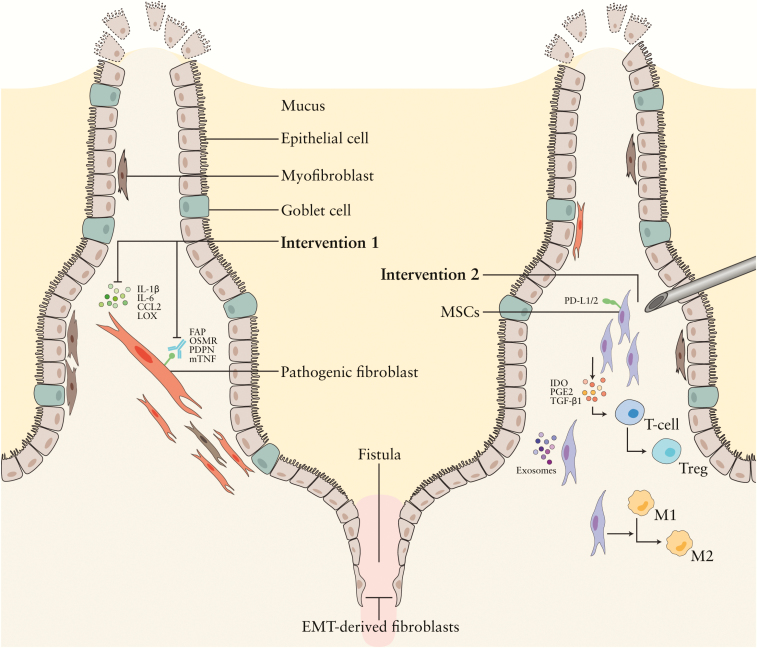
Up till now, research on inflammatory bowel disease [IBD] has mainly been focused on the immune cells present in the gastrointestinal tract. However, recent insights indicate that stromal cells also play an important and significant role in IBD pathogenesis. Stromal cells in the intestines regulate both intestinal epithelial and immune cell homeostasis. Different subsets of stromal cells have been found to play a role in other inflammatory diseases [e.g. rheumatoid arthritis], and these various stromal subsets now appear to carry out also specific functions in the inflamed gut in IBD. Novel potential therapies for IBD utilize, as well as target, these pathogenic stromal cells. Injection of mesenchymal stromal cells [MSCs] into fistula tracts of Crohn's disease patients is already approved and used in clinical settings. In this review we discuss the current knowledge of the role of stromal cells in IBD pathogenesis. We further outline recent attempts to modify the stromal compartment in IBD with agents that target or replace the pathogenic stroma.
到目前为止,炎症性肠病(IBD)的研究主要集中在胃肠道中存在的免疫细胞上。然而,最近的研究表明,基质细胞在 IBD 的发病机制中也起着重要和重要的作用。肠道中的基质细胞调节肠道上皮细胞和免疫细胞的稳态。已经发现不同亚群的基质细胞在其他炎症性疾病中发挥作用[例如类风湿关节炎],这些不同的基质亚群现在似乎在 IBD 中发炎的肠道中执行特定的功能。用于 IBD 的新型潜在治疗方法利用并针对这些致病基质细胞。已经批准并在临床环境中使用将间充质基质细胞(MSCs)注入克罗恩病患者的瘘管中。在这篇综述中,我们讨论了基质细胞在 IBD 发病机制中的作用的现有知识。我们进一步概述了最近尝试使用靶向或替代致病基质的药物来修饰 IBD 中的基质隔室的尝试。