Cheeloo College of Medicine, Shandong University, 44 Wenhua West Road, LixiaDistrict, Jinan, Shandong, China.
Shandong Collaborative Innovation Center for Diagnosis, Treatment and Behavioral Interventions of mental disorders, Institute of Mental Health, Jining Medical University, 133 Hehua Road, Taibaihu New District, Jining, 272067, Shandong, China.
BMC Mol Cell Biol. 2020 Mar 11;21(1):13. doi: 10.1186/s12860-020-00260-7.
Alzheimer's disease is the most common neurodegenerative disease in the elderly. Amyloid-β protein (Aβ) is the major component of neuritic plaques which are the hallmark of AD pathology. β-site APP cleaving enzyme 1 (BACE1) is the major β-secretase contributing to Aβ generation. β-site APP-cleaving enzyme 2 (BACE2), the homolog of BACE1, might play a complex role in the pathogenesis of Alzheimer's disease as it is not only a θ-secretase but also a conditional β-secretase. Dysregulation of BACE2 is observed in Alzheimer's disease. However, the regulation of BACE2 is less studied compared with BACE1, including its degradation pathways. In this study, we investigated the turnover rates and degradation pathways of BACE2 in both neuronal cells and non-neuronal cells.
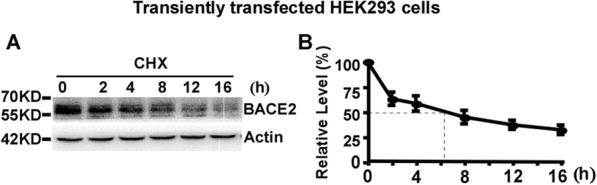
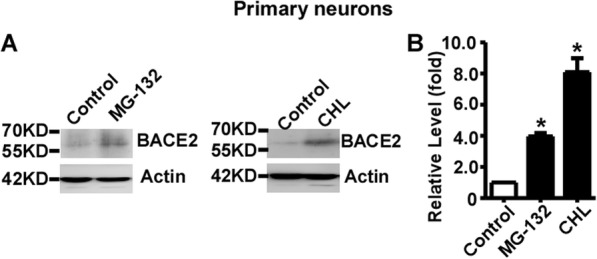
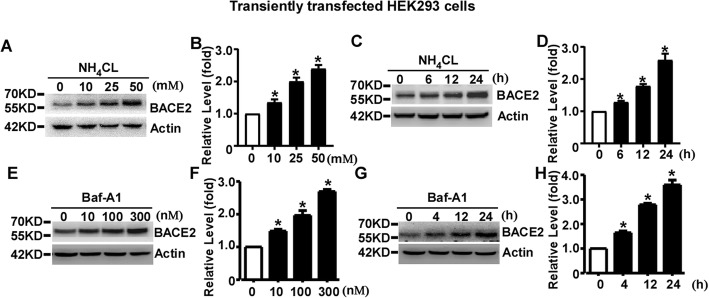
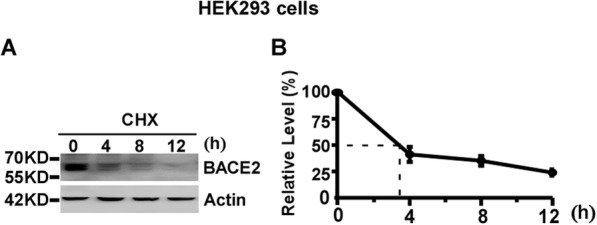
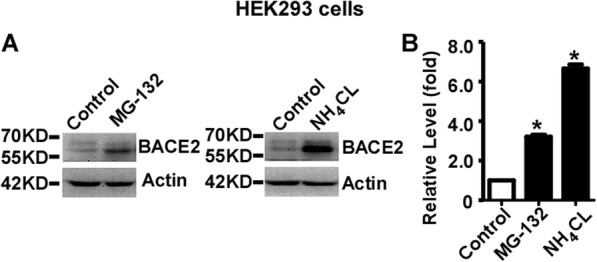
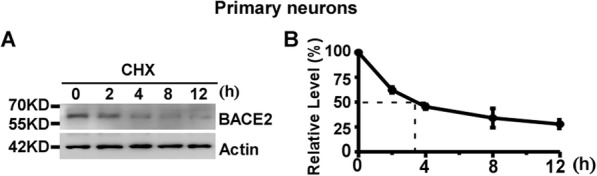
Both lysosomal inhibition and proteasomal inhibition cause a time- and dose-dependent increase of transiently overexpressed BACE2 in HEK293 cells. The half-life of transiently overexpressed BACE2 protein is approximately 6 h. Moreover, the half-life of endogenous BACE2 protein is approximately 4 h in both HEK293 cells and mouse primary cortical neurons. Furthermore, both lysosomal inhibition and proteasomal inhibition markedly increases endogenous BACE2 in HEK293 cells and mouse primary cortical neurons.
This study demonstrates that BACE2 is degraded by both the proteasome and lysosome pathways in both neuronal and non-neuronal cells at endogenous level and in transient overexpression system. It indicates that BACE2 dysregulation might be mediated by the proteasomal and lysosomal impairment in Alzheimer's disease. This study advances our understanding of the regulation of BACE2 and provides a potential mechanism of its dysregulation in Alzheimer's disease.
阿尔茨海默病是老年人中最常见的神经退行性疾病。淀粉样β蛋白(Aβ)是神经原纤维缠结的主要成分,而神经原纤维缠结是 AD 病理学的标志。β 位淀粉样前体蛋白裂解酶 1(BACE1)是主要的β-分泌酶,有助于 Aβ 的产生。β 位淀粉样前体蛋白裂解酶 2(BACE2)是 BACE1 的同源物,它不仅是θ-分泌酶,也是条件性β-分泌酶,因此在阿尔茨海默病的发病机制中可能发挥复杂的作用。在阿尔茨海默病中观察到 BACE2 的失调。然而,与 BACE1 相比,BACE2 的调节,包括其降解途径,研究较少。在这项研究中,我们研究了 BACE2 在神经元细胞和非神经元细胞中的周转率和降解途径。
溶酶体抑制和蛋白酶体抑制均导致 HEK293 细胞中瞬时过表达的 BACE2 呈时间和剂量依赖性增加。瞬时过表达的 BACE2 蛋白的半衰期约为 6 小时。此外,HEK293 细胞和小鼠原代皮质神经元中内源性 BACE2 蛋白的半衰期约为 4 小时。此外,溶酶体抑制和蛋白酶体抑制均显著增加 HEK293 细胞和小鼠原代皮质神经元中的内源性 BACE2。
这项研究表明,在神经元和非神经元细胞的内源性水平和瞬时过表达系统中,BACE2 通过蛋白酶体和溶酶体途径降解。这表明 BACE2 的失调可能是由阿尔茨海默病中的蛋白酶体和溶酶体损伤介导的。这项研究增进了我们对 BACE2 调节的理解,并为其在阿尔茨海默病中的失调提供了潜在的机制。