Department of Pathology and Tumor Biology, Graduate School of Medicine, Kyoto University.
Proc Jpn Acad Ser B Phys Biol Sci. 2020;96(3):107-121. doi: 10.2183/pjab.96.009.
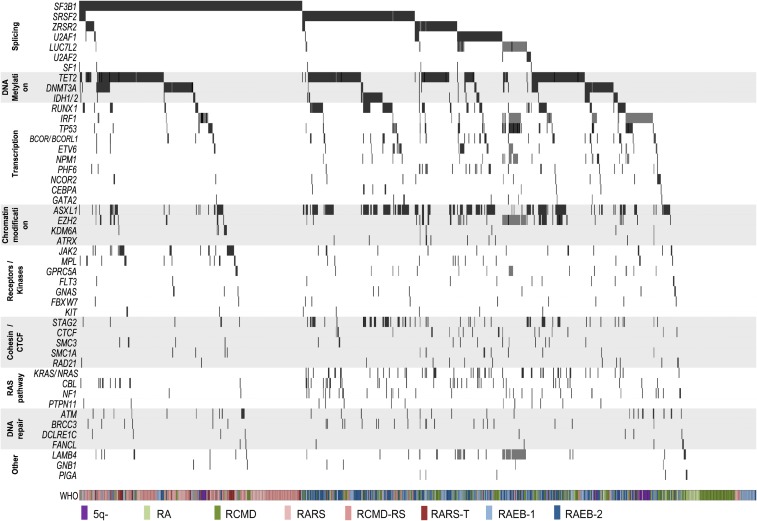
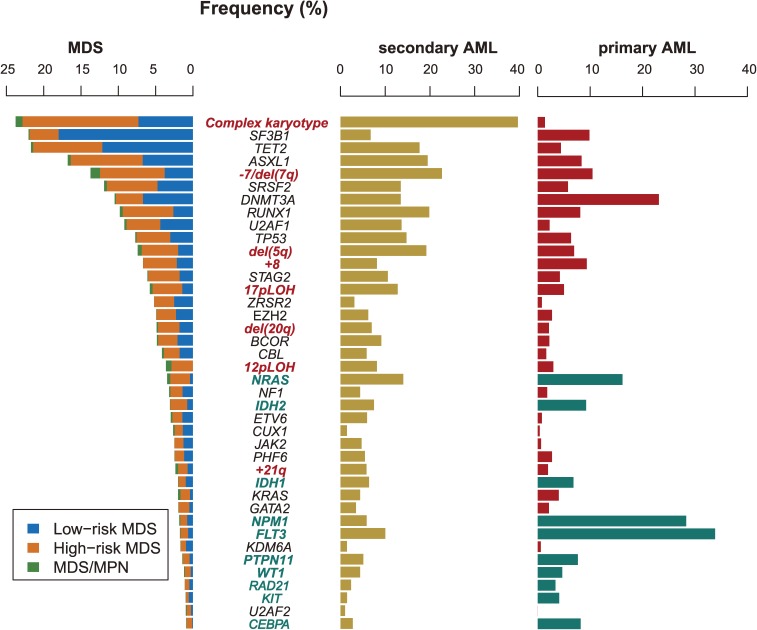
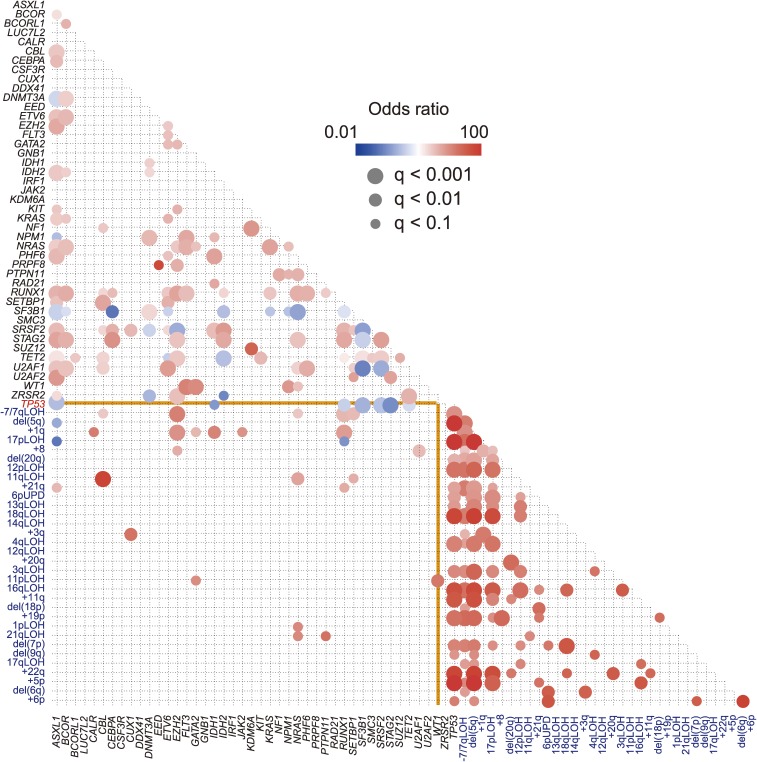
During the past decade, substantial progress has been made in the field of the genetics of myelodysplastic syndromes (MDS). These comprise a group of chronic myeloid neoplasms with abnormal cell morphology and progression to acute myeloid leukemia (AML), where revolutionary sequencing technologies have played a major role. Through extensive sequencing of a large number of MDS genomes, a comprehensive registry of driver mutations involved in the pathogenesis of MDS has been revealed, along with their impacts on clinical phenotype and prognosis. The most frequently affected molecules are involved in DNA methylations, chromatin modification, RNA splicing, transcription, signal transduction, cohesin regulation, and DNA repair. These mutations show strong positive and negative correlations with each other, suggesting the presence of functional interactions between mutations, which dictate disease progression. Because these mutations are associated with disease phenotype, drug response, and clinical outcomes, it is essential to be familiar with MDS genetics not only for better understanding of MDS pathogenesis but also for management of patients.
在过去的十年中,骨髓增生异常综合征(MDS)的遗传学领域取得了重大进展。这些疾病是一组具有异常细胞形态并进展为急性髓系白血病(AML)的慢性髓系肿瘤,其中革命性的测序技术发挥了重要作用。通过对大量 MDS 基因组进行广泛测序,揭示了涉及 MDS 发病机制的驱动突变的综合目录,以及它们对临床表型和预后的影响。受影响最频繁的分子涉及 DNA 甲基化、染色质修饰、RNA 剪接、转录、信号转导、黏合调控和 DNA 修复。这些突变相互之间具有强烈的正相关和负相关关系,表明突变之间存在功能相互作用,决定疾病的进展。由于这些突变与疾病表型、药物反应和临床结局相关,因此熟悉 MDS 遗传学不仅对于更好地理解 MDS 发病机制,而且对于患者的管理都是至关重要的。