Makino Koji, Mahant Neil, Tilden Dominic, Aghajanian Lara
THEMA Consulting Pty. Ltd., Sydney, Australia.
Neurology, Westmead Hospital, Sydney, Australia.
Neurol Ther. 2020 Jun;9(1):117-133. doi: 10.1007/s40120-020-00182-8. Epub 2020 Mar 12.
Sialorrhea is a common and debilitating symptom associated with neurological conditions, which can result in considerable physical and psychosocial complications. In Australia, management options are limited and further impeded by the lack of approved treatments. Whilst there is emerging evidence for the efficacy and tolerability of botulinum toxin (BoNT) for the treatment of sialorrhea in patients with neurological conditions, the cost-effectiveness of the treatment is yet to be established.
To evaluate the cost-effectiveness of incobotulinumtoxinA for the treatment of chronic troublesome sialorrhea caused by various neurological conditions from the Australian healthcare perspective.
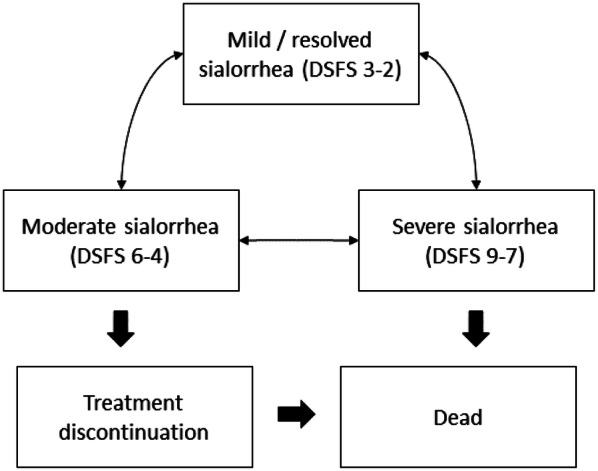
A Markov state transition model was developed to perform a cost-utility analysis comparing incobotulinumtoxinA with standard of care (SoC). The model consisted of a hypothetical cohort of patients transiting between three severity-based health states, defined according to the Drooling Severity and Frequency Scale (DSFS), in 16-weekly cycles over 5 years. All clinical and utility inputs were sourced from a single placebo-controlled randomised clinical trial. Only direct healthcare costs were considered, and potential indirect costs such as carer's time and lost productivity were ignored. The primary outcome measure was the incremental cost per quality-adjusted life-year (QALY). Univariate and probabilistic sensitivity analyses were conducted.
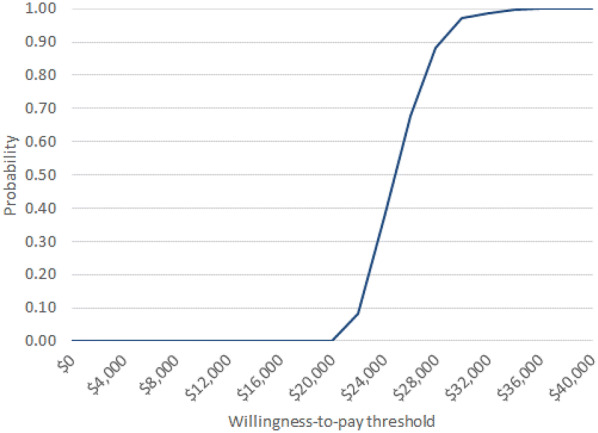
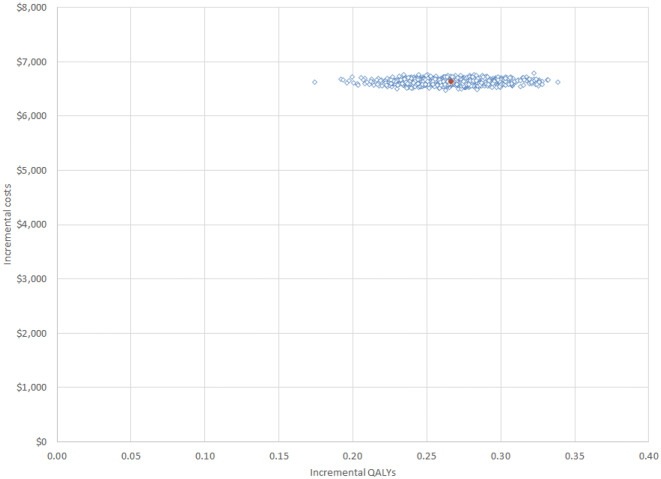
The model demonstrated that proportionally more patients spent time in less severe sialorrhea health states in the incobotulinumtoxinA arm. For example, over the 5-year period, patients receiving incobotulinumtoxinA were estimated to spend 1.6 years with minimal or no sialorrhea, while no patients achieved this level of improvement under SoC. IncobotulinumtoxinA was shown to have an incremental cost per QALY gained of A$23,445 when compared with SoC.
The quality of life (QoL) of patients with sialorrhea caused by neurological conditions was considerably compromised. IncobotulinumtoxinA was shown to successfully alleviate sialorrhea and it was demonstrated to be a cost-effective intervention when compared with SoC alone.
流涎是一种与神经系统疾病相关的常见且使人衰弱的症状,可能导致相当多的身体和心理社会并发症。在澳大利亚,管理选择有限,且因缺乏获批治疗方法而进一步受阻。虽然有新证据表明肉毒杆菌毒素(BoNT)治疗神经系统疾病患者流涎的有效性和耐受性,但该治疗的成本效益尚未确定。
从澳大利亚医疗保健角度评估incobotulinumtoxinA治疗由各种神经系统疾病引起的慢性难治性流涎的成本效益。
开发了一个马尔可夫状态转换模型,以进行将incobotulinumtoxinA与护理标准(SoC)进行比较的成本效用分析。该模型由一组假设的患者组成,他们在根据流涎严重程度和频率量表(DSFS)定义的三种基于严重程度的健康状态之间转换,在5年中每16周为一个周期。所有临床和效用输入均来自一项单一的安慰剂对照随机临床试验。仅考虑直接医疗保健成本,而忽略诸如护理人员时间和生产力损失等潜在间接成本。主要结局指标是每质量调整生命年(QALY)的增量成本。进行了单变量和概率敏感性分析。
模型表明,在incobotulinumtoxinA组中,按比例有更多患者处于流涎较轻的健康状态。例如,在5年期间,接受incobotulinumtoxinA治疗的患者估计有1.6年几乎没有或没有流涎,而在护理标准下没有患者达到这种改善水平。与护理标准相比,incobotulinumtoxinA每获得一个QALY的增量成本为23,445澳元。
神经系统疾病引起的流涎患者的生活质量(QoL)受到严重损害。IncobotulinumtoxinA被证明能成功减轻流涎,并且与单独的护理标准相比,它被证明是一种具有成本效益的干预措施。