Chiappini Andrea, Tran Lam Thi Ngoc, Trejo-García Pablo Marco, Zur Lidia, Lukowiak Anna, Ferrari Maurizio, Righini Giancarlo C
Institute of Photonics and Nanotechnologies (IFN-CNR) CSMFO Laboratory and Fondazione Bruno Kessler (FBK) Photonics Unit, 38123 Povo (Trento), Italy.
Department of Materials Technology, Faculty of Applied Sciences, Ho Chi Minh City University of Technology and Education, Ho Chi Min City 70000, Vietnam.
Micromachines (Basel). 2020 Mar 10;11(3):290. doi: 10.3390/mi11030290.
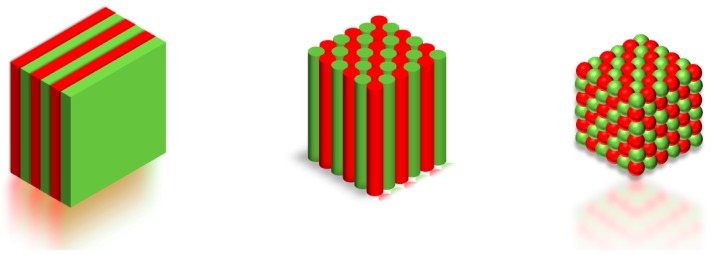
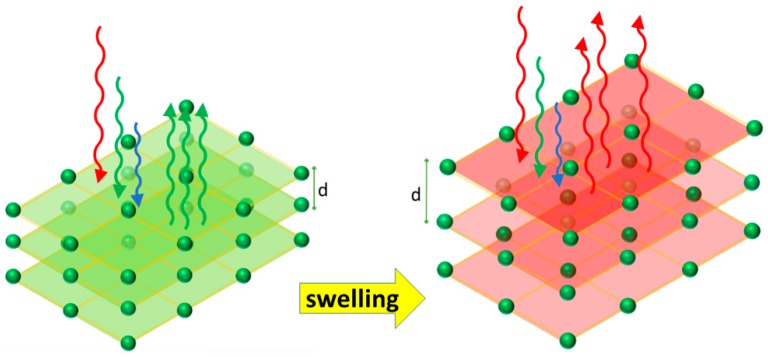
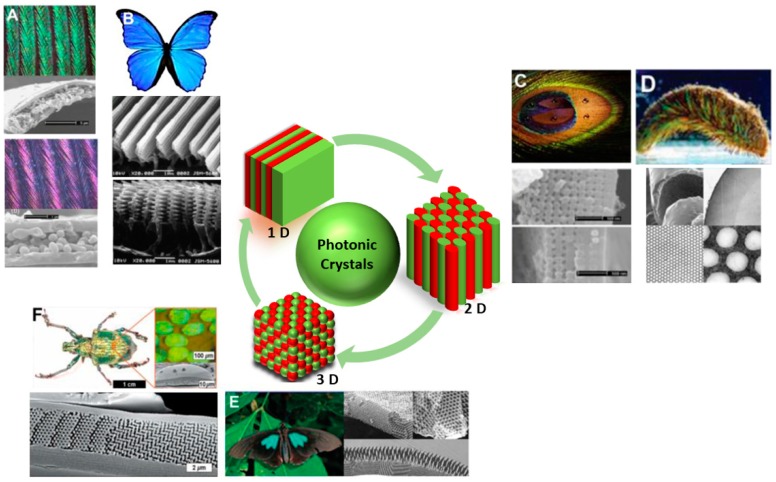
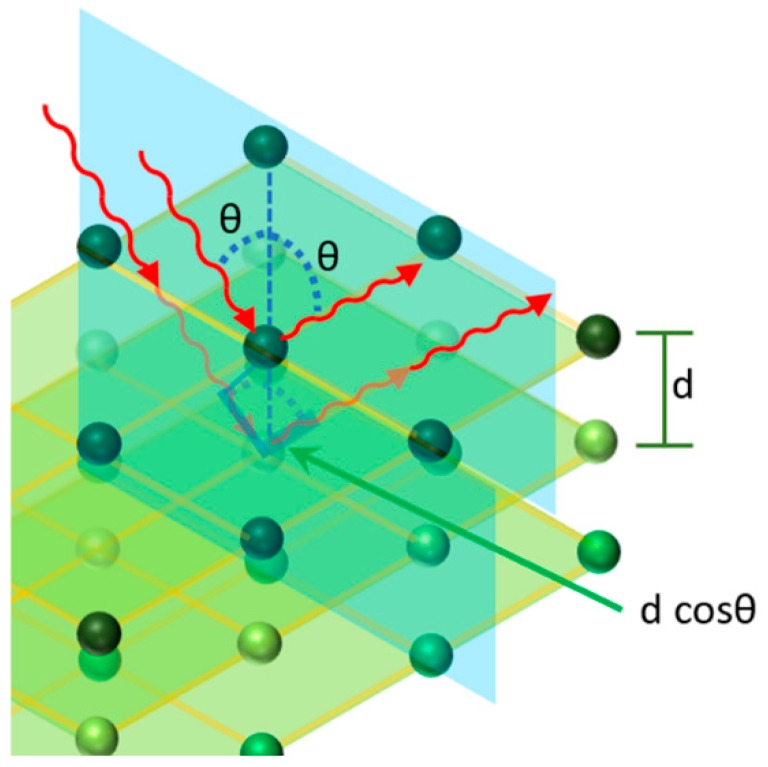
Photonic crystals (PhC) are spatially ordered structures with lattice parameters comparable to the wavelength of propagating light. Their geometrical and refractive index features lead to an energy band structure for photons, which may allow or forbid the propagation of electromagnetic waves in a limited frequency range. These unique properties have attracted much attention for both theoretical and applied research. Devices such as high-reflection omnidirectional mirrors, low-loss waveguides, and high- and low-reflection coatings have been demonstrated, and several application areas have been explored, from optical communications and color displays to energy harvest and sensors. In this latter area, photonic crystal fibers (PCF) have proven to be very suitable for the development of highly performing sensors, but one-dimensional (1D), two-dimensional (2D) and three-dimensional (3D) PhCs have been successfully employed, too. The working principle of most PhC sensors is based on the fact that any physical phenomenon which affects the periodicity and the refractive index of the PhC structure induces changes in the intensity and spectral characteristics of the reflected, transmitted or diffracted light; thus, optical measurements allow one to sense, for instance, temperature, pressure, strain, chemical parameters, like pH and ionic strength, and the presence of chemical or biological elements. In the present article, after a brief general introduction, we present a review of the state of the art of PhC sensors, with particular reference to our own results in the field of mechanochromic sensors. We believe that PhC sensors based on changes of structural color and mechanochromic effect are able to provide a promising, technologically simple, low-cost platform for further developing devices and functionalities.
光子晶体(PhC)是一种空间有序结构,其晶格参数与传播光的波长相当。它们的几何和折射率特征导致了光子的能带结构,这可能会在有限的频率范围内允许或禁止电磁波的传播。这些独特的性质在理论和应用研究方面都引起了广泛关注。诸如高反射全向镜、低损耗波导以及高反射和低反射涂层等器件已经得到了展示,并且已经探索了几个应用领域,从光通信、彩色显示到能量收集和传感器。在后者这个领域,光子晶体光纤(PCF)已被证明非常适合用于开发高性能传感器,但一维(1D)、二维(2D)和三维(3D)光子晶体也已成功得到应用。大多数光子晶体传感器的工作原理基于这样一个事实,即任何影响光子晶体结构周期性和折射率的物理现象都会引起反射、透射或衍射光的强度和光谱特性发生变化;因此,光学测量能够让人感知例如温度、压力、应变、化学参数(如pH值和离子强度)以及化学或生物元素的存在。在本文中,在进行简要的一般性介绍之后,我们对光子晶体传感器的当前技术水平进行了综述,特别提及了我们在机械变色传感器领域自己的研究成果。我们认为,基于结构颜色变化和机械变色效应的光子晶体传感器能够为进一步开发器件和功能提供一个有前景的、技术上简单且低成本的平台。