Department of Endocrinology & Metabolism, Amsterdam University Medical Centers, Amsterdam, the Netherlands.
Division of Endocrinology, Diabetes, and Metabolism, Department of Medicine, Beth Israel Deaconess Medical Center, Harvard Medical School, Boston, MA, USA.
FASEB J. 2020 May;34(5):6099-6110. doi: 10.1096/fj.201901979RR. Epub 2020 Mar 13.
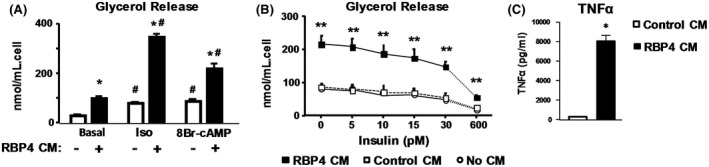
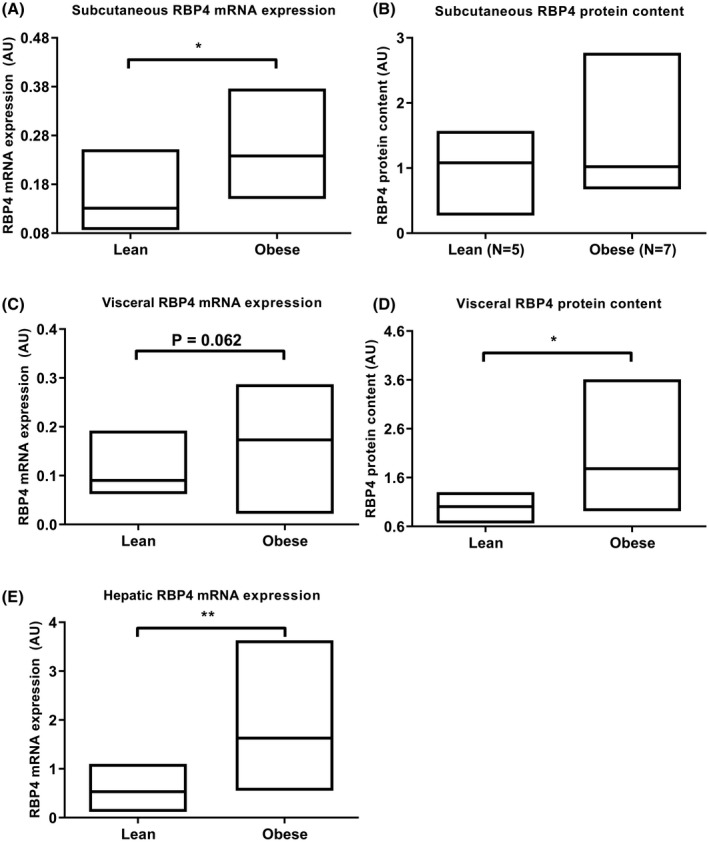
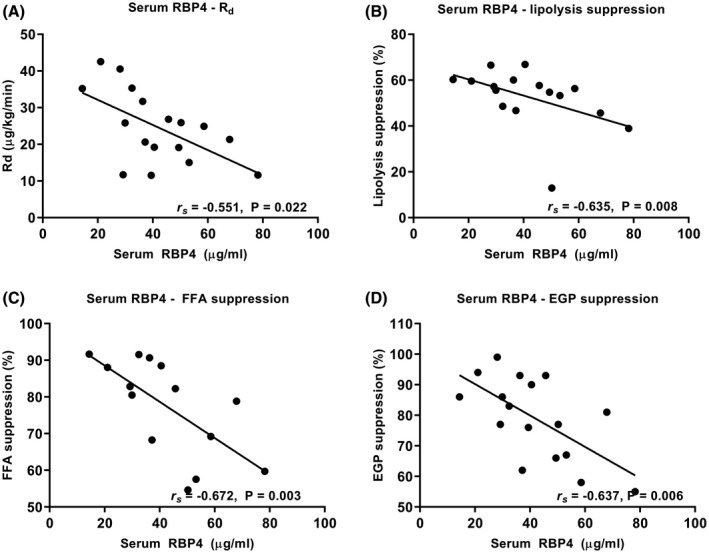
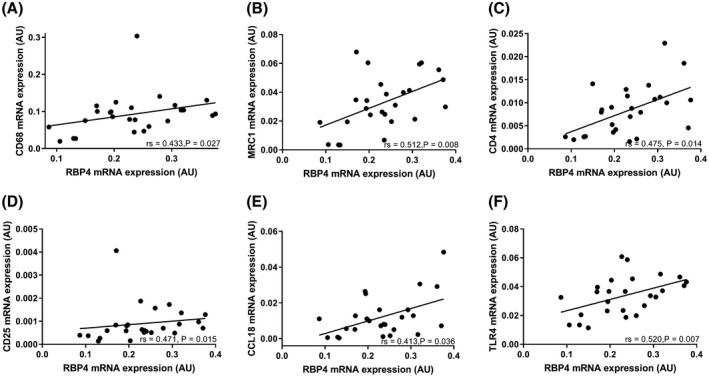
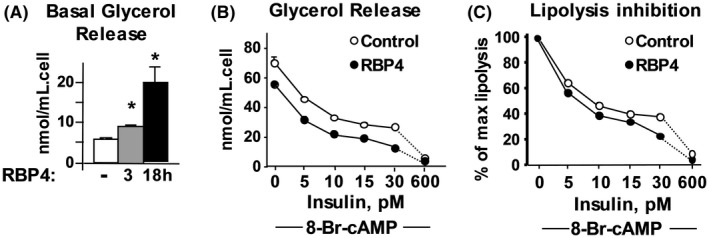
Retinol-binding protein-4 (RBP4) is elevated in serum and adipose tissue (AT) in obesity-induced insulin resistance and correlates inversely with insulin-stimulated glucose disposal. But its role in insulin-mediated suppression of lipolysis, free fatty acids (FFA), and endogenous glucose production (EGP) in humans is unknown. RBP4 mRNA or protein levels were higher in liver, subcutaneous adipose tissue (SAT), and visceral adipose tissue (VAT) in morbidly obese subjects undergoing Roux-en-Y gastric bypass surgery compared to lean controls undergoing elective laparoscopic cholecystectomy. RBP4 mRNA expression in SAT correlated with the expression of several macrophage and other inflammation markers. Serum RBP4 levels correlated inversely with glucose disposal and insulin-mediated suppression of lipolysis, FFA, and EGP. Mechanistically, RBP4 treatment of human adipocytes in vitro directly stimulated basal lipolysis. Treatment of adipocytes with conditioned media from RBP4-activated macrophages markedly increased basal lipolysis and impaired insulin-mediated lipolysis suppression. RBP4 treatment of macrophages increased TNFα production. These data suggest that elevated serum or adipose tissue RBP4 levels in morbidly obese subjects may cause hepatic and systemic insulin resistance by stimulating basal lipolysis and by activating macrophages in adipose tissue, resulting in release of pro-inflammatory cytokines that impair lipolysis suppression. While we have demonstrated this mechanism in human adipocytes in vitro, and correlations from our flux studies in humans strongly support this, further studies are needed to determine whether this mechanism explains RBP4-induced insulin resistance in humans.
视黄醇结合蛋白 4(RBP4)在肥胖诱导的胰岛素抵抗患者的血清和脂肪组织(AT)中升高,与胰岛素刺激的葡萄糖摄取呈负相关。但其在胰岛素介导的脂肪分解、游离脂肪酸(FFA)和内源性葡萄糖生成(EGP)抑制中的作用在人类中尚不清楚。与接受择期腹腔镜胆囊切除术的正常体重对照者相比,接受 Roux-en-Y 胃旁路手术的病态肥胖患者的肝脏、皮下脂肪组织(SAT)和内脏脂肪组织(VAT)中的 RBP4mRNA 或蛋白水平更高。SAT 中的 RBP4mRNA 表达与几种巨噬细胞和其他炎症标志物的表达相关。血清 RBP4 水平与葡萄糖摄取以及胰岛素介导的脂肪分解、FFA 和 EGP 抑制呈负相关。从机制上讲,RBP4 体外处理人脂肪细胞可直接刺激基础脂肪分解。用 RBP4 激活的巨噬细胞条件培养基处理脂肪细胞可显著增加基础脂肪分解并损害胰岛素介导的脂肪分解抑制。RBP4 处理巨噬细胞可增加 TNFα 的产生。这些数据表明,肥胖患者血清或脂肪组织中 RBP4 水平升高可能通过刺激基础脂肪分解和激活脂肪组织中的巨噬细胞,导致释放促炎细胞因子,从而损害脂肪分解抑制,从而导致肝脏和全身胰岛素抵抗。虽然我们已经在体外的人脂肪细胞中证明了这种机制,并且我们在人类中的通量研究相关性强烈支持这一点,但还需要进一步的研究来确定这种机制是否可以解释 RBP4 引起的人类胰岛素抵抗。