Genomic and post-Genomic Center, IRCCS Mondino Foundation, Via Mondino 2, 27100 Pavia, Italy.
3D Bioprinting Center, Chalmers University of Technology, Arvid Wallgrens backe 20, 41346 Göteborg, Sweden.
Cells. 2020 Mar 11;9(3):682. doi: 10.3390/cells9030682.
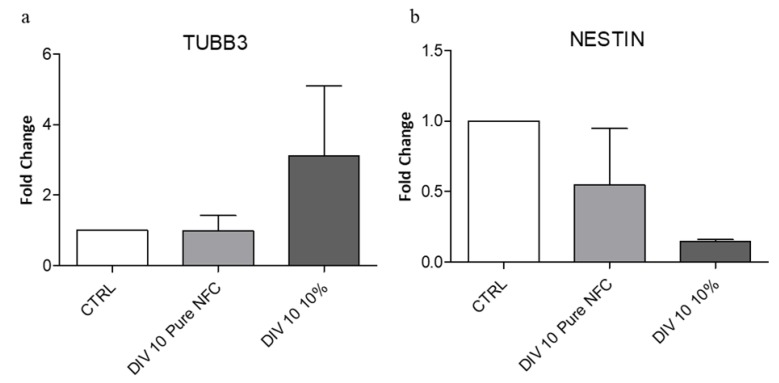
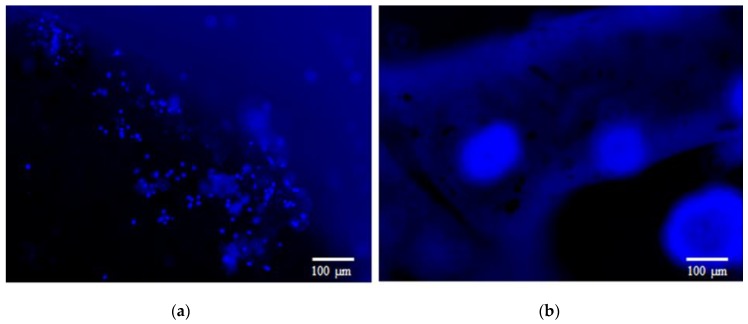
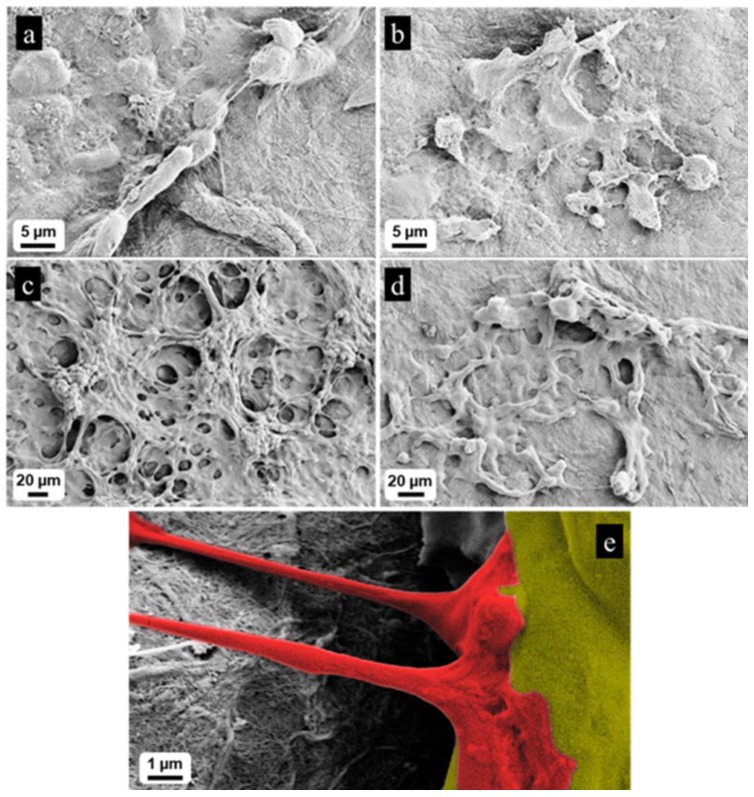
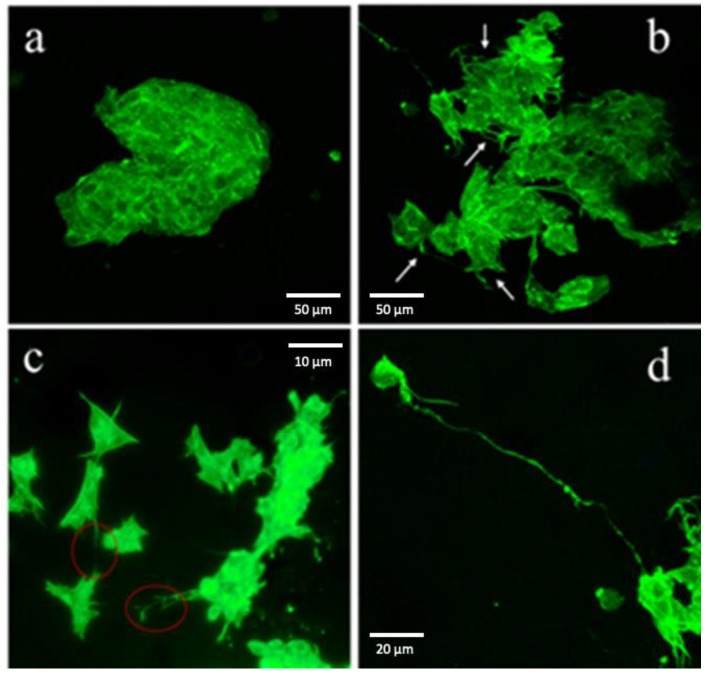
We prepared cellulose nanofibrils-based (CNF), alginate-based and single-walled carbon nanotubes (SWCNT)-based inks for freeform reversible embedding hydrogel (FRESH) 3D bioprinting of conductive scaffolds. The 3D printability of conductive inks was evaluated in terms of their rheological properties. The differentiation of human neuroblastoma cells (SH-SY5Y cell line) was visualized by the confocal microscopy and the scanning electron microscopy techniques. The expression of TUBB3 and Nestin genes was monitored by the RT-qPCR technique. We have demonstrated that the conductive guidelines promote the cell differentiation, regardless of using differentiation factors. It was also shown that the electrical conductivity of the 3D printed scaffolds could be tuned by calcium-induced crosslinking of alginate, and this plays a significant role on neural cell differentiation. Our work provides a protocol for the generation of a realistic in vitro 3D neural model and allows for a better understanding of the pathological mechanisms of neurodegenerative diseases.
我们制备了基于纤维素纳米纤维(CNF)、海藻酸钠和单壁碳纳米管(SWCNT)的墨水,用于自由形态可逆嵌入水凝胶(FRESH)3D 生物打印导电支架。通过流变学性质评估了导电墨水的 3D 打印性能。通过共聚焦显微镜和扫描电子显微镜技术可视化人神经母细胞瘤细胞(SH-SY5Y 细胞系)的分化。通过 RT-qPCR 技术监测 TUBB3 和 Nestin 基因的表达。我们已经证明,无论是否使用分化因子,导电指南都可以促进细胞分化。还表明,海藻酸钠的钙诱导交联可以调节 3D 打印支架的导电性,这对神经细胞分化起着重要作用。我们的工作提供了一种生成真实体外 3D 神经模型的方案,有助于更好地理解神经退行性疾病的病理机制。