MRC Laboratory for Molecular Cell Biology, University College London, Gower Street, London, WC1E 6BT, United Kingdom.
Present address: Science for Life Laboratory, Department of Molecular Biosciences, The Wenner-Gren Institute, Stockholm University, Stockholm, Sweden.
BMC Biol. 2020 Mar 13;18(1):28. doi: 10.1186/s12915-020-0758-x.
Phosphoinositide lipids provide spatial landmarks during polarized cell growth and migration. Yet how phosphoinositide gradients are oriented in response to extracellular cues and environmental conditions is not well understood. Here, we elucidate an unexpected mode of phosphatidylinositol 4-phosphate (PI4P) regulation in the control of polarized secretion.
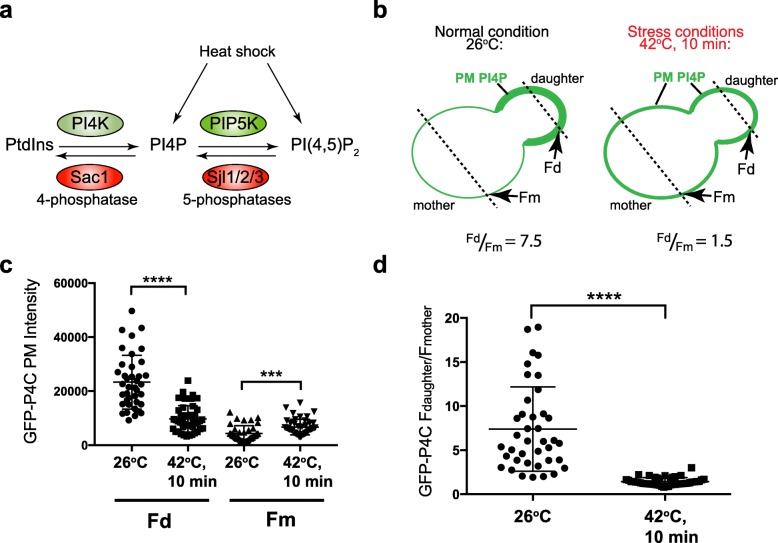
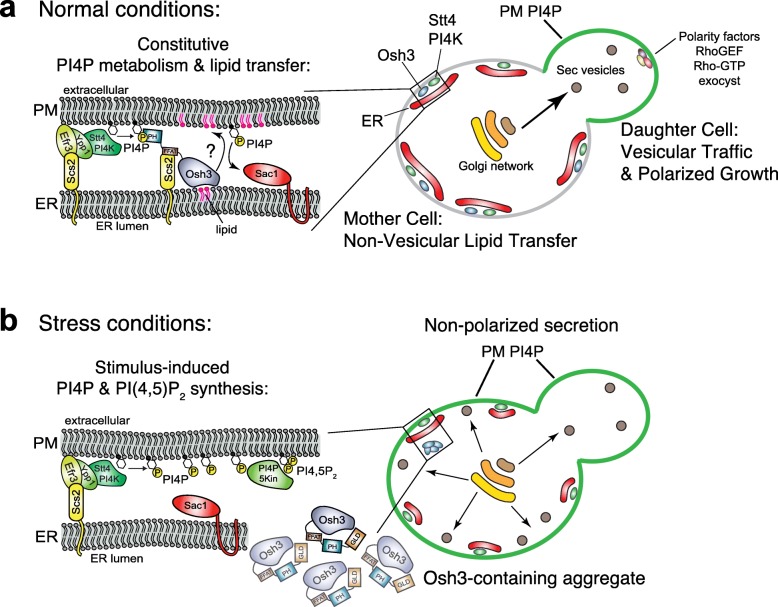
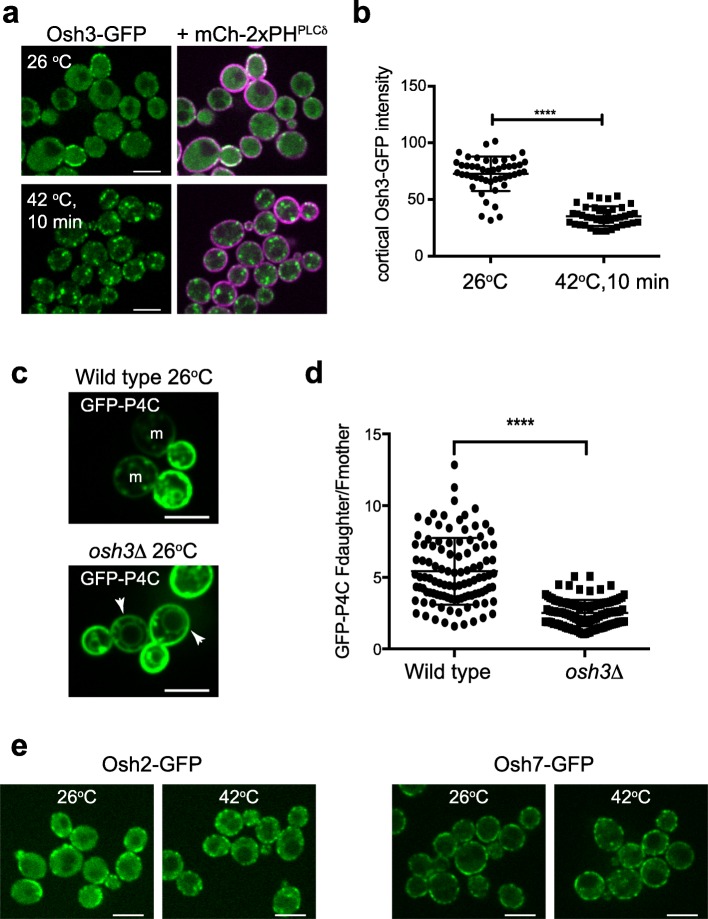
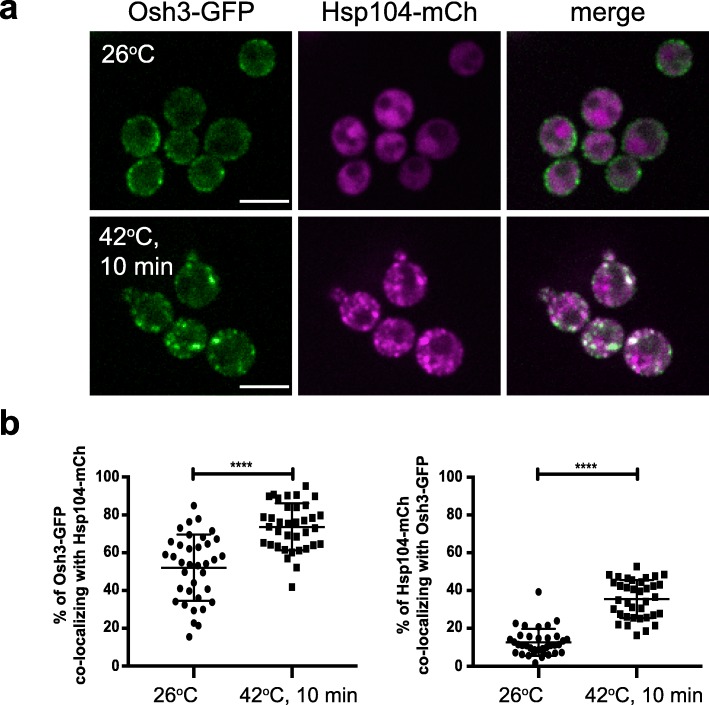
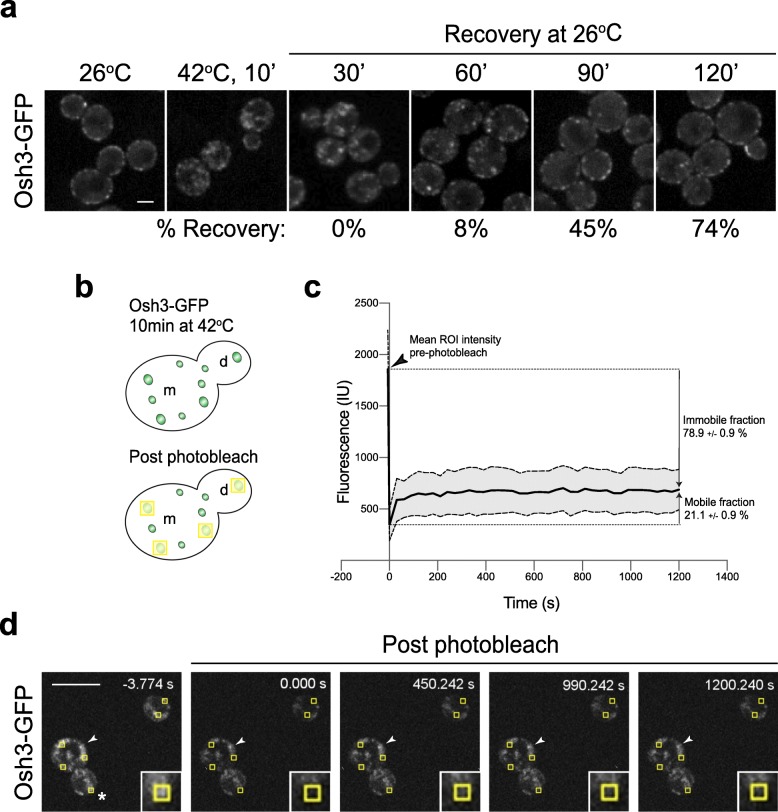
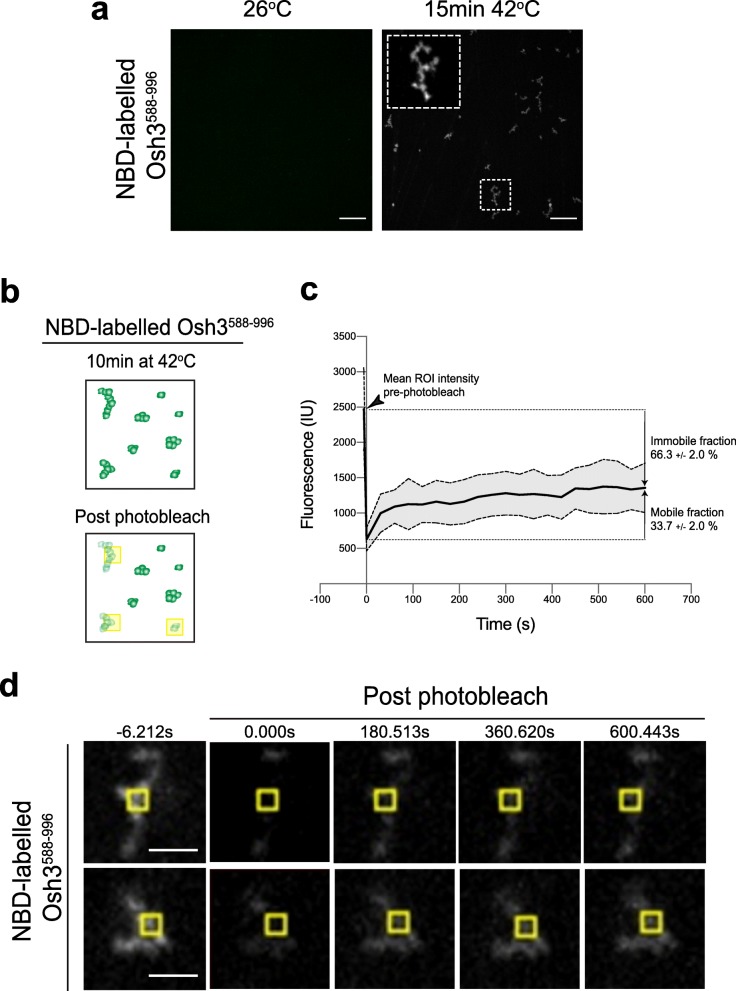
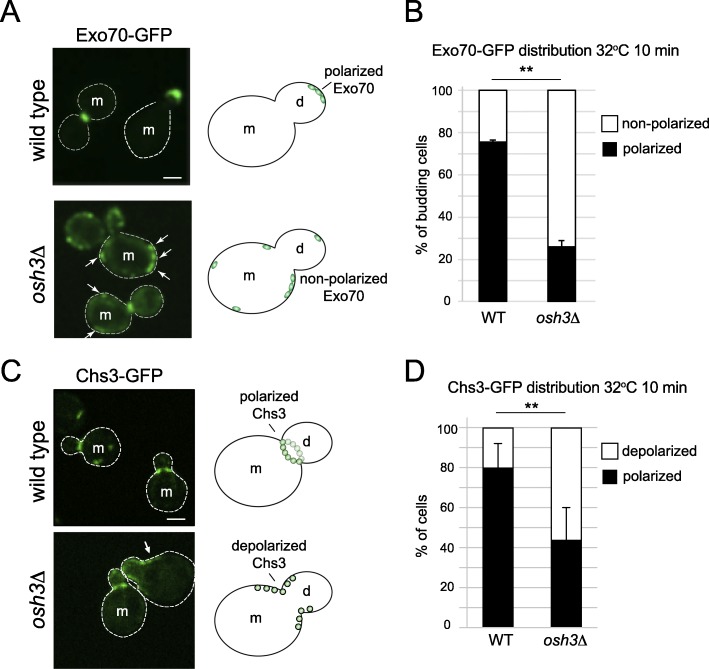
We show that PI4P is highly enriched at the plasma membrane of growing daughter cells in budding yeast where polarized secretion occurs. However, upon heat stress conditions that redirect secretory traffic, PI4P rapidly increases at the plasma membrane in mother cells resulting in a more uniform PI4P distribution. Precise control of PI4P distribution is mediated through the Osh (oxysterol-binding protein homology) proteins that bind and present PI4P to a phosphoinositide phosphatase. Interestingly, Osh3 undergoes a phase transition upon heat stress conditions, resulting in intracellular aggregates and reduced cortical localization. Both the Osh3 GOLD and ORD domains are sufficient to form heat stress-induced aggregates, indicating that Osh3 is highly tuned to heat stress conditions. Upon loss of Osh3 function, the polarized distribution of both PI4P and the exocyst component Exo70 are impaired. Thus, an intrinsically heat stress-sensitive PI4P regulatory protein controls the spatial distribution of phosphoinositide lipid metabolism to direct secretory trafficking as needed.
Our results suggest that control of PI4P metabolism by Osh proteins is a key determinant in the control of polarized growth and secretion.
磷脂酰肌醇脂质在极化细胞生长和迁移过程中提供空间标记。然而,人们对磷脂酰肌醇梯度如何响应细胞外线索和环境条件进行定向还不太了解。在这里,我们阐明了磷脂酰肌醇 4-磷酸(PI4P)调节在控制极化分泌中的一种意外模式。
我们表明,PI4P 在出芽酵母中发生极化分泌的生长子细胞的质膜上高度富集。然而,在重新定向分泌流量的热应激条件下,PI4P 在母细胞的质膜上迅速增加,导致 PI4P 分布更加均匀。PI4P 分布的精确控制是通过结合并向磷酸肌醇磷酸酶呈递 PI4P 的 Osh(氧化固醇结合蛋白同源物)蛋白介导的。有趣的是,Osh3 在热应激条件下发生相变,导致细胞内聚集体和皮质定位减少。Osh3 的 GOLD 和 ORD 结构域都足以形成热应激诱导的聚集体,表明 Osh3 对热应激条件高度敏感。在 Osh3 功能丧失的情况下,PI4P 和外泌体成分 Exo70 的极化分布都受到损害。因此,一种固有地对热应激敏感的 PI4P 调节蛋白控制着磷酸肌醇脂质代谢的空间分布,以根据需要指导分泌运输。
我们的结果表明,Osh 蛋白对 PI4P 代谢的控制是控制极化生长和分泌的关键决定因素。