Department of Anesthesiology, Weill Cornell Medicine, New York, New York.
Department of Psychiatry and Neurosciences, Laval University, Québec, Québec, Canada.
Biol Psychiatry. 2020 Jul 15;88(2):159-168. doi: 10.1016/j.biopsych.2019.12.029. Epub 2020 Jan 22.
Most of our knowledge of the biological basis of major depressive disorder (MDD) is derived from studies of chronic stress models in rodents. While these models capture certain aspects of the behavioral and neuroendocrine features of MDD, the extent to which they reproduce the molecular pathology of the human syndrome remains unknown.
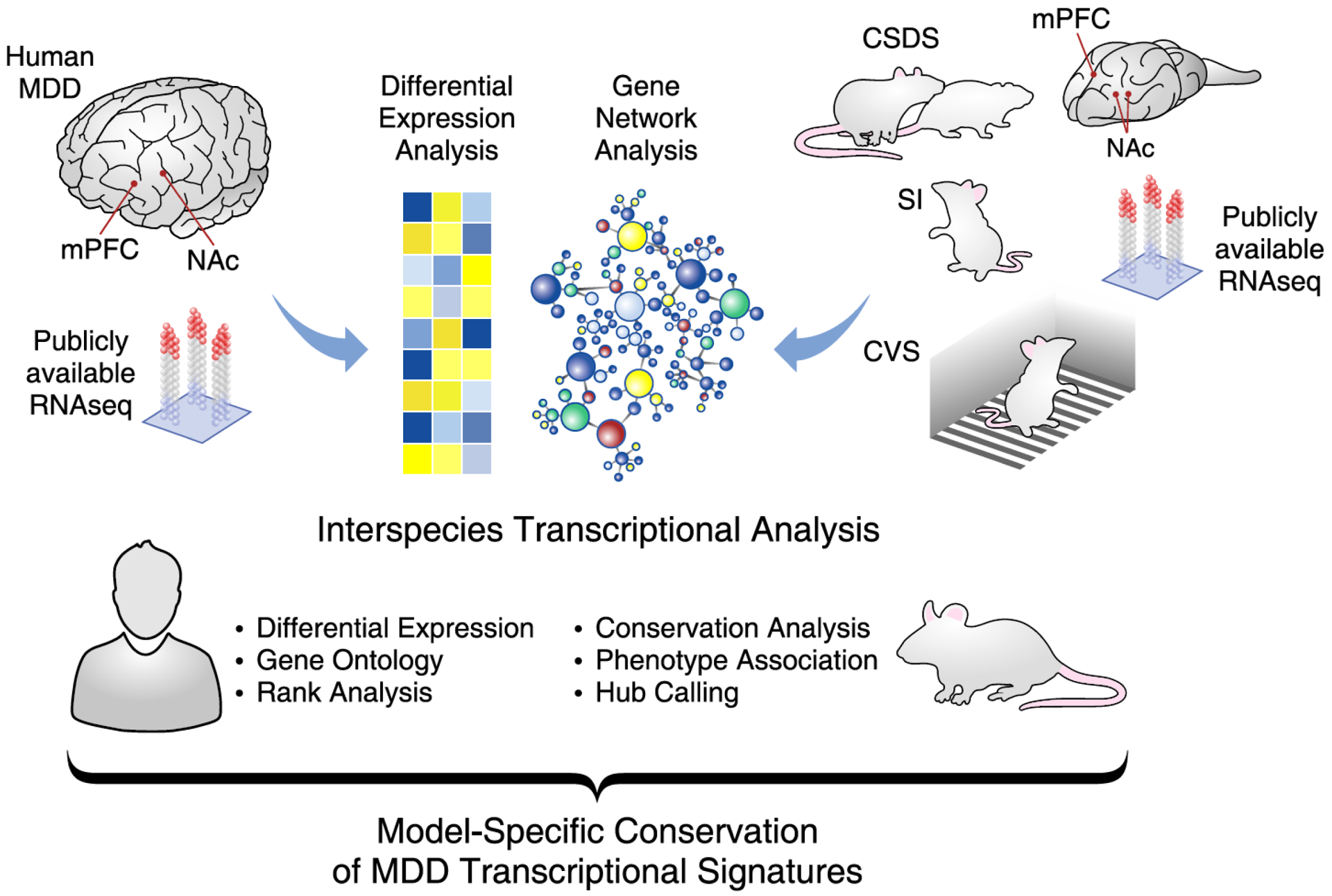
We systematically compared transcriptional signatures in two brain regions implicated in depression-medial prefrontal cortex and nucleus accumbens-of humans with MDD and of 3 chronic stress models in mice: chronic variable stress, adult social isolation, and chronic social defeat stress. We used differential expression analysis combined with weighted gene coexpression network analysis to create interspecies gene networks and assess the capacity of each stress paradigm to recapitulate the transcriptional organization of gene networks in human MDD.
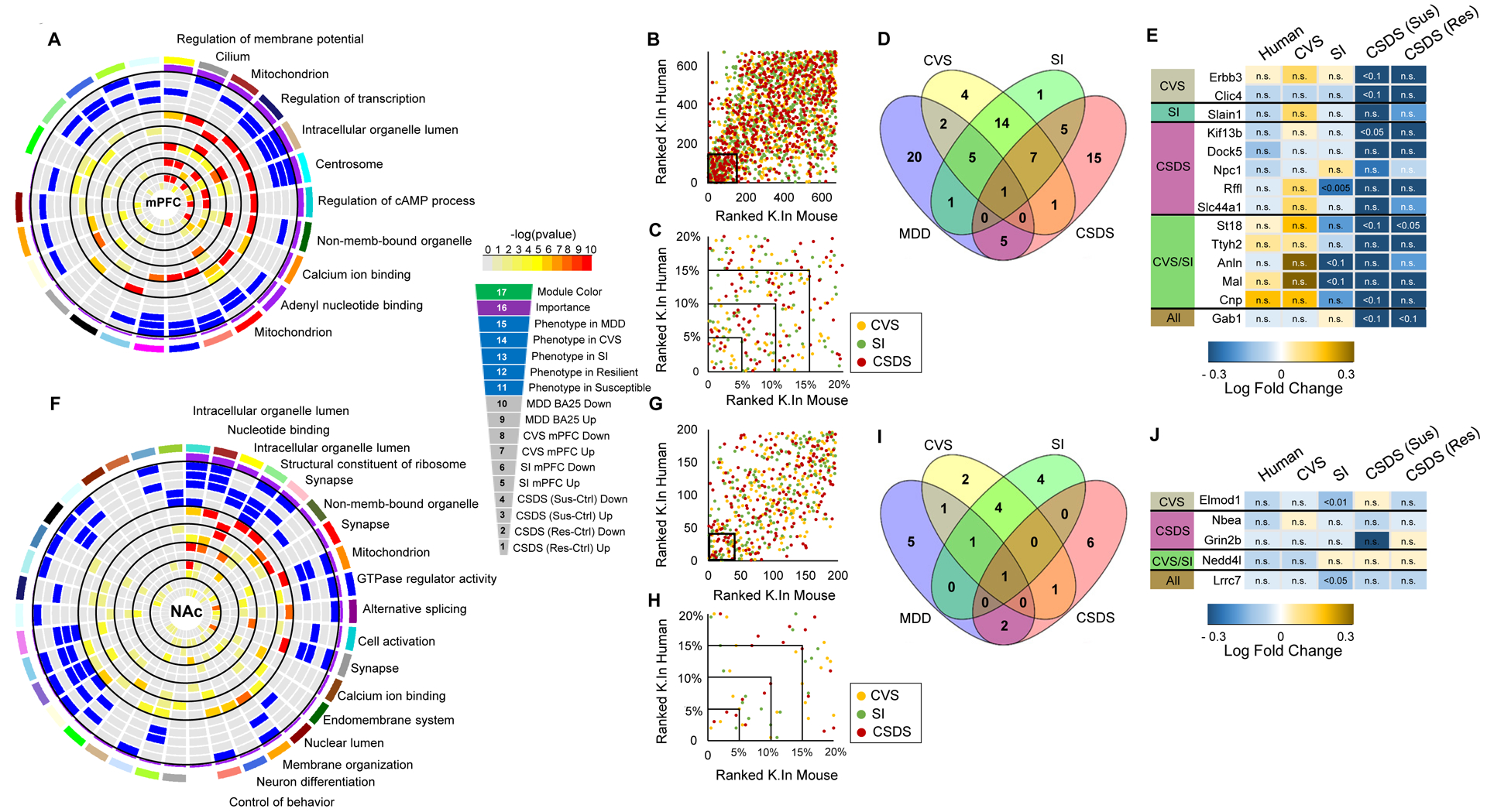
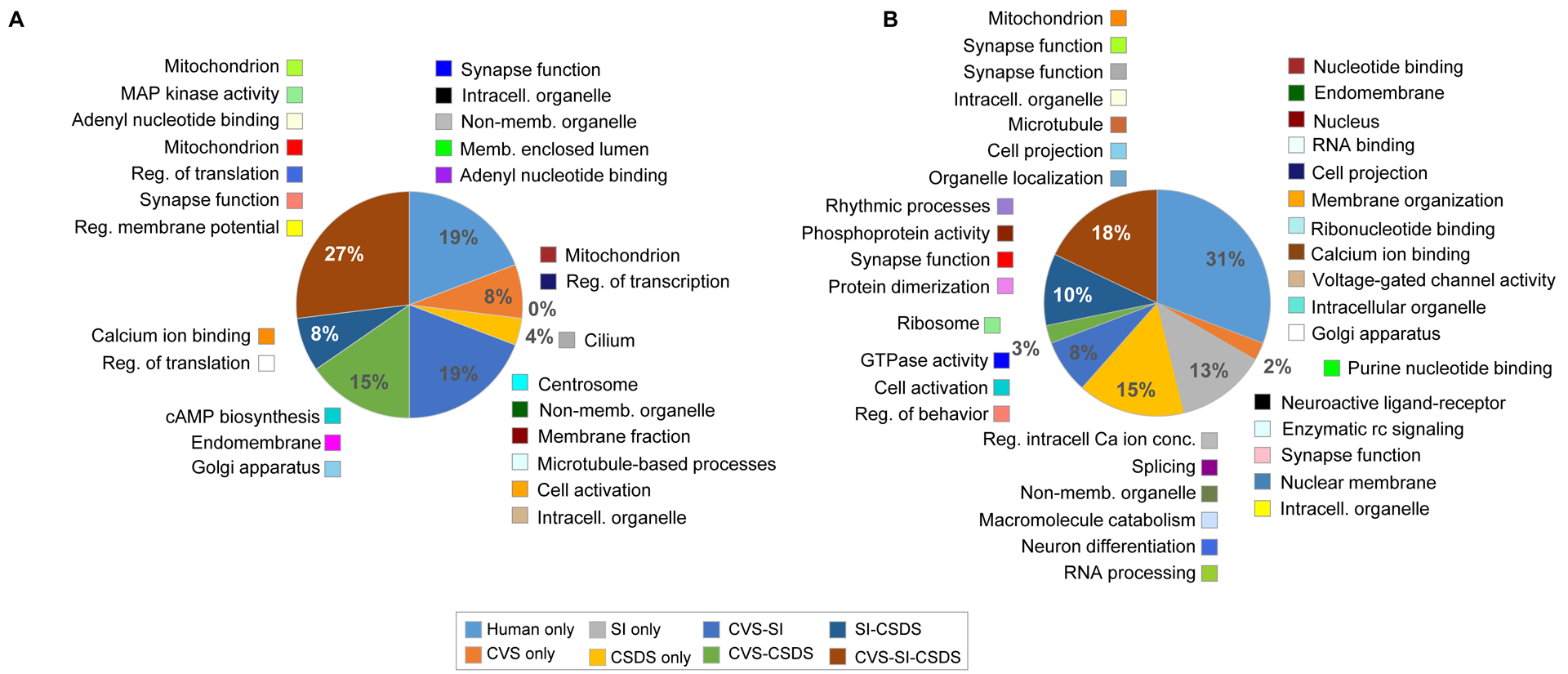
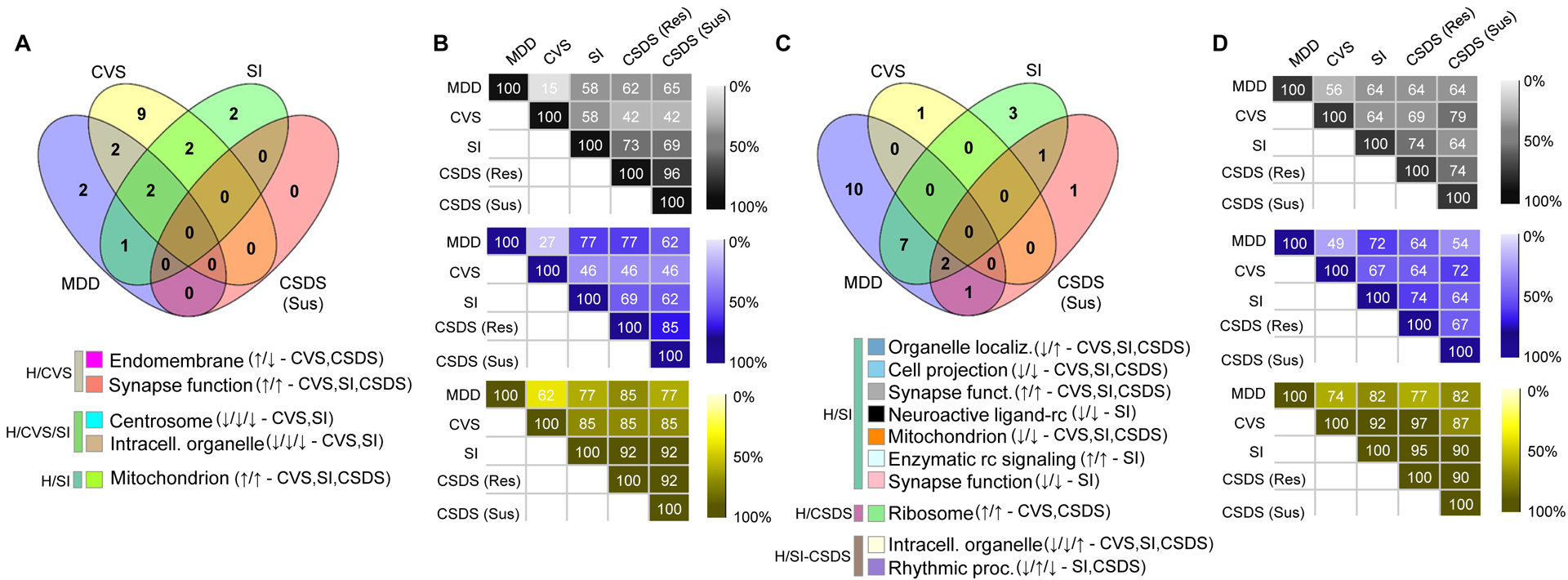
Our results show significant overlap between transcriptional alterations in medial prefrontal cortex and nucleus accumbens in human MDD and the 3 mouse chronic stress models, with each of the chronic stress paradigms capturing distinct aspects of MDD abnormalities. Chronic variable stress and adult social isolation better reproduce differentially expressed genes, while chronic social defeat stress and adult social isolation better reproduce gene networks characteristic of human MDD. We also identified several gene networks and their constituent genes that are most significantly associated with human MDD and mouse stress models.
This study demonstrates the ability of 3 chronic stress models in mice to recapitulate distinct aspects of the broad molecular pathology of human MDD, with no one mouse model apparently better than another.
我们对重度抑郁症(MDD)生物学基础的大部分认识都来自于啮齿动物慢性应激模型的研究。虽然这些模型捕捉到了 MDD 的某些行为和神经内分泌特征,但它们在多大程度上再现了人类综合征的分子病理学仍然未知。
我们系统地比较了两个与抑郁相关的脑区(内侧前额叶皮质和伏隔核)中受 MDD 影响的人类和 3 种慢性应激模型(慢性可变应激、成年社交隔离和慢性社会挫败应激)的转录特征。我们使用差异表达分析结合加权基因共表达网络分析来创建种间基因网络,并评估每个应激范式重现人类 MDD 基因网络转录组织的能力。
我们的结果显示,人类 MDD 及 3 种慢性应激模型的内侧前额叶皮质和伏隔核的转录改变之间存在显著重叠,每种慢性应激模型都捕捉到了 MDD 异常的不同方面。慢性可变应激和成年社交隔离更好地再现差异表达基因,而慢性社会挫败应激和成年社交隔离更好地再现人类 MDD 的特征基因网络。我们还确定了几个与人类 MDD 和小鼠应激模型最显著相关的基因网络及其组成基因。
本研究表明,3 种慢性应激模型在小鼠中能够再现人类 MDD 广泛分子病理学的不同方面,没有一种小鼠模型明显优于另一种。