Pillai Rajapillai L I, Bartlett Elizabeth A, Ananth Mala R, Zhu Chencan, Yang Jie, Hajcak Greg, Parsey Ramin V, DeLorenzo Christine
Department of Psychiatry, Stony Brook University, United States.
Department of Molecular Imaging and Neuropathology, New York State Psychiatric Institute, United States.
Neuroimage. 2020 Jun;213:116733. doi: 10.1016/j.neuroimage.2020.116733. Epub 2020 Mar 10.
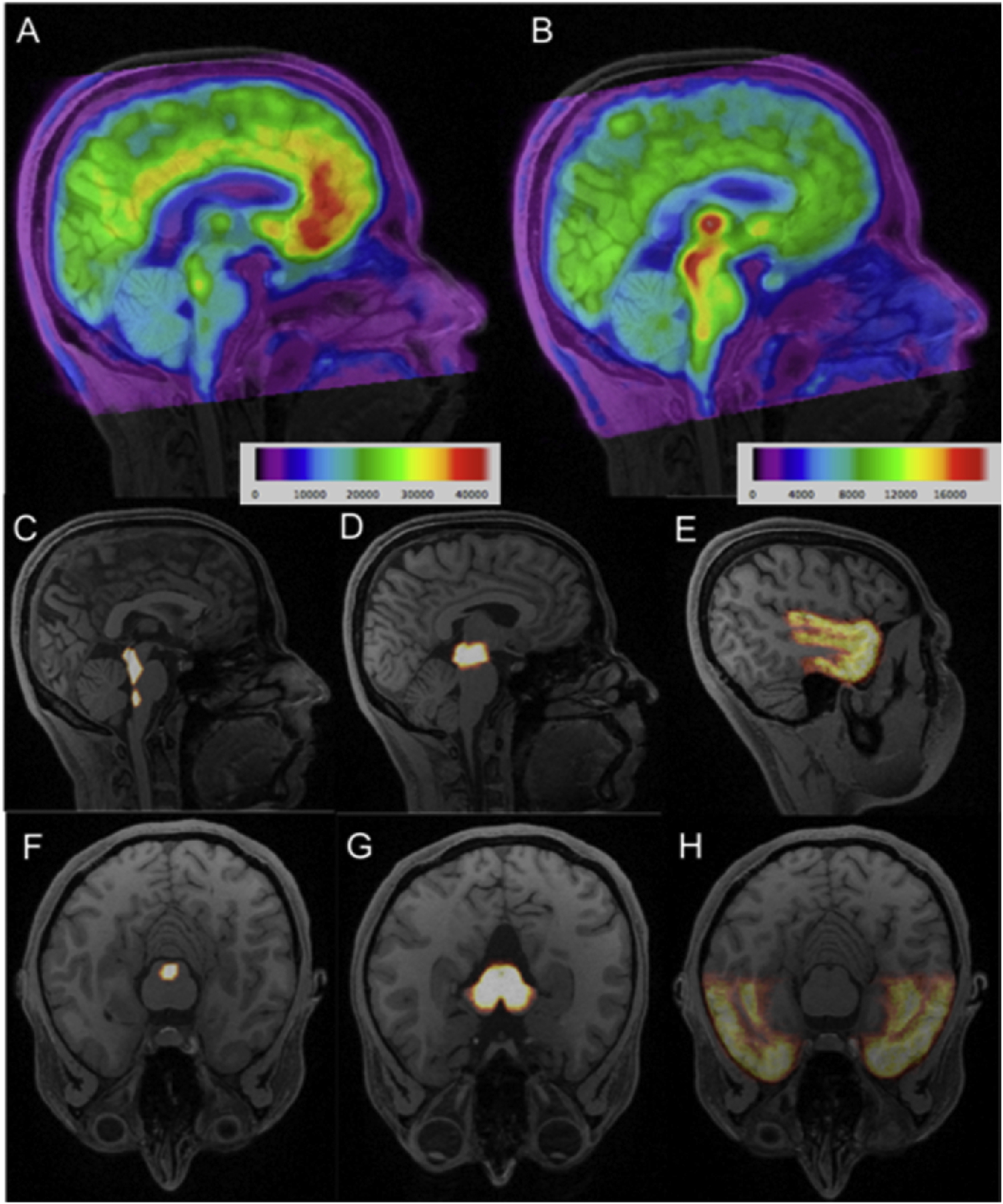
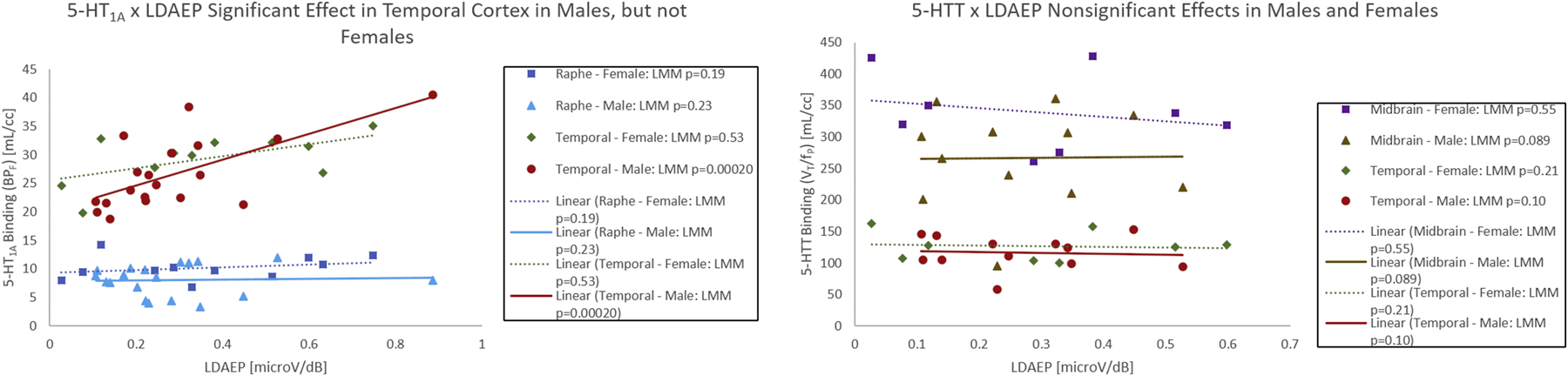
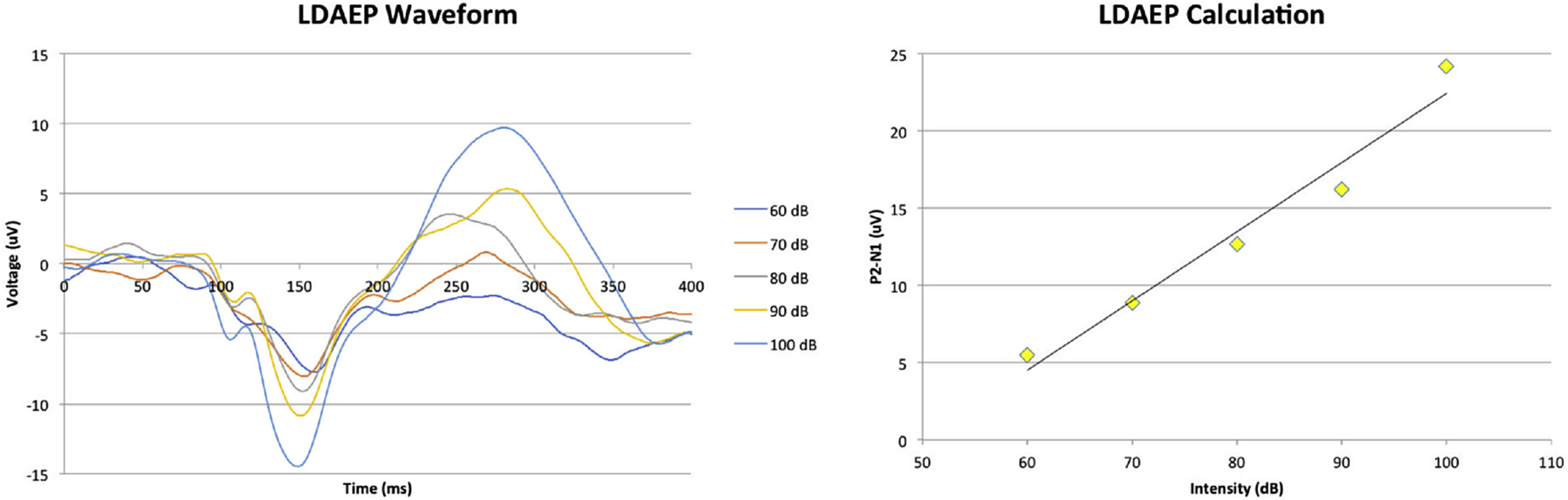
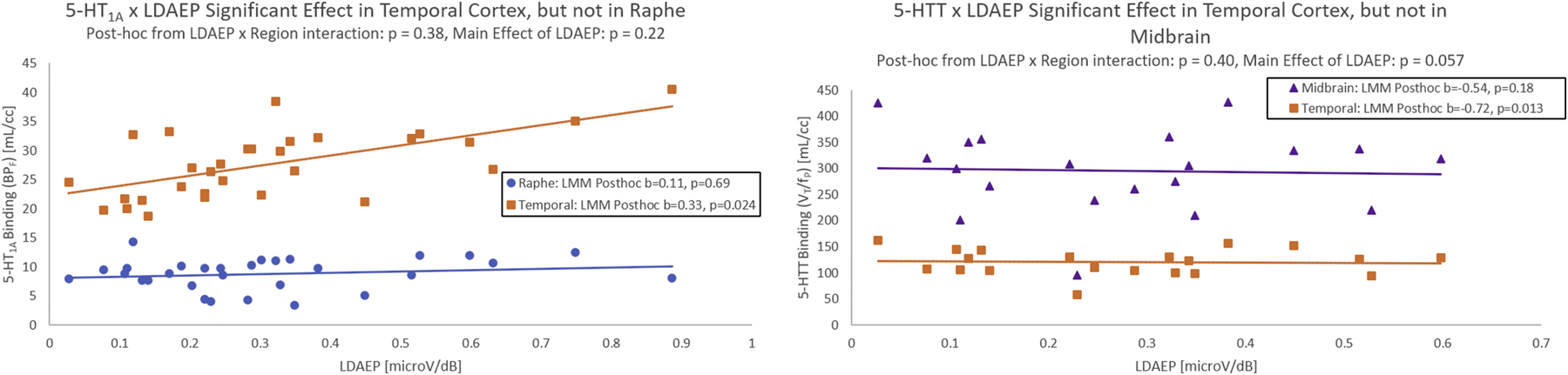
Loudness dependence of auditory evoked potentials (LDAEP) has long been considered to reflect central basal serotonin transmission. However, the relationship between LDAEP and individual serotonin receptors and transporters has not been fully explored in humans and may involve other neurotransmitter systems. To examine LDAEP's relationship with the serotonin system, we performed PET using serotonin-1A (5-HT) imaging via [C]CUMI-101 and serotonin transporter (5-HTT) imaging via [C]DASB on a mixed sample of healthy controls (n = 4: 4 females, 0 males), patients with unipolar (MDD, n = 11: 4 females, 7 males) and bipolar depression (BD, n = 8: 4 females, 4 males). On these same participants, we also performed electroencephalography (EEG) within a week of PET scanning, using 1000 Hz tones of varying intensity to evoke LDAEP. We then evaluated the relationship between LDAEP and 5-HT or 5-HTT binding in both the raphe (5-HT)/midbrain (5-HTT) areas and in the temporal cortex. We found that LDAEP was significantly correlated with 5-HT positively and with 5-HTT negatively in the temporal cortex (p < 0.05), but not correlated with either in midbrain or raphe. In males only, exploratory analysis showed multiple regions in which LDAEP significantly correlated with 5-HT throughout the brain; we did not find this with 5-HTT. This multimodal study partially validates preclinical models of a serotonergic influence on LDAEP. Replication in larger samples is necessary to further clarify our understanding of the role of serotonin in perception of auditory tones.
听觉诱发电位的响度依赖性(LDAEP)长期以来一直被认为可反映中枢基础血清素传递。然而,LDAEP与个体血清素受体及转运体之间的关系在人类中尚未得到充分探索,且可能涉及其他神经递质系统。为了研究LDAEP与血清素系统的关系,我们对健康对照者(n = 4:4名女性,0名男性)、单相抑郁症患者(MDD,n = 11:4名女性,7名男性)和双相抑郁症患者(BD,n = 8:4名女性,4名男性)的混合样本进行了正电子发射断层扫描(PET),使用[C]CUMI - 101进行血清素 - 1A(5 - HT)成像,使用[C]DASB进行血清素转运体(5 - HTT)成像。在这些相同的参与者身上,我们还在PET扫描的一周内进行了脑电图(EEG)检查,使用不同强度的1000Hz音调来诱发LDAEP。然后,我们评估了LDAEP与中缝(5 - HT)/中脑(5 - HTT)区域以及颞叶皮质中5 - HT或5 - HTT结合之间的关系。我们发现,在颞叶皮质中,LDAEP与5 - HT呈显著正相关,与5 - HTT呈显著负相关(p < 0.05),但在中脑或中缝中与两者均无相关性。仅在男性中,探索性分析显示大脑中多个区域LDAEP与5 - HT显著相关;而在5 - HTT方面未发现此现象。这项多模态研究部分验证了血清素对LDAEP影响的临床前模型。需要在更大样本中进行重复研究,以进一步阐明我们对血清素在听觉音调感知中作用的理解。