Department of Infectious Diseases, National Clinical Research Center for Aging and Medicine, Huashan Hospital, State Key Laboratory of Genetic Engineering, School of Life Science, Key Laboratory of Medical Molecular Virology (MOE/MOH) and Institutes of Biomedical Sciences, Shanghai Medical College, Fudan University, Shanghai, People's Republic of China.
Vision Medicals Co., Ltd, Guangzhou, People's Republic of China.
Emerg Microbes Infect. 2020 Mar 16;9(1):597-600. doi: 10.1080/22221751.2020.1738905. eCollection 2020.
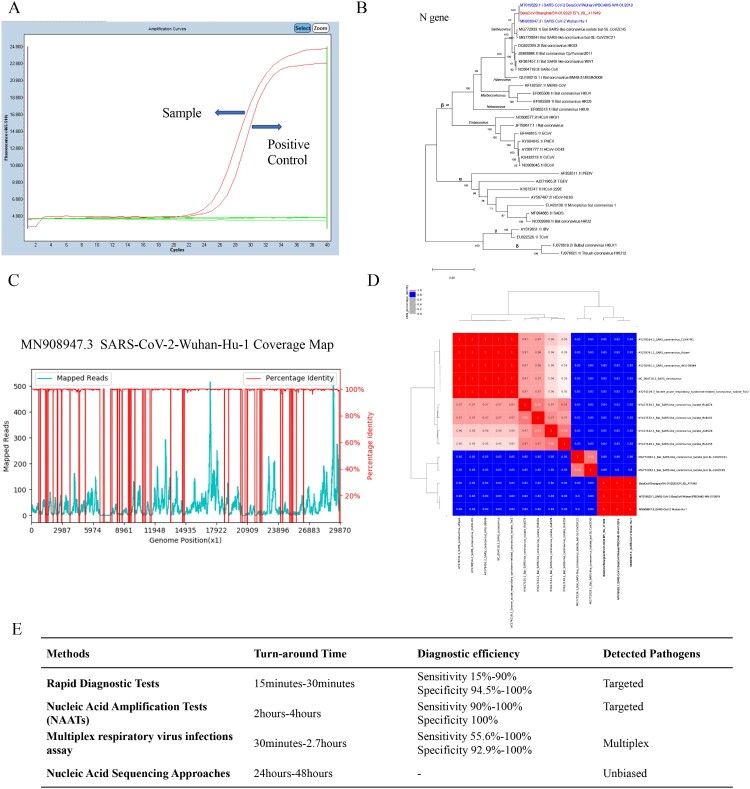
Unexplained pneumonia (UP) caused by a novel coronavirus SARS-CoV-2 (severe acute respiratory syndrome coronavirus 2) emerged in China in late December 2019 and has infected more than 9000 cases by 31 January 2020. Shanghai reported the first imported case of COVID-19 (Coronavirus Disease 2019) in 20 January 2020. A combinative approach of real-time RT-PCR, CRISPR-based assay and metagenomic next-generation sequencing (mNGS) were used to diagnose this unexplained pneumonia patient. Real-time RT-PCR and CRISPR-based assay both reported positive. This sample belonged to Betacoronavirus and shared a more than 99% nucleotide (nt) identity with the Wuhan SARS-CoV-2 isolates. We further compared pros and cons of common molecular diagnostics in UP. In this study, we illustrated the importance of combining molecular diagnostics to rule out common pathogens and performed mNGS to obtain unbiased potential pathogen result for the diagnosis of UP.
不明原因肺炎(UP)由新型冠状病毒 SARS-CoV-2(严重急性呼吸综合征冠状病毒 2)引起,于 2019 年 12 月底在中国出现,截至 2020 年 1 月 31 日已感染超过 9000 例。上海于 2020 年 1 月 20 日报告首例输入性 COVID-19(2019 年冠状病毒病)病例。我们采用实时 RT-PCR、基于 CRISPR 的检测和宏基因组下一代测序(mNGS)相结合的方法来诊断该不明原因肺炎患者。实时 RT-PCR 和基于 CRISPR 的检测均报告阳性。该样本属于β冠状病毒,与武汉 SARS-CoV-2 分离株的核苷酸(nt)同一性超过 99%。我们进一步比较了 UP 中常见分子诊断的优缺点。在本研究中,我们说明了结合分子诊断排除常见病原体的重要性,并进行 mNGS 以获得用于 UP 诊断的无偏潜在病原体结果。