Centre for Stem Cell Research, Faculty of Medicine and Health Sciences, Universiti Tunku Abdul Rahman, Selangor, Malaysia.
Postgraduate Program, Faculty of Medicine and Health Sciences, Universiti Tunku Abdul Rahman, Selangor, Malaysia.
Int J Med Sci. 2020 Feb 4;17(4):457-470. doi: 10.7150/ijms.38832. eCollection 2020.
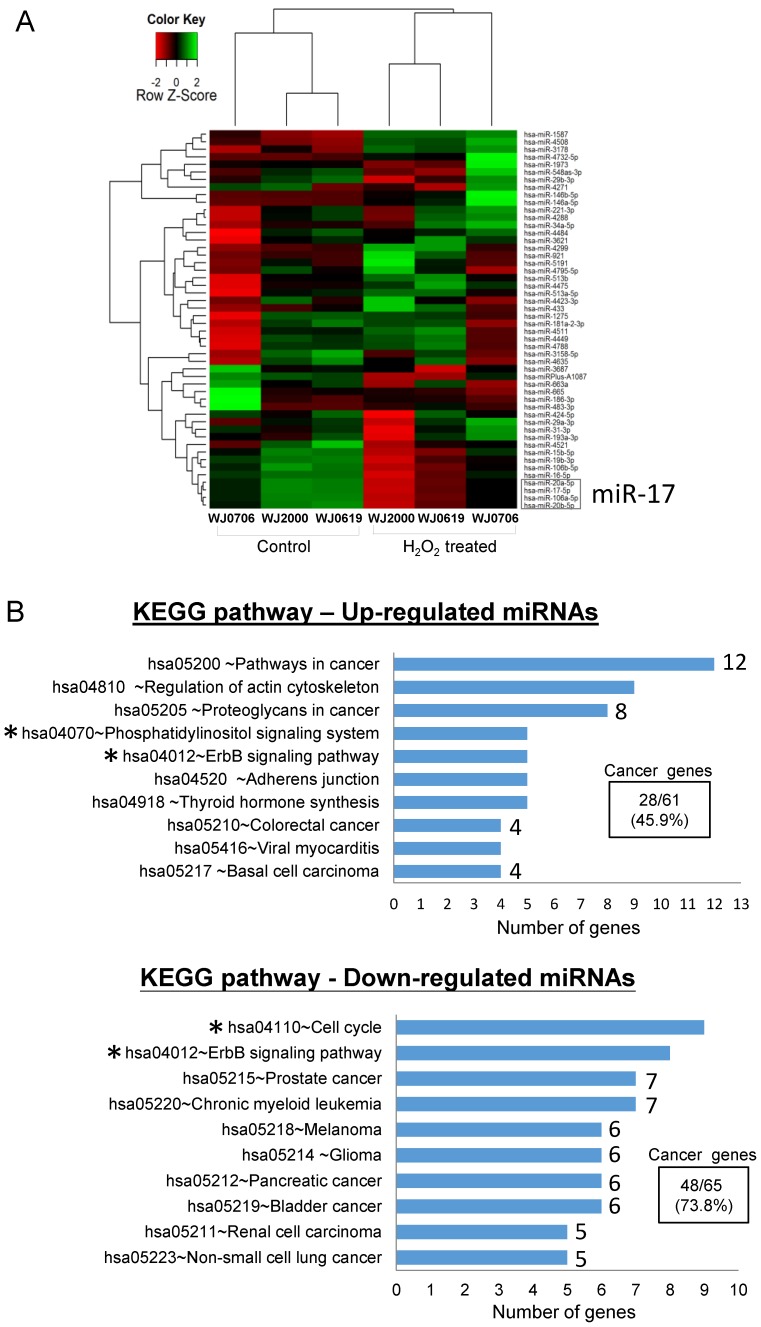
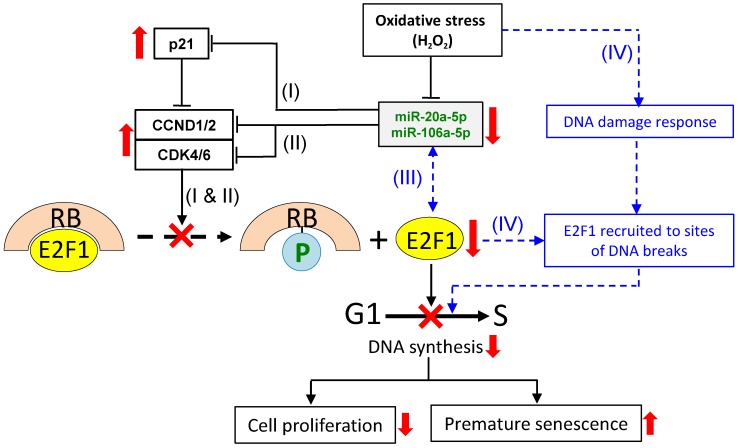
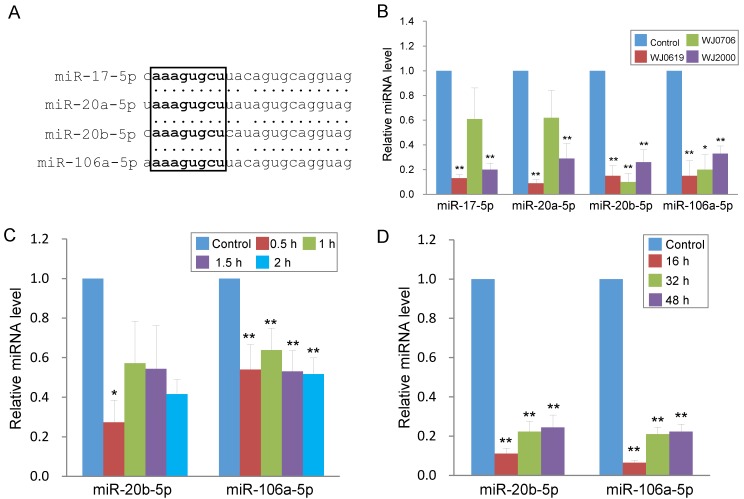
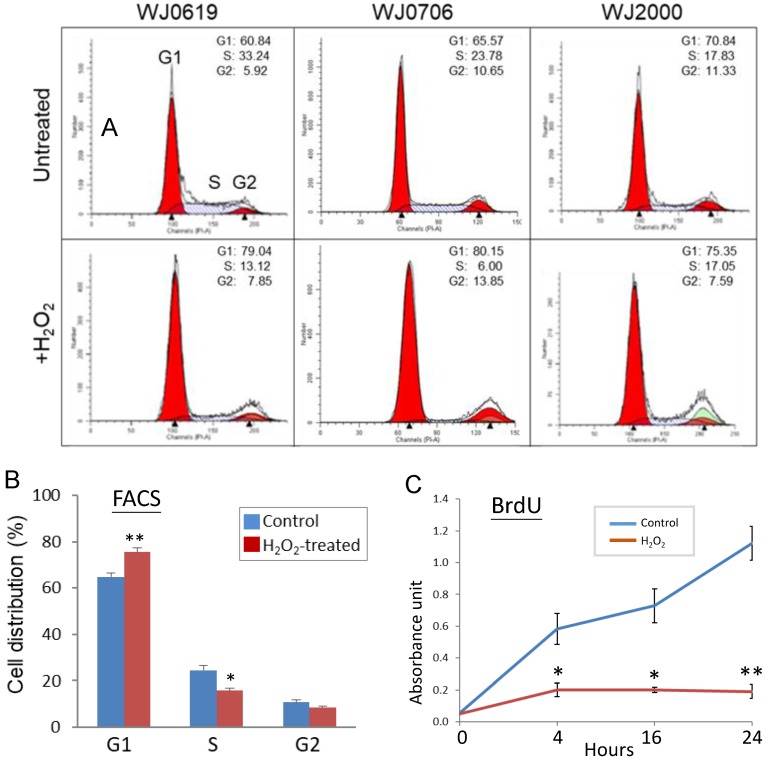
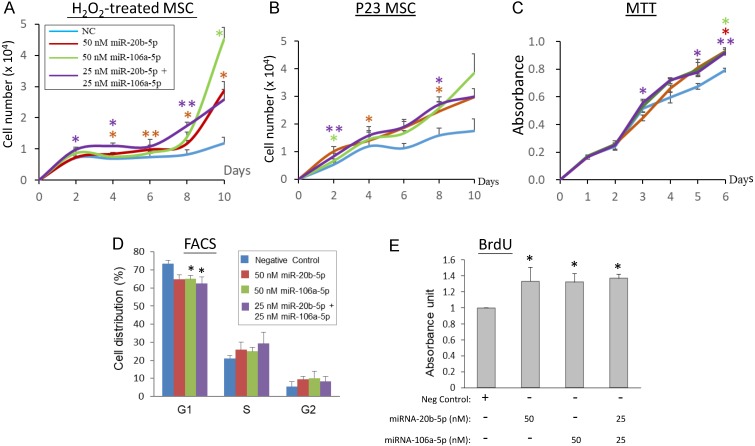
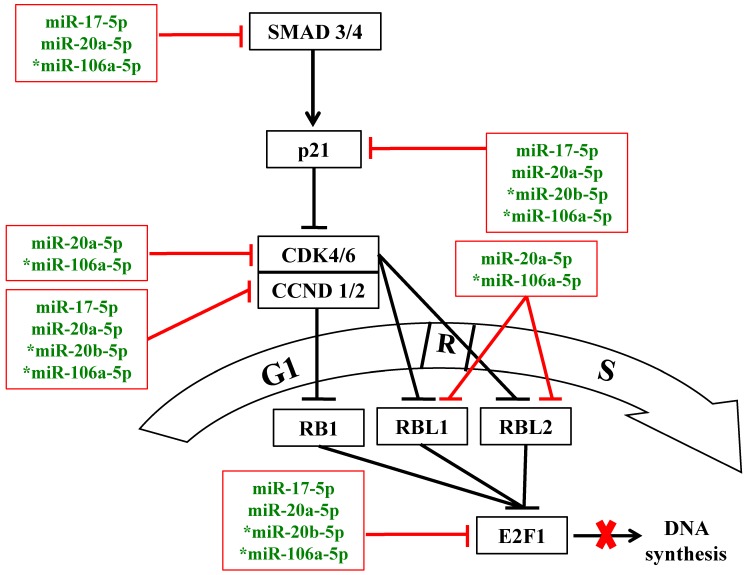
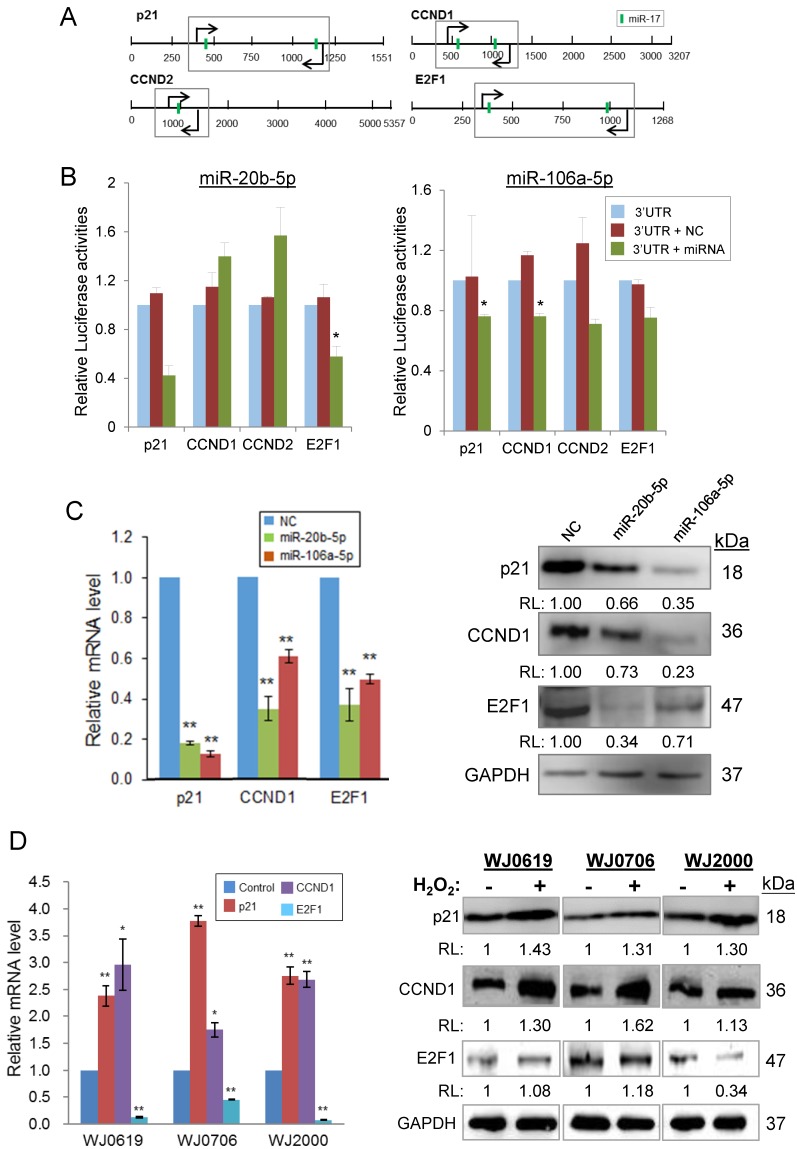
Oxidative stress has been linked to senescence and tumorigenesis via modulation of the cell cycle. Using a hydrogen peroxide (HO)-induced oxidative stress-induced premature senescence (OSIPS) model previously reported by our group, this study aimed to investigate the effects of oxidative stress on microRNA (miRNA) expression in relation to the G1-to-S-phase (G1/S) transition of the cell cycle and cell proliferation. On global miRNA analysis of the OSIPS cells, twelve significantly up- or down-regulated miRNAs were identified, the target genes of which are frequently associated with cancers. Four down-regulated miR-17 family miRNAs are predicted to target key pro- and anti-proliferative proteins of the p21/cyclin D-dependent kinase (CDK)/E2F1 pathway to modulate G1/S transition. Two miR-17 miRNAs, miR-20-5p and miR-106-5p, were confirmed to be rapidly and stably down-regulated under oxidative stress. While HO treatment hampered G1/S transition and suppressed DNA synthesis, miR-20b-5p/miR-106a-5p over-expression rescued cells from growth arrest in promoting G1/S transition and DNA synthesis Direct miR-20b-5p/miR-106a-5p regulation of p21, CCND1 and E2F1 was demonstrated by an inverse expression relationship in miRNA mimic-transfected cells. However, under oxidative stress, E2F1 expression was down-regulated, consistent with hampered G1/S transition and suppressed DNA synthesis and cell proliferation. To explain the observed E2F1 down-regulation under oxidative stress, a scheme is proposed which includes miR-20b-5p/miR-106a-5p-dependent regulation, miRNA-E2F1 autoregulatory feedback and E2F1 response to repair oxidative stress-induced DNA damages. The oxidative stress-modulated expression of miR-17 miRNAs and E2F1 may be used to develop strategies to retard or reverse MSC senescence in culture, or senescence in general.
氧化应激通过调节细胞周期与衰老和肿瘤发生有关。本研究使用我们之前报道的过氧化氢(HO)诱导的氧化应激诱导的早衰(OSIPS)模型,旨在研究氧化应激对细胞周期 G1 期到 S 期(G1/S)转换和细胞增殖相关的 microRNA(miRNA)表达的影响。对 OSIPS 细胞进行全局 miRNA 分析,鉴定出 12 个显著上调或下调的 miRNA,其靶基因通常与癌症有关。下调的 miR-17 家族 miRNA 预测靶向 p21/细胞周期蛋白依赖性激酶(CDK)/E2F1 通路的关键促增殖和抗增殖蛋白,调节 G1/S 期转换。在氧化应激下,两个 miR-17 miRNA,miR-20-5p 和 miR-106-5p,被证实迅速且稳定地下调。虽然 HO 处理阻碍 G1/S 期转换并抑制 DNA 合成,但 miR-20b-5p/miR-106a-5p 过表达可通过促进 G1/S 期转换和 DNA 合成来挽救细胞生长停滞。miRNA 模拟转染细胞中表现出 miR-20b-5p/miR-106a-5p 对 p21、CCND1 和 E2F1 的直接调控,表现为 miRNA 模拟转染细胞中表达呈反比关系。然而,在氧化应激下,E2F1 的表达下调,与 G1/S 期转换受阻、DNA 合成和细胞增殖受抑制一致。为了解释氧化应激下观察到的 E2F1 下调,提出了一个包括 miR-20b-5p/miR-106a-5p 依赖性调节、miRNA-E2F1 自身反馈和 E2F1 对修复氧化应激诱导的 DNA 损伤的反应的方案。氧化应激调节的 miR-17 miRNA 和 E2F1 的表达可能用于开发策略来延缓或逆转 MSC 培养中的衰老或普遍衰老。