Edwards Katie A, Motamedi Vida, Osier Nicole D, Kim Hyung-Suk, Yun Sijung, Cho Young-Eun, Lai Chen, Dell Kristine C, Carr Walter, Walker Peter, Ahlers Stephen, LoPresti Matthew, Yarnell Angela, Tschiffley Anna, Gill Jessica M
National Institute of Nursing Research, National Institutes of Health, Bethesda, MD, United States.
The Henry M. Jackson Foundation for the Advancement of Military Medicine, Bethesda, MD, United States.
Front Neurol. 2020 Feb 26;11:91. doi: 10.3389/fneur.2020.00091. eCollection 2020.
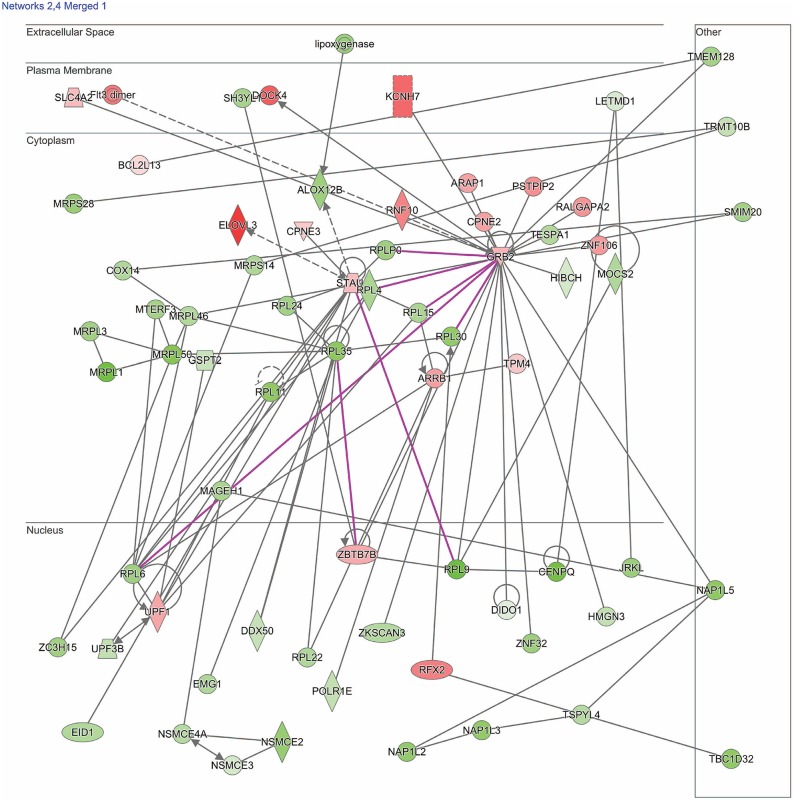
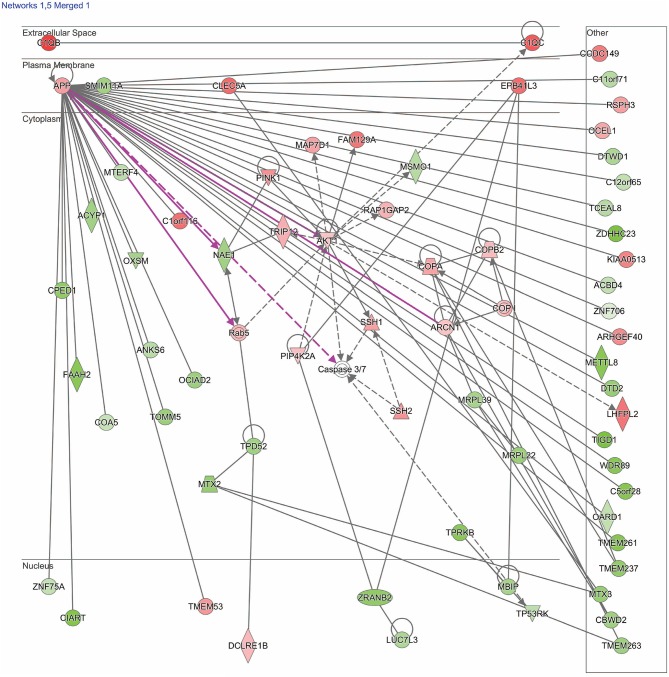
Blast exposure is common in military personnel during training and combat operations, yet biological mechanisms related to cell survival and function that coordinate recovery remain poorly understood. This study explored how moderate blast exposure influences gene expression; specifically, gene-network changes following moderate blast exposure. On day 1 (baseline) of a 10-day military training program, blood samples were drawn, and health and demographic information collected. Helmets equipped with bilateral sensors worn throughout training measured overpressure in pounds per square inch (psi). On day 7, some participants experienced moderate blast exposure (peak pressure ≥5 psi). On day 10, 3 days post-exposure, blood was collected and compared to baseline with RNA-sequencing to establish gene expression changes. Based on dysregulation data from RNA-sequencing, followed by top gene networks identified with Ingenuity Pathway Analysis, a subset of genes was validated (NanoString). Five gene networks were dysregulated; specifically, two highly significant networks: (1) Cell Death and Survival (score: 42), including 70 genes, with 50 downregulated and (2) Cell Structure, Function, and Metabolism (score: 41), including 69 genes, with 41 downregulated. Genes related to ubiquitination, including neuronal development and repair: UPF1, RNA Helicase and ATPase () was upregulated while UPF3 Regulator of Nonsense Transcripts Homolog B () was downregulated. Genes related to inflammation were upregulated, including AKT serine/threonine kinase 1 (), a gene coordinating cellular recovery following TBIs. Moderate blast exposure induced significant gene expression changes including gene networks involved in (1) cell death and survival and (2) cellular development and function. The present findings may have implications for understanding blast exposure pathology and subsequent recovery efforts.
在军事人员的训练和作战行动中,爆炸暴露很常见,但与细胞存活和功能相关的协调恢复的生物学机制仍知之甚少。本研究探讨了中度爆炸暴露如何影响基因表达;具体而言,是中度爆炸暴露后基因网络的变化。在一个为期10天的军事训练计划的第1天(基线),采集血样,并收集健康和人口统计学信息。在整个训练过程中佩戴的配备双侧传感器的头盔测量每平方英寸磅数(psi)的超压。在第7天,一些参与者经历了中度爆炸暴露(峰值压力≥5 psi)。在第10天,即暴露后3天,采集血液并与基线进行RNA测序比较,以确定基因表达变化。基于RNA测序的失调数据,随后通过 Ingenuity 通路分析确定顶级基因网络,对一部分基因进行了验证(NanoString)。五个基因网络失调;具体来说,有两个高度显著的网络:(1)细胞死亡与存活(得分:42),包括70个基因,其中50个下调;(2)细胞结构、功能和代谢(得分:41),包括69个基因,其中41个下调。与泛素化相关的基因,包括神经元发育和修复:UPF1,RNA解旋酶和ATP酶()上调,而UPF3无义转录本调节同源物B()下调。与炎症相关的基因上调,包括AKT丝氨酸/苏氨酸激酶1(),这是一个在创伤性脑损伤后协调细胞恢复的基因。中度爆炸暴露诱导了显著的基因表达变化,包括参与(1)细胞死亡与存活和(2)细胞发育与功能的基因网络。本研究结果可能对理解爆炸暴露病理学和后续恢复工作具有启示意义。