Tsai Chi-Chu, Liao Pei-Chun, Ko Ya-Zhu, Chen Chih-Hsiung, Chiang Yu-Chung
Kaohsiung District Agricultural Research and Extension Station, Pingtung, Taiwan.
Department of Biological Science and Technology, National Pingtung University of Science and Technology, Pingtung, Taiwan.
Front Plant Sci. 2020 Feb 27;11:126. doi: 10.3389/fpls.2020.00126. eCollection 2020.
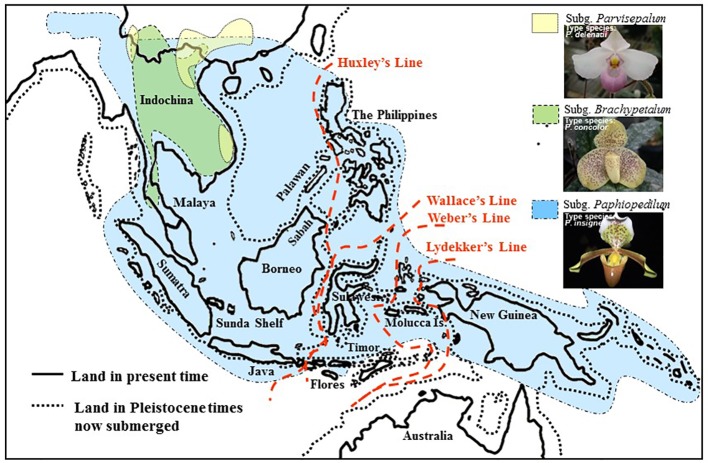
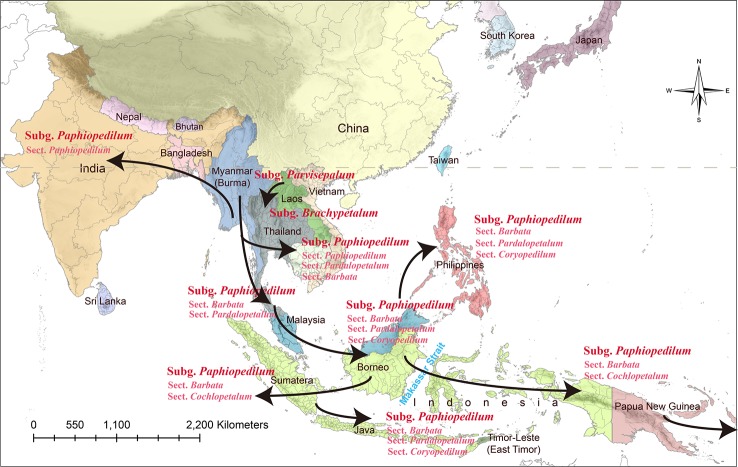
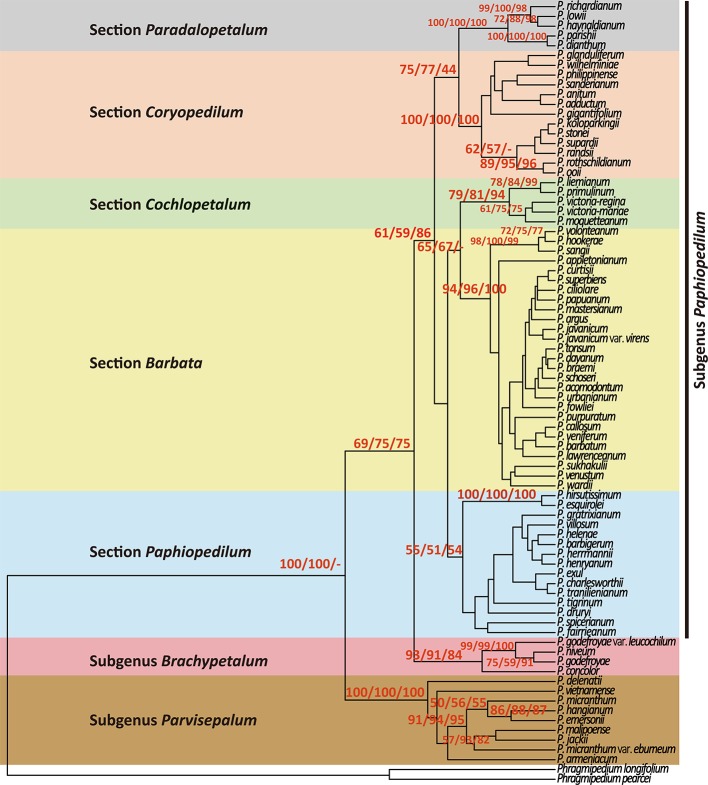
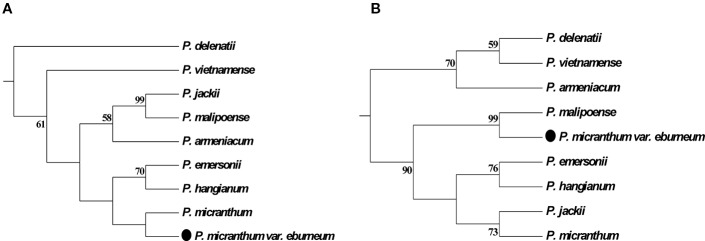
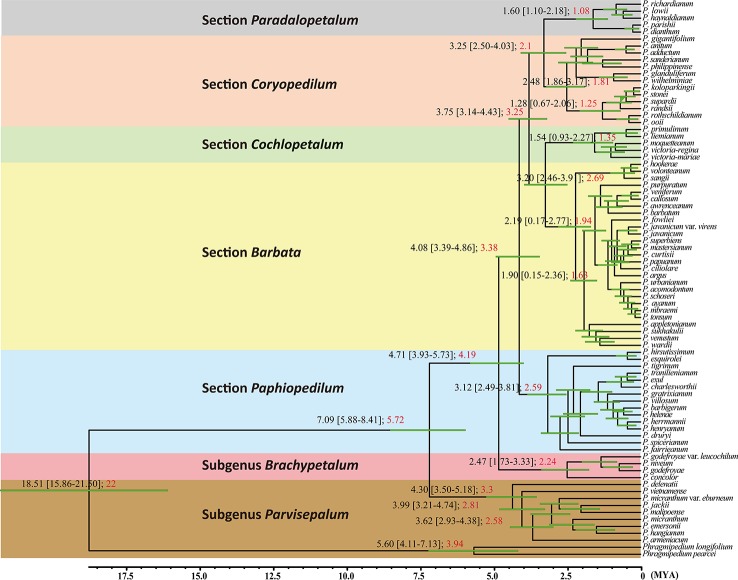
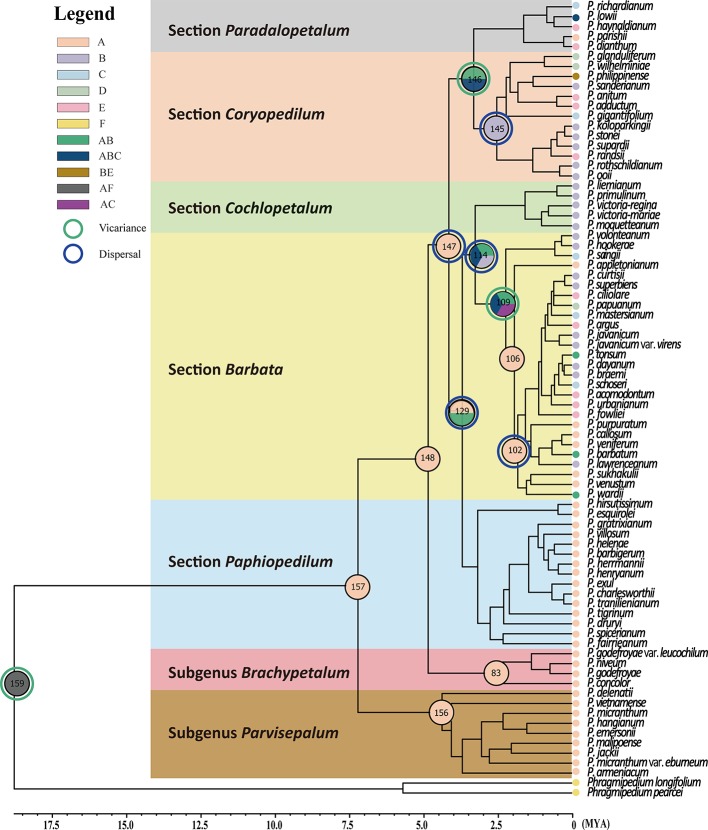
The phylogeny and biogeography of the genus were evaluated by using phylogenetic trees derived from analysis of nuclear ribosomal internal transcribed spacer (ITS) sequences, the plastid L intron, the L-F spacer, and the B-L spacer. This genus was divided into three subgenera: , , and . Each of them is monophyletic with high bootstrap supports according to the highly resolved phylogenetic tree reconstructed by combined sequences. There are five sections within the subgenus , including , , , , and . The subgenus is phylogenetic basal, which suggesting that is comprising more ancestral characters than other subgenera. The evolutionary trend of genus was deduced based on the maximum likelihood (ML) tree and Bayesian Evolutionary Analysis Sampling Trees (BEAST). Reconstruct Ancestral State in Phylogenies (RASP) analyses based on the combined sequence data. The biogeographic analysis indicates that species were firstly derived in Southern China and Southeast Asia, subsequently dispersed into the Southeast Asian archipelagoes. The subgenera was likely derived after these historical dispersals and vicariance events. Our research reveals the relevance of the differentiation of in Southeast Asia and geological history. Moreover, the biogeographic analysis explains that the significant evolutionary hotspots of these orchids in the Sundaland and Wallacea might be attributed to repeated migration and isolation events between the south-eastern Asia mainland and the Sunda Super Islands.
通过对核糖体内部转录间隔区(ITS)序列、质体L内含子、L-F间隔区和B-L间隔区进行分析得到的系统发育树,对该属的系统发育和生物地理学进行了评估。该属分为三个亚属: 、 和 。根据通过组合序列重建的高度解析的系统发育树,它们各自都是单系的,具有较高的自展支持率。 亚属中有五个组,包括 、 、 、 和 。 亚属在系统发育上处于基部,这表明 比其他亚属包含更多的祖先特征。基于最大似然(ML)树和贝叶斯进化分析抽样树(BEAST)推断了该属的进化趋势。基于组合序列数据进行系统发育中的祖先状态重建(RASP)分析。生物地理学分析表明, 物种最初起源于中国南部和东南亚,随后扩散到东南亚群岛。 亚属可能是在这些历史扩散和地理隔离事件之后起源的。我们的研究揭示了东南亚地区 分化与地质历史的相关性。此外,生物地理学分析解释说,这些兰花在巽他陆架和华莱士区显著的进化热点可能归因于东南亚大陆和巽他超级岛屿之间反复的迁移和隔离事件。