Pigłowski Marcin
Department of Commodity and Quality Management Faculty of Entrepreneurship and Quality Science Gdynia Maritime University Gdynia Poland.
Food Sci Nutr. 2020 Feb 11;8(3):1603-1627. doi: 10.1002/fsn3.1448. eCollection 2020 Mar.
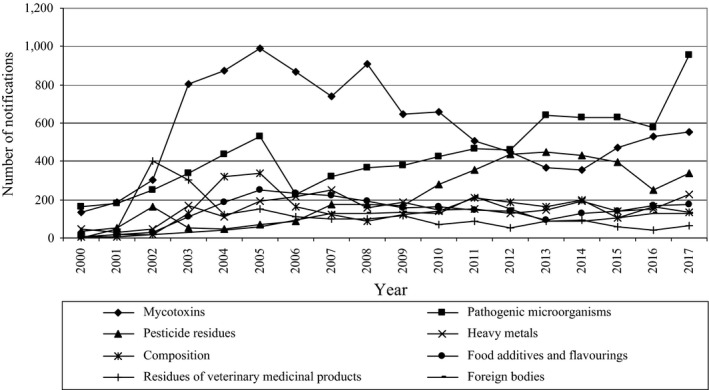
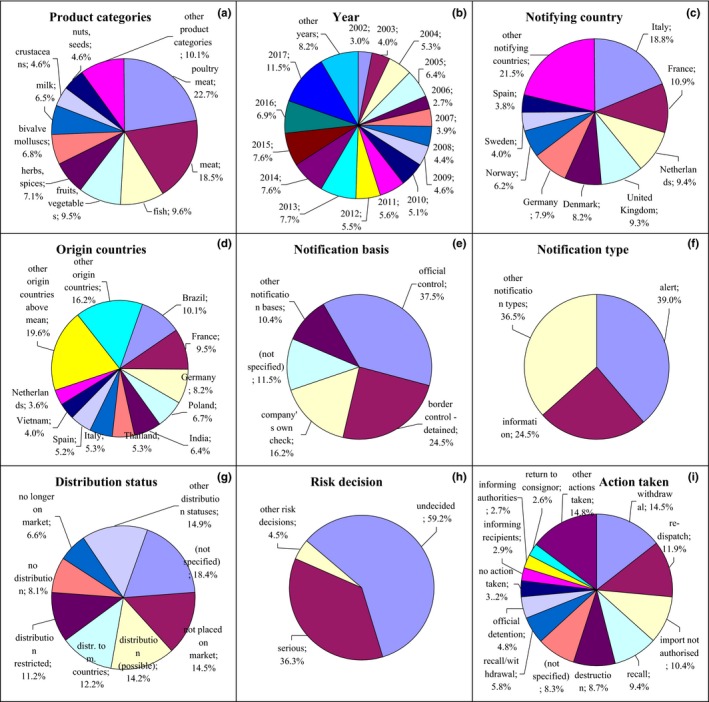
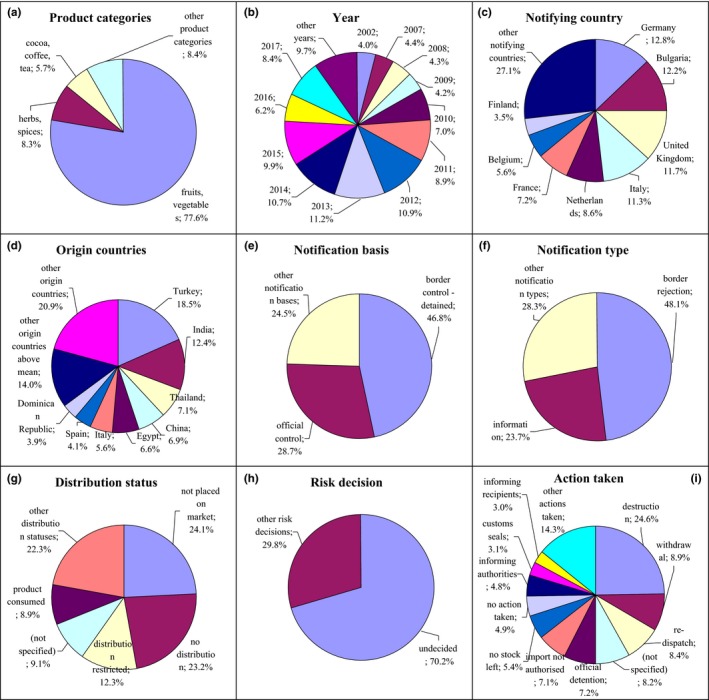
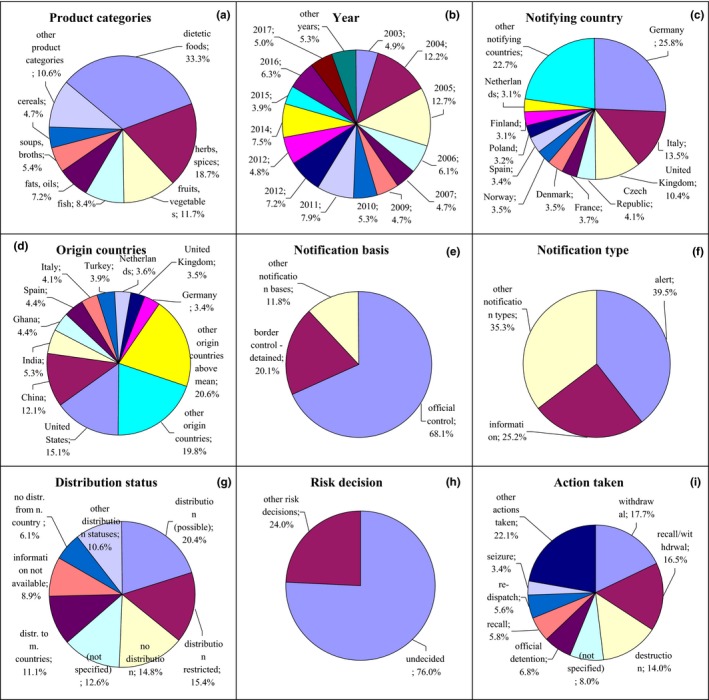
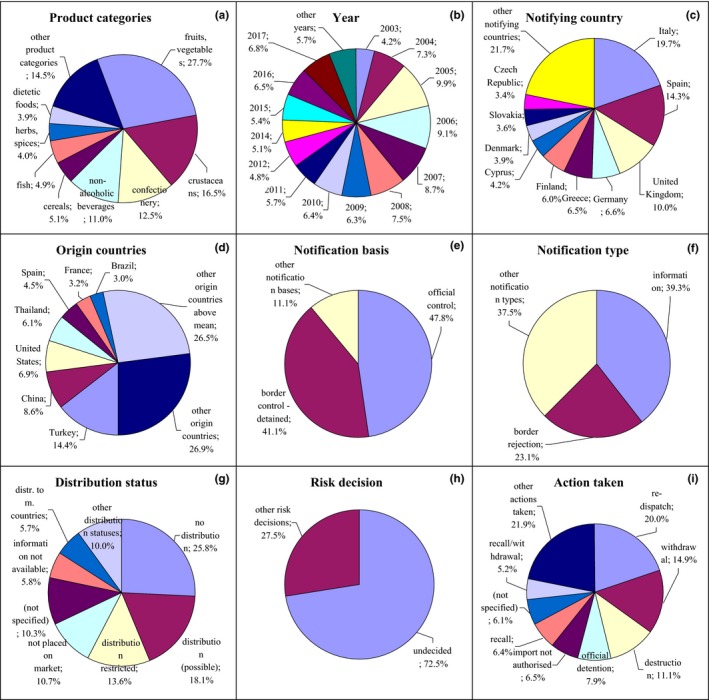
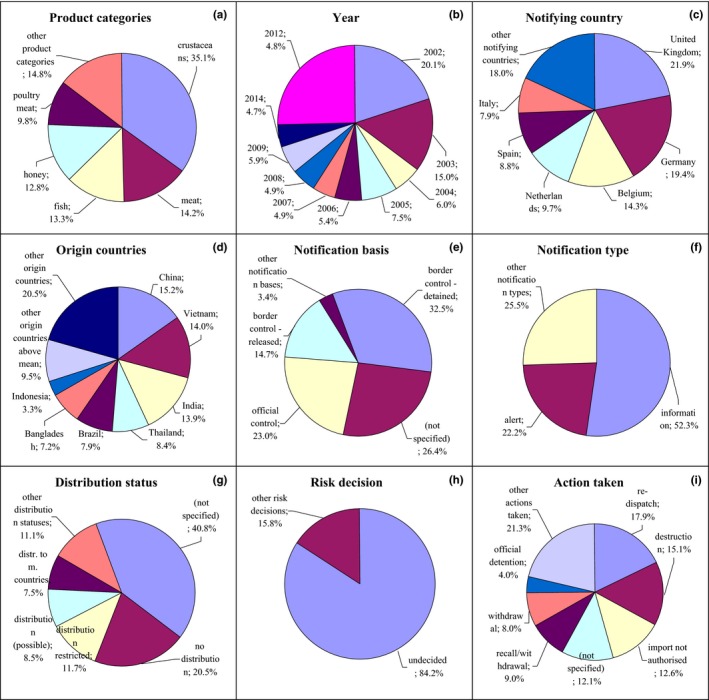
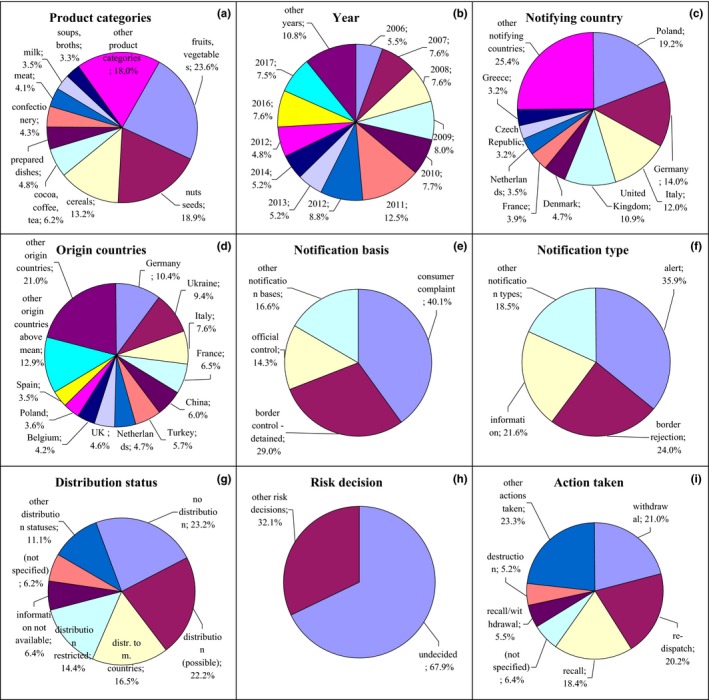
The aim of the study was to examine similarities in notifications on main hazards within food reported in the Rapid Alert System for Food and Feed (RASFF) in 1979-2017. The main problems were mycotoxins in nuts, pathogenic microorganisms in poultry meat and fish, pesticide residues in fruits and vegetables, and heavy metals in fish. The increase in the number of notifications has been observed since 2002/2003. Products were notified mainly by Italy, Germany, and United Kingdom and originated from Asian and European Union countries. The notification basis was border control and official control, and the notification type was border rejections, information, and alerts. Notified products were not distributed and not placed on the market, distribution status could be also not specified, or distribution was possible, also to other countries. The risk decision on hazard was usually not made. Products were redispatched, withdrawn from the market, and destroyed, or import was not authorized. Remarks, which can be used to improve the RASFF database, were also presented. It was further pointed out that European law should significantly reduce the use of pesticides, drugs, and food additives, and European agriculture should be reoriented from an intensive farming to a more sustainable and ecological one.
该研究的目的是调查1979年至2017年食品和饲料快速预警系统(RASFF)报告的食品主要危害通报的相似之处。主要问题包括坚果中的霉菌毒素、禽肉和鱼肉中的致病微生物、水果和蔬菜中的农药残留以及鱼肉中的重金属。自2002/2003年以来,通报数量有所增加。通报产品主要由意大利、德国和英国发出,原产于亚洲和欧盟国家。通报依据是边境管制和官方控制,通报类型为边境拒收、信息和警报。通报产品未进行分销且未投放市场,分销状态也可能未明确说明,或者有可能进行分销,甚至分销到其他国家。通常未对危害做出风险判定。产品被重新调配、从市场上撤回并销毁,或者进口未获批准。还提出了可用于改进RASFF数据库的备注。还进一步指出,欧洲法律应大幅减少农药、药物和食品添加剂的使用,欧洲农业应从集约化农业转向更具可持续性和生态性的农业。