Afzaal Muhammad, Khan Azmat Ullah, Saeed Farhan, Arshad Muhammad Sajid, Khan Muhammad Asif, Saeed Muhammad, Maan Abid Aslam, Khan Muhammad Kashif, Ismail Zoria, Ahmed Aftab, Tufail Tabussam, Ateeq Huda, Anjum Faqir Muhammad
Institute of Home & Food Sciences Government College University Faisalabad Faisalabad Pakistan.
Department of Food Science and Human Nutrition University of Veterinary & Animal Sciences Lahore Pakistan.
Food Sci Nutr. 2020 Feb 17;8(3):1649-1656. doi: 10.1002/fsn3.1451. eCollection 2020 Mar.
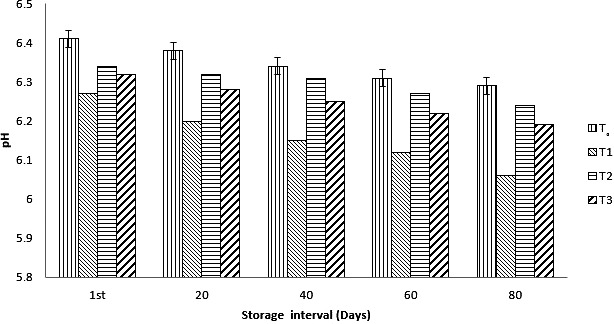
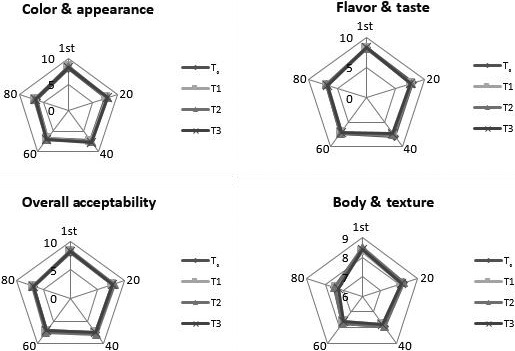
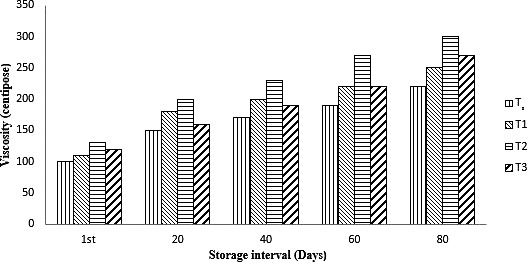
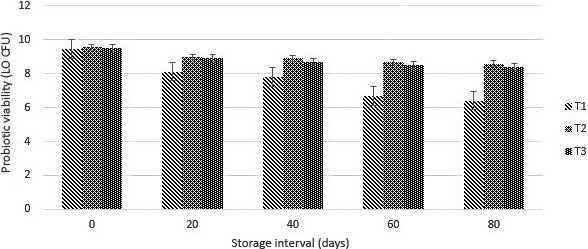
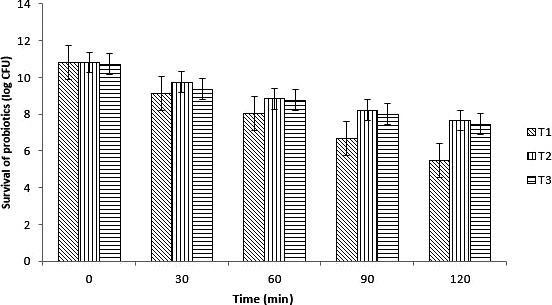
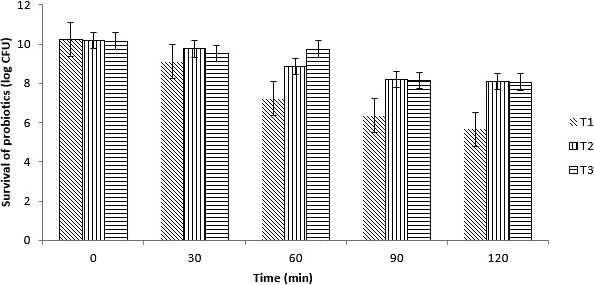
The aim of the present study was to evaluate the upshot of microencapsulation on the stability and viability of probiotics in carrier food (ice cream) and simulated gastrointestinal (GIT) conditions. Purposely, was encapsulated with two different hydrocolloids, that is, calcium alginate (Ca-ALG) and whey protein concentrate (WPC) by using encapsulator. The obtained microbeads were characterized in terms of encapsulation efficiency and morphological features. Afterward, the probiotics in free and encapsulated form were incorporated into ice cream. The product was subjected for physicochemical, microbiological, and sensory attributes over a storage period of 80 days. Microencapsulation with both hydrogels significantly ( < .05) improved the viability of probiotics in both carrier food and simulated GIT conditions.The initial viable count of probiotics encapsulated with Ca-ALG and WPC was 9.54 and 9.52 log CFU/ml, respectively, that declined to 8.59 and 8.39 log CFU/ml, respectively, over period of 80 days of storage. While nonencapsulated/free cells declined from 9.44 to 6.41 log CFU/ml during same storage period. Likewise, during in vitro GIT assay, encapsulated probiotic with Ca-ALG and WPC showed 0.95 and 1.13 log reduction, respectively. On other hand, free probiotics showed significant 3.03 log reduction. Overall, microencapsulated probiotic exhibited better survival as compared to free cells. Moreover, the amalgamation of encapsulated and free probiotics affected the physicochemical (decrease in pH and increase in viscosity) was and sensory parameters of ice cream during storage.
本研究的目的是评估微囊化对益生菌在载体食品(冰淇淋)和模拟胃肠道(GIT)条件下的稳定性和活力的影响。特意使用包囊机用两种不同的水胶体,即海藻酸钙(Ca-ALG)和乳清蛋白浓缩物(WPC)对益生菌进行包囊。对获得的微珠进行包封效率和形态特征方面的表征。随后,将游离形式和包囊形式的益生菌加入到冰淇淋中。在80天的储存期内对该产品进行物理化学、微生物学和感官属性检测。两种水凝胶的微囊化均显著(P<0.05)提高了益生菌在载体食品和模拟GIT条件下的活力。用Ca-ALG和WPC包囊的益生菌的初始活菌数分别为9.54和9.52 log CFU/ml,在80天的储存期内分别降至8.59和8.39 log CFU/ml。而未包囊的/游离细胞在相同储存期内从9.44降至6.41 log CFU/ml。同样,在体外GIT试验中,用Ca-ALG和WPC包囊的益生菌分别减少了0.95和1.13 log。另一方面,游离益生菌显著减少了3.03 log。总体而言,与游离细胞相比,微囊化益生菌表现出更好的存活率。此外,包囊和游离益生菌的混合在储存期间影响了冰淇淋的物理化学性质(pH值降低和粘度增加)和感官参数。