Duan Ping, Chen Siyu, Zeng Yuxiao, Xu Haiwei, Liu Yong
Southwest Hospital, Southwest Eye Hospital, Third Military Medical University (Amy Medical University), Chongqing 400038, China; Key Lab of Visual Damage and Regeneration and Restoration of Chongqing, Chongqing 400038, China.
Southwest Hospital, Southwest Eye Hospital, Third Military Medical University (Amy Medical University), Chongqing 400038, China; Key Lab of Visual Damage and Regeneration and Restoration of Chongqing, Chongqing 400038, China.
Mol Ther Nucleic Acids. 2020 Jun 5;20:242-251. doi: 10.1016/j.omtn.2020.02.001. Epub 2020 Feb 11.
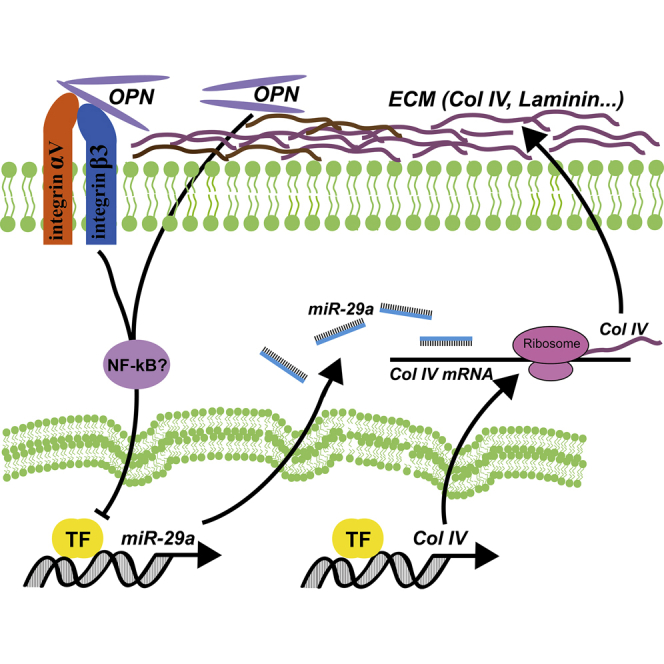
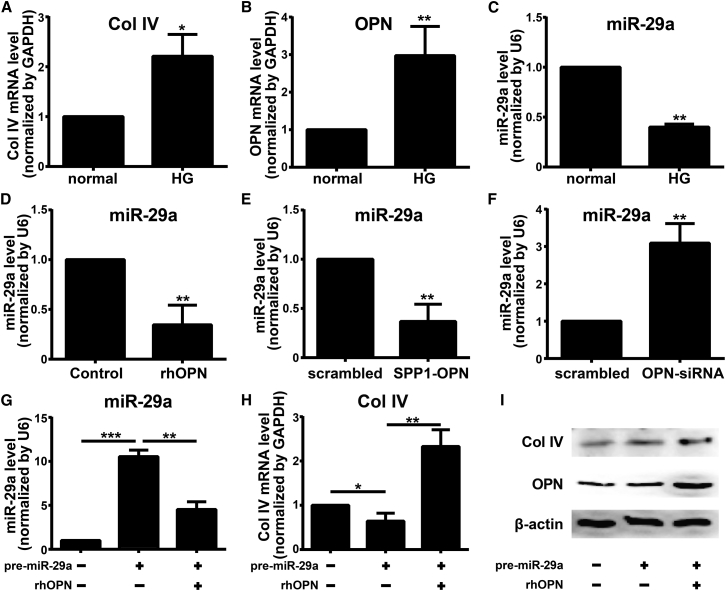
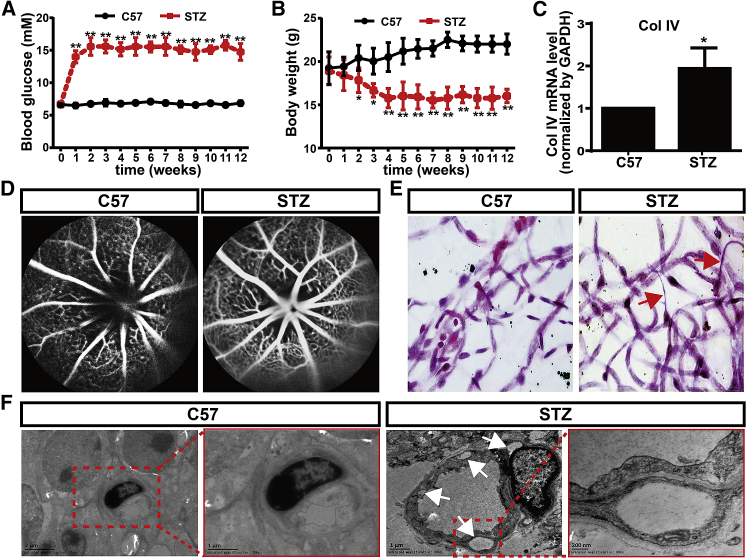
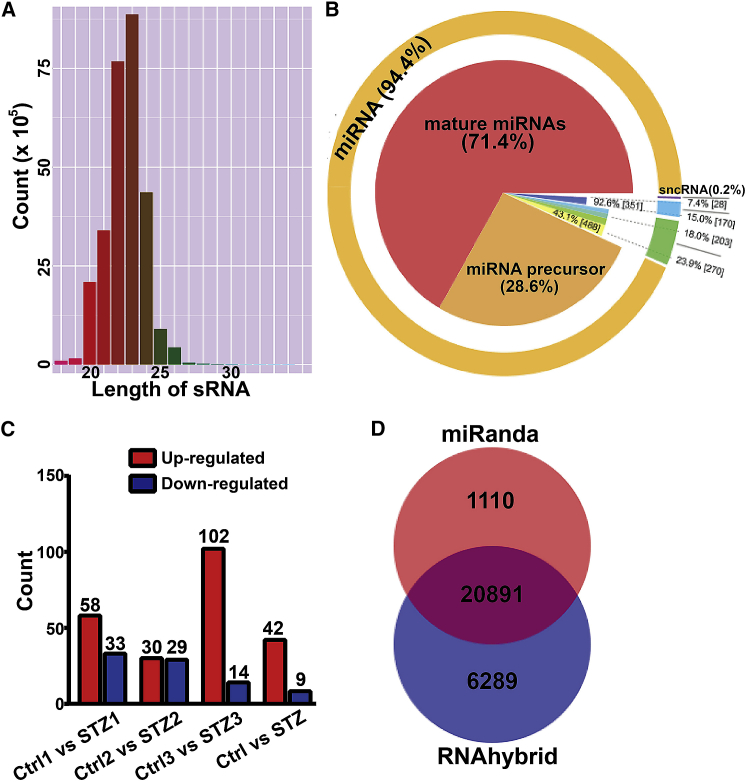
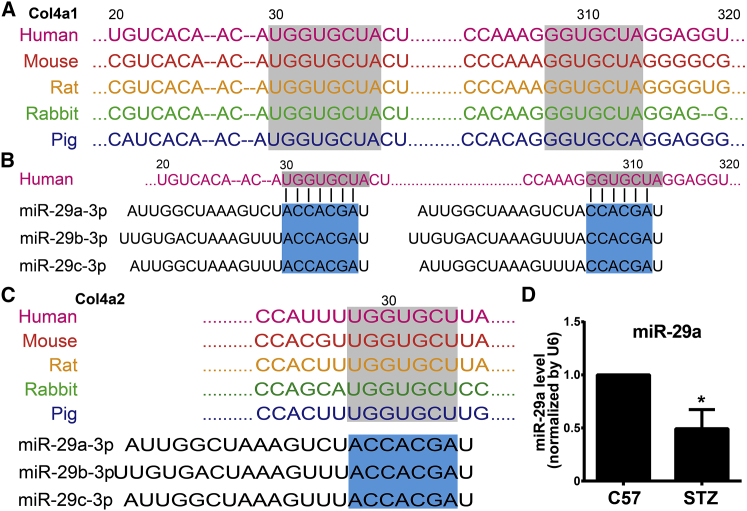
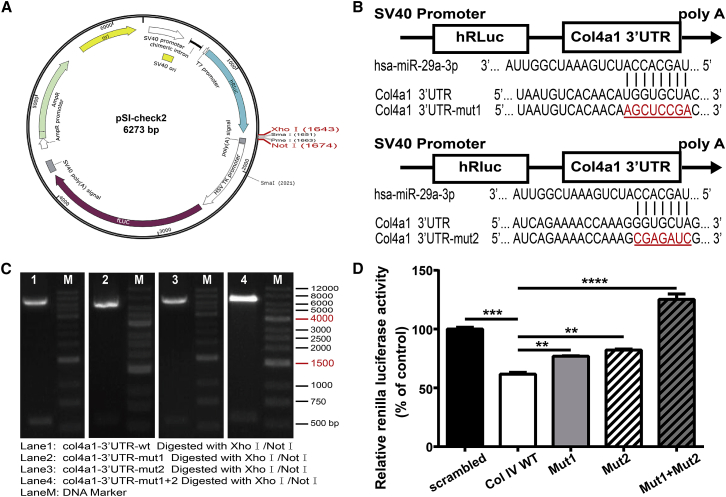
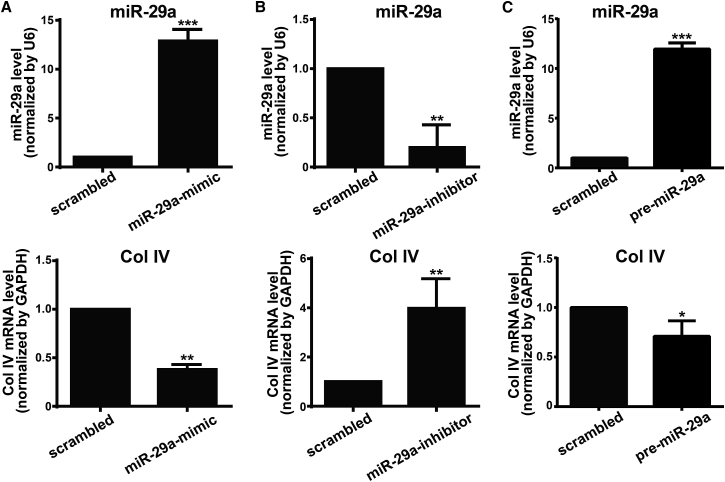
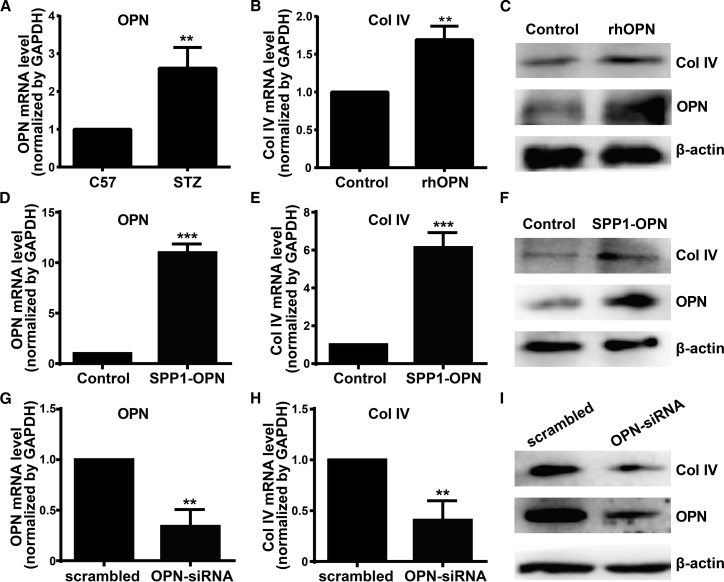
Abnormal synthesis of extracellular matrix (ECM), especially collagen type IV (Col IV), in human retinal capillary endothelial cells (HRCECs) and resultant basement membrane (BM) thickening is the most prominent and characteristic feature of early diabetic retinopathy (DR). Osteopontin (OPN) has been shown to play an important role in the pathogenesis of DR and specifically, found to be critically involved in diabetic nephropathy, as it can upregulate many factors, like collagen IV. However, the precise role of OPN in the pathogenesis of DR and the underlying mechanisms remain unclear. In this study, 51 differentially expressed microRNAs (miRNAs; 42 miRNAs upregulated and 9 miRNAs downregulated) were first identified in retina of streptozotocin (STZ)-induced diabetic mice with DR. Among these miRNAs, we identified miRNA (miR)-29a as a prominent miRNA that targeted and directly downregulated Col IV expression through database prediction and dual-luciferase reporter assay, which was further confirmed in HRCECs using miR-29a mimic, miR-29a inhibitor, and pre-miR-29a transfection. Furthermore, OPN upregulated Col IV expression via a miR-29a-repressed pathway in HRCECs. Taken together, these results provided a miR-29a-repressing mechanism through which OPN plays roles in abnormal synthesis of Col IV in HRCECs and resultant BM thickening, contributing to the pathogenesis of DR.
细胞外基质(ECM),尤其是IV型胶原蛋白(Col IV)在人视网膜毛细血管内皮细胞(HRCECs)中的异常合成以及由此导致的基底膜(BM)增厚是早期糖尿病视网膜病变(DR)最显著和最具特征性的表现。骨桥蛋白(OPN)已被证明在DR的发病机制中起重要作用,具体而言,发现其在糖尿病肾病中起关键作用,因为它可以上调许多因子,如胶原蛋白IV。然而,OPN在DR发病机制中的精确作用及其潜在机制仍不清楚。在本研究中,首先在链脲佐菌素(STZ)诱导的患有DR的糖尿病小鼠视网膜中鉴定出51种差异表达的微小RNA(miRNA;42种miRNA上调,9种miRNA下调)。在这些miRNA中,我们通过数据库预测和双荧光素酶报告基因检测鉴定出miRNA(miR)-29a是一种突出的miRNA,它靶向并直接下调Col IV的表达,这在HRCECs中使用miR-29a模拟物、miR-29a抑制剂和pre-miR-29a转染进一步得到证实。此外,OPN通过HRCECs中miR-29a抑制的途径上调Col IV的表达。综上所述,这些结果提供了一种miR-29a抑制机制,通过该机制OPN在HRCECs中Col IV的异常合成及由此导致的BM增厚中发挥作用,促进了DR的发病机制。