Zhang Jilei, Lu Rong, Zhang Yongguo, Matuszek Żaneta, Zhang Wen, Xia Yinglin, Pan Tao, Sun Jun
Division of Gastroenterology and Hepatology, Department of Medicine, University of Illinois at Chicago, Chicago, IL 60612, USA.
Department of Biochemistry & Molecular Biology, University of Chicago, Chicago, IL 60637, USA.
Cancers (Basel). 2020 Mar 9;12(3):628. doi: 10.3390/cancers12030628.
Transfer RNA (tRNA) queuosine (Q)-modifications occur specifically in 4 cellular tRNAs at the wobble anticodon position. tRNA Q-modification in human cells depends on the gut microbiome because the microbiome product queuine is required for its installation by the enzyme Q tRNA ribosyltransferase catalytic subunit 1 (QTRT1) encoded in the human genome. Queuine is a micronutrient from diet and microbiome. Although tRNA Q-modification has been studied for a long time regarding its properties in decoding and tRNA fragment generation, how QTRT1 affects tumorigenesis and the microbiome is still poorly understood.
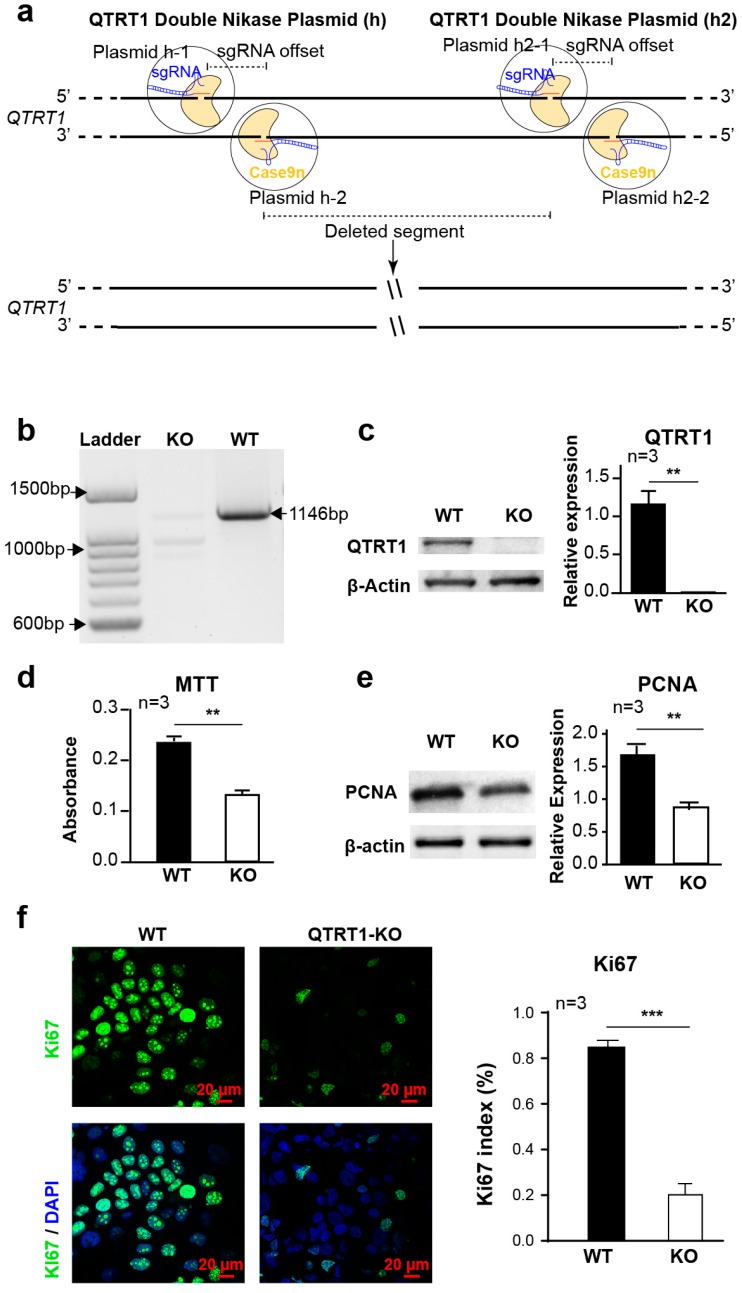
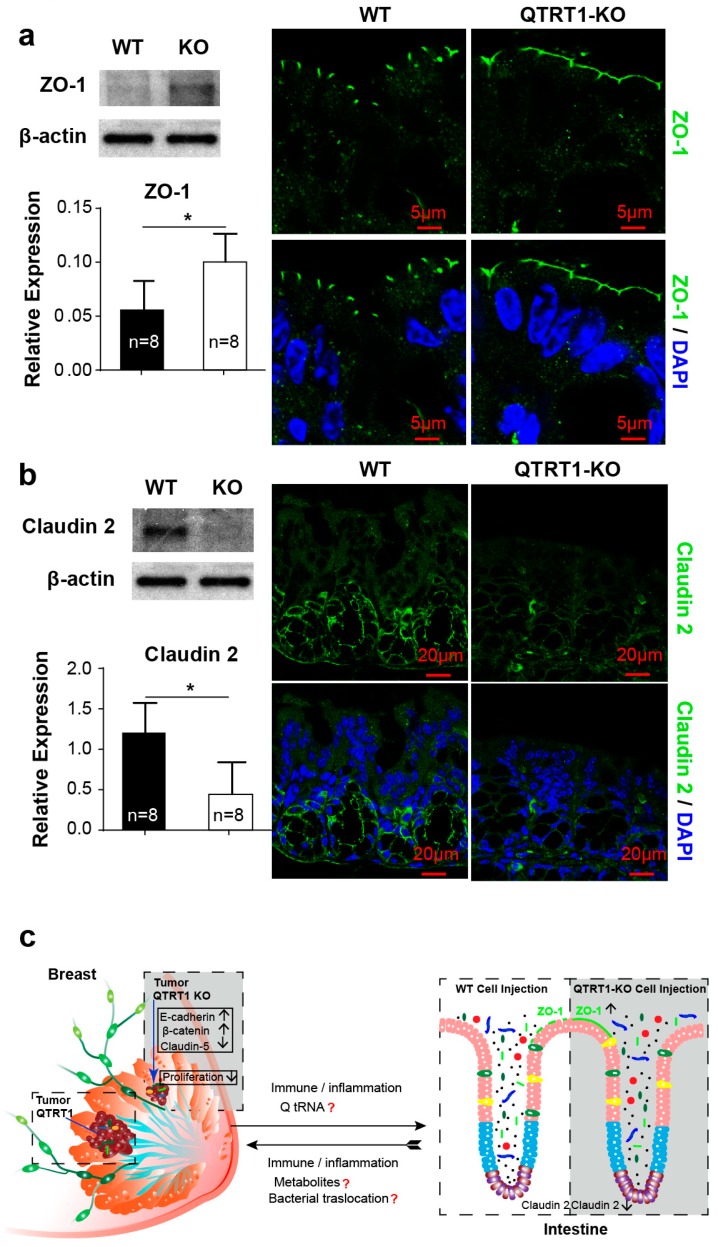
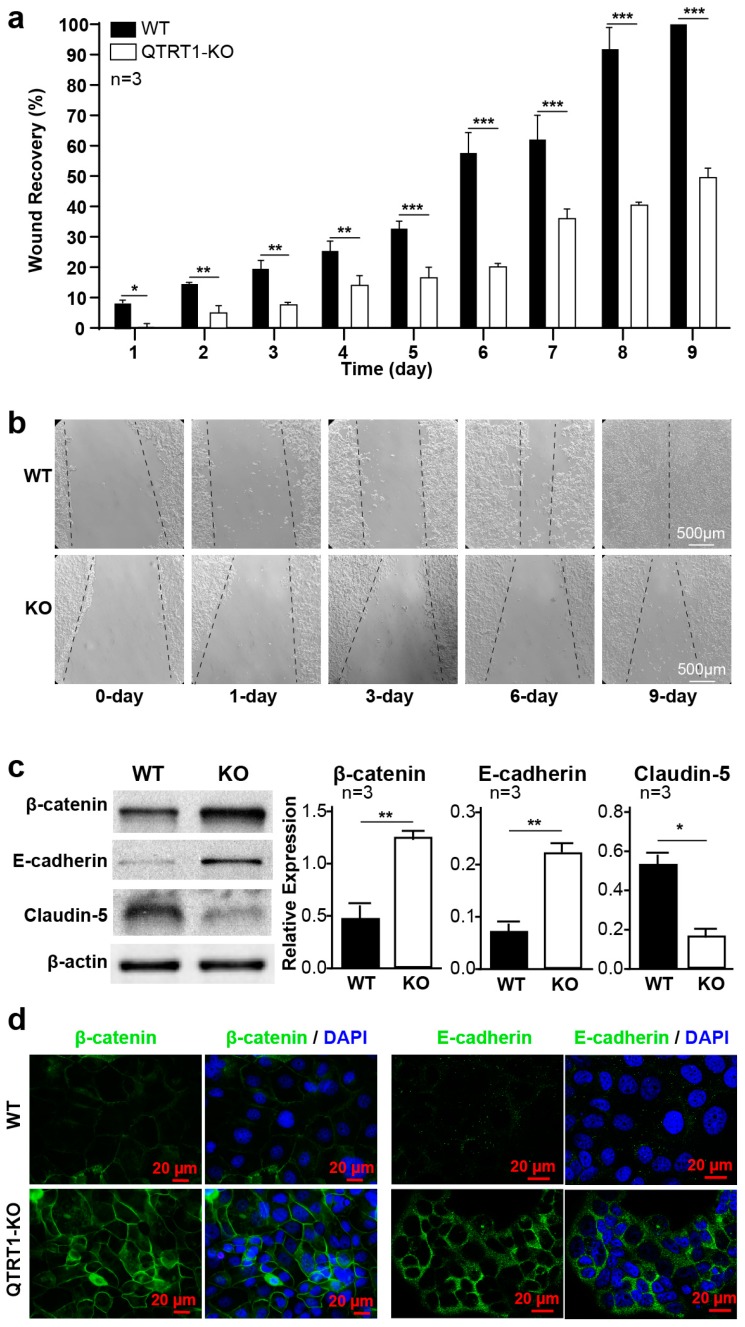
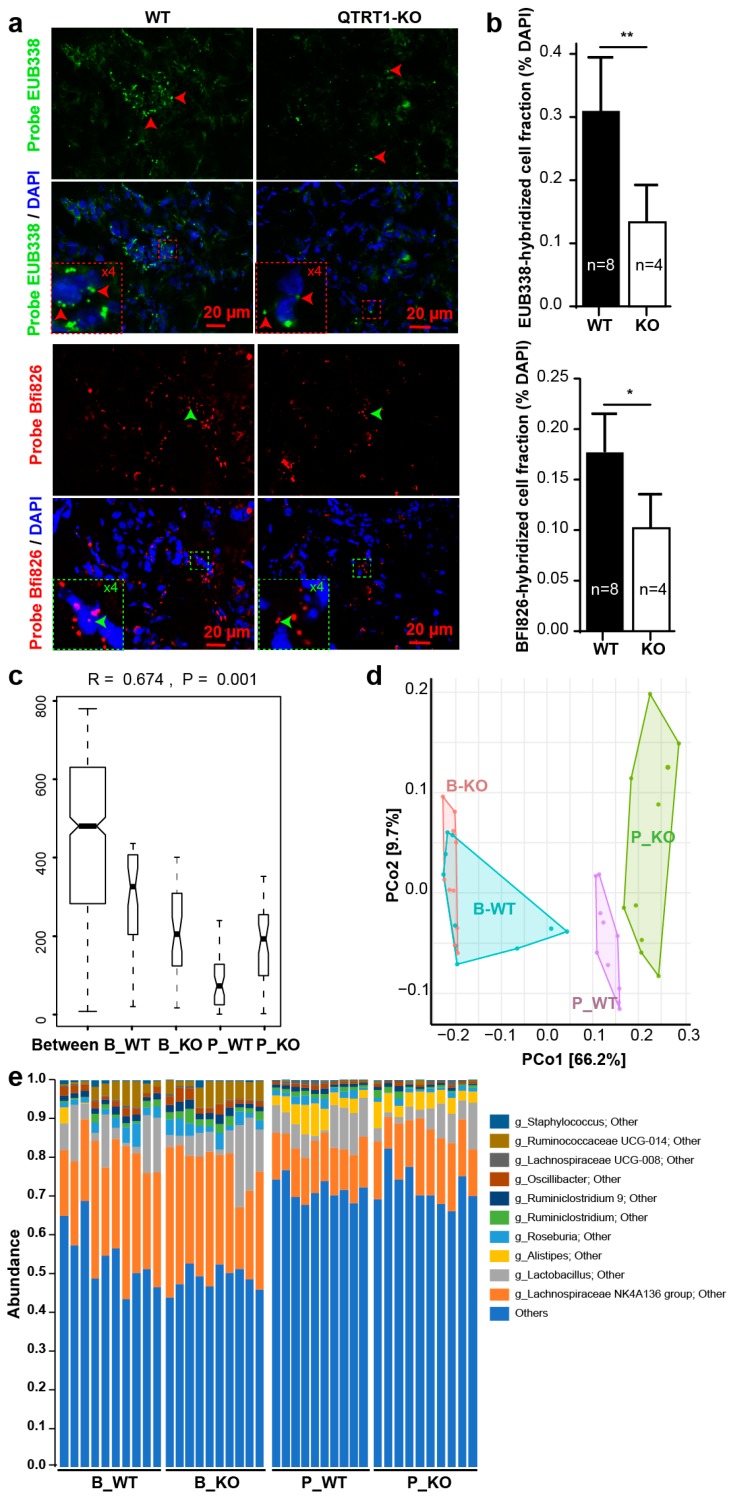
We generated single clones of QTRT1-knockout breast cancer MCF7 cells using Double Nickase Plasmid. We also established a QTRT1-knockdown breast MDA-MB-231 cell line. The impacts of QTRT1 deletion or reduction on cell proliferation and migration in vitro were evaluated using cell culture, while the regulations on tumor growth in vivo were evaluated using a xenograft BALB/c nude mouse model. We found that QTRT1 deficiency in human breast cancer cells could change the functions of regulation genes, which are critical in cell proliferation, tight junction formation, and migration in human breast cancer cells in vitro and a breast tumor mouse model in vivo. We identified that several core bacteria, such as , , and , were markedly changed in mice post injection with breast cancer cells. The relative abundance of bacteria in tumors induced from wildtype cells was significantly higher than those of QTRT1 deficiency cells.
Our results demonstrate that the gene and tRNA Q-modification altered cell proliferation, junctions, and microbiome in tumors and the intestine, thus playing a critical role in breast cancer development.
转运RNA(tRNA)的 queuosine(Q)修饰特异性地发生在4种细胞tRNA的摆动反密码子位置。人类细胞中的tRNA Q修饰依赖于肠道微生物群,因为微生物群产物queuine是人类基因组中编码的Q tRNA核糖基转移酶催化亚基1(QTRT1)安装该修饰所必需的。Queuine是一种来自饮食和微生物群的微量营养素。尽管关于tRNA Q修饰在解码和tRNA片段生成方面的特性已经研究了很长时间,但QTRT1如何影响肿瘤发生和微生物群仍知之甚少。
我们使用双切口酶质粒生成了QTRT1基因敲除的乳腺癌MCF7细胞单克隆。我们还建立了QTRT1基因敲低的乳腺癌MDA-MB-231细胞系。使用细胞培养评估QTRT1缺失或减少对体外细胞增殖和迁移的影响,同时使用异种移植BALB/c裸鼠模型评估对体内肿瘤生长的调控。我们发现人类乳腺癌细胞中QTRT1的缺乏会改变调控基因的功能,这些基因在体外人类乳腺癌细胞以及体内乳腺癌小鼠模型的细胞增殖、紧密连接形成和迁移中至关重要。我们确定,在注射乳腺癌细胞后的小鼠中,几种核心细菌,如 、 和 ,发生了显著变化。野生型细胞诱导的肿瘤中细菌的相对丰度明显高于QTRT1缺陷细胞诱导的肿瘤。
我们的结果表明, 基因和tRNA Q修饰改变了肿瘤和肠道中的细胞增殖、连接和微生物群,从而在乳腺癌发展中起关键作用。