Luley Kim B, Biedermann Shauni B, Künstner Axel, Busch Hauke, Franzenburg Sören, Schrader Jörg, Grabowski Patricia, Wellner Ulrich F, Keck Tobias, Brabant Georg, Schmid Sebastian M, Lehnert Hendrik, Ungefroren Hendrik
Clinic for Hematology and Oncology, University Hospital Schleswig-Holstein, Campus Lübeck, D-23538 Lübeck, Germany.
First Department of Medicine, University Hospital Schleswig-Holstein, Campus Lübeck, D-23538 Lübeck, Germany.
Cancers (Basel). 2020 Mar 14;12(3):691. doi: 10.3390/cancers12030691.
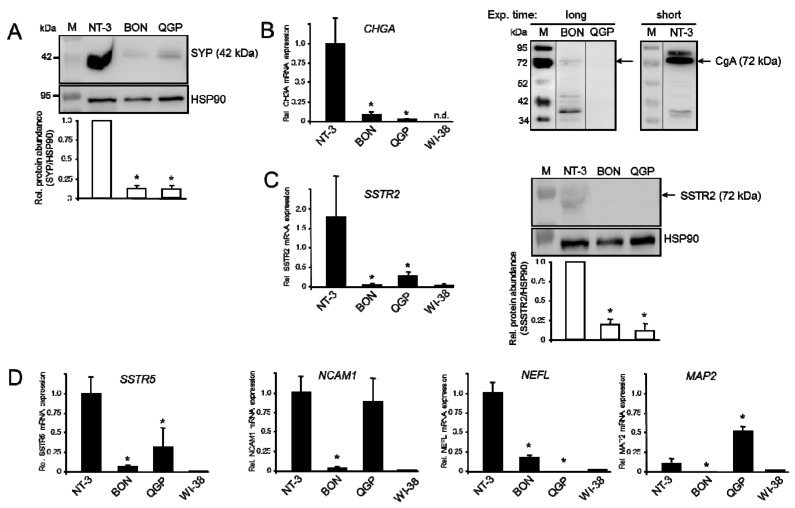
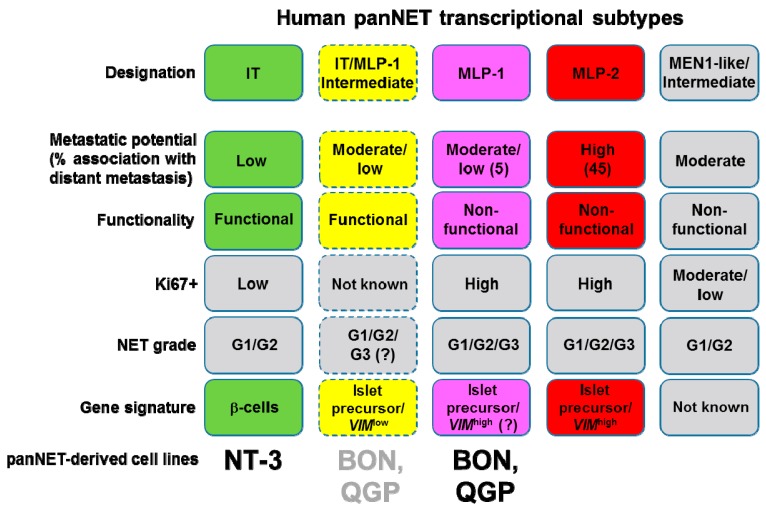
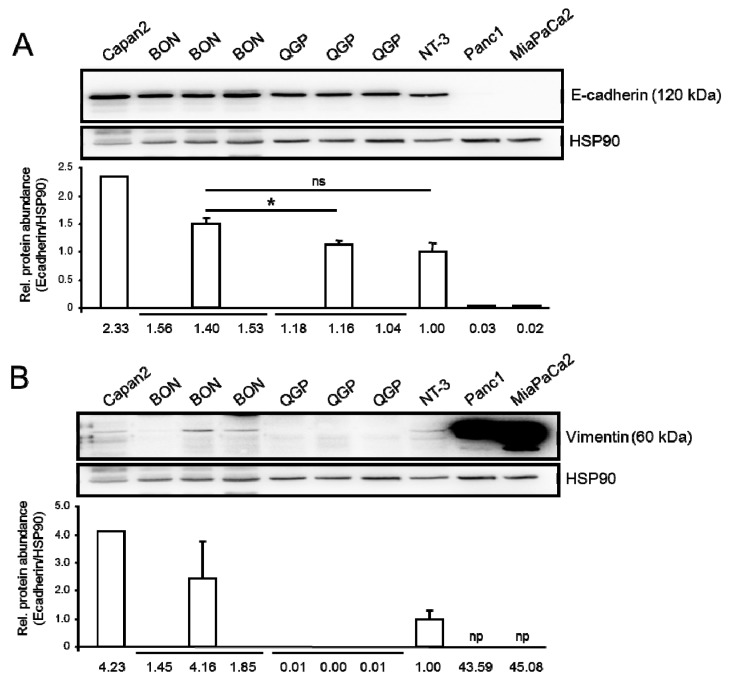
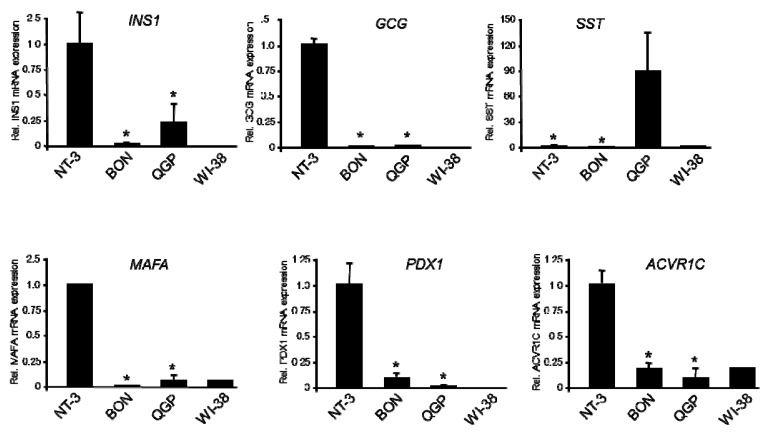
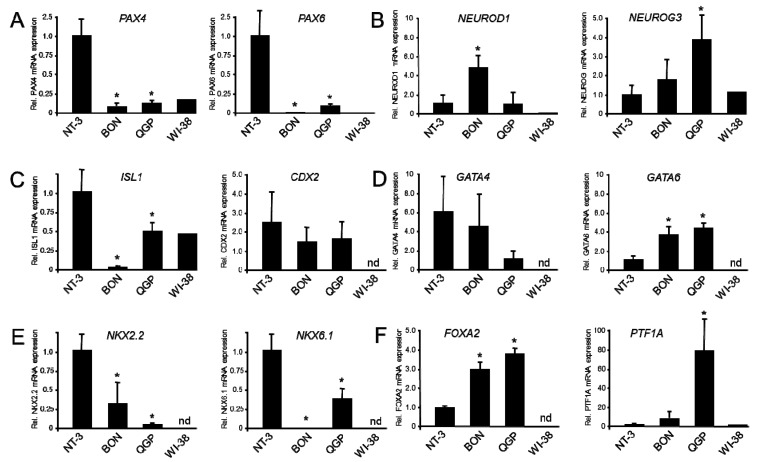
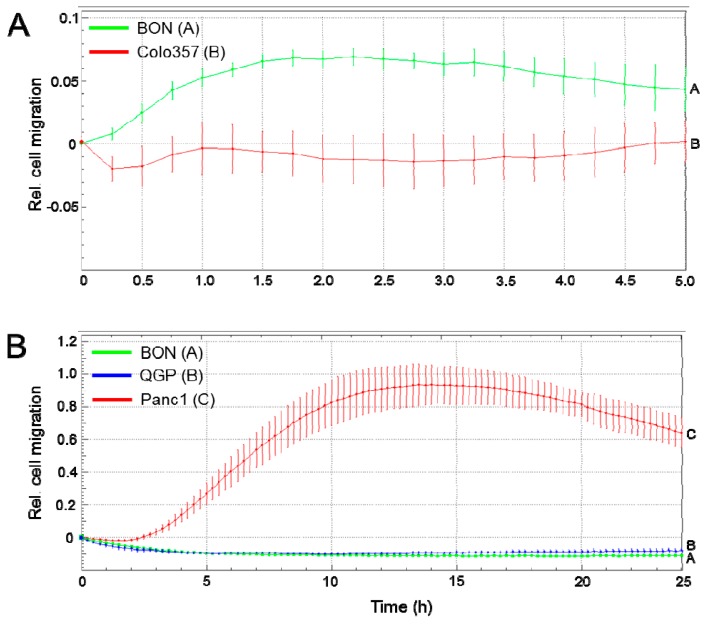
Experimental models of neuroendocrine tumor disease are scarce, with only a few existing neuroendocrine tumor cell lines of pancreatic origin (panNET). Their molecular characterization has so far focused on the neuroendocrine phenotype and cancer-related mutations, while a transcription-based assessment of their developmental origin and malignant potential is lacking. In this study, we performed immunoblotting and qPCR analysis of neuroendocrine, epithelial, developmental endocrine-related genes as well as next-generation sequencing (NGS) analysis of microRNAs (miRs) on three panNET cell lines, BON-1, QGP-1, and NT-3. All three lines displayed a neuroendocrine and epithelial phenotype; however, while insulinoma-derived NT-3 cells preferentially expressed markers of mature functional pancreatic β-cells (i.e., , ), both BON-1 and QGP-1 displayed high expression of genes associated with immature or non-functional β/δ-cells genes (i.e., ), or pancreatic endocrine progenitors (i.e., ). NGS-based identification of miRs in BON-1 and QGP-1 cells revealed the presence of all six members of the miR-17-92 cluster, which have been implicated in b-cell function and differentiation, but also have roles in cancer being both oncogenic or tumor suppressive. Notably, both BON-1 and QGP-1 cells expressed several miRs known to be negatively associated with epithelial-mesenchymal transition, invasion or metastasis. Moreover, both cell lines failed to exhibit migratory activity in vitro. Taken together, NT-3 cells resemble mature functional β-cells, while both BON-1 and QGP-1 are more similar to immature/non-functional pancreatic β/δ-cells or pancreatic endocrine progenitors. Based on the recent identification of three transcriptional subtypes in panNETs, NT-3 cells resemble the "islet/insulinoma tumors" (IT) subtype, while BON-1 and QGP-1 cells were tentatively classified as "metastasis-like/primary" (MLP). Our results provide a comprehensive characterization of three panNET cell lines and demonstrate their relevance as neuroendocrine tumor models.
神经内分泌肿瘤疾病的实验模型稀缺,仅存在少数源自胰腺的神经内分泌肿瘤细胞系(胰腺神经内分泌肿瘤,panNET)。到目前为止,它们的分子特征主要集中在神经内分泌表型和癌症相关突变上,而缺乏基于转录的对其发育起源和恶性潜能的评估。在本研究中,我们对三种panNET细胞系BON-1、QGP-1和NT-3进行了神经内分泌、上皮、发育内分泌相关基因的免疫印迹和qPCR分析,以及微小RNA(miR)的下一代测序(NGS)分析。所有这三种细胞系均表现出神经内分泌和上皮表型;然而,虽然源自胰岛素瘤的NT-3细胞优先表达成熟功能性胰腺β细胞的标志物(即 , ),但BON-1和QGP-1均高表达与未成熟或无功能的β/δ细胞基因(即 )或胰腺内分泌祖细胞(即 )相关的基因。基于NGS对BON-1和QGP-1细胞中miR的鉴定揭示了miR-17-92簇的所有六个成员的存在,这些成员与β细胞功能和分化有关,但在癌症中也具有致癌或肿瘤抑制作用。值得注意的是,BON-1和QGP-1细胞均表达了几种已知与上皮-间质转化、侵袭或转移呈负相关的miR。此外,这两种细胞系在体外均未表现出迁移活性。综上所述,NT-3细胞类似于成熟的功能性β细胞,而BON-1和QGP-1更类似于未成熟/无功能的胰腺β/δ细胞或胰腺内分泌祖细胞。基于最近在panNET中鉴定出的三种转录亚型,NT-3细胞类似于“胰岛/胰岛素瘤肿瘤”(IT)亚型,而BON-1和QGP-1细胞被初步归类为“转移样/原发性”(MLP)。我们的结果提供了三种panNET细胞系的全面特征,并证明了它们作为神经内分泌肿瘤模型的相关性。