Perović Klara, Dela Rosa Francis M, Kovačić Marin, Kušić Hrvoje, Lavrenčič Štangar Urška, Fresno Fernando, Dionysiou Dionysios D, Bozic Ana Loncaric
Faculty of Chemical Engineering and Technology, University of Zagreb, Marulicev trg 19, HR-10000 Zagreb, Croatia.
Faculty of Chemistry and Chemical Technology, University of Ljubljana, 1000 Ljubljana, Slovenia.
Materials (Basel). 2020 Mar 15;13(6):1338. doi: 10.3390/ma13061338.
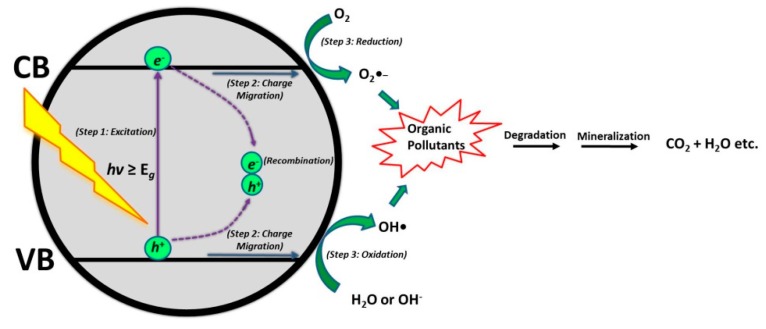
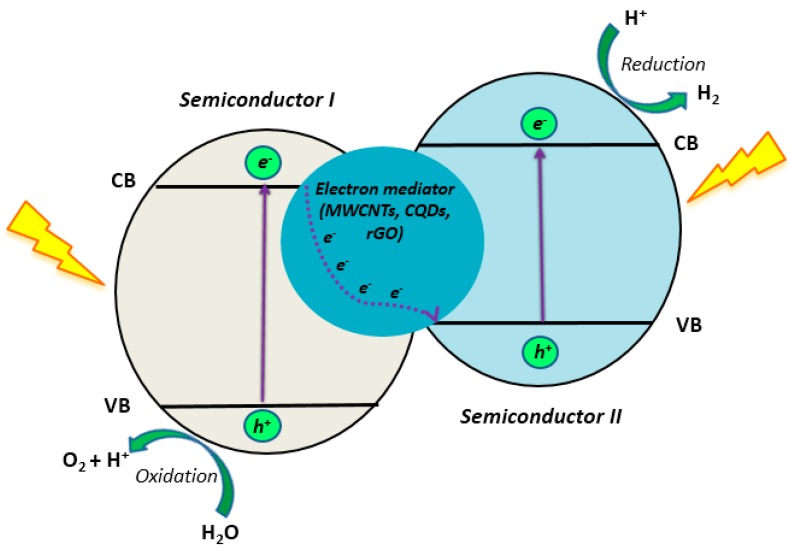
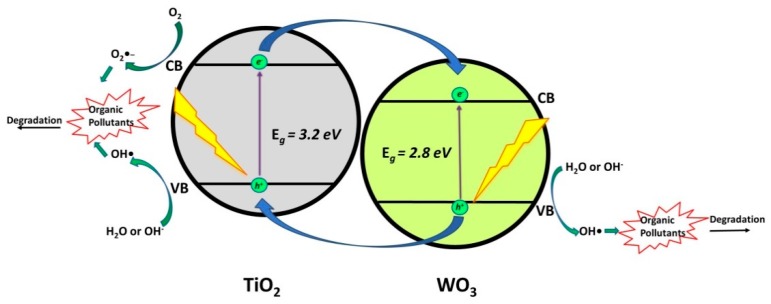
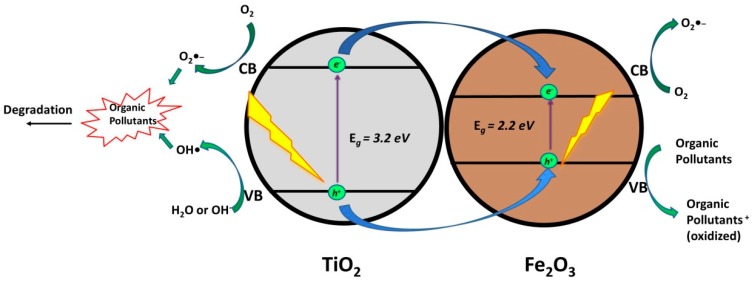
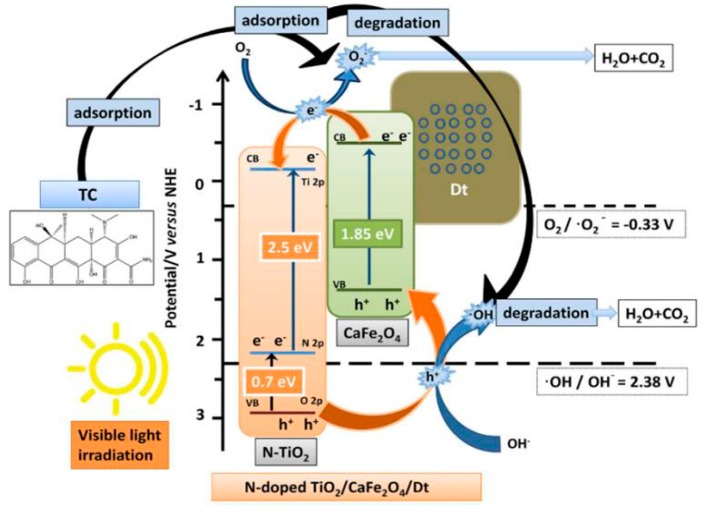
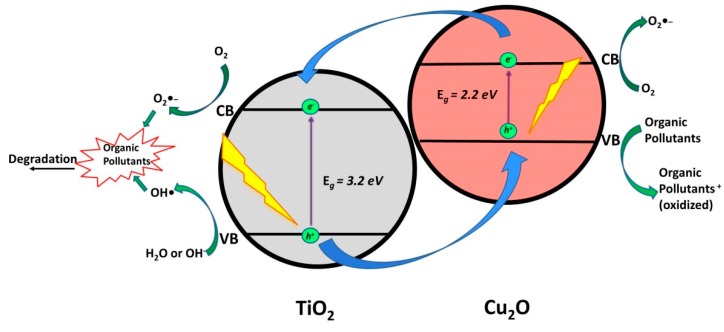
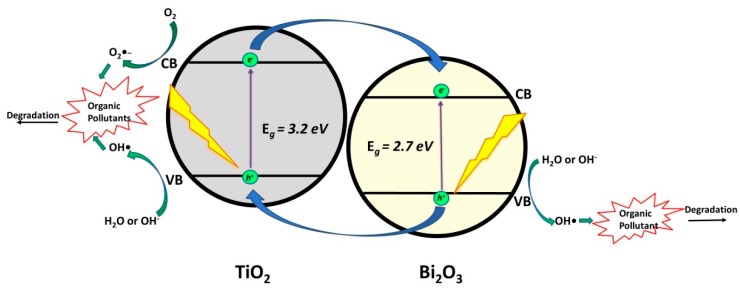
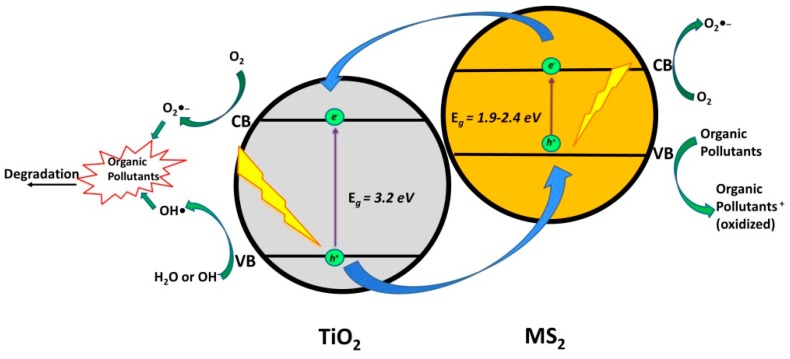
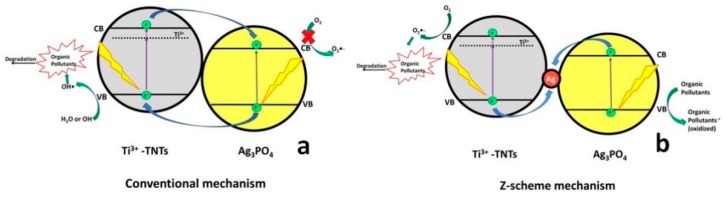
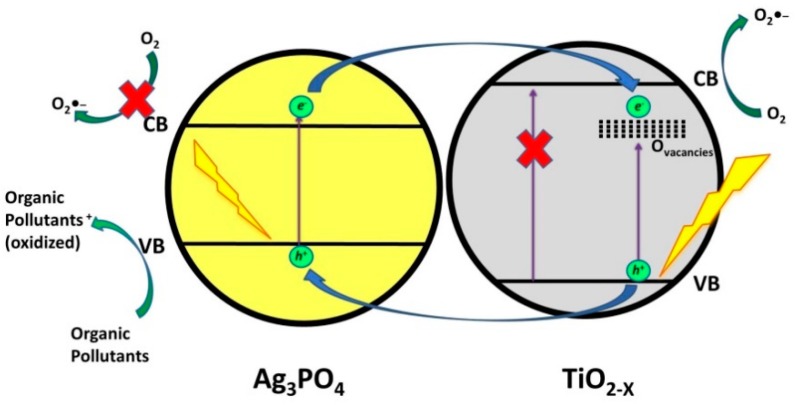
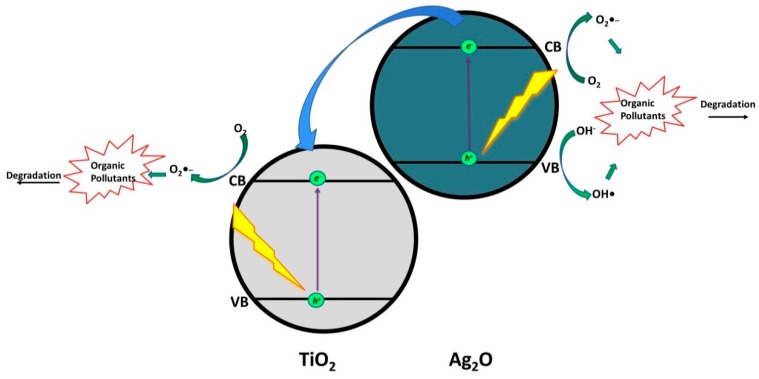
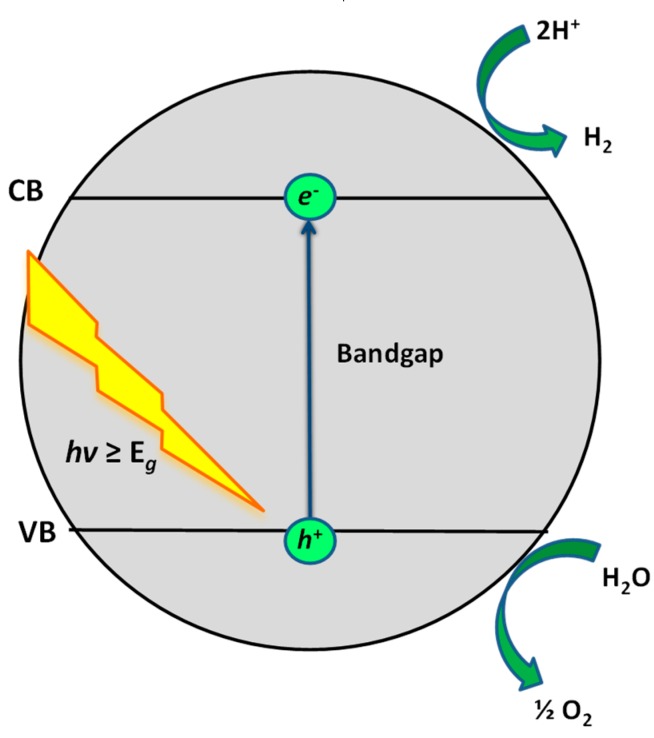
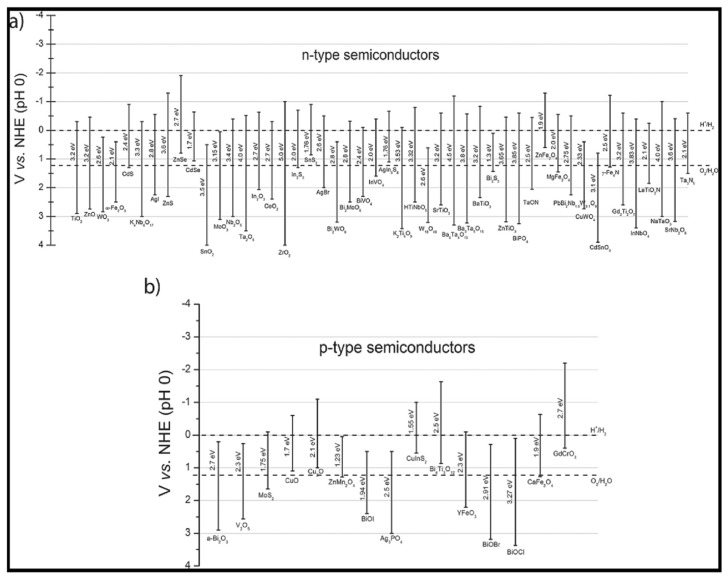
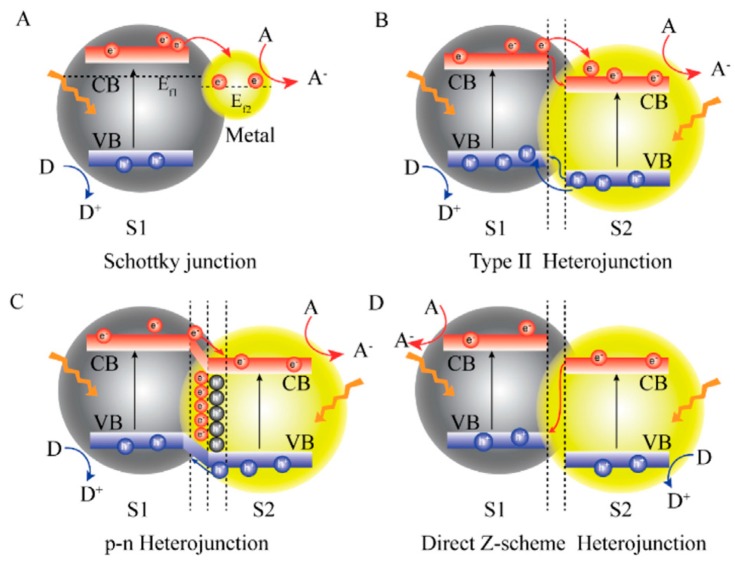
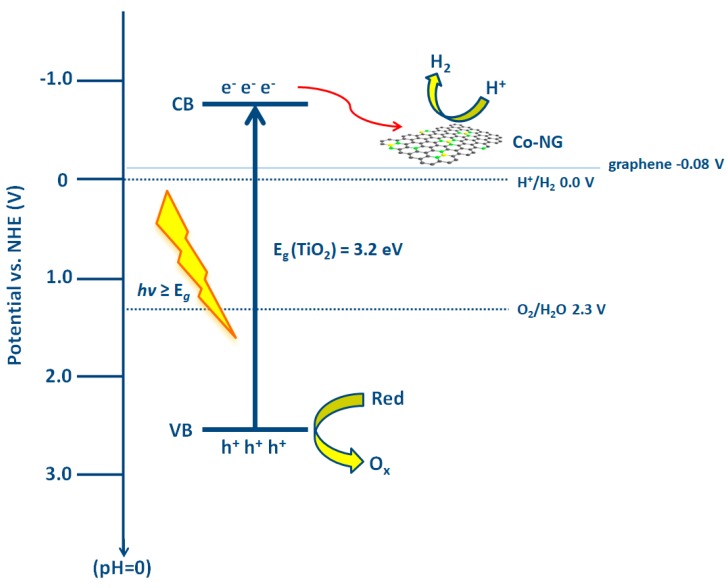
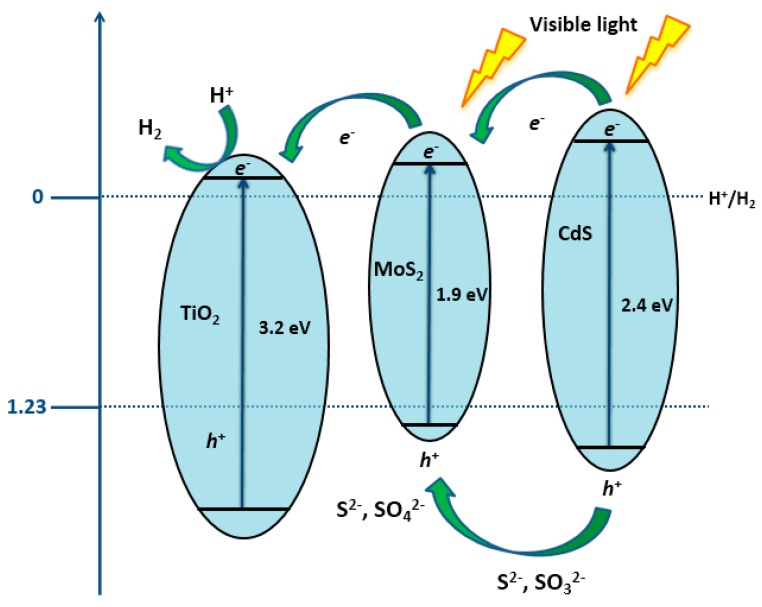
Clean water and the increased use of renewable energy are considered to be two of the main goals in the effort to achieve a sustainable living environment. The fulfillment of these goals may include the use of solar-driven photocatalytic processes that are found to be quite effective in water purification, as well as hydrogen generation. H production by water splitting and photocatalytic degradation of organic pollutants in water both rely on the formation of electron/hole (e/h) pairs at a semiconducting material upon its excitation by light with sufficient photon energy. Most of the photocatalytic studies involve the use of TiO and well-suited model compounds, either as sacrificial agents or pollutants. However, the wider application of this technology requires the harvesting of a broader spectrum of solar irradiation and the suppression of the recombination of photogenerated charge carriers. These limitations can be overcome by the use of different strategies, among which the focus is put on the creation of heterojunctions with another narrow bandgap semiconductor, which can provide high response in the visible light region. In this review paper, we report the most recent advances in the application of TiO based heterojunction (semiconductor-semiconductor) composites for photocatalytic water treatment and water splitting. This review article is subdivided into two major parts, namely Photocatalytic water treatment and Photocatalytic water splitting, to give a thorough examination of all achieved progress. The first part provides an overview on photocatalytic degradation mechanism principles, followed by the most recent applications for photocatalytic degradation and mineralization of contaminants of emerging concern (CEC), such as pharmaceuticals and pesticides with a critical insight into removal mechanism, while the second part focuses on fabrication of TiO-based heterojunctions with carbon-based materials, transition metal oxides, transition metal chalcogenides, and multiple composites that were made of three or more semiconductor materials for photocatalytic water splitting.
清洁水和可再生能源使用的增加被认为是实现可持续生活环境努力中的两个主要目标。实现这些目标可能包括使用太阳能驱动的光催化过程,该过程在水净化以及制氢方面都非常有效。通过水分解制氢和光催化降解水中的有机污染物都依赖于半导体材料在具有足够光子能量的光激发下形成电子/空穴(e/h)对。大多数光催化研究都涉及使用二氧化钛(TiO)和非常合适的模型化合物,它们要么作为牺牲剂,要么作为污染物。然而,这项技术的更广泛应用需要捕获更宽光谱的太阳辐射,并抑制光生电荷载流子的复合。这些限制可以通过使用不同的策略来克服,其中重点是与另一种窄带隙半导体形成异质结,这可以在可见光区域提供高响应。在这篇综述文章中,我们报告了基于TiO的异质结(半导体-半导体)复合材料在光催化水处理和水分解应用方面的最新进展。这篇综述文章分为两个主要部分,即光催化水处理和光催化水分解,以全面审视所有取得的进展。第一部分概述了光催化降解机理原理,接着介绍了光催化降解和矿化新出现的关注污染物(CEC)的最新应用,如药物和农药,并深入分析了去除机理,而第二部分则重点介绍了用碳基材料、过渡金属氧化物、过渡金属硫属化物以及由三种或更多种半导体材料制成的多种复合材料制备基于TiO的异质结用于光催化水分解。