• 文献检索
  • 文档翻译
  • 深度研究
  • 学术资讯
  • Suppr Zotero 插件Zotero 插件
  • 邀请有礼
  • 套餐&价格
  • 历史记录
应用&插件
Suppr Zotero 插件Zotero 插件浏览器插件Mac 客户端Windows 客户端微信小程序
定价
高级版会员购买积分包购买API积分包
服务
文献检索文档翻译深度研究API 文档MCP 服务
关于我们
关于 Suppr公司介绍联系我们用户协议隐私条款
关注我们

Suppr 超能文献

核心技术专利:CN118964589B侵权必究
粤ICP备2023148730 号-1Suppr @ 2026

文献检索

告别复杂PubMed语法,用中文像聊天一样搜索,搜遍4000万医学文献。AI智能推荐,让科研检索更轻松。

立即免费搜索

文件翻译

保留排版,准确专业,支持PDF/Word/PPT等文件格式,支持 12+语言互译。

免费翻译文档

深度研究

AI帮你快速写综述,25分钟生成高质量综述,智能提取关键信息,辅助科研写作。

立即免费体验

The Parietal Eye of Lizards () Needs Light at a Wavelength Lower than 580 nm to Activate Light-Dependent Magnetoreception.

作者信息

Nishimura Tsutomu

机构信息

Institute for Advancement of Clinical and Translational Science (iACT), Graduate School of Medicine, Kyoto University, 54 Kawahara-cho, Shogoin, Sakyo-ku, Kyoto 606-8507, Japan.

Translational Research Center for Medical Innovation, 1-5-4 Minatojima-minamimachi, Chuo-ku, Kobe 650-0047, Japan.

出版信息

Animals (Basel). 2020 Mar 15;10(3):489. doi: 10.3390/ani10030489.

DOI:10.3390/ani10030489
PMID:32183459
原文链接:https://pmc.ncbi.nlm.nih.gov/articles/PMC7143638/
Abstract

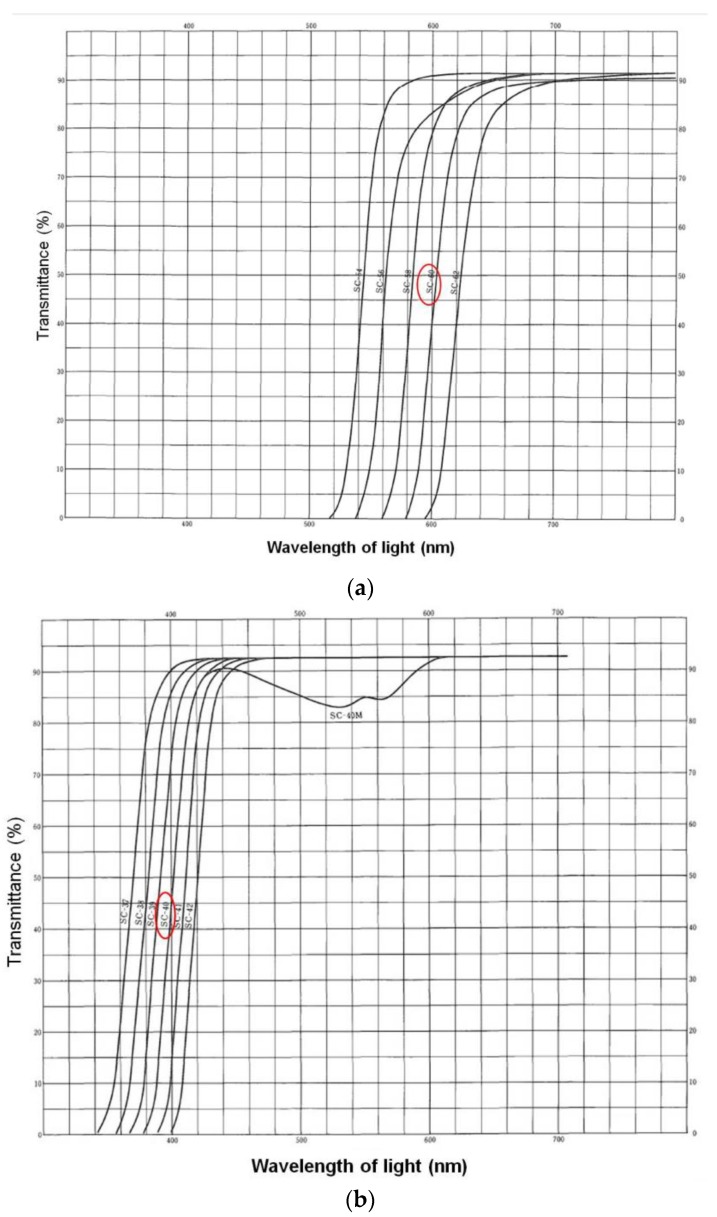
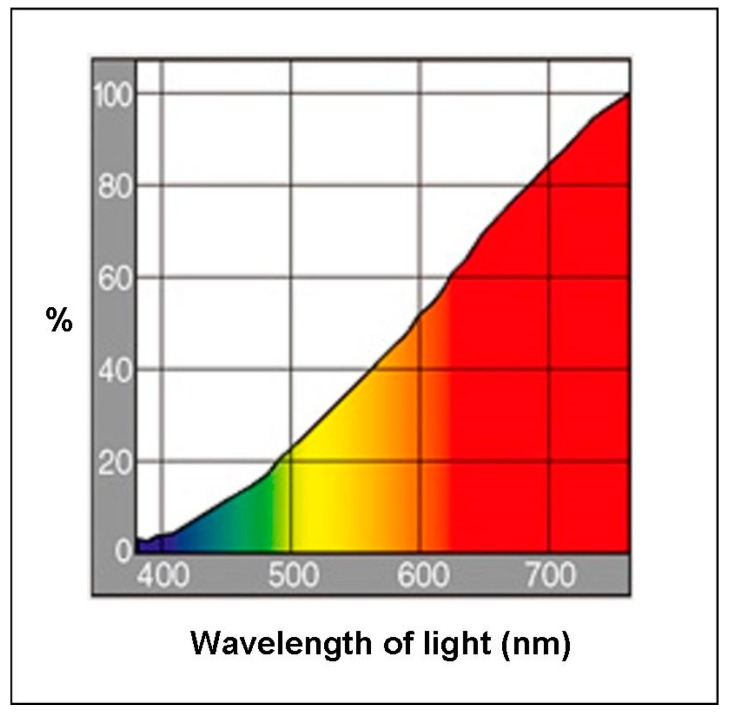
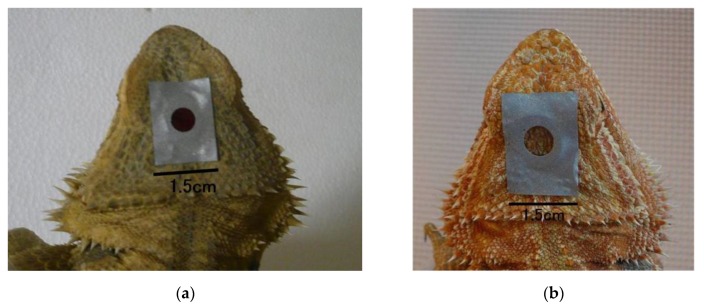
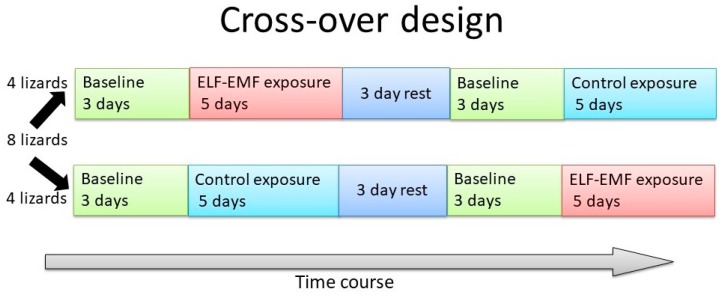
In a previous study, the agamid lizard was discovered to respond to an electromagnetic field (EMF) of extremely low frequency (6 and 8 Hz; peak magnetic and electric fields of 2.6 µT and 10 V/m, respectively). Furthermore, when the third eye of a lizard was covered, using a small round aluminum cap, the reaction to the EMF disappeared. These results suggested that the parietal eye has a role in light-dependent magnetoreception. However, the wavelength of light needed to activate light-dependent magnetoreception has not been identified and was thus explored in the present study. Lizards were randomly divided into control and EMF groups. In both groups, a small round light-absorbing filter was positioned on the back of the head of each lizard and blocked light of wavelengths lower than 580 nm. The EMF group was subjected to EMF exposure for half of the day, whereas the control group was not. No significant intergroup differences were discovered in the average ratio of the number of tail lifts on test days to the baseline value or average increase in the number of test-day tail lifts minus the baseline value ( = 0.41 and = 0.67, respectively). Lizards with light-absorption filters that cut out light with wavelengths lower than 380 nm were found to respond to the EMF. Therefore, the lizards appeared to respond to light of certain wavelengths rather than the filters themselves. The results of these experiments suggest that light of wavelengths lower than 580 nm is required to activate light-dependent magnetoreception in the parietal eye of .
摘要
https://cdn.ncbi.nlm.nih.gov/pmc/blobs/6022/7143638/ebe49014f5ec/animals-10-00489-g004.jpg
https://cdn.ncbi.nlm.nih.gov/pmc/blobs/6022/7143638/f914b2e4b16d/animals-10-00489-g001.jpg
https://cdn.ncbi.nlm.nih.gov/pmc/blobs/6022/7143638/f8ed5614dc82/animals-10-00489-g002.jpg
https://cdn.ncbi.nlm.nih.gov/pmc/blobs/6022/7143638/d42265425293/animals-10-00489-g003.jpg
https://cdn.ncbi.nlm.nih.gov/pmc/blobs/6022/7143638/ebe49014f5ec/animals-10-00489-g004.jpg
https://cdn.ncbi.nlm.nih.gov/pmc/blobs/6022/7143638/f914b2e4b16d/animals-10-00489-g001.jpg
https://cdn.ncbi.nlm.nih.gov/pmc/blobs/6022/7143638/f8ed5614dc82/animals-10-00489-g002.jpg
https://cdn.ncbi.nlm.nih.gov/pmc/blobs/6022/7143638/d42265425293/animals-10-00489-g003.jpg
https://cdn.ncbi.nlm.nih.gov/pmc/blobs/6022/7143638/ebe49014f5ec/animals-10-00489-g004.jpg

相似文献

1
The Parietal Eye of Lizards () Needs Light at a Wavelength Lower than 580 nm to Activate Light-Dependent Magnetoreception.
Animals (Basel). 2020 Mar 15;10(3):489. doi: 10.3390/ani10030489.
2
Correlation between the Lunar Phase and Tail-Lifting Behavior of Lizards () Exposed to an Extremely Low-Frequency Electromagnetic Field.暴露于极低频电磁场的蜥蜴的月相与抬尾行为之间的相关性()
Animals (Basel). 2019 Apr 30;9(5):208. doi: 10.3390/ani9050208.
3
Lizards respond to an extremely low-frequency electromagnetic field.蜥蜴对极低频电磁场有反应。
J Exp Biol. 2010 Jun 15;213(Pt 12):1985-90. doi: 10.1242/jeb.031609.
4
The effect on rat thymocytes of the simultaneous in vivo exposure to 50-Hz electric and magnetic field and to continuous light.大鼠胸腺细胞在体内同时暴露于50赫兹电场和磁场以及持续光照下的影响。
ScientificWorldJournal. 2004 Oct 20;4 Suppl 2:91-9. doi: 10.1100/tsw.2004.183.
5
Effects of extremely low frequency electromagnetic fields on distortion product otoacoustic emissions in rabbits.极低频电磁场对兔畸变产物耳声发射的影响。
Auris Nasus Larynx. 2009 Jun;36(3):255-62. doi: 10.1016/j.anl.2008.04.011. Epub 2008 Jul 7.
6
A 1-μT extremely low-frequency electromagnetic field vs. sham control for mild-to-moderate hypertension: a double-blind, randomized study.1 微特斯拉极低频电磁场对比假对照治疗轻中度高血压的随机双盲研究。
Hypertens Res. 2011 Mar;34(3):372-7. doi: 10.1038/hr.2010.246. Epub 2011 Jan 20.
7
Short-term effects of extremely low frequency electromagnetic fields exposure on Alzheimer's disease in rats.极低频电磁场暴露对大鼠阿尔茨海默病的短期影响。
Int J Radiat Biol. 2015 Jan;91(1):28-34. doi: 10.3109/09553002.2014.954058. Epub 2014 Nov 14.
8
Extremely low-frequency electromagnetic fields induce neural differentiation in bone marrow derived mesenchymal stem cells.极低频电磁场诱导骨髓间充质干细胞的神经分化。
Exp Biol Med (Maywood). 2013 Aug 1;238(8):923-31. doi: 10.1177/1535370213497173.
9
Comparison of the genotoxic effects induced by 50 Hz extremely low-frequency electromagnetic fields and 1800 MHz radiofrequency electromagnetic fields in GC-2 cells.比较 50 Hz 极低频电磁场和 1800 MHz 射频电磁场对 GC-2 细胞的遗传毒性作用。
Radiat Res. 2015 Mar;183(3):305-14. doi: 10.1667/RR13851.1. Epub 2015 Feb 17.
10
Personal digital assistant (PDA) cell phone units produce elevated extremely-low frequency electromagnetic field emissions.个人数字助理(PDA)手机设备会产生增强的极低频电磁场辐射。
Bioelectromagnetics. 2007 Jul;28(5):386-92. doi: 10.1002/bem.20315.

引用本文的文献

1
The Gain and Loss of Cryptochrome/Photolyase Family Members during Evolution.在进化过程中,隐花色素/光解酶家族成员的得失。
Genes (Basel). 2022 Sep 8;13(9):1613. doi: 10.3390/genes13091613.

本文引用的文献

1
Correlation between the Lunar Phase and Tail-Lifting Behavior of Lizards () Exposed to an Extremely Low-Frequency Electromagnetic Field.暴露于极低频电磁场的蜥蜴的月相与抬尾行为之间的相关性()
Animals (Basel). 2019 Apr 30;9(5):208. doi: 10.3390/ani9050208.
2
Magnetoreception-A sense without a receptor.磁感受——一种没有感受器的感觉。
PLoS Biol. 2017 Oct 23;15(10):e2003234. doi: 10.1371/journal.pbio.2003234. eCollection 2017 Oct.
3
Spontaneous magnetic alignment behaviour in free-living lizards.自由生活蜥蜴的自发磁排列行为。
Naturwissenschaften. 2017 Apr;104(3-4):13. doi: 10.1007/s00114-017-1439-7. Epub 2017 Mar 1.
4
Lizards respond to an extremely low-frequency electromagnetic field.蜥蜴对极低频电磁场有反应。
J Exp Biol. 2010 Jun 15;213(Pt 12):1985-90. doi: 10.1242/jeb.031609.
5
Parietal-eye phototransduction components and their potential evolutionary implications.顶眼的光转导成分及其潜在的进化意义。
Science. 2006 Mar 17;311(5767):1617-21. doi: 10.1126/science.1123802.
6
Magnetic orientation and magnetoreception in birds and other animals.鸟类及其他动物的磁定向与磁感受
J Comp Physiol A Neuroethol Sens Neural Behav Physiol. 2005 Aug;191(8):675-93. doi: 10.1007/s00359-005-0627-7. Epub 2005 May 11.
7
Migrating songbirds recalibrate their magnetic compass daily from twilight cues.迁徙中的鸣禽每天根据黄昏线索重新校准它们的磁罗盘。
Science. 2004 Apr 16;304(5669):405-8. doi: 10.1126/science.1095844.
8
Extraocular magnetic compass in newts.蝾螈的眼外磁罗盘
Nature. 1999 Jul 22;400(6742):324-5. doi: 10.1038/22450.
9
The case for light-dependent magnetic orientation in animals.动物中依赖光的磁定向情况。
J Exp Biol. 1999 Apr;202 (Pt 8):891-908. doi: 10.1242/jeb.202.8.891.
10
Extraocular photoreception in amphibians.两栖动物的眼外光感受
Photophysiology. 1976 Apr;23(4):275-98.