Dong Jie
Receptor Biology Laboratory, Toxicology and Molecular Biology Branch, Health Effects Laboratory Division, National Institute for Occupational Safety and Health, Centers for Disease Control and Prevention, Morgantown, WV, United States.
Front Cell Dev Biol. 2020 Feb 28;8:126. doi: 10.3389/fcell.2020.00126. eCollection 2020.
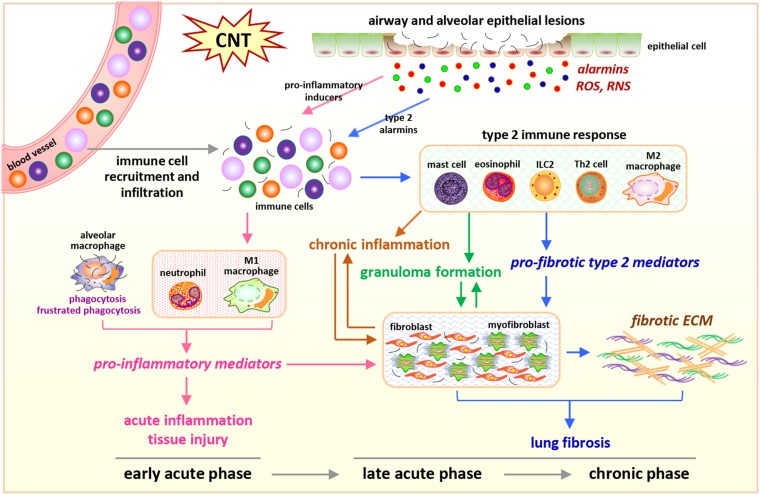
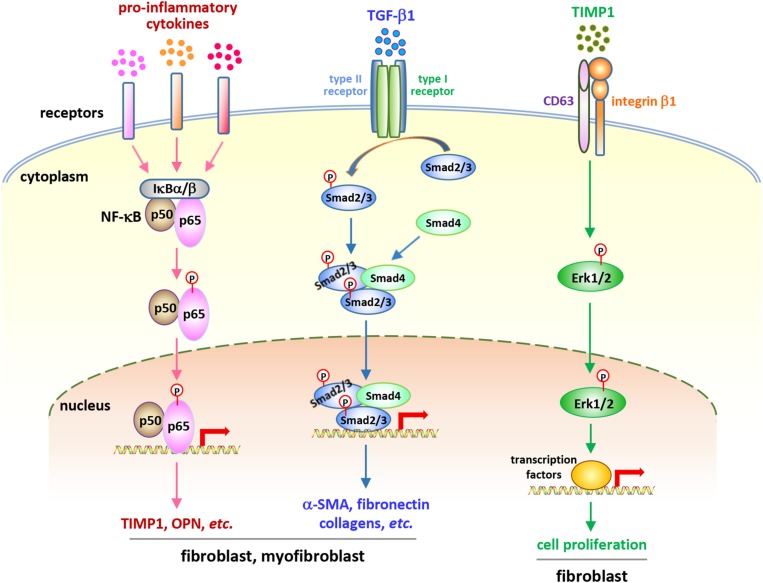
Carbon nanotube (CNT)-induced pulmonary inflammation and fibrosis have been intensively observed and characterized in numerous animal studies in the past decade. Remarkably, CNT-induced fibrotic lesions highly resemble some human fibrotic lung diseases, such as IPF and pneumoconiosis, regarding disease development and pathological features. This notion leads to a serious concern over the health impact of CNTs in exposed human populations, considering the rapidly expanding production of CNT materials for diverse industrial and commercial applications, and meanwhile provides the rationale for exploring CNT-induced pathologic effects in the lung. Accumulating mechanistic understanding of CNT lung pathology at the systemic, cellular, and molecular levels has demonstrated the potential of using CNT-exposed animals as a new disease model for the studies on inflammation, fibrosis, and the interactions between these two disease states. Tissue microenvironment plays critical roles in maintaining homeostasis and physiological functions of organ systems. When aberrant microenvironment forms under intrinsic or extrinsic stimulation, tissue abnormality, organ dysfunction, and pathological outcomes are induced, resulting in disease development. In this article, the cellular and molecular alterations that are induced in tissue microenvironment and implicated in the initiation and progression of inflammation and fibrosis in CNT-exposed lungs, including effector cells, soluble mediators, and functional events exemplified by cell differentiation and extracellular matrix (ECM) modification, are summarized and discussed. This analysis would provide new insights into the mechanistic understanding of lung inflammation and fibrosis induced by CNTs, as well as the development of CNT-exposed animals as a new model for human lung diseases.
在过去十年的众多动物研究中,碳纳米管(CNT)诱发的肺部炎症和纤维化已得到深入观察和表征。值得注意的是,就疾病发展和病理特征而言,CNT诱发的纤维化病变与某些人类纤维化肺病(如特发性肺纤维化和尘肺病)极为相似。鉴于用于各种工业和商业应用的CNT材料产量迅速增长,这一观点引发了人们对接触CNT的人群健康影响的严重担忧,同时也为探索CNT在肺部诱发的病理效应提供了理论依据。在系统、细胞和分子水平上,对CNT肺部病理学的机制理解不断积累,这表明可以将接触CNT的动物用作研究炎症、纤维化以及这两种疾病状态之间相互作用的新疾病模型。组织微环境在维持器官系统的稳态和生理功能方面起着关键作用。当在内在或外在刺激下形成异常微环境时,会诱发组织异常、器官功能障碍和病理结果,从而导致疾病发展。在本文中,我们总结并讨论了在组织微环境中诱发的、与接触CNT的肺部炎症和纤维化的起始及进展相关的细胞和分子变化,包括效应细胞、可溶性介质以及以细胞分化和细胞外基质(ECM)修饰为例的功能事件。这一分析将为深入理解CNT诱发的肺部炎症和纤维化机制,以及将接触CNT的动物开发为人类肺病新模型提供新的见解。