School of Chemistry and Chemical Engineering, University of South China, Hengyang 421001, China.
Laboratory of Protein Structure and Function, University of South China, Hengyang 421001, China.
Biomolecules. 2020 Mar 16;10(3):457. doi: 10.3390/biom10030457.
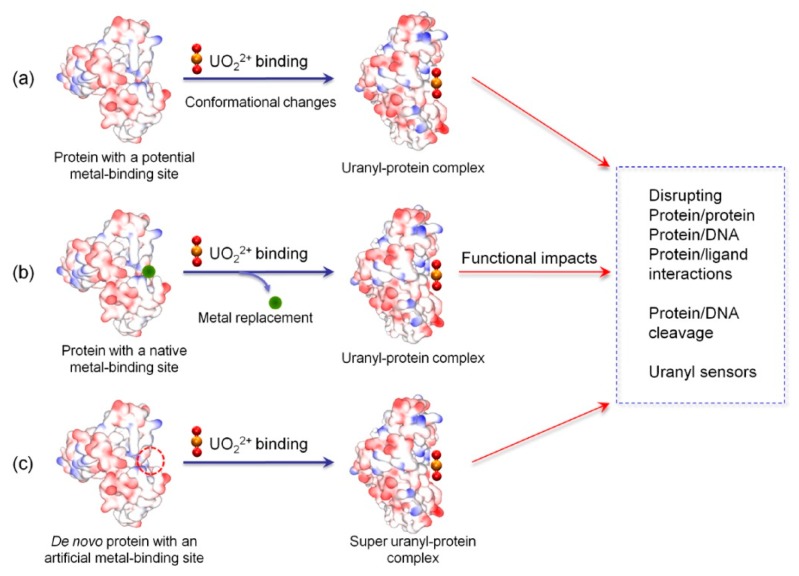
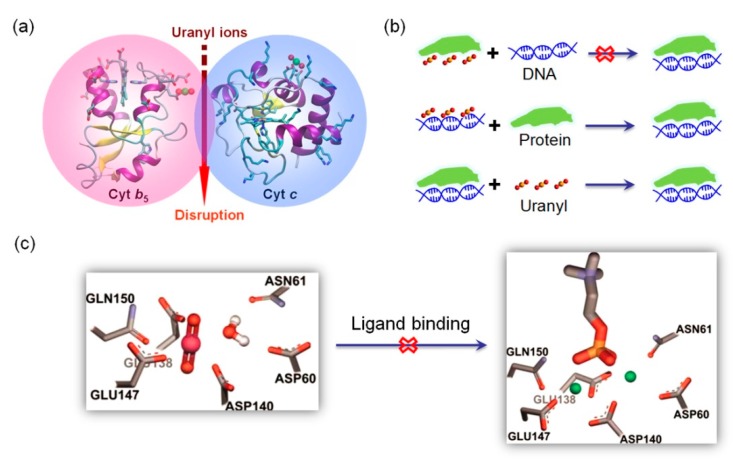
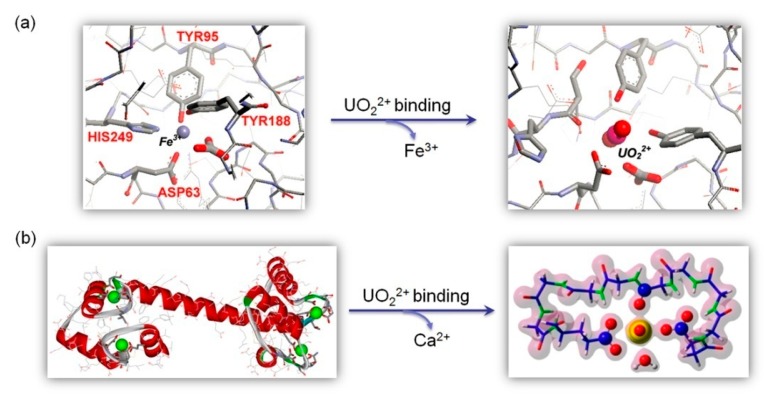
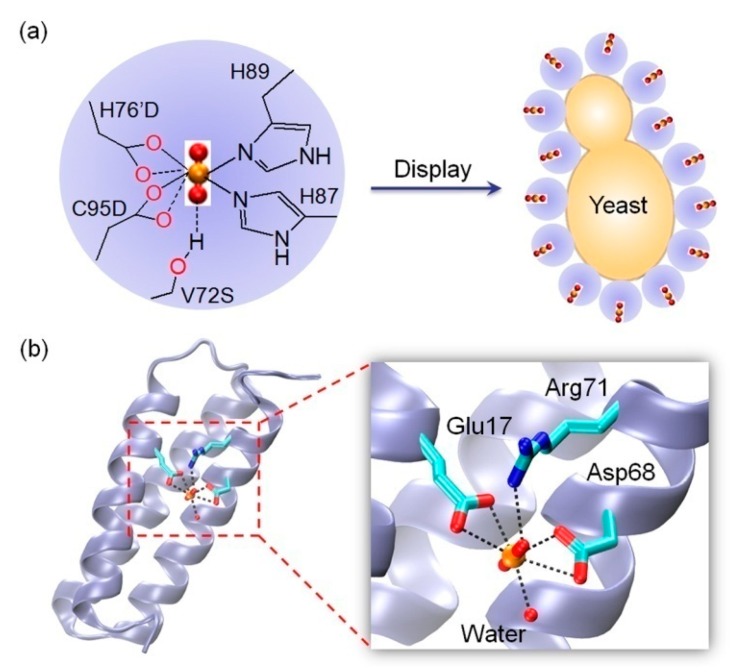
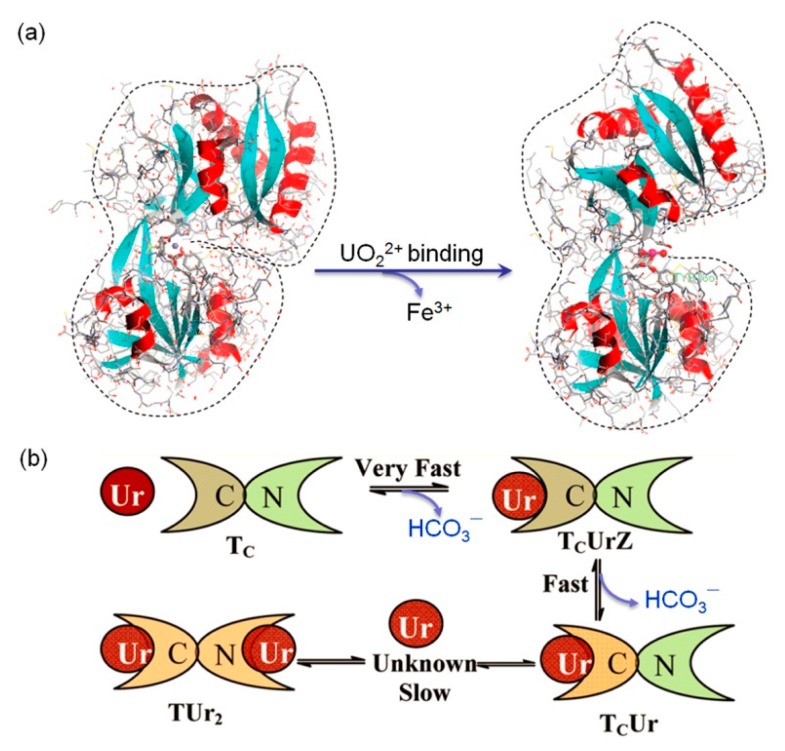
The widespread use of uranium for civilian purposes causes a worldwide concern of its threat to human health due to the long-lived radioactivity of uranium and the high toxicity of uranyl ion (UO). Although uranyl-protein/DNA interactions have been known for decades, fewer advances are made in understanding their structural-functional impacts. Instead of focusing only on the structural information, this article aims to review the recent advances in understanding the binding of uranyl to proteins in either potential, native, or artificial metal-binding sites, and the structural-functional impacts of uranyl-protein interactions, such as inducing conformational changes and disrupting protein-protein/DNA/ligand interactions. Photo-induced protein/DNA cleavages, as well as other impacts, are also highlighted. These advances shed light on the structure-function relationship of proteins, especially for metalloproteins, as impacted by uranyl-protein interactions. It is desired to seek approaches for biological remediation of uranyl ions, and ultimately make a full use of the double-edged sword of uranium.
铀的广泛应用引起了全球对其对人类健康威胁的关注,这是由于铀的长寿命放射性和铀酰离子 (UO) 的高毒性所致。尽管铀酰-蛋白质/DNA 相互作用已被人们认识了几十年,但在理解其结构-功能影响方面进展甚微。本文的目的不是仅关注结构信息,而是旨在综述近年来在理解铀酰与潜在、天然或人工金属结合位点中蛋白质的结合,以及铀酰-蛋白质相互作用的结构-功能影响(如诱导构象变化和破坏蛋白质-蛋白质/DNA/配体相互作用)方面的研究进展。还强调了光诱导的蛋白质/DNA 断裂以及其他影响。这些进展揭示了铀酰-蛋白质相互作用对蛋白质(特别是金属蛋白)的结构-功能关系的影响。人们希望寻求生物修复铀酰离子的方法,并最终充分利用铀的双刃剑效应。