School of Chemistry and Chemical Engineering, University of South China, Hengyang 421001, China.
Laboratory of Protein Structure and Function, University of South China, Hengyang 421001, China.
Molecules. 2019 Jul 29;24(15):2743. doi: 10.3390/molecules24152743.
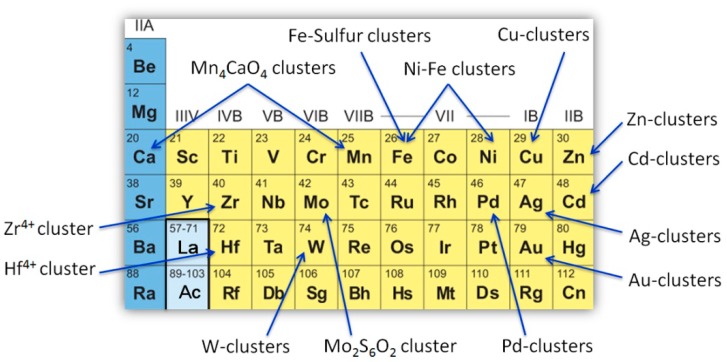
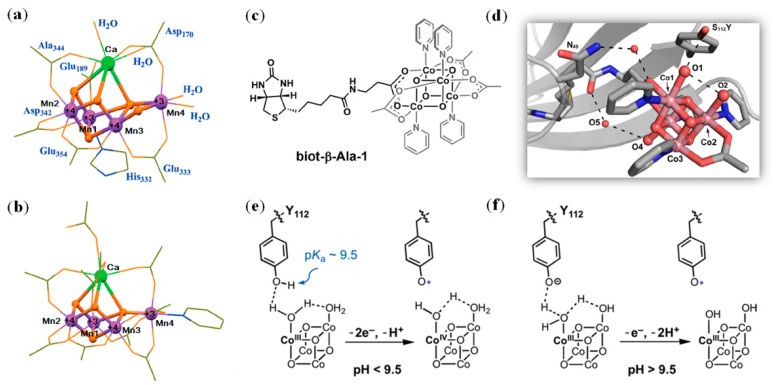
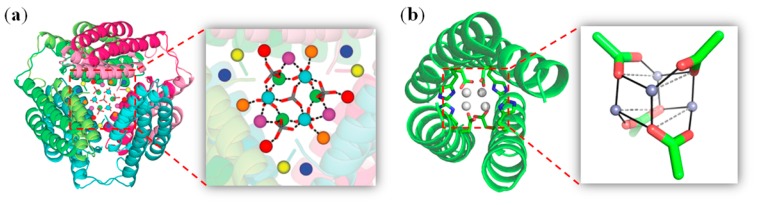
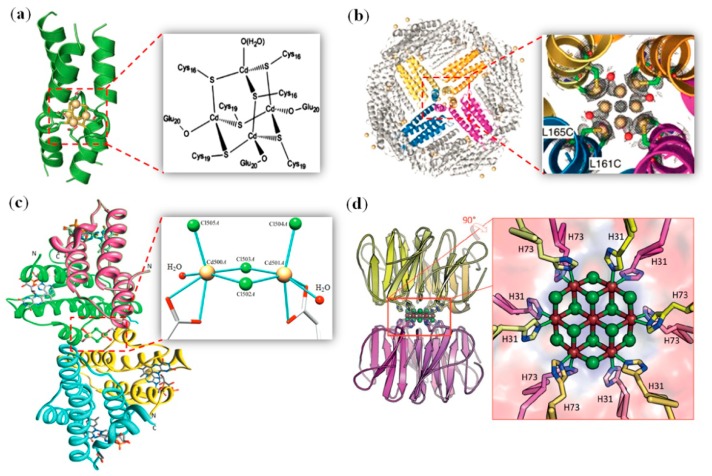
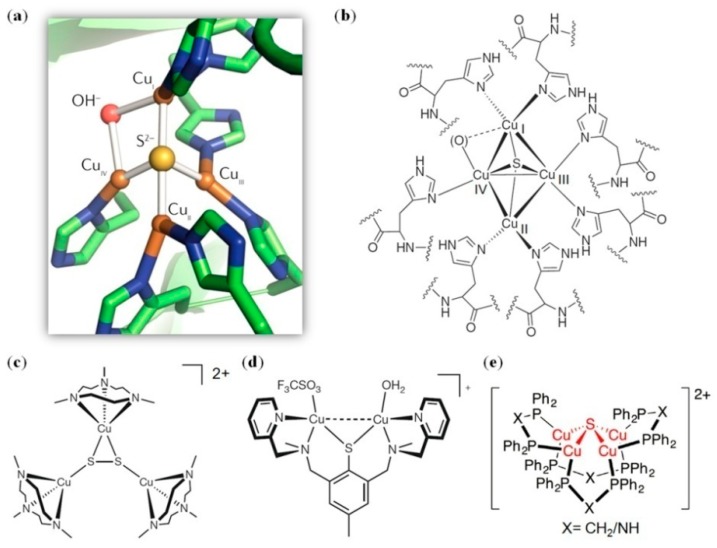
Metalloproteins and metalloenzymes play important roles in biological systems by using the limited metal ions, complexes, and clusters that are associated with the protein matrix. The design of artificial metalloproteins and metalloenzymes not only reveals the structure and function relationship of natural proteins, but also enables the synthesis of artificial proteins and enzymes with improved properties and functions. Acknowledging the progress in rational design from single to multiple active sites, this review focuses on recent achievements in the design of artificial metalloproteins and metalloenzymes with metal clusters, including zinc clusters, cadmium clusters, iron-sulfur clusters, and copper-sulfur clusters, as well as noble metal clusters and others. These metal clusters were designed in both native and de novo protein scaffolds for structural roles, electron transfer, or catalysis. Some synthetic metal clusters as functional models of native enzymes are also discussed. These achievements provide valuable insights for deep understanding of the natural proteins and enzymes, and practical clues for the further design of artificial enzymes with functions comparable or even beyond those of natural counterparts.
金属蛋白和金属酶通过利用与蛋白质基质相关的有限的金属离子、配合物和簇来在生物系统中发挥重要作用。人工金属蛋白和金属酶的设计不仅揭示了天然蛋白的结构和功能关系,而且还能够合成具有改进的性质和功能的人工蛋白和酶。本文承认从单一到多个活性位点的合理设计方面的进展,重点介绍了设计具有金属簇的人工金属蛋白和金属酶的最新进展,包括锌簇、镉簇、铁硫簇和铜硫簇以及贵金属簇和其他簇。这些金属簇在天然和从头设计的蛋白质支架中被设计用于结构作用、电子转移或催化。还讨论了一些作为天然酶功能模型的合成金属簇。这些成就为深入了解天然蛋白和酶提供了有价值的见解,并为进一步设计具有功能的人工酶提供了实际线索,这些人工酶的功能可与天然对应物相当甚至超越。