Department of Pharmacy, University of Salerno, Via Giovanni Paolo II, 134, I-84084 Fisciano, Italy.
Institute of Polymers, Composites and Biomaterials, National Research Council of Italy, V.le J.F. Kennedy 54-Pad. 20 Mostra d'Oltremare, 80125 Naples, Italy.
Int J Mol Sci. 2020 Mar 16;21(6):2037. doi: 10.3390/ijms21062037.
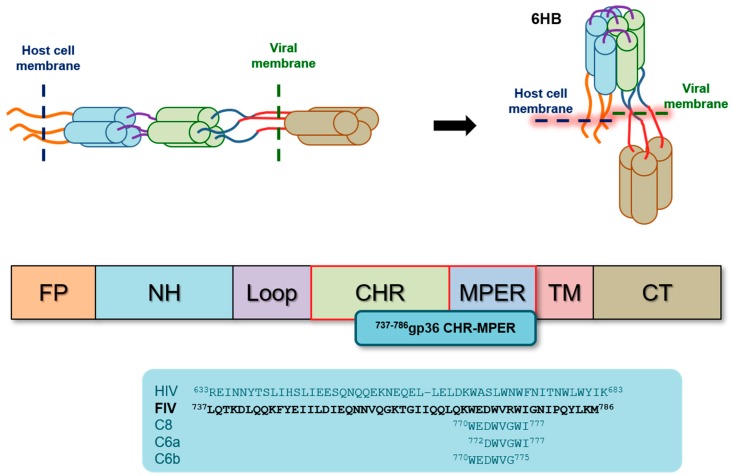
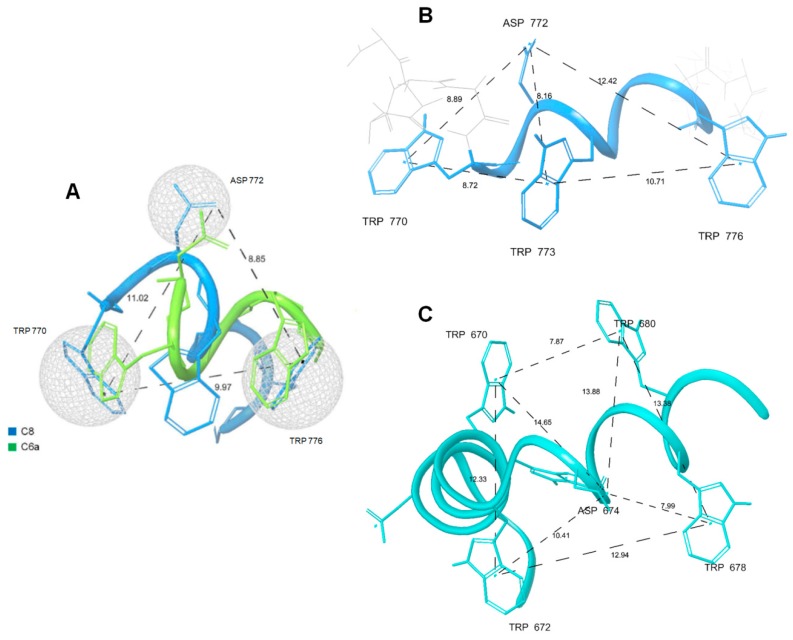
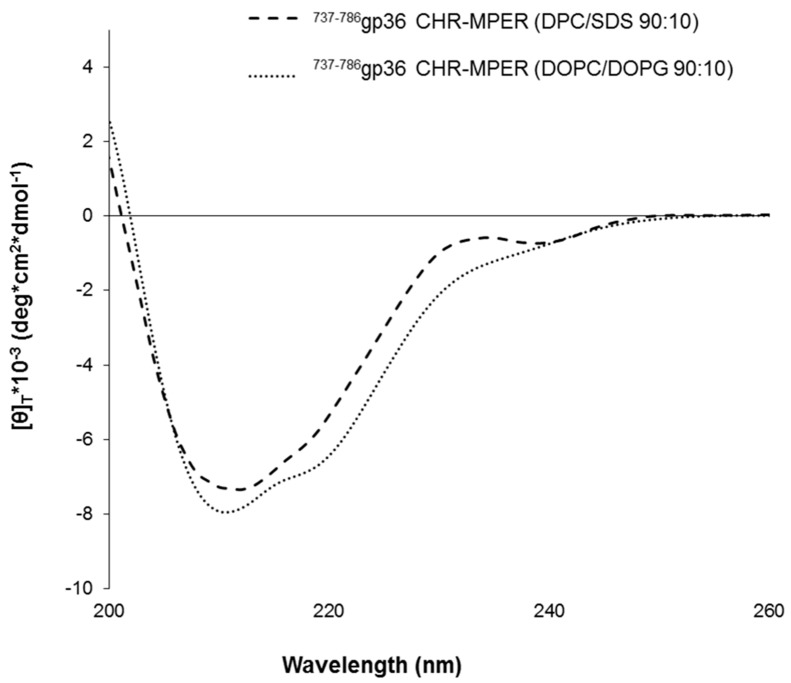
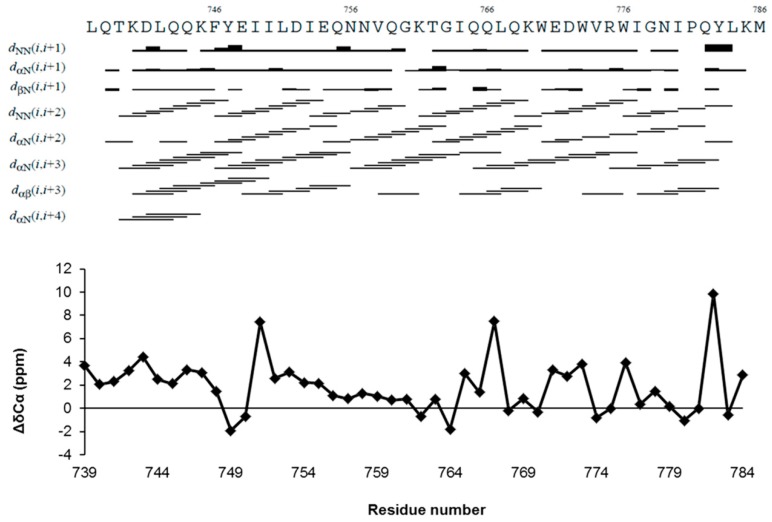
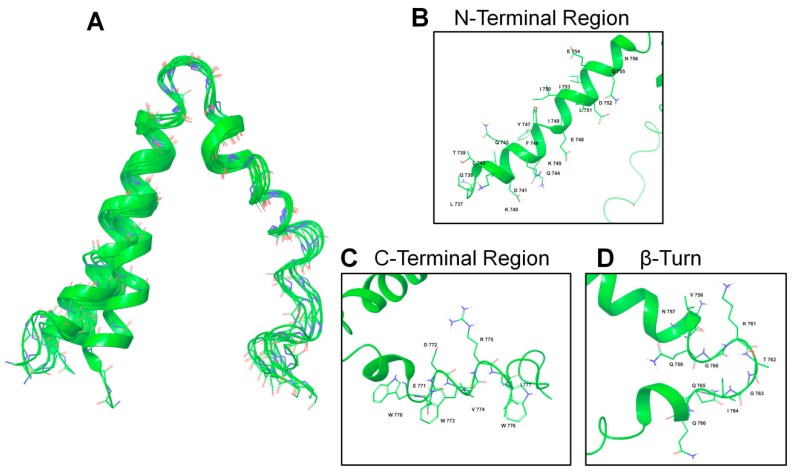
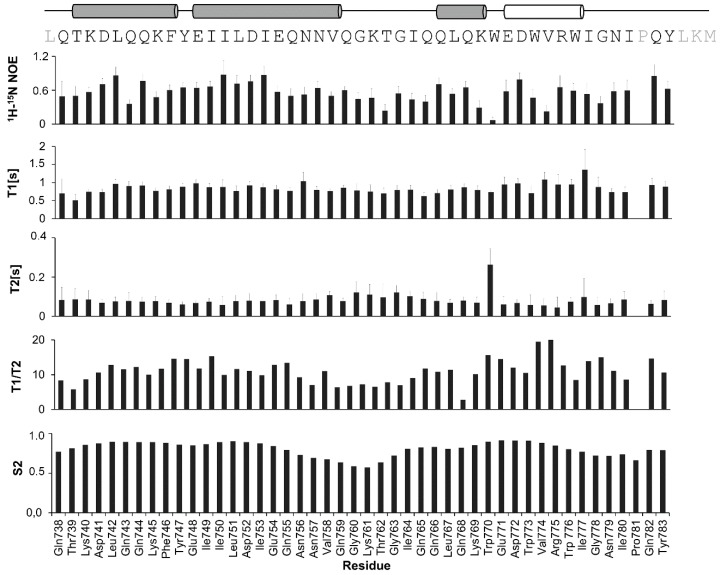
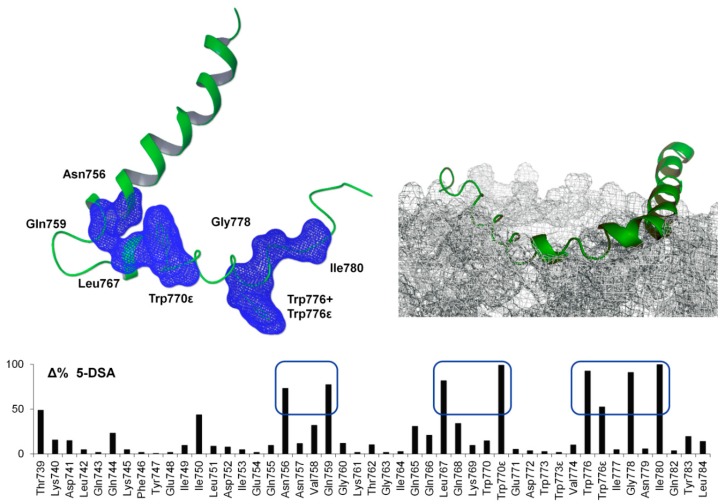
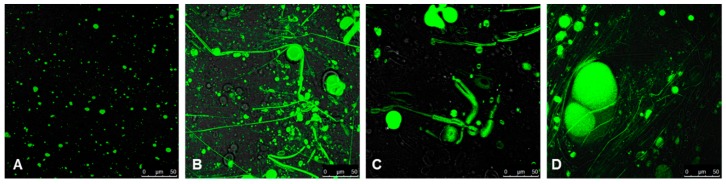
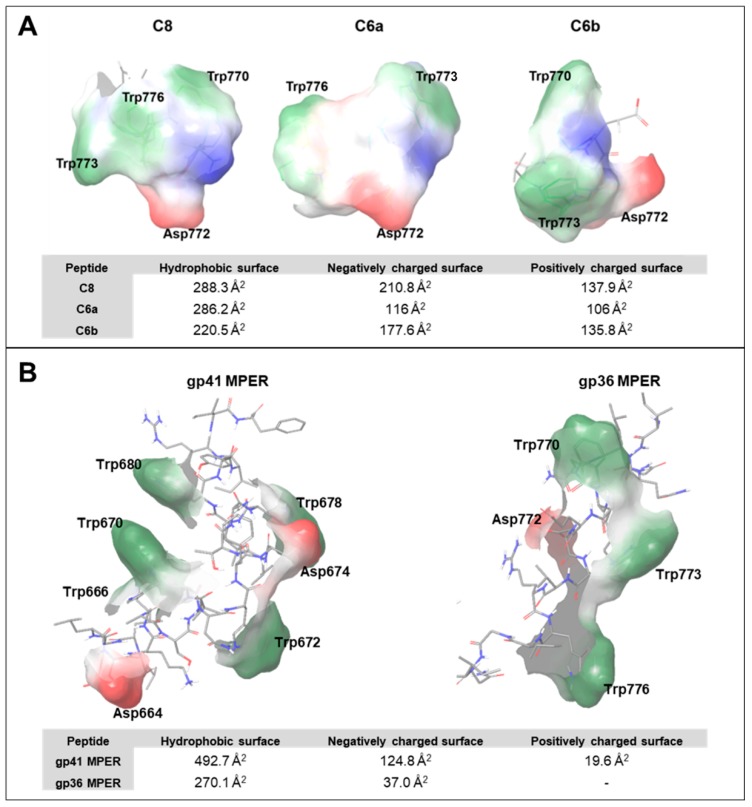
Feline immunodeficiency virus (FIV), a lentivirus causing an immunodeficiency syndrome in cats, represents a relevant model of pre-screening therapies for human immunodeficiency virus (HIV). The envelope glycoproteins gp36 in FIV and gp41 in HIV mediate the fusion of the virus with the host cell membrane. They have a common structural framework in the C-terminal region that includes a Trp-rich membrane-proximal external region (MPER) and a C-terminal heptad repeat (CHR). MPER is essential for the correct positioning of gp36 on the lipid membrane, whereas CHR is essential for the stabilization of the low-energy six-helical bundle (6HB) that is necessary for the fusion of the virus envelope with the cell membrane. Conformational data for gp36 are missing, and several aspects of the MPER structure of different lentiviruses are still debated. In the present work, we report the structural investigation of a gp36 construct that includes the MPER and part of the CHR domain (gp36 CHR-MPER). Using 2D and 3D homo and heteronuclear NMR spectra on N and C double-labelled samples, we solved the NMR structure in micelles composed of dodecyl phosphocholine (DPC) and sodium dodecyl sulfate (SDS) 90/10 M: M. The structure of gp36 CHR-MPER is characterized by a helix-turn-helix motif, with a regular α-helix and a moderately flexible 3 helix, characterizing the CHR and the MPER domains, respectively. The two helices are linked by a flexible loop regulating their orientation at a ~43° angle. We investigated the positioning of gp36 CHR-MPER on the lipid membrane using spin label-enhanced NMR and ESR spectroscopies. On a different scale, using confocal microscopy imaging, we studied the effect of gp36 CHR-MPER on 1,2-dioleoyl-sn-glycero-3-phosphocholine/1,2-dioleoyl-sn-glycero-3-phospho-(1'-rac-glycerol) (DOPC/DOPG) multilamellar vesicles (MLVs). This effect results in membrane budding and tubulation that is reminiscent of a membrane-plasticizing role that is typical of MPER domains during the event in which the virus envelope merges with the host cell membrane.
猫免疫缺陷病毒(FIV)是一种导致猫免疫缺陷综合征的慢病毒,它是人类免疫缺陷病毒(HIV)前筛选治疗的相关模型。FIV 的包膜糖蛋白 gp36 和 HIV 的 gp41 介导病毒与宿主细胞膜的融合。它们在 C 端区域具有共同的结构框架,包括富含色氨酸的膜近端外部区域(MPER)和 C 端七肽重复(CHR)。MPER 对于 gp36 在脂质膜上的正确定位至关重要,而 CHR 对于稳定低能量六螺旋束(6HB)至关重要,该六螺旋束是病毒包膜与细胞膜融合所必需的。gp36 的构象数据缺失,并且不同慢病毒的 MPER 结构的几个方面仍存在争议。在本工作中,我们报告了包括 MPER 和 CHR 结构域部分的 gp36 构建体的结构研究。使用二维和三维同核和异核 NMR 光谱对 N 和 C 双标记样品进行研究,我们在由十二烷基磷酸胆碱(DPC)和十二烷基硫酸钠(SDS)90/10 M:M 组成的胶束中解决了 NMR 结构。gp36 CHR-MPER 的结构特征是一个螺旋-转角-螺旋基序,具有规则的α-螺旋和一个适度灵活的 3 螺旋,分别表征 CHR 和 MPER 结构域。这两个螺旋通过一个灵活的环连接,使其以约 43°的角度定位。我们使用自旋标记增强 NMR 和 ESR 光谱研究了 gp36 CHR-MPER 在脂质膜上的定位。在不同的尺度上,我们使用共焦显微镜成像研究了 gp36 CHR-MPER 对 1,2-二油酰基-sn-甘油-3-磷酸胆碱/1,2-二油酰基-sn-甘油-3-磷酸-(1'-rac-甘油)(DOPC/DOPG)多层囊泡(MLVs)的影响。这种影响导致膜泡出芽和管化,这类似于 MPER 结构域在病毒包膜与宿主细胞膜融合过程中具有的膜塑性作用。