Bertacchi Stefano, Bettiga Maurizio, Porro Danilo, Branduardi Paola
1Department of Biotechnology and Biosciences, University of Milano-Bicocca, Piazza della Scienza 2, 20126 Milan, Italy.
2Division of Industrial Biotechnology, Department of Biology and Biological Engineering, Chalmers University of Technology, Kemivägen 10, 412 96 Gothenburg, Sweden.
Biotechnol Biofuels. 2020 Mar 12;13:47. doi: 10.1186/s13068-020-01682-3. eCollection 2020.
As the circular economy advocates a near total waste reduction, the industry has shown an increased interest toward the exploitation of various residual biomasses. The origin and availability of biomass used as feedstock strongly affect the sustainability of biorefineries, where it is converted in energy and chemicals. Here, we explored the valorization of meal, the leftover residue from oil extraction. In fact, in addition to meal use as animal feed, there is an increasing interest in further valorizing its macromolecular content or its nutritional value.
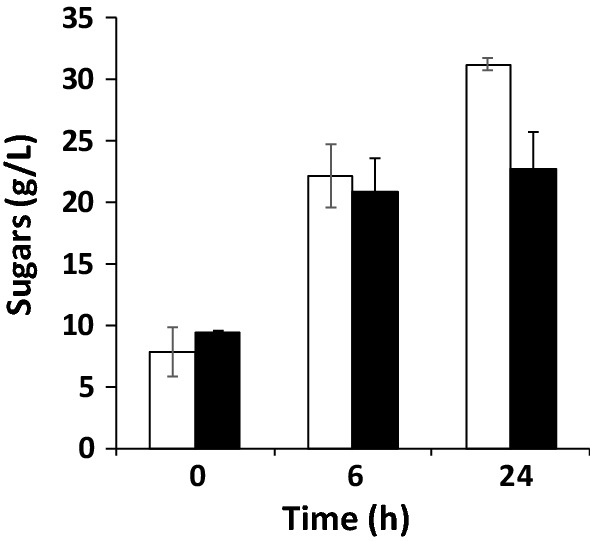
meal hydrolysates were used as nutrient and energy sources for the fermentation of the carotenoid-producing yeast in shake flasks. Total acid hydrolysis revealed that carbohydrates accounted for a maximum of 31 ± 1.0% of meal. However, because acid hydrolysis is not optimal for subsequent microbial fermentation, an enzymatic hydrolysis protocol was assessed, yielding a maximum sugar recovery of 53.3%. Separate hydrolysis and fermentation (SHF), simultaneous saccharification and fermentation (SSF), and SSF preceded by presaccharification of meal hydrolysate produced 5 ± 0.7, 16 ± 1.9, and 13 ± 2.6 mg/L of carotenoids, respectively. Importantly, the presence of water-insoluble solids, which normally inhibit microbial growth, correlated with a higher titer of carotenoids, suggesting that the latter could act as scavengers.
This study paves the way for the exploitation of meal as feedstock in biorefinery processes. The process under development provides an example of how different final products can be obtained from this side stream, such as pure carotenoids and carotenoid-enriched meal, can potentially increase the initial value of the source material. The obtained data will help assess the feasibility of using meal to generate high value-added products.
由于循环经济提倡近乎完全减少浪费,该行业对各种残余生物质的开发表现出越来越浓厚的兴趣。用作原料的生物质的来源和可用性强烈影响生物精炼厂的可持续性,在生物精炼厂中生物质被转化为能源和化学品。在此,我们探索了粕(油提取后的剩余残渣)的价值提升。事实上,除了将粕用作动物饲料外,人们对进一步提升其大分子含量或营养价值的兴趣也在增加。
在摇瓶中,粕水解产物被用作生产类胡萝卜素的酵母发酵的营养和能量来源。完全酸水解显示碳水化合物在粕中最多占31±1.0%。然而,由于酸水解对后续微生物发酵并非最佳选择,因此评估了一种酶水解方案,糖的最大回收率为53.3%。单独水解和发酵(SHF)、同步糖化和发酵(SSF)以及在粕水解产物预糖化后进行的SSF分别产生了5±0.7、16±1.9和13±2.6mg/L的类胡萝卜素。重要的是,通常会抑制微生物生长的水不溶性固体的存在与较高的类胡萝卜素滴度相关,这表明后者可能起到清除剂的作用。
本研究为在生物精炼过程中利用粕作为原料铺平了道路。正在开发的工艺提供了一个例子,说明如何从这种副产物中获得不同的最终产品,如纯类胡萝卜素和富含类胡萝卜素的粕,这有可能提高原料的初始价值。所获得的数据将有助于评估使用粕生产高附加值产品的可行性。