Xing Yingfang, Cai Zhewei, Xu Meijuan, Ju Wenzheng, Luo Xiaojun, Hu Yaojuan, Liu Xiaoyan, Kang Tuli, Wu Ping, Cai Chenxin, Zhu Jun-Jie
Jiangsu Key Laboratory of New Power Batteries , Jiangsu Collaborative Innovation Center of Biomedical Functional Materials , National and Local Joint Engineering Research Center of Biomedical Functional Materials , College of Chemistry and Materials Science , Nanjing Normal University , Nanjing 210097 , P. R. China . Email:
Department of Chemical and Biomolecular Engineering , Clarkson University , Potsdam , NY 13699 , USA.
Chem Sci. 2019 Oct 15;10(47):10900-10910. doi: 10.1039/c9sc04389f. eCollection 2019 Dec 21.
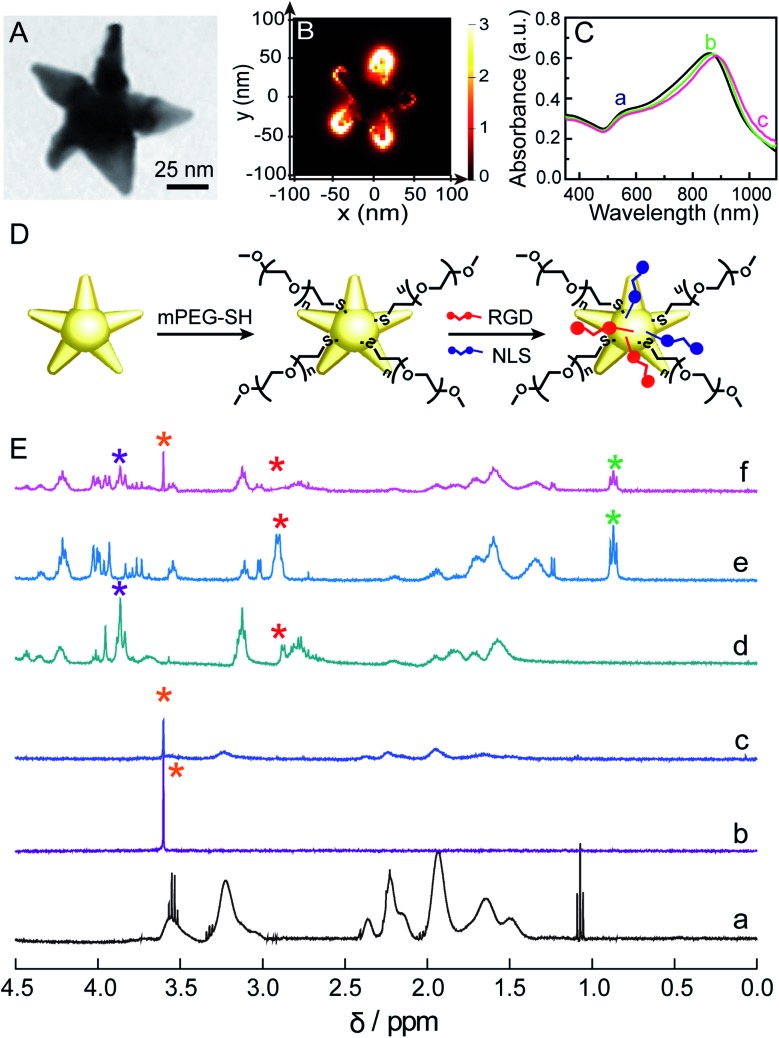
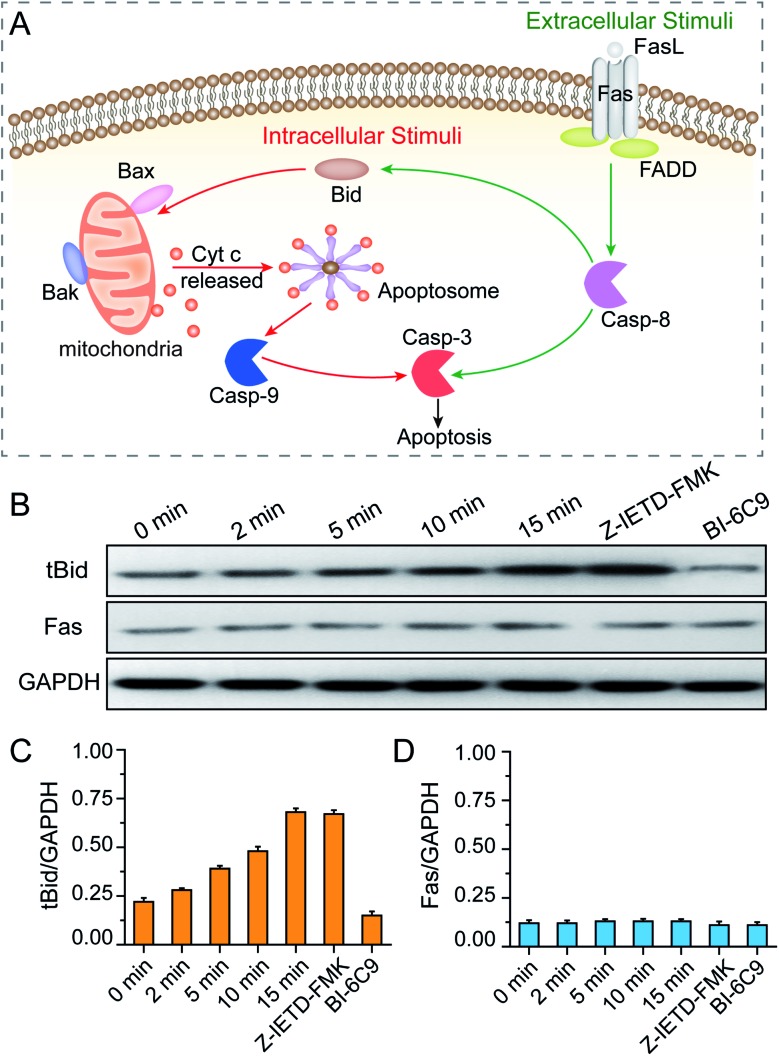
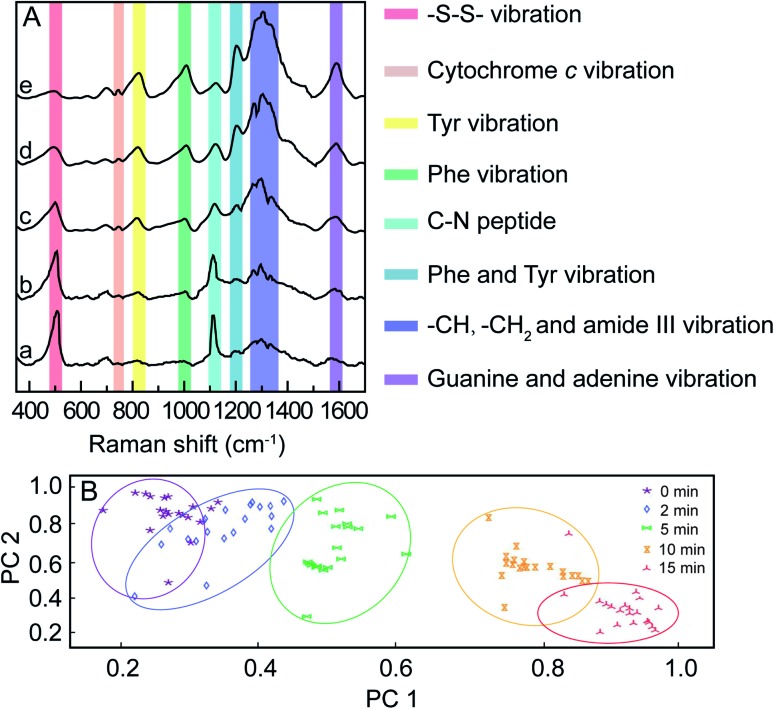
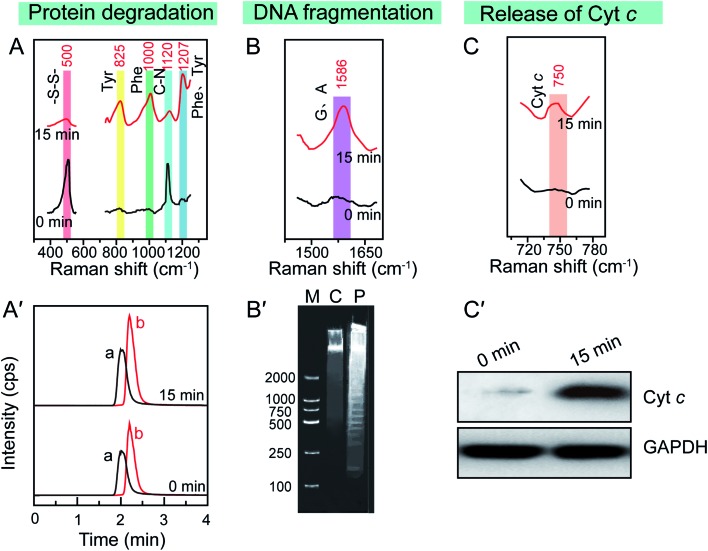
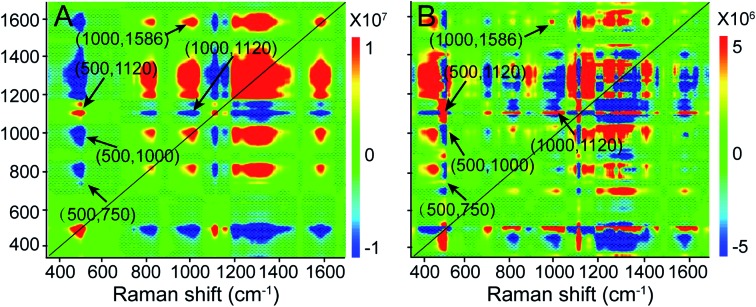
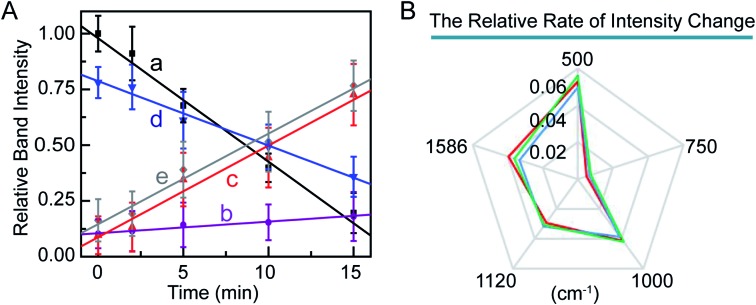
Plasmonic nanoparticle (NP)-mediated photothermal therapy (PPTT) has been explored as a minimally invasive approach to cancer therapy and has progressed from concept to the early stage of clinical trials. Better understanding of the cellular and molecular response to PPTT is crucial for improvement of therapy efficacy and advancement of clinical application. However, the molecular mechanism underlying PPTT-induced apoptosis is still unclear and under dispute. In this work, we used nuclear-targeting Au nanostars (Au NSs) as both a photothermal agent to specifically induce apoptosis in cancer cells and as a surface enhanced Raman spectroscopy (SERS) probe to monitor the time-dependent SERS spectra of MCF-7 cells which are undergoing apoptosis. Through SERS spectra and their synchronous and asynchronous SERS correlation maps, the occurrence and dynamics of a cascade of molecular events have been investigated, and a molecular signaling pathway of PPTT-induced apoptosis, including release of cytochrome c, protein degradation, and DNA fragmentation, was revealed, which was also demonstrated by metabolomics, agarose gel electrophoresis, and western blot analysis, respectively. These results indicated that PPTT-induced apoptosis undergoes an intrinsic mitochondria-mediated apoptosis pathway. Combined with western blot results, this intrinsic mitochondria-mediated apoptosis pathway was further demonstrated to be initiated by a BH3-only protein, BID. This work is beneficial for not only improving the fundamental understanding of the molecular mechanism of apoptosis induced by PPTT but also for guiding the modulation of PPTT to drive forward its clinical application.
等离子体纳米颗粒(NP)介导的光热疗法(PPTT)已被探索作为一种癌症治疗的微创方法,并且已经从概念发展到临床试验的早期阶段。更好地理解细胞和分子对PPTT的反应对于提高治疗效果和推进临床应用至关重要。然而,PPTT诱导细胞凋亡的分子机制仍不清楚且存在争议。在这项工作中,我们使用核靶向金纳米星(Au NSs)作为光热剂特异性诱导癌细胞凋亡,并作为表面增强拉曼光谱(SERS)探针监测正在经历凋亡的MCF-7细胞的时间依赖性SERS光谱。通过SERS光谱及其同步和异步SERS相关图,研究了一系列分子事件的发生和动态,并揭示了PPTT诱导细胞凋亡的分子信号通路,包括细胞色素c的释放、蛋白质降解和DNA片段化,分别通过代谢组学、琼脂糖凝胶电泳和蛋白质免疫印迹分析得到证实。这些结果表明,PPTT诱导的细胞凋亡经历了内在的线粒体介导的凋亡途径。结合蛋白质免疫印迹结果,进一步证明这种内在的线粒体介导的凋亡途径是由仅含BH3结构域的蛋白BID启动的。这项工作不仅有利于增进对PPTT诱导细胞凋亡分子机制的基本理解,也有助于指导PPTT的调控以推动其临床应用。