NeuroHub Analytics, LLC, Chicago, IL 60605, USA.
Center for Neurodegenerative Diseases and Therapeutics, Cellular and Molecular Pharmacology Department, The Chicago Medical School, Rosalind Franklin University of Medicine and Science, North Chicago, IL 60064, USA.
Int J Mol Sci. 2020 Mar 17;21(6):2050. doi: 10.3390/ijms21062050.
Dementia is a growing public health concern with an estimated prevalence of 50 million people worldwide. Alzheimer's disease (AD) and vascular and frontotemporal dementias (VaD, FTD), share many clinical, genetical, and pathological features making the diagnosis difficult.
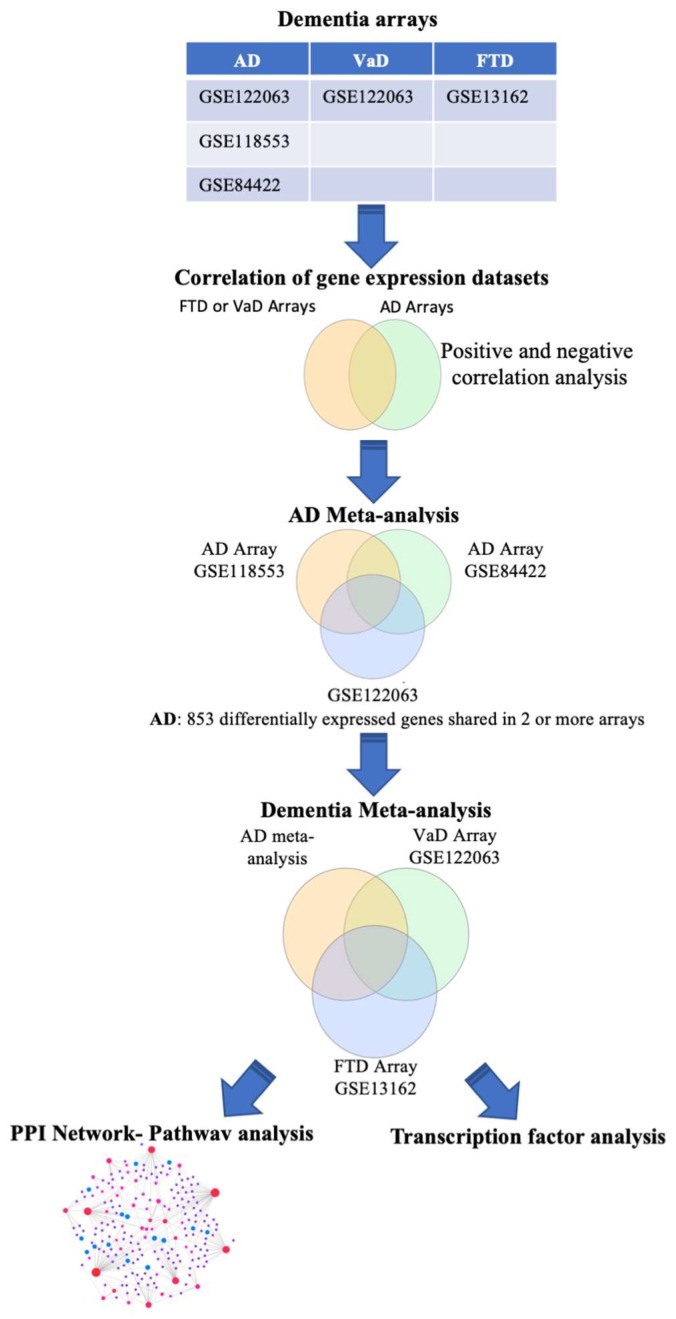
In this study, we compared the transcriptome from the frontal cortex of patients with AD, VaD, and FTD to identify dysregulated pathways.
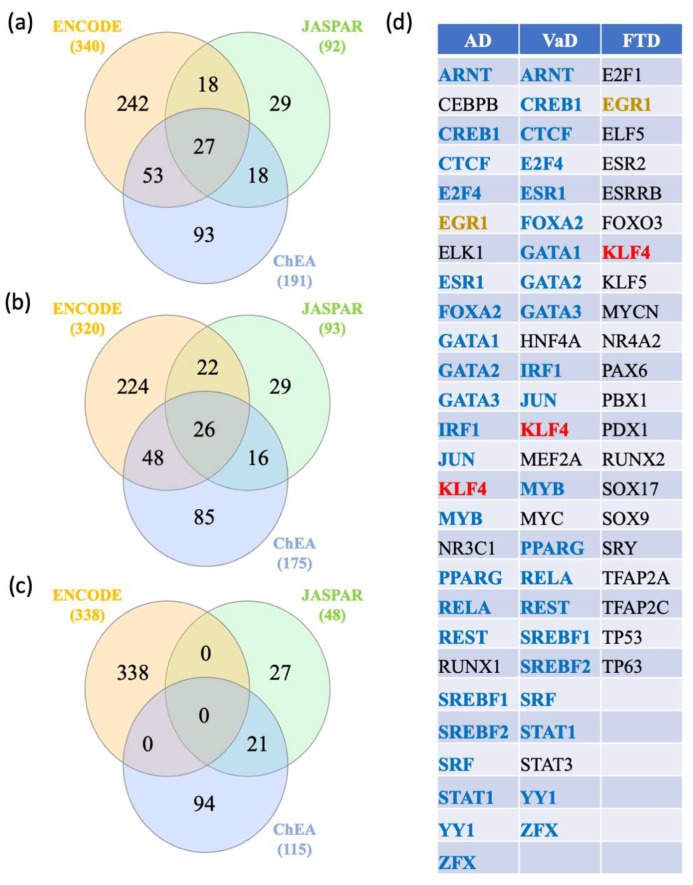
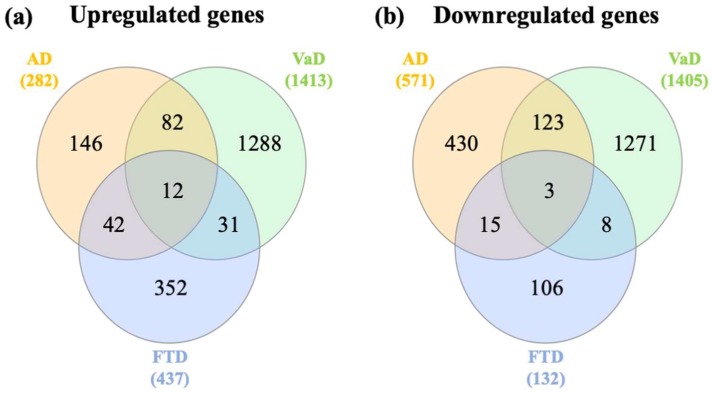
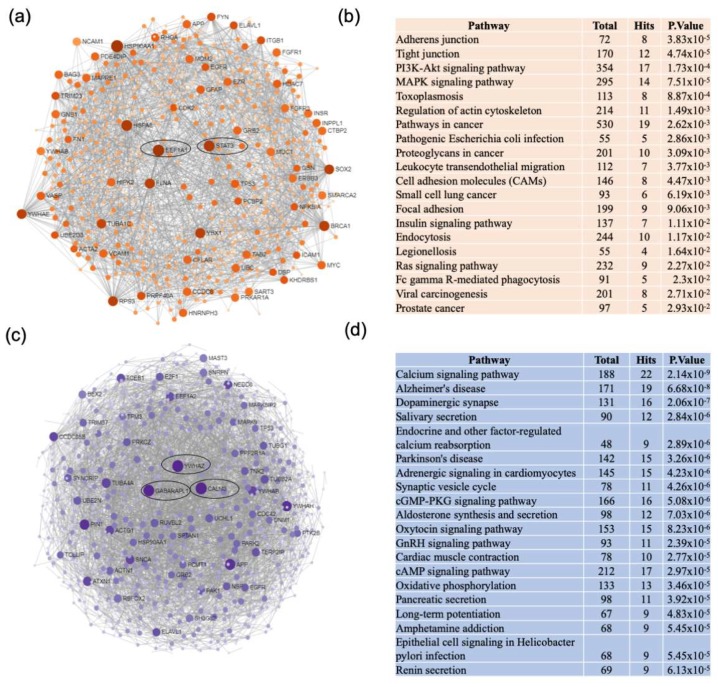
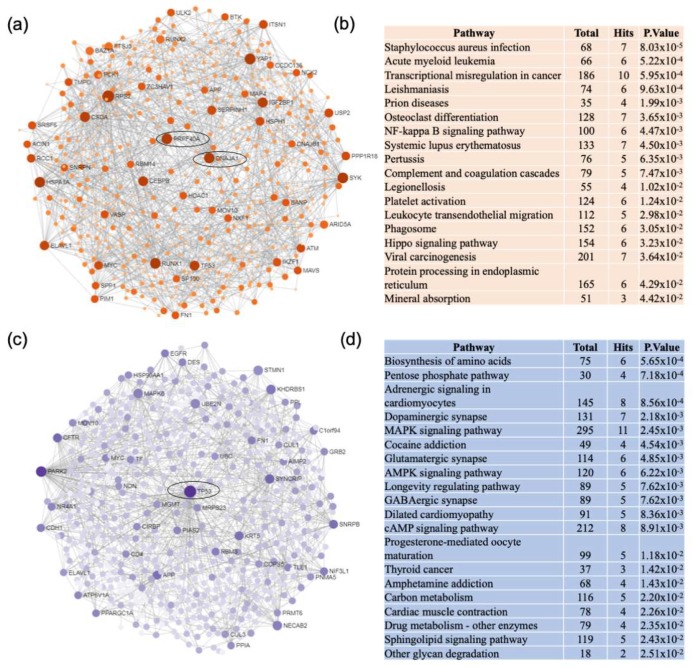
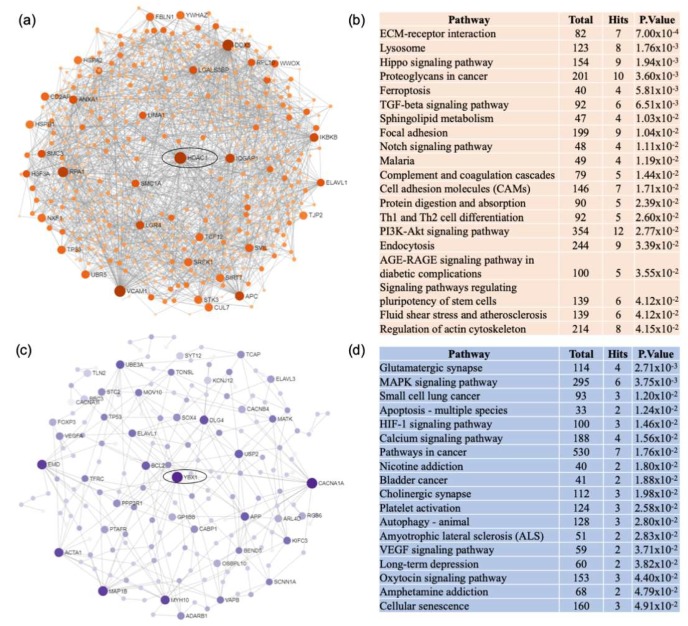
Upregulated genes in AD were enriched in adherens and tight junctions, mitogen-activated protein kinase, and phosphatidylinositol 3-kinase and protein kinase B/Akt signaling pathways, whereas downregulated genes associated with calcium signaling. Upregulated genes in VaD were centered on infectious diseases and nuclear factor kappa beta signaling, whereas downregulated genes are involved in biosynthesis of amino acids and the pentose phosphate pathway. Upregulated genes in FTD were associated with ECM receptor interactions and the lysosome, whereas downregulated genes were involved in glutamatergic synapse and MAPK signaling. The transcription factor KFL4 was shared among the 3 types of dementia.
Collectively, we identified similarities and differences in dysregulated pathways and transcription factors among the dementias. The shared pathways and transcription factors may indicate a potential common etiology, whereas the differences may be useful for distinguishing dementias.
痴呆是一个日益严重的公共卫生问题,全球估计有 5000 万人患有痴呆症。阿尔茨海默病(AD)和血管性及额颞叶痴呆(VaD、FTD)具有许多临床、遗传和病理特征,这使得诊断变得困难。
在这项研究中,我们比较了 AD、VaD 和 FTD 患者额叶皮层的转录组,以确定失调的途径。
AD 中上调的基因富集在黏附连接、丝裂原活化蛋白激酶、磷酸肌醇 3-激酶和蛋白激酶 B/akt 信号通路,而下调的基因与钙信号相关。VaD 中上调的基因集中在传染病和核因子 kappa beta 信号,而下调的基因涉及氨基酸合成和戊糖磷酸途径。FTD 中上调的基因与细胞外基质受体相互作用和溶酶体有关,而下调的基因则与谷氨酸能突触和 MAPK 信号有关。转录因子 KFL4 在这 3 种痴呆症中都有表达。
总的来说,我们确定了痴呆症中失调途径和转录因子的异同。共同的途径和转录因子可能表明存在潜在的共同病因,而差异可能有助于区分痴呆症。