Cao Ye, Lee Bae Hoon, Irvine Scott Alexander, Wong Yee Shan, Bianco Peled Havazelet, Venkatraman Subramanian
School of Materials Science and Engineering, Nanyang Technological University, 50 Nanyang Avenue, Singapore 639798, Singapore.
The Inter-Departmental Program for Biotechnology, Technion-Israel Institute of Technology, Haifa 32000, Israel.
Polymers (Basel). 2020 Mar 17;12(3):670. doi: 10.3390/polym12030670.
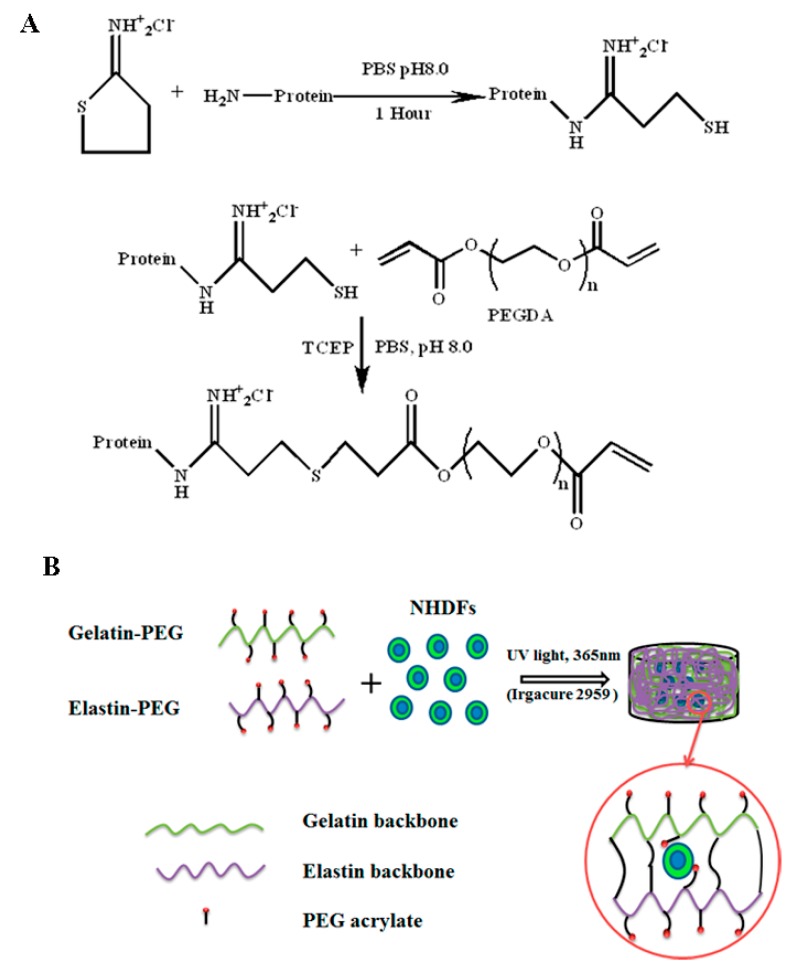
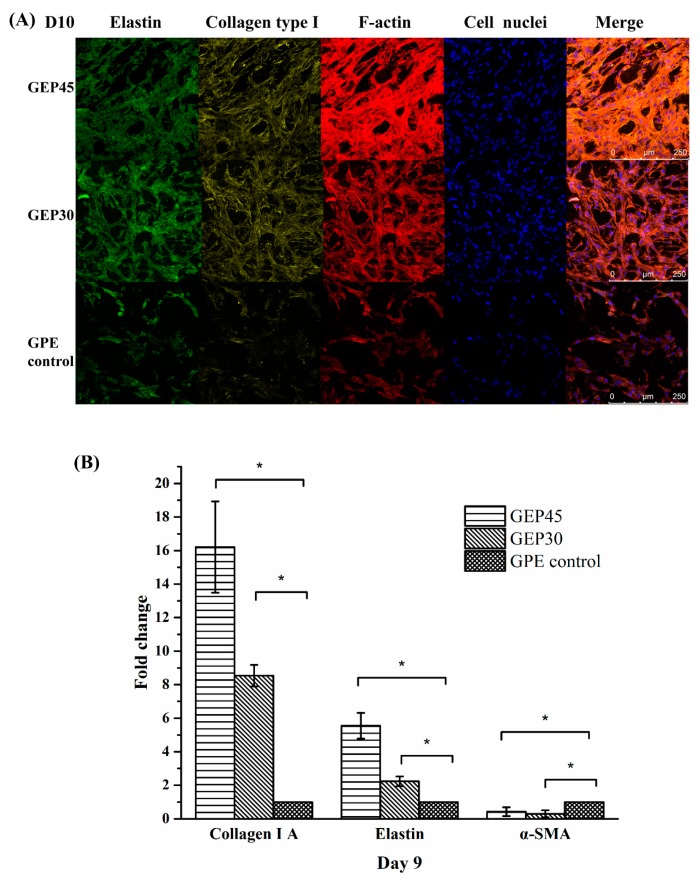
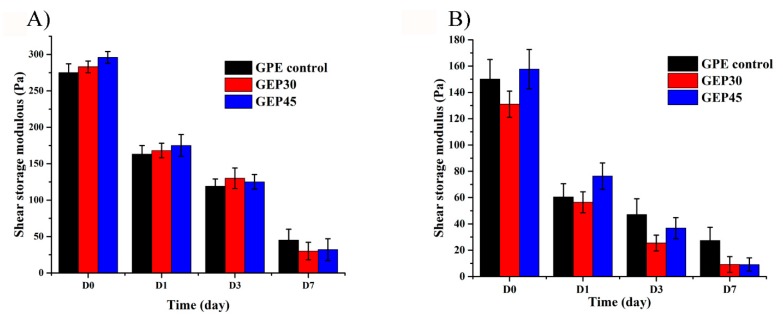
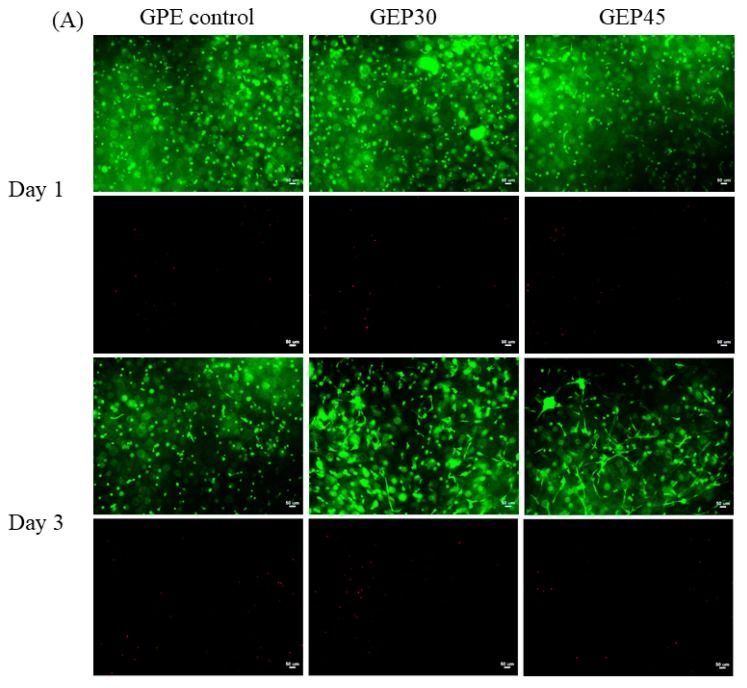
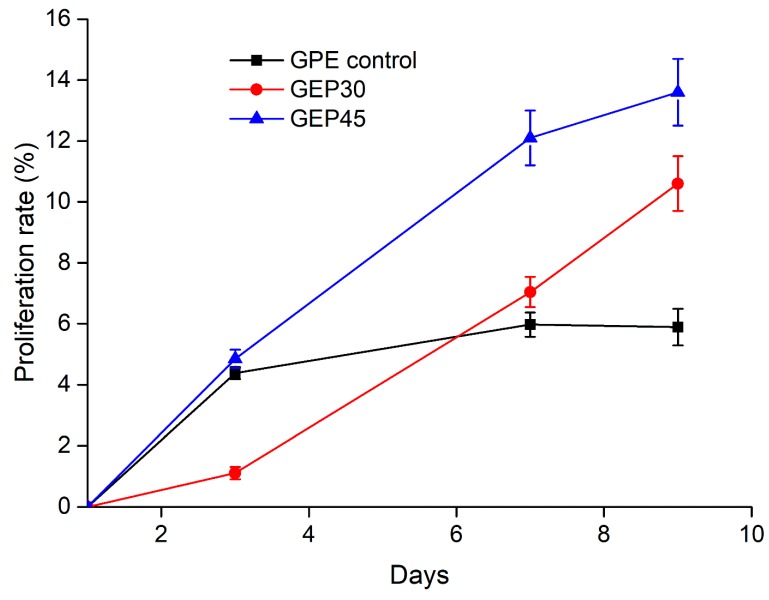
The capacity of a biomaterial to innately modulate cell behavior while meeting the mechanical property requirements of the implant is a much sought-after goal within bioengineering. Here we covalently incorporate soluble elastin into a gelatin-poly (ethylene glycol) (PEG) hydrogel for three-dimensional (3D) cell encapsulation to achieve these properties. The inclusion of elastin into a previously optimized gelatin-PEG hydrogel was then evaluated for effects on entrapped fibroblasts, with the aim to assess the hydrogel as an extracellular matrix (ECM)-mimicking 3D microenvironment for cellular guidance. Soluble elastin was incorporated both physically and covalently into novel gelatin/elastin hybrid PEG hydrogels with the aim to harness the cellular interactivity and mechanical tunability of both elastin and gelatin. This design allowed us to assess the benefits of elastin-containing hydrogels in guiding fibroblast activity for evaluation as a potential dermal replacement. It was found that a gelatin-PEG hydrogel with covalently conjugated elastin, supported neonatal fibroblast viability, promoted their proliferation from 7.3% to 13.5% and guided their behavior. The expression of collagen alpha-1(COL1A1) and elastin in gelatin/elastin hybrid gels increased 16-fold and 6-fold compared to control sample at day 9, respectively. Moreover, cells can be loaded into the hydrogel precursor solution, deposited, and the matrix cross-linked without affecting the incorporated cells adversely, thus enabling a potential injectable system for dermal wound healing.
生物材料在满足植入物机械性能要求的同时,还能天然调节细胞行为,这是生物工程领域一个备受追捧的目标。在此,我们将可溶性弹性蛋白共价结合到明胶 - 聚乙二醇(PEG)水凝胶中,用于三维(3D)细胞封装,以实现这些特性。然后评估将弹性蛋白加入到先前优化的明胶 - PEG水凝胶中对包封的成纤维细胞的影响,目的是评估该水凝胶作为模拟细胞外基质(ECM)的3D微环境对细胞的引导作用。可溶性弹性蛋白通过物理和共价方式被结合到新型明胶/弹性蛋白混合PEG水凝胶中,旨在利用弹性蛋白和明胶的细胞相互作用性和机械可调性。这种设计使我们能够评估含弹性蛋白水凝胶在引导成纤维细胞活性方面的益处,以评估其作为潜在皮肤替代物的可能性。结果发现,含有共价结合弹性蛋白的明胶 - PEG水凝胶能够支持新生成纤维细胞的活力,将其增殖率从7.3%提高到13.5%,并引导其行为。在第9天,明胶/弹性蛋白混合凝胶中胶原蛋白α-1(COL1A1)和弹性蛋白的表达分别比对照样品增加了16倍和6倍。此外,细胞可以加载到水凝胶前体溶液中,进行沉积,并且基质交联不会对包封的细胞产生不利影响,从而形成一种潜在的用于皮肤伤口愈合的可注射系统。