Department of Veterinary Biosciences, College of Veterinary Medicine, The Ohio State University, Columbus, OH 43210.
Laboratory of Cell Biology, Center for Cancer Research, National Cancer Institute, National Institutes of Health, Bethesda, MD 20892.
Proc Natl Acad Sci U S A. 2020 Apr 7;117(14):8032-8043. doi: 10.1073/pnas.1921619117. Epub 2020 Mar 19.
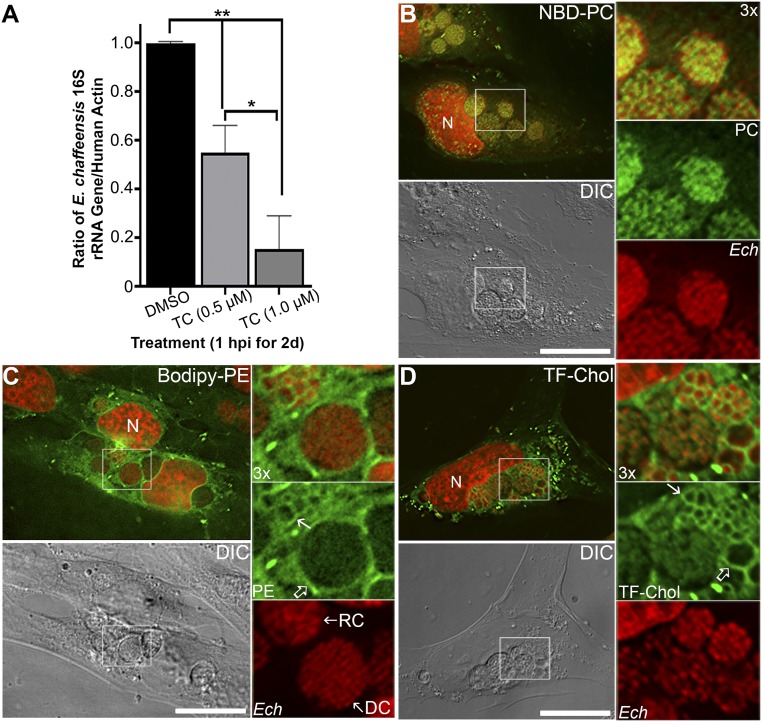
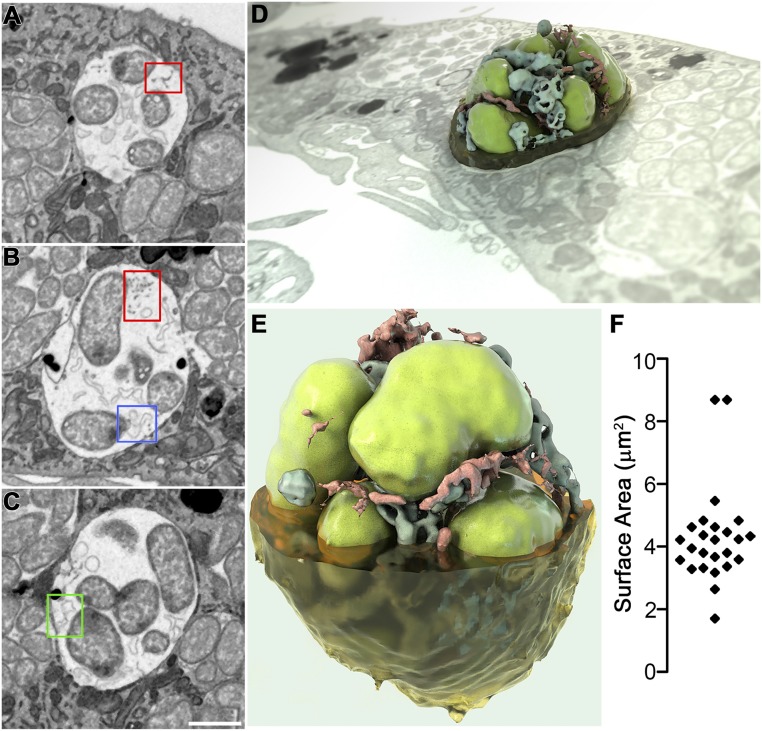
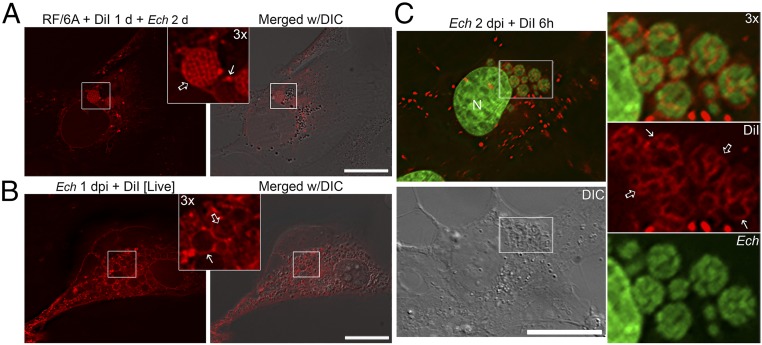
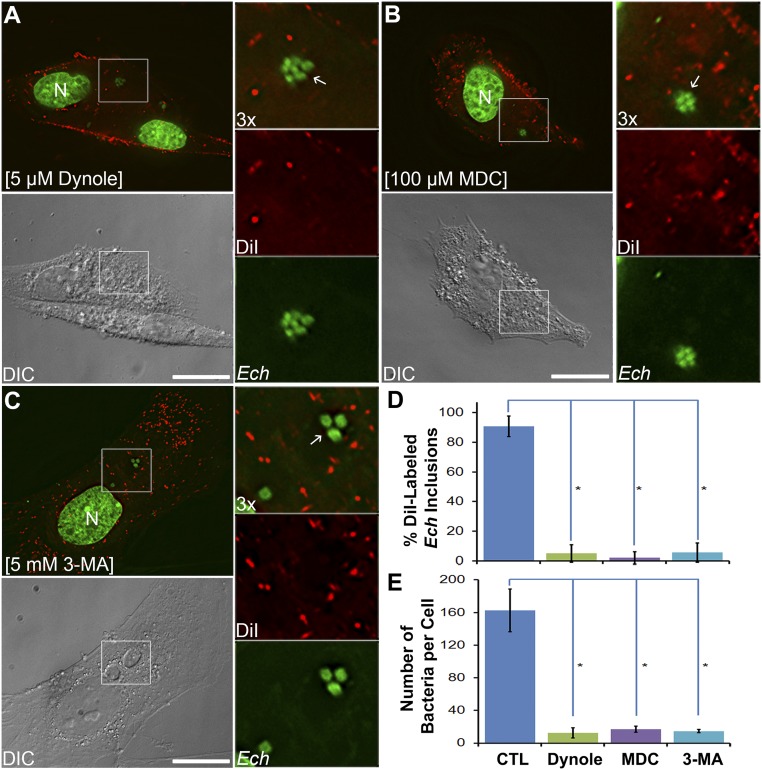
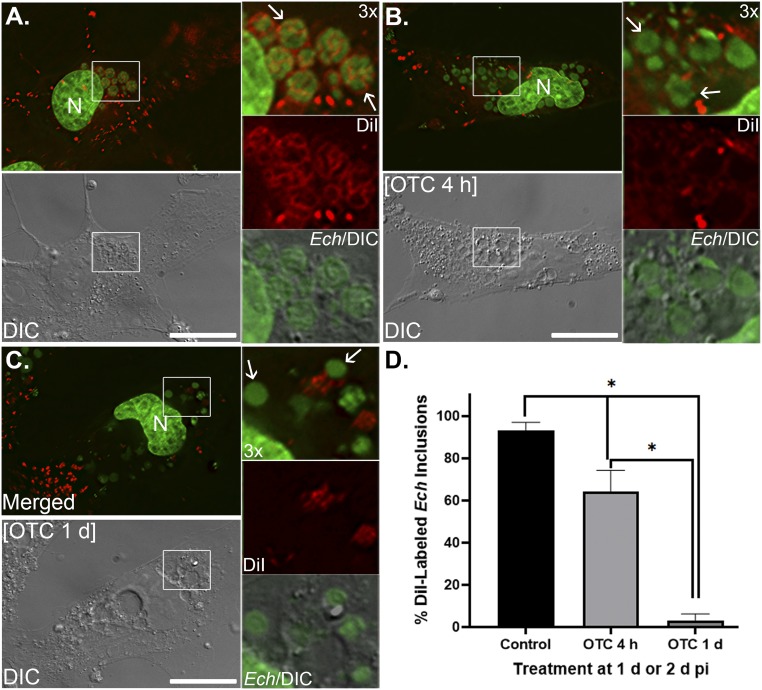
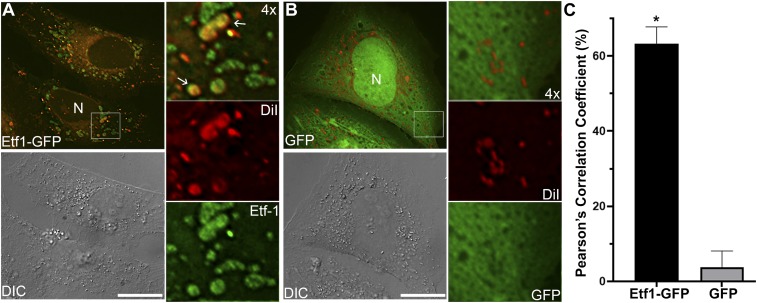
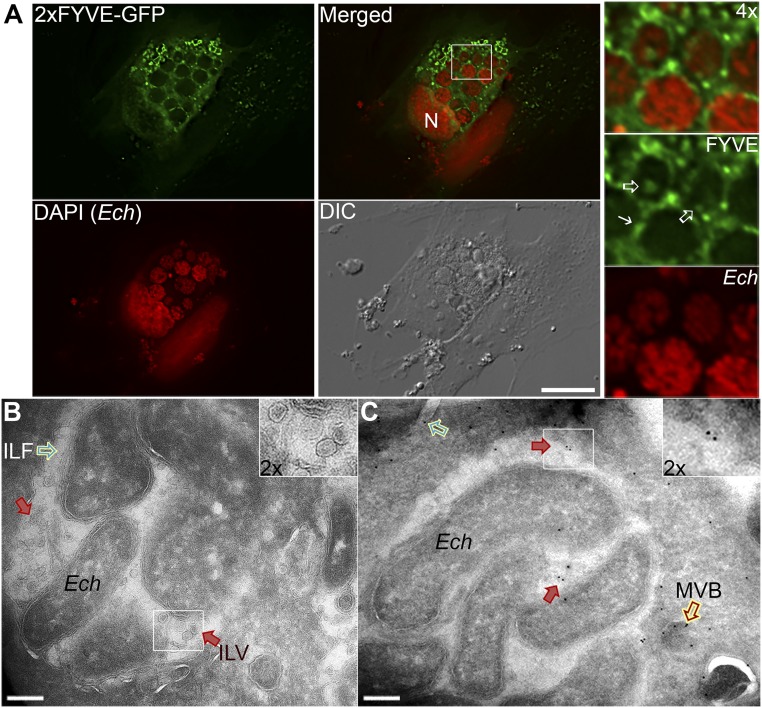
, a cholesterol-rich and cholesterol-dependent obligate intracellular bacterium, partially lacks genes for glycerophospholipid biosynthesis. We found here that is dependent on host glycerolipid biosynthesis, as an inhibitor of host long-chain acyl CoA synthetases, key enzymes for glycerolipid biosynthesis, significantly reduced bacterial proliferation. cannot synthesize phosphatidylcholine or cholesterol but encodes enzymes for phosphatidylethanolamine (PE) biosynthesis; however, exogenous NBD-phosphatidylcholine, Bodipy-PE, and TopFluor-cholesterol were rapidly trafficked to ehrlichiae in infected cells. DiI (3,3'-dioctadecylindocarbocyanine)-prelabeled host-cell membranes were unidirectionally trafficked to inclusion and bacterial membranes, but DiI-prelabeled membranes were not trafficked to host-cell membranes. The trafficking of host-cell membranes to inclusions was dependent on both host endocytic and autophagic pathways, and bacterial protein synthesis, as the respective inhibitors blocked both infection and trafficking of DiI-labeled host membranes to In addition, DiI-labeled host-cell membranes were trafficked to autophagosomes induced by the type IV secretion system effector Etf-1, which traffic to and fuse with inclusions. Cryosections of infected cells revealed numerous membranous vesicles inside inclusions, as well as multivesicular bodies docked on the inclusion surface, both of which were immunogold-labeled by a GFP-tagged 2×FYVE protein that binds to phosphatidylinositol 3-phosphate. Focused ion-beam scanning electron microscopy of infected cells validated numerous membranous structures inside bacteria-containing inclusions. Our results support the notion that inclusions are amphisomes formed through fusion of early endosomes, multivesicular bodies, and early autophagosomes induced by Etf-1, and they provide host-cell glycerophospholipids and cholesterol that are necessary for bacterial proliferation.
沃尔巴克氏体是一种富含胆固醇且依赖胆固醇的严格细胞内细菌,其部分基因缺失甘油磷脂生物合成。我们发现,作为长链酰基辅酶 A 合成酶(甘油磷脂生物合成的关键酶)的宿主抑制剂,能够显著抑制细菌的增殖,表明 依赖于宿主甘油脂生物合成。虽然 不能合成磷脂酰胆碱或胆固醇,但编码磷脂乙醇胺(PE)生物合成的酶;然而,外源性 NBD-磷脂酰胆碱、Bodipy-PE 和 TopFluor-胆固醇迅速转运到感染细胞中的埃立克体。DiI(3,3'-二辛基吲哚碳氰)标记的宿主细胞膜单向转运到 包涵体和细菌膜,但 DiI 标记的 膜不转运到宿主细胞膜。宿主细胞膜向 包涵体的转运依赖于宿主内吞和自噬途径以及细菌蛋白质合成,因为各自的抑制剂均能阻断感染和 DiI 标记的宿主膜向 的转运。此外,宿主细胞膜被 DiI 标记,转运到由 Ⅳ型分泌系统效应蛋白 Etf-1 诱导的自噬体,自噬体运输并与 包涵体融合。感染细胞的冷冻切片显示,包涵体内有许多膜囊泡,以及停靠在包涵体表面的多泡体,两者均被 GFP 标记的 2×FYVE 蛋白免疫金标记,该蛋白与磷脂酰肌醇 3-磷酸结合。对感染细胞的聚焦离子束扫描电子显微镜验证了在含细菌的包涵体内有许多膜结构。我们的研究结果支持以下观点,即 包涵体是通过 Etf-1 诱导的早期内体、多泡体和早期自噬体融合形成的两性体,它们提供了宿主细胞甘油磷脂和胆固醇,这些物质是细菌增殖所必需的。