Global Centre for Environmental Remediation, University of Newcastle, Newcastle, 2308, Australia.
State Key Laboratory of Urban Water Resource and Environment, School of Environment, Harbin Institute of Technology, Harbin, 150090, China.
Sci Rep. 2020 Mar 19;10(1):4841. doi: 10.1038/s41598-020-61146-4.
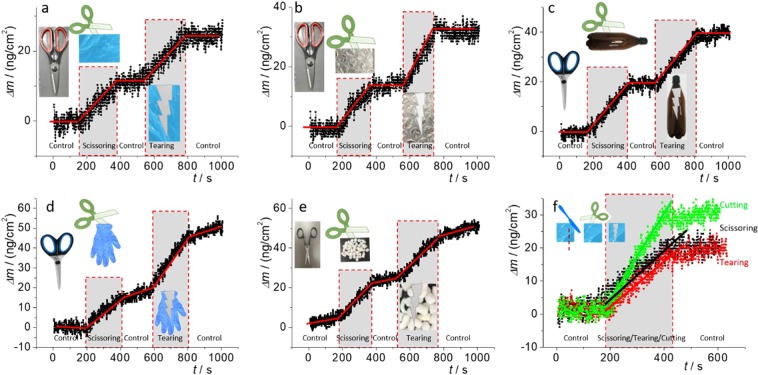
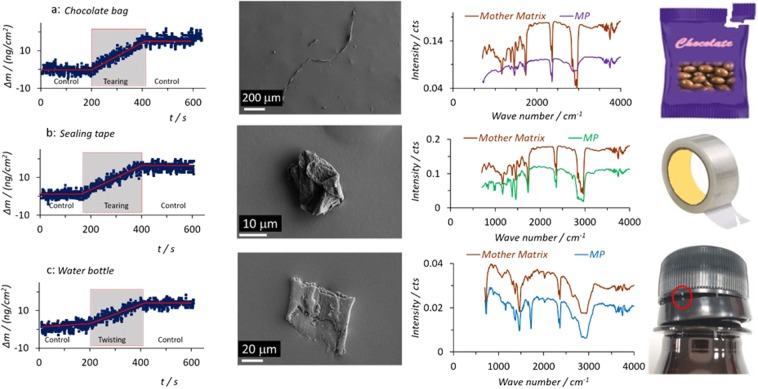
Millions of tonnes of plastics have been released into the environment. Although the risk of plastics to humans is not yet resolved, microplastics, in the range of 1 μm - 5 mm, have entered our bodies, originating either from ingestion via the food chain or from inhalation of air. Generally there are two sources of microplastics, either directly from industry, such as cosmetic exfoliants, or indirectly from physical, chemical and biological fragmentation of large (>5 mm) plastic residues. We have found that microplastics can be generated by simple tasks in our daily lives such as by scissoring with scissors, tearing with hands, cutting with knives or twisting manually, to open plastics containers/bags/tapes/caps. These processes can generate about 0.46-250 microplastic/cm. This amount is dependent on the conditions such as stiffness, thickness, anisotropy, the density of plastic materials and the size of microplastics.This finding sends an important warning, that we must be careful when opening plastic packaging, if we are concerned about microplastics and care about reducing microplastics contamination.
数以百万吨计的塑料已被释放到环境中。尽管塑料对人类的风险尚未得到解决,但 1 微米至 5 毫米范围内的微塑料已经进入我们的体内,其来源要么是通过食物链摄入,要么是通过吸入空气。微塑料一般有两个来源,要么直接来自工业,如化妆品去角质剂,要么间接来自大块(>5 毫米)塑料残余物的物理、化学和生物破碎。我们发现,日常生活中的一些简单活动,如用剪刀剪、用手撕、用刀切或手动拧开塑料容器/袋子/胶带/盖子,都可以产生微塑料。这些过程可产生约 0.46-250 个微塑料/平方厘米。这个数量取决于条件,如塑料材料的硬度、厚度、各向异性、密度和微塑料的大小。这一发现发出了一个重要警告,如果我们关注微塑料并关心减少微塑料污染,那么在打开塑料包装时必须小心。