School of Life Sciences, Division of Physiology, Pharmacology and Neuroscience, Medical School, Queens Medical Centre, University of Nottingham, Nottingham, United Kingdom.
EMEA Knowledge Centre, Eisai Ltd., Hatfield, United Kingdom.
Front Immunol. 2020 Mar 5;11:293. doi: 10.3389/fimmu.2020.00293. eCollection 2020.
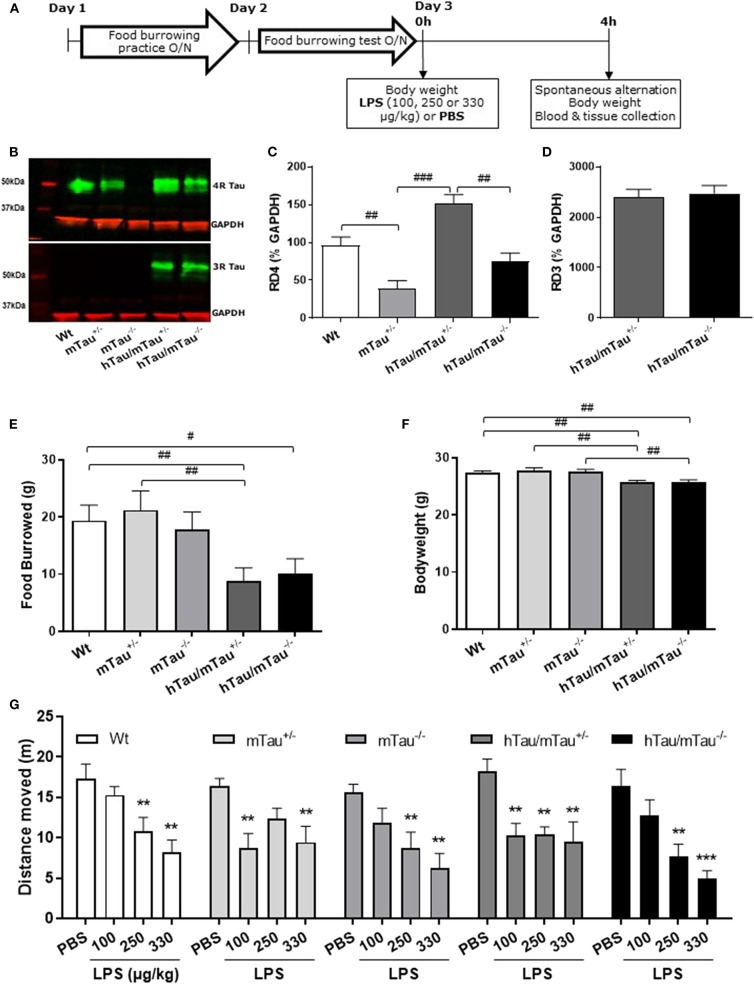
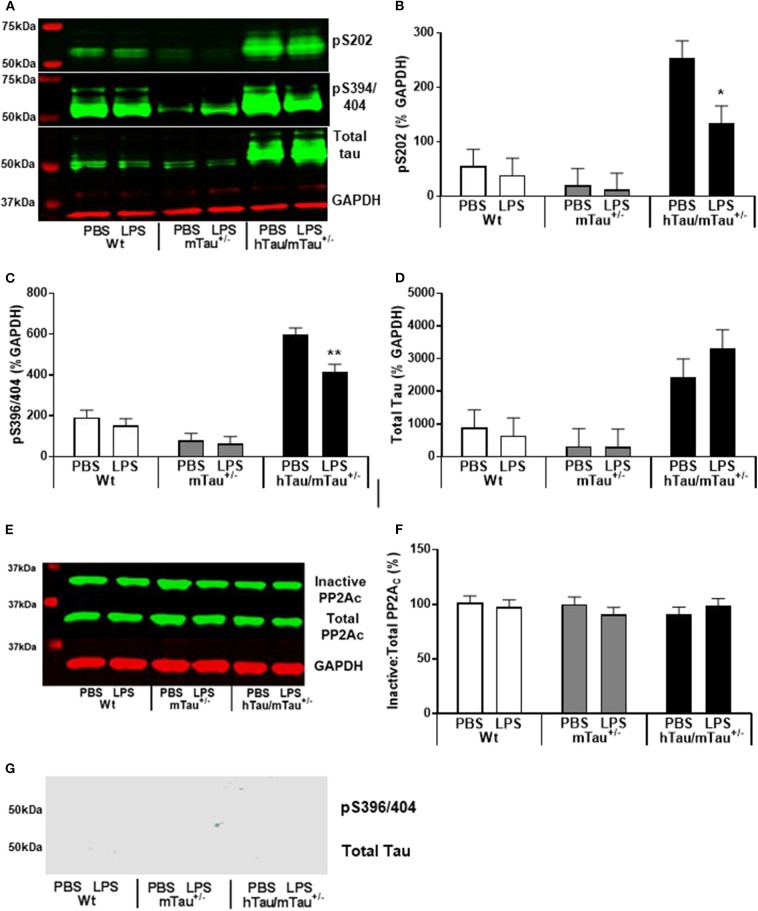
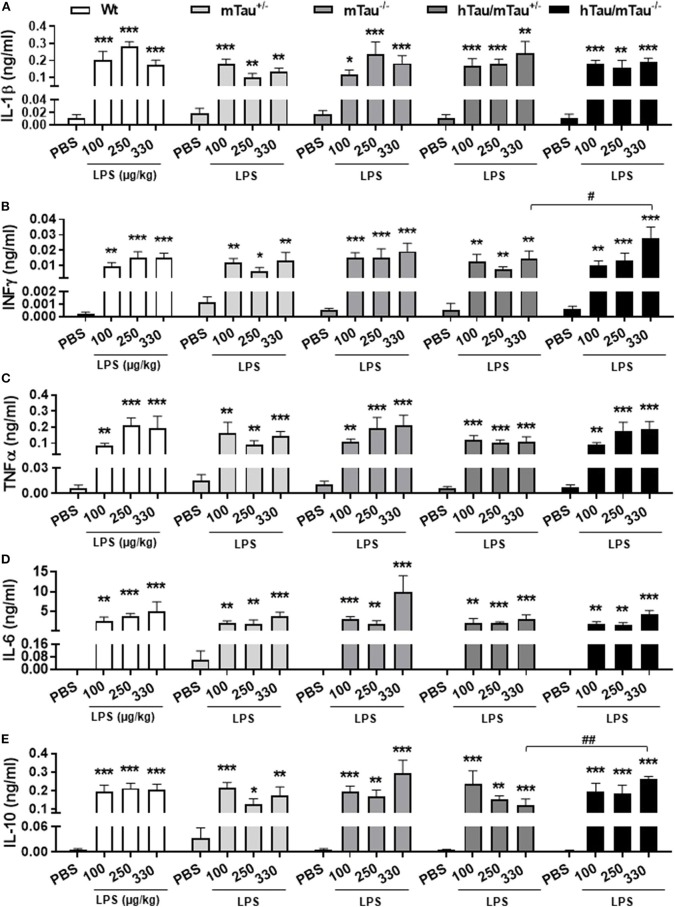
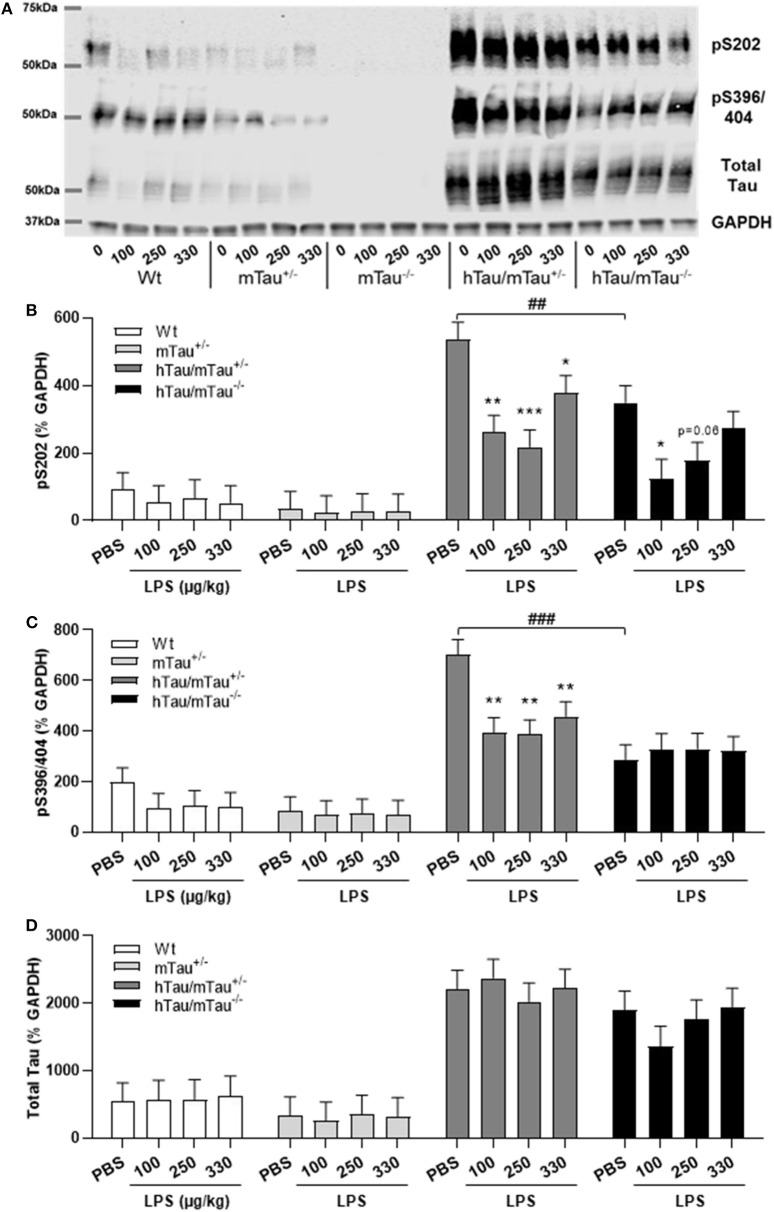
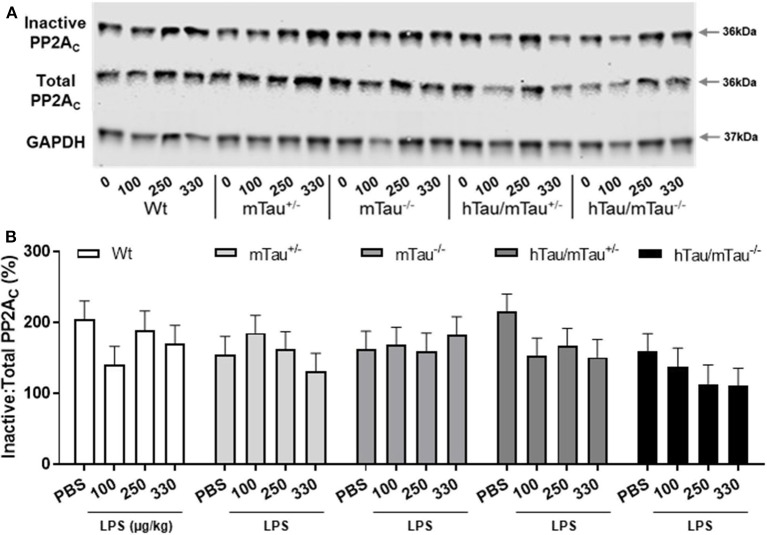
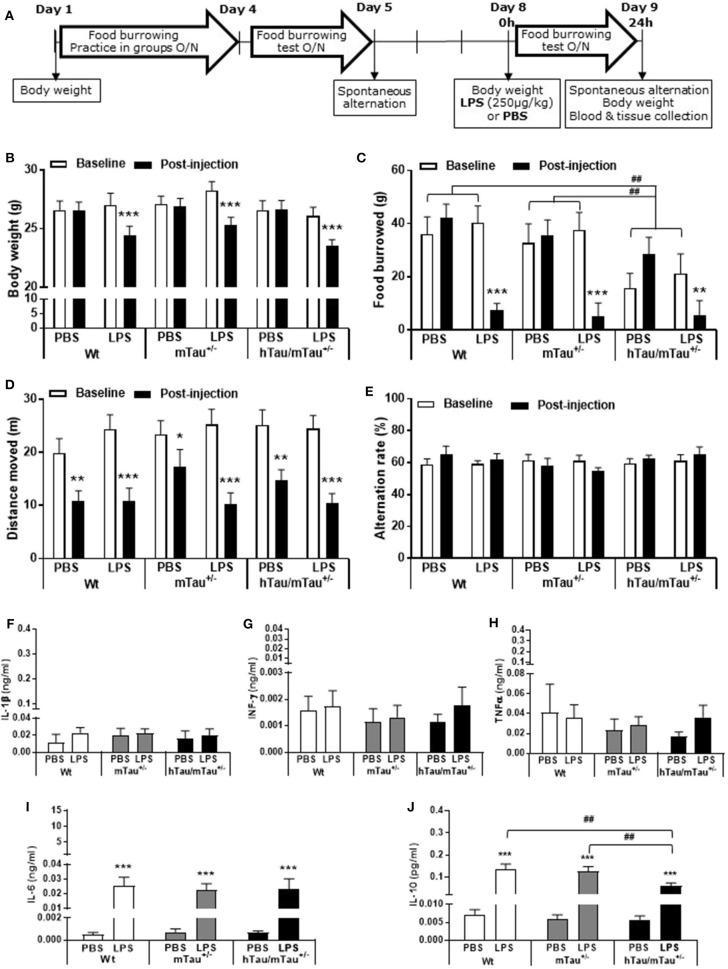
Inflammation is considered a mechanistic driver of Alzheimer's disease, thought to increase tau phosphorylation, the first step to the formation of neurofibrillary tangles (NFTs). To further understand how inflammation impacts the development of tau pathology, we used (hTau) mice, which express all six, non-mutated, human tau isoforms, but with an altered ratio of tau isoforms favoring 3R tau due to the concomitant loss of murine tau (mTau) that is predominantly 4R. Such an imbalance pattern has been related to susceptibility to NFTs formation, but whether or not this also affects susceptibility to systemic inflammation and related changes in tau phosphorylation is not known. To reduce the predominance of 3R tau by increasing 4R tau availability, we bred hTau mice on a heterozygous mTau background and compared the impact of systemic inflammation induced by lipopolysaccharide (LPS) in hTau mice hetero- or homozygous mTau knockout. Three-month-old male wild-type (Wt), mTau, mTau, hTau/mTau, and hTau/mTau mice were administered 100, 250, or 330 μg/kg of LPS or its vehicle phosphate buffer saline (PBS) [intravenously (.), = 8-9/group]. Sickness behavior, reflected by behavioral suppression in the spontaneous alternation task, hippocampal tau phosphorylation, measured by western immunoblotting, and circulating cytokine levels were quantified 4 h after LPS administration. The persistence of the LPS effects (250 μg/kg) on these measures, and food burrowing behavior, was assessed at 24 h post-inoculation in Wt, mTau, and hTau/mTau mice ( = 9-10/group). In the absence of immune stimulation, increasing 4R tau levels in hTau/mTau exacerbated pS202 and pS396/404 tau phosphorylation, without altering total tau levels or worsening early behavioral perturbations characteristic of hTau/mTau mice. We also show for the first time that modulating 4R tau levels in hTau mice affects the response to systemic inflammation. Behavior was suppressed in all genotypes 4 h following LPS administration, but hTau/mTau exhibited more severe sickness behavior at the 100 μg/kg dose and a milder behavioral and cytokine response than hTau/mTau mice at the 330 μg/kg dose. All LPS doses decreased tau phosphorylation at both epitopes in hTau/mTau mice, but pS202 levels were selectively reduced at the 100 μg/kg dose in hTau/mTau mice. Behavioral suppression and decreased tau phosphorylation persisted at 24 h following LPS administration in hTau/mTau mice.
炎症被认为是阿尔茨海默病的一种机械驱动因素,它被认为会增加 tau 磷酸化,这是形成神经原纤维缠结(NFTs)的第一步。为了进一步了解炎症如何影响 tau 病理学的发展,我们使用了(hTau)小鼠,这些小鼠表达所有六种非突变的人类 tau 异构体,但由于同时丧失了主要为 4R 的小鼠 tau(mTau),tau 异构体的比例发生了改变,有利于 3R tau。这种不平衡模式与 NFTs 形成的易感性有关,但这种模式是否也会影响对全身炎症和相关 tau 磷酸化变化的易感性尚不清楚。为了通过增加 4R tau 的可用性来降低 3R tau 的优势,我们在杂合 mTau 背景下繁殖 hTau 小鼠,并比较了脂多糖(LPS)诱导的全身炎症对 hTau 小鼠杂合或纯合 mTau 敲除的影响。3 月龄雄性野生型(Wt)、mTau、mTau、hTau/mTau 和 hTau/mTau 小鼠接受 100、250 或 330 μg/kg LPS 或其载体磷酸盐缓冲盐水(PBS)[静脉内(.),每组 8-9 只]。在 LPS 给药后 4 小时,通过行为抑制在自发交替任务中的反映,通过western 免疫印迹测量海马 tau 磷酸化,以及通过测量循环细胞因子水平来量化疾病行为。在 Wt、mTau 和 hTau/mTau 小鼠中,在接种后 24 小时评估 LPS 对这些测量值(250 μg/kg)的持续影响以及食物挖掘行为(每组 9-10 只)。在没有免疫刺激的情况下,hTau/mTau 中 4R tau 水平的增加加剧了 pS202 和 pS396/404 tau 磷酸化,而不改变总 tau 水平或加重 hTau/mTau 小鼠的早期行为扰动特征。我们还首次表明,调节 hTau 小鼠中的 4R tau 水平会影响对全身炎症的反应。所有基因型在 LPS 给药后 4 小时均表现出行为抑制,但 hTau/mTau 在 100 μg/kg 剂量下表现出更严重的疾病行为,在 330 μg/kg 剂量下表现出比 hTau/mTau 小鼠更温和的行为和细胞因子反应。所有 LPS 剂量均降低了 hTau/mTau 小鼠中两个表位的 tau 磷酸化,但在 100 μg/kg 剂量下 hTau/mTau 小鼠中的 pS202 水平选择性降低。在 hTau/mTau 小鼠中,LPS 给药后 24 小时,行为抑制和 tau 磷酸化持续存在。