Cancer Science Institute, National University of Singapore, 14 Medical Drive, Singapore 117599.
National University Health System, 5 Lower Kent Ridge Road, Singapore 119074.
Theranostics. 2020 Feb 3;10(6):2727-2743. doi: 10.7150/thno.38729. eCollection 2020.
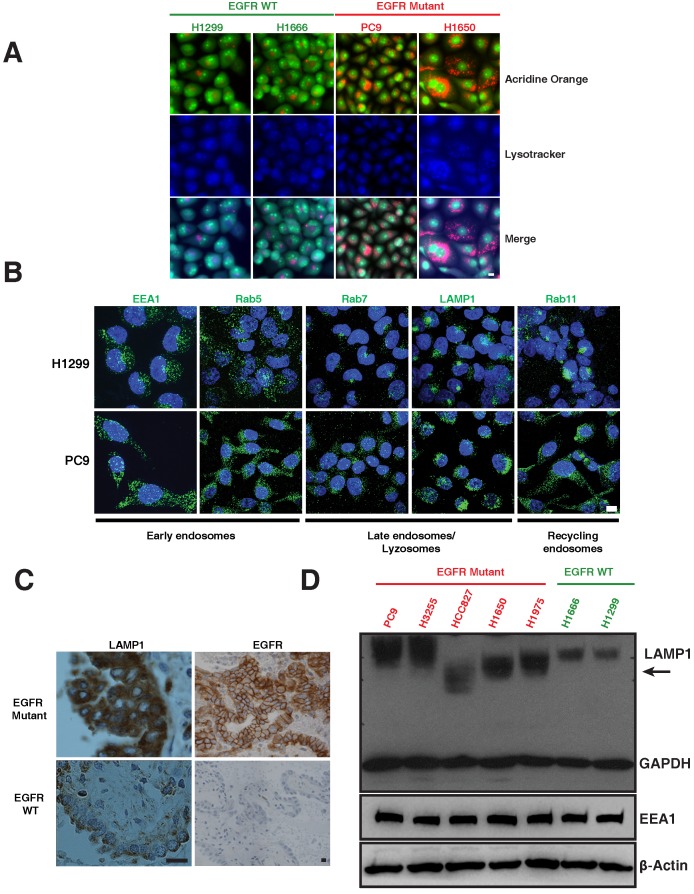
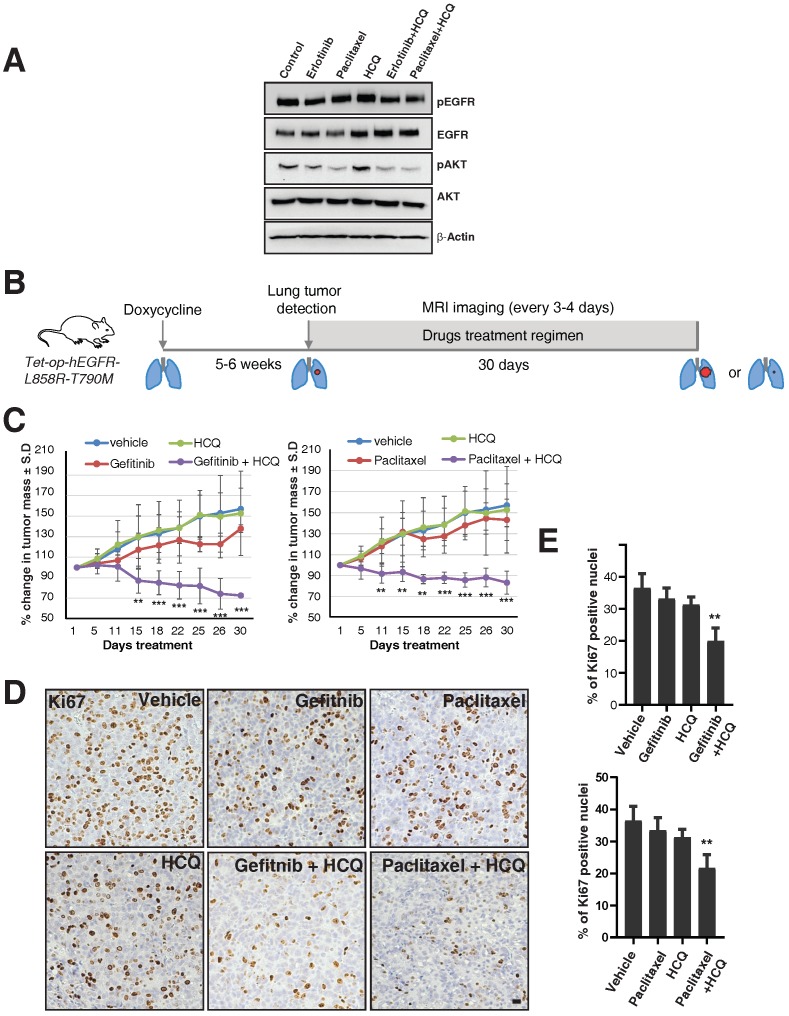
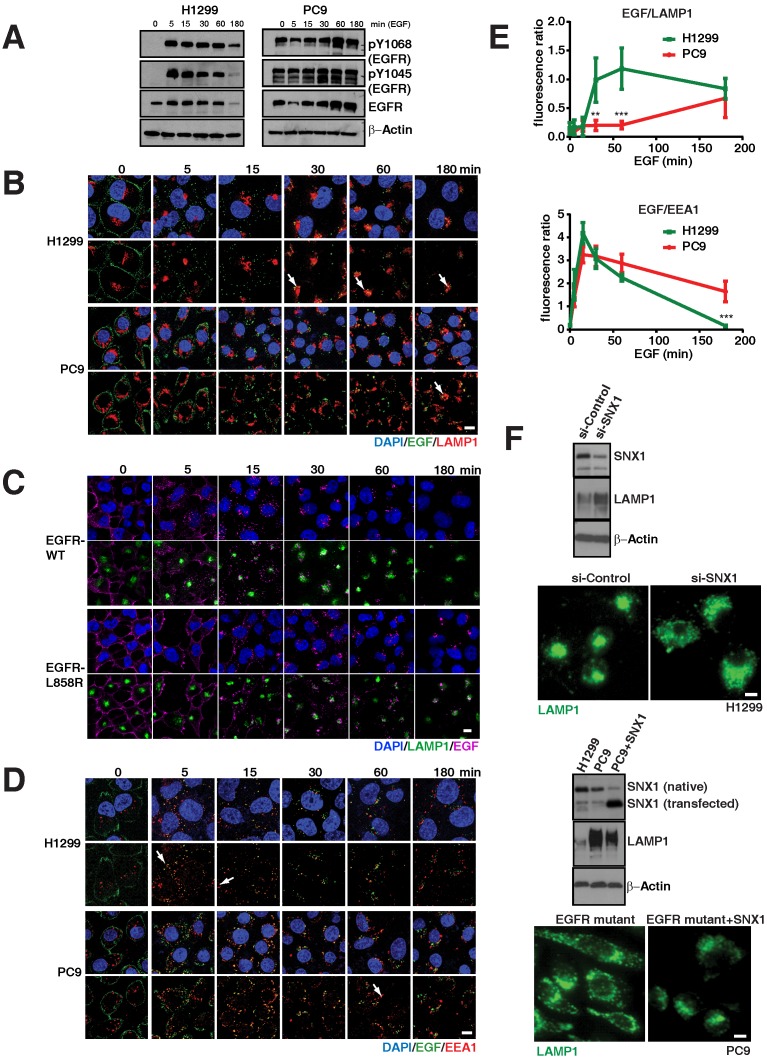
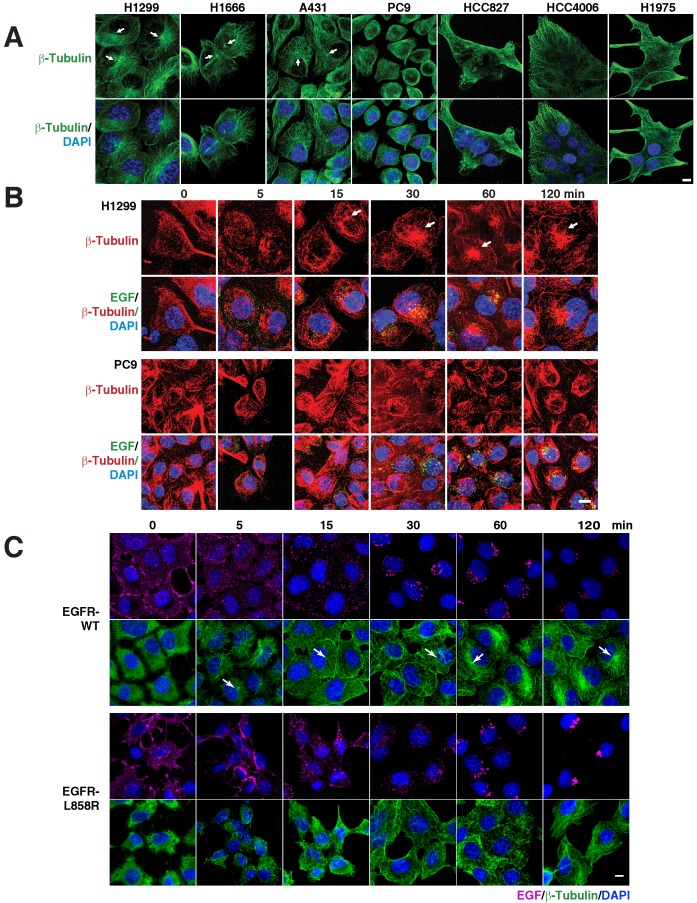
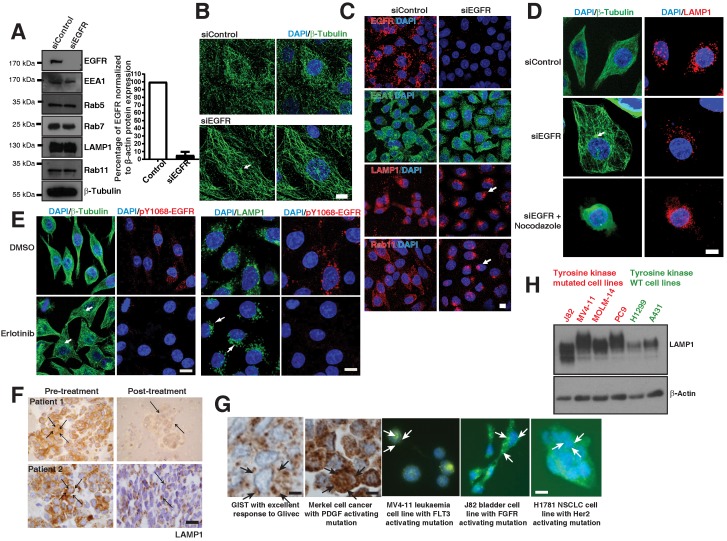
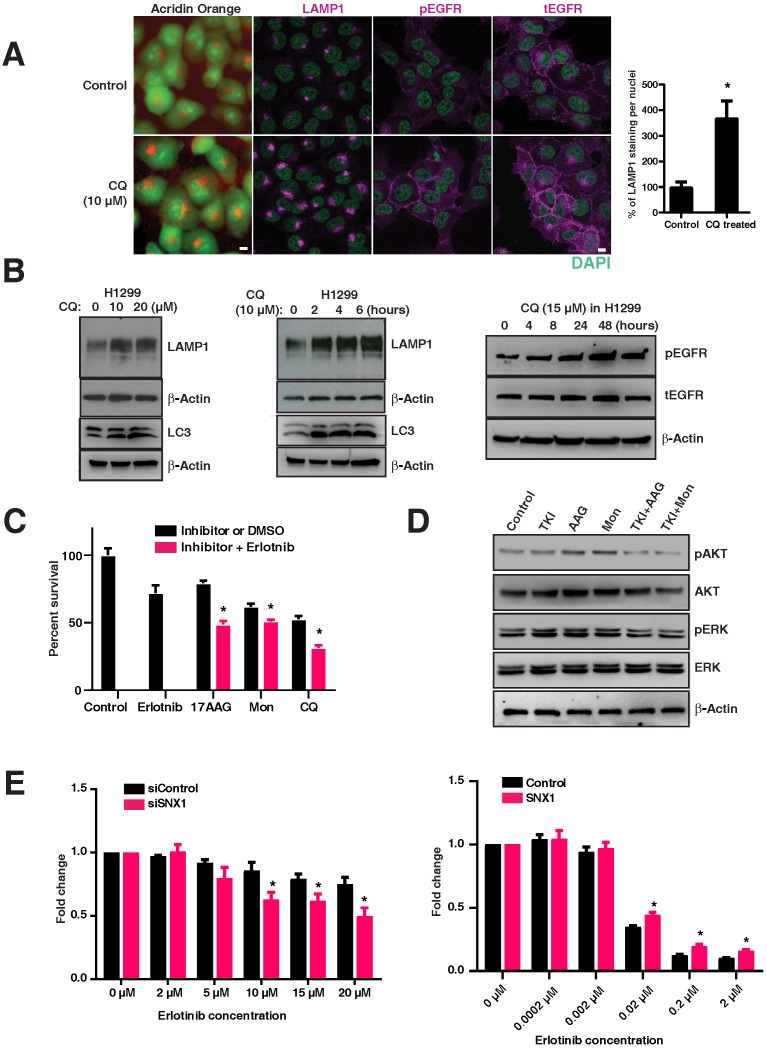
Oncogene-addicted cancers are predominantly driven by specific oncogenic pathways and display initial exquisite sensitivity to designer therapies, but eventually become refractory to treatments. Clear understanding of lung tumorigenic mechanisms is essential for improved therapies. : Lysosomes were analyzed in EGFR-WT and mutant cells and corresponding patient samples using immunofluorescence or immunohistochemistry and immunoblotting. Microtubule organization and dynamics were studied using immunofluorescence analyses. Also, we have validated our findings in a transgenic mouse model that contain EGFR-TKI resistant mutations. : We herein describe a novel mechanism that a mutated kinase disrupts the microtubule organization and results in a defective endosomal/lysosomal pathway. This prevents the efficient degradation of phosphorylated proteins that become trapped within the endosomes and continue to signal, therefore amplifying downstream proliferative and survival pathways. Phenotypically, a distinctive subcellular appearance of LAMP1 secondary to microtubule dysfunction in cells expressing EGFR kinase mutants is seen, and this may have potential diagnostic applications for the detection of such mutants. We demonstrate that lysosomal-inhibitors re-sensitize resistant cells to EGFR tyrosine-kinase inhibitors (TKIs). Identifying the endosome-lysosome pathway and microtubule dysfunction as a mechanism of resistance allows to pharmacologically intervene on this pathway. : We find that the combination of microtubule stabilizing agent and lysosome inhibitor could reduce the tumor progression in EGFR TKI resistant mouse models of lung cancer.
致癌基因成瘾的癌症主要由特定的致癌途径驱动,对设计治疗方法最初表现出高度敏感,但最终会对治疗产生抗药性。因此,明确肿瘤发生机制对于改善治疗方法至关重要。在 EGFR-WT 和突变细胞以及相应的患者样本中,使用免疫荧光或免疫组化和免疫印迹分析溶酶体。使用免疫荧光分析研究微管组织和动力学。此外,我们还在含有 EGFR-TKI 耐药突变的转基因小鼠模型中验证了我们的发现。本文描述了一种新的机制,即突变激酶破坏微管组织,导致内体/溶酶体途径缺陷。这阻止了磷酸化蛋白的有效降解,这些蛋白被困在内体中继续信号传递,从而放大下游增殖和存活途径。表型上,在表达 EGFR 激酶突变体的细胞中,由于微管功能障碍,LAMP1 出现独特的亚细胞外观,这可能对检测此类突变体具有潜在的诊断应用。我们证明溶酶体抑制剂可使耐药细胞重新对 EGFR 酪氨酸激酶抑制剂(TKI)敏感。确定内体-溶酶体途径和微管功能障碍作为耐药机制,可以对该途径进行药理学干预。我们发现,微管稳定剂和溶酶体抑制剂的组合可以减少 EGFR TKI 耐药肺癌小鼠模型中的肿瘤进展。