Skalsky Stefan, Zhang Yunyan, Alanis Juan Arturo, Fonseka H Aruni, Sanchez Ana M, Liu Huiyun, Parkinson Patrick
1Department of Physics and Astronomy and The Photon Science Institute, The University of Manchester, Manchester, M13 9PL UK.
2Department of Electronic and Electrical Engineering, University College London, London, WC1E 7JE UK.
Light Sci Appl. 2020 Mar 17;9:43. doi: 10.1038/s41377-020-0279-y. eCollection 2020.
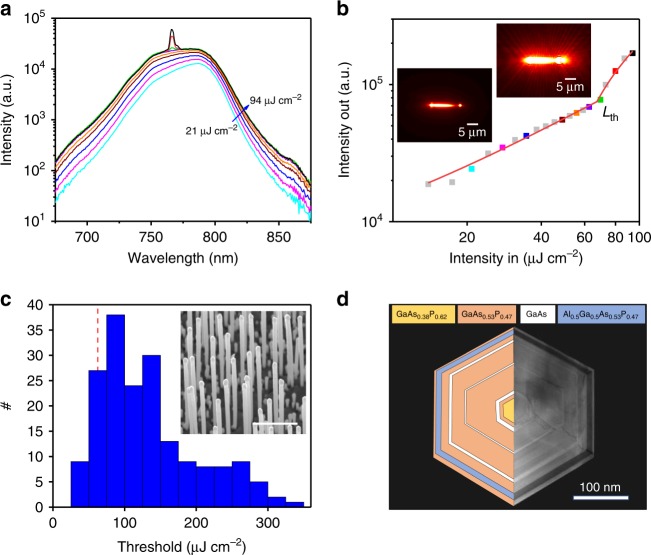
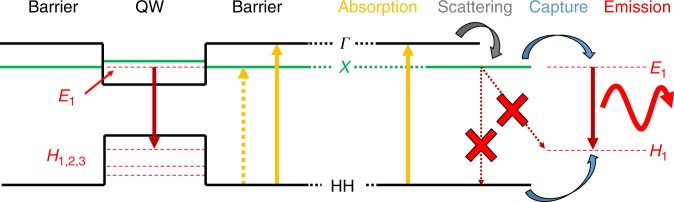
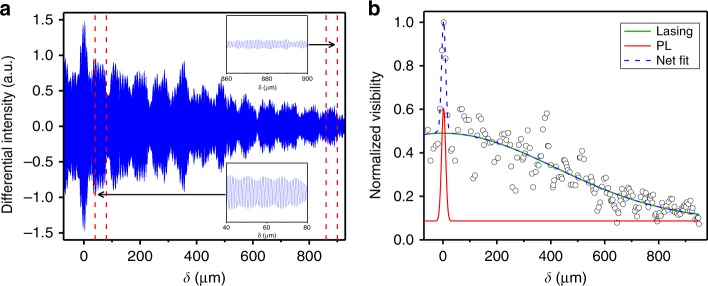
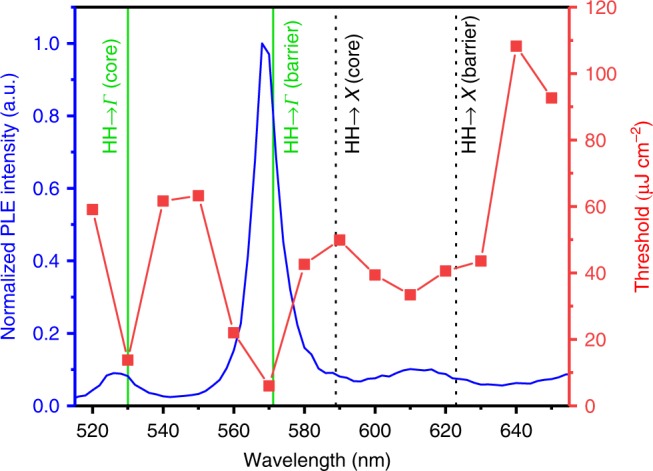
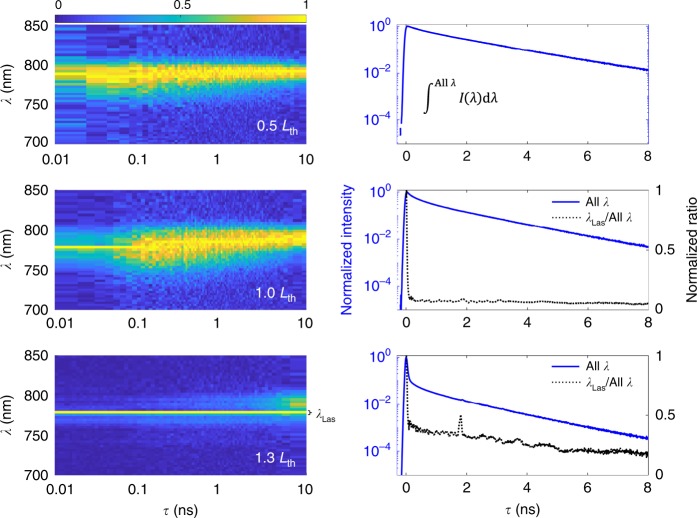
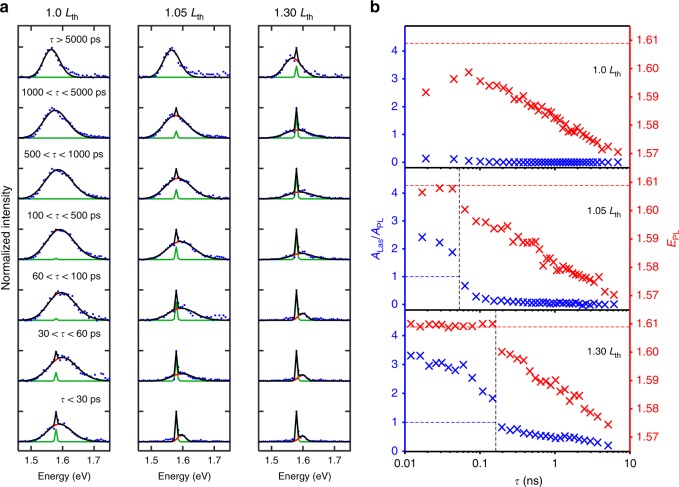
Continuous room temperature nanowire lasing from silicon-integrated optoelectronic elements requires careful optimisation of both the lasing cavity -factor and population inversion conditions. We apply time-gated optical interferometry to the lasing emission from high-quality GaAsP/GaAs quantum well nanowire laser structures, revealing high -factors of 1250 ± 90 corresponding to end-facet reflectivities of = 0.73 ± 0.02. By using optimised direct-indirect band alignment in the active region, we demonstrate a well-refilling mechanism providing a quasi-four-level system leading to multi-nanosecond lasing and record low room temperature lasing thresholds (~6 μJ cm pulse) for III-V nanowire lasers. Our findings demonstrate a highly promising new route towards continuously operating silicon-integrated nanolaser elements.
从硅集成光电子元件实现连续室温纳米线激光发射需要对激光腔因子和粒子数反转条件进行仔细优化。我们将时间选通光学干涉测量法应用于高质量GaAsP/GaAs量子阱纳米线激光结构的激光发射,揭示了对应于端面反射率(R = 0.73 ± 0.02)的高达1250 ± 90的高因子。通过在有源区使用优化的直接-间接能带对准,我们展示了一种良好的再填充机制,该机制提供了一个准四能级系统,导致多纳秒激光发射,并记录了III-V族纳米线激光器的低室温激光阈值(约6 μJ cm脉冲)。我们的研究结果展示了一条朝着连续运行的硅集成纳米激光元件发展的极具前景的新途径。