Chen Yiqing, Chen Xi, Huang Qi, Shao Zhiwei, Gao Yanqing, Li Yangyang, Yang Chun, Liu Hehua, Li Jixi, Wang Qiyao, Ma Jinbiao, Zhang Yong-Zhen, Gu Yijun, Gan Jianhua
1State Key Laboratory of Genetic Engineering, Collaborative Innovation Center of Genetics and Development, Shanghai Public Health Clinical Center, School of Life Sciences, Fudan University, 200438 Shanghai, China.
2State Key Laboratory of Bioreactor Engineering, East China University of Science and Technology, 200237 Shanghai, China.
Cell Discov. 2020 Mar 17;6:13. doi: 10.1038/s41421-020-0146-2. eCollection 2020.
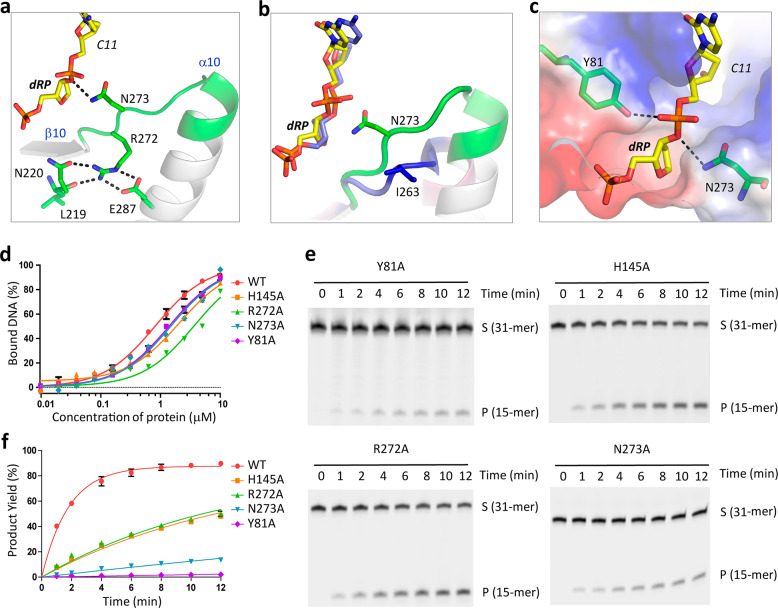
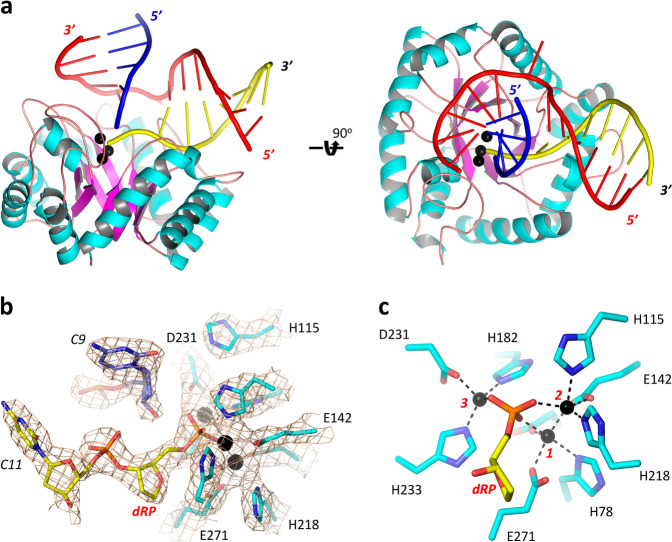
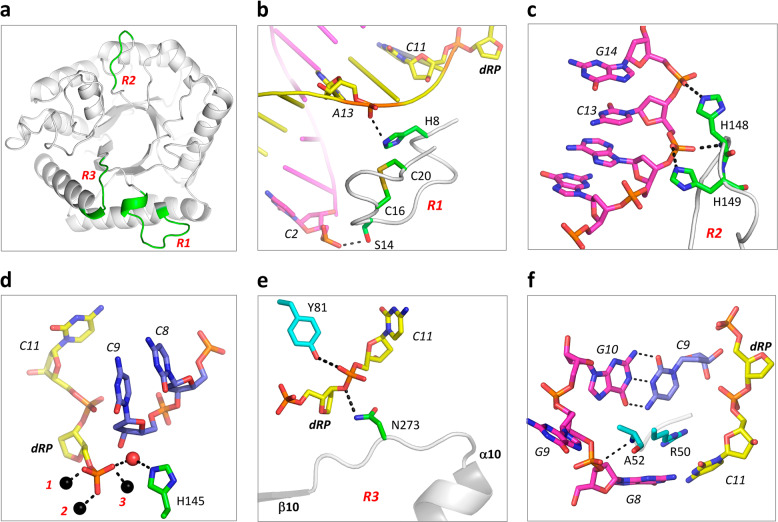
African swine fever virus (ASFV) is highly contagious and can cause lethal disease in pigs. ASFV is primarily replicated in the cytoplasm of pig macrophages, which is oxidative and caused constant damage to ASFV genome. ASFV AP endonuclease (AP) catalyzes DNA cleavage reaction at the abasic site and is a key enzyme of ASFV base excision repair (BER) system. Although it plays an essential role in ASFV survival in host cells, the basis underlying substrate binding and cleavage by AP remains unclear. Here, we reported the structural and functional studies of AP, showing that AP adopts a novel DNA-binding mode distinct from other APs. AP possesses many unique structural features, including one narrower nucleotide-binding pocket at the active site, the C16-C20 disulfide bond-containing region, and histidine-rich loop. As indicated by our mutagenesis, in vitro binding and cleavage assays, these features are important for AP to suit the acidic and oxidative environment. Owing to their functional importance, these unique features could serve as targets for designing small molecule inhibitors that could disrupt the repair process of ASFV genome and help fight against this deadly virus in the future.
非洲猪瘟病毒(ASFV)具有高度传染性,可导致猪的致命疾病。ASFV主要在猪巨噬细胞的细胞质中复制,该细胞质具有氧化性,会对ASFV基因组造成持续损伤。ASFV脱嘌呤嘧啶内切酶(AP)催化无碱基位点的DNA切割反应,是ASFV碱基切除修复(BER)系统的关键酶。尽管它在ASFV在宿主细胞中的存活中起着至关重要的作用,但AP对底物的结合和切割的基础仍不清楚。在此,我们报道了对AP的结构和功能研究,表明AP采用了一种不同于其他AP的新型DNA结合模式。AP具有许多独特的结构特征,包括活性位点处一个较窄的核苷酸结合口袋、含C16 - C20二硫键的区域以及富含组氨酸的环。正如我们的诱变、体外结合和切割试验所示,这些特征对于AP适应酸性和氧化环境很重要。由于它们的功能重要性,这些独特特征可作为设计小分子抑制剂的靶点,这些抑制剂可能会破坏ASFV基因组的修复过程,并在未来有助于对抗这种致命病毒。