Centre for Host-Microbiome Interactions, Faculty of Dentistry, Oral and Craniofacial Sciences, King's College London, London, United Kingdom.
Front Cell Infect Microbiol. 2020 Mar 3;10:81. doi: 10.3389/fcimb.2020.00081. eCollection 2020.
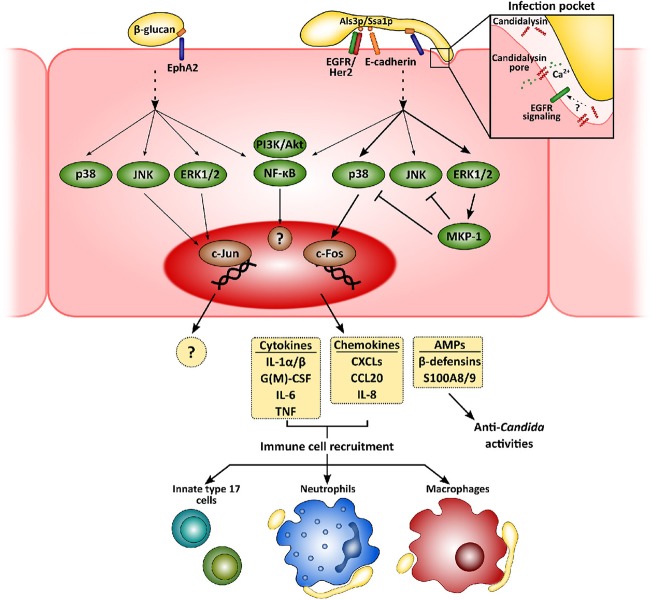
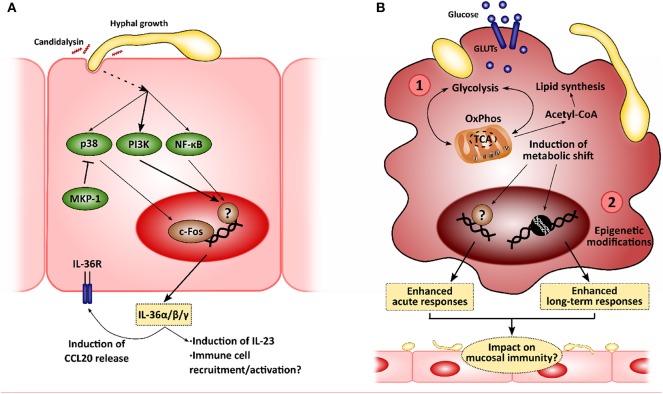
The mucosal surfaces of the human body are challenged by millions of microbes on a daily basis. Co-evolution with these microbes has led to the development of plastic mechanisms in both host and microorganisms that regulate the balance between preserving beneficial microbes and clearing pathogens. is a fungal pathobiont present in most healthy individuals that, under certain circumstances, can become pathogenic and cause everything from mild mucosal infections to life-threatening systemic diseases. As an essential part of the innate immunity in mucosae, epithelial cells elaborate complex immune responses that discriminate between commensal and pathogenic microbes, including . Recently, several significant advances have been made identifying new pieces in the puzzle of host-microbe interactions. This review will summarize these advances in the context of our current knowledge of anti- mucosal immunity, and their impact on epithelial immune responses to this fungal pathogen.
人体的黏膜表面每天都会受到数百万种微生物的挑战。与这些微生物的共同进化导致了宿主和微生物中调节有益微生物和清除病原体之间平衡的可塑性机制的发展。 是一种真菌共生体,存在于大多数健康个体中,但在某些情况下,它可能会变得具有致病性,并导致从轻度黏膜感染到危及生命的全身性疾病等各种疾病。作为黏膜固有免疫的重要组成部分,上皮细胞精心设计了复杂的免疫反应,以区分共生和致病性微生物,包括 。最近,在鉴定宿主-微生物相互作用这一难题的新部分方面取得了几项重大进展。本综述将根据我们目前对黏膜免疫的了解,以及它们对上皮细胞对这种真菌病原体免疫反应的影响,总结这些进展。