School of Earth, Ocean & Environment, University of South Carolina, Columbia, South Carolina, United States of America.
Department of Urban Planning & Public Policy, University of California, Irvine, California, United States of America.
PLoS One. 2020 Mar 20;15(3):e0227611. doi: 10.1371/journal.pone.0227611. eCollection 2020.
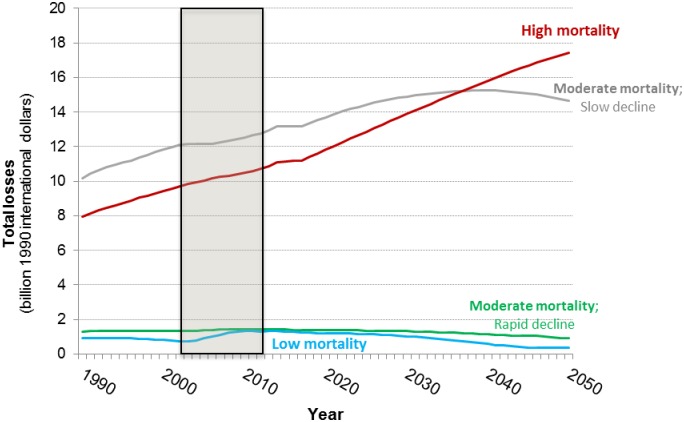
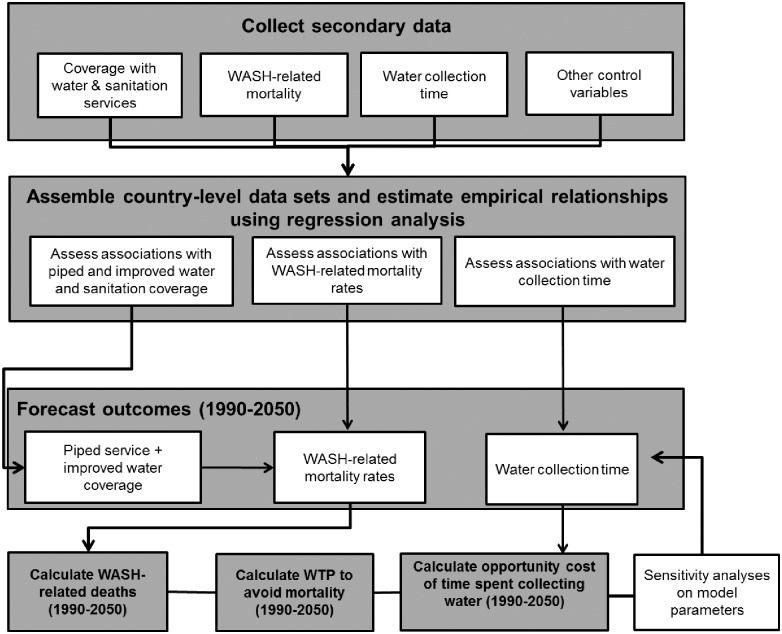
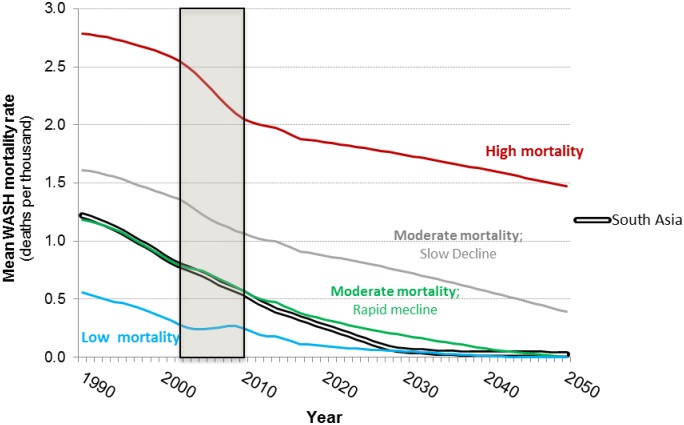
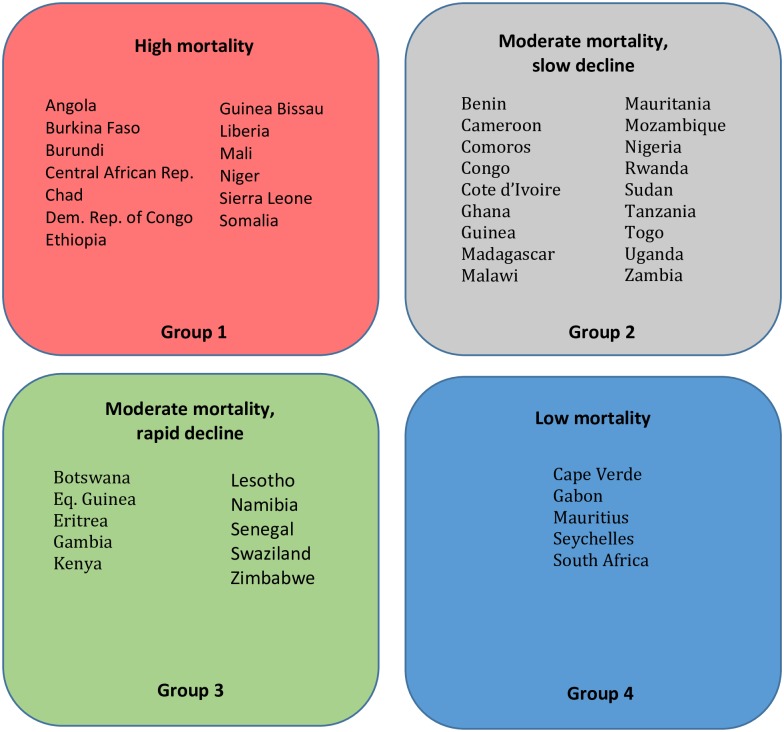
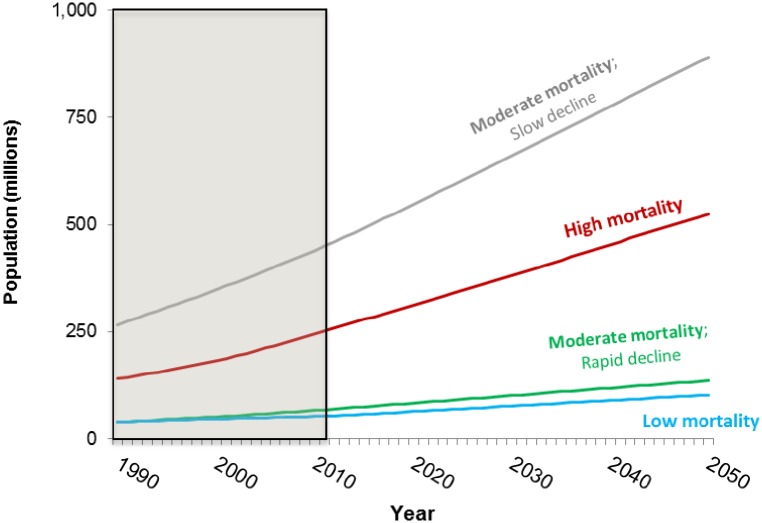
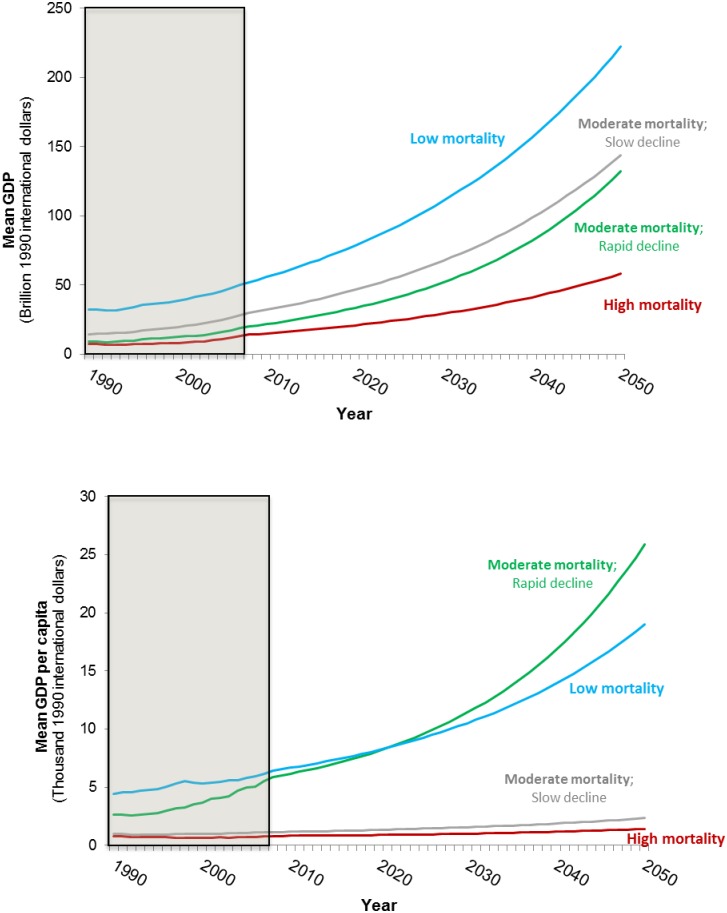
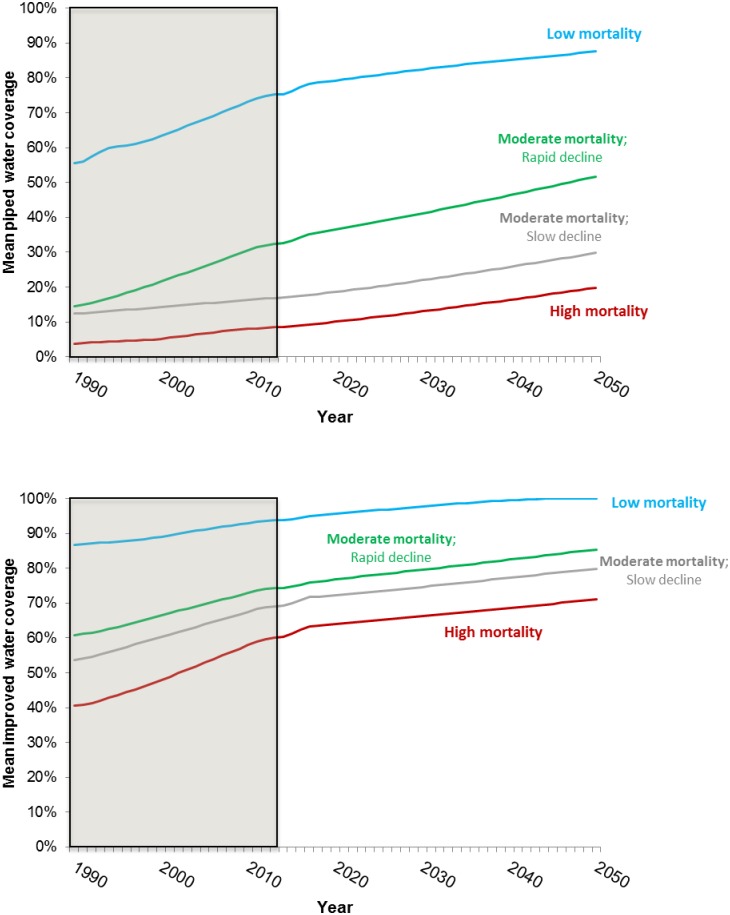
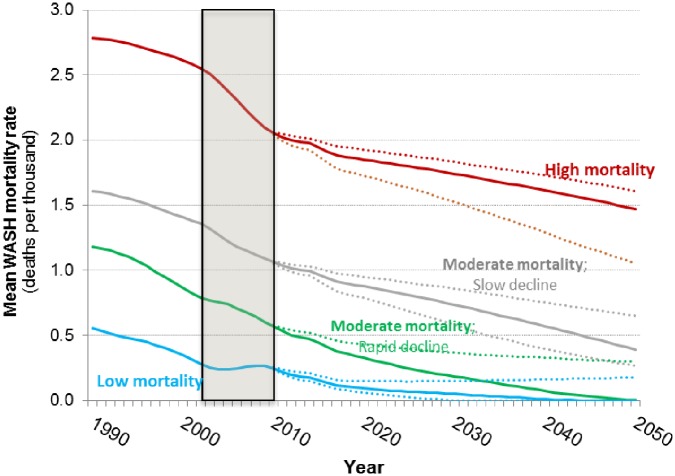
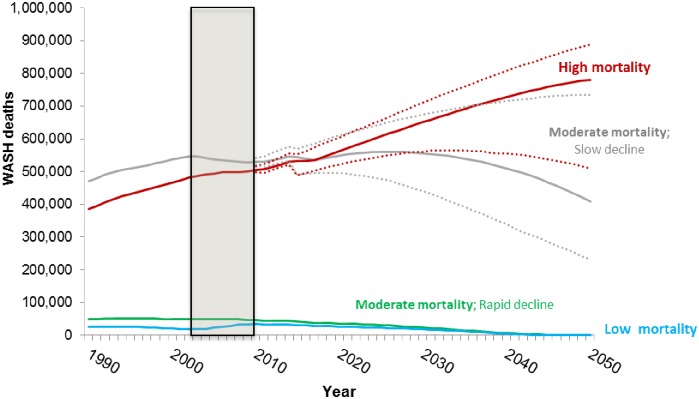
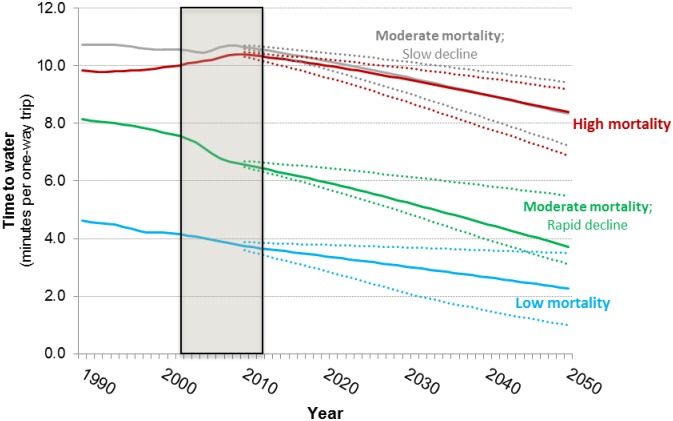
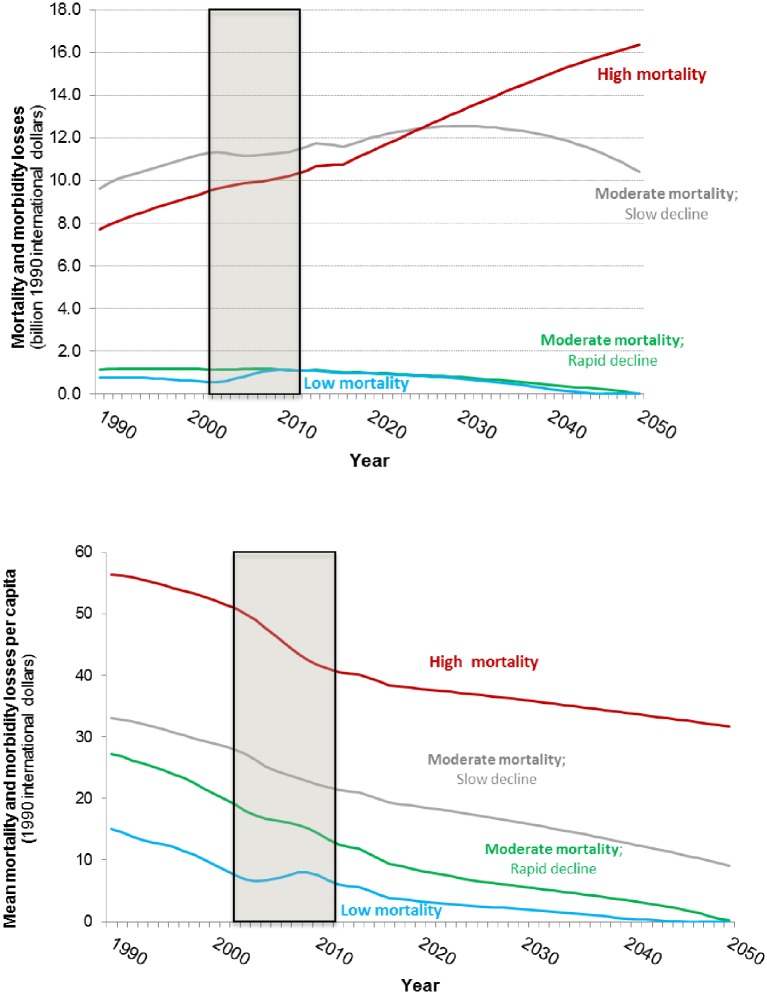
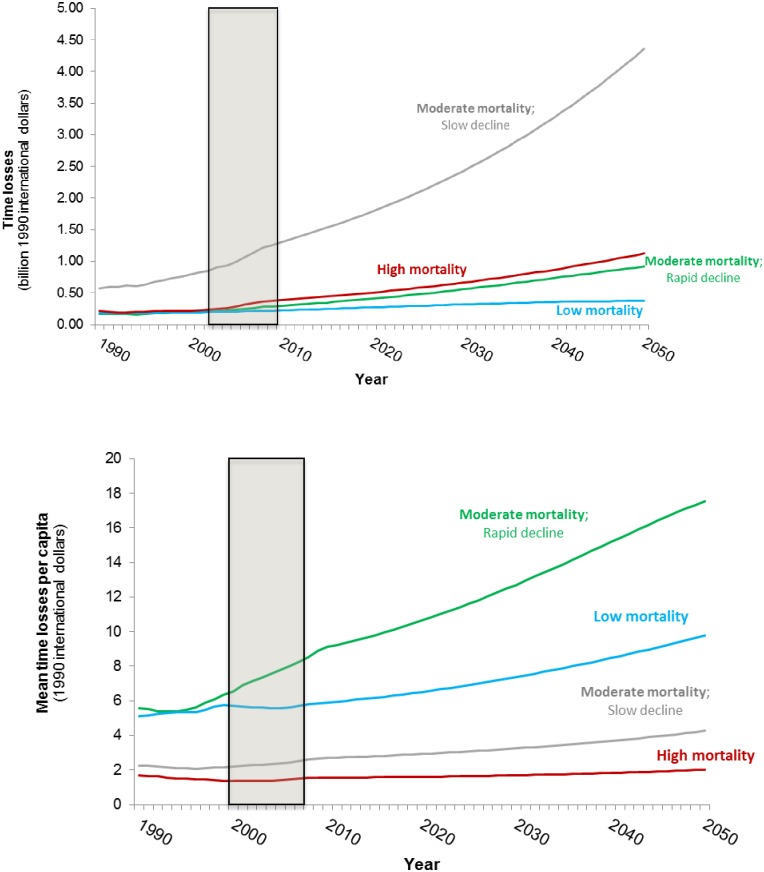
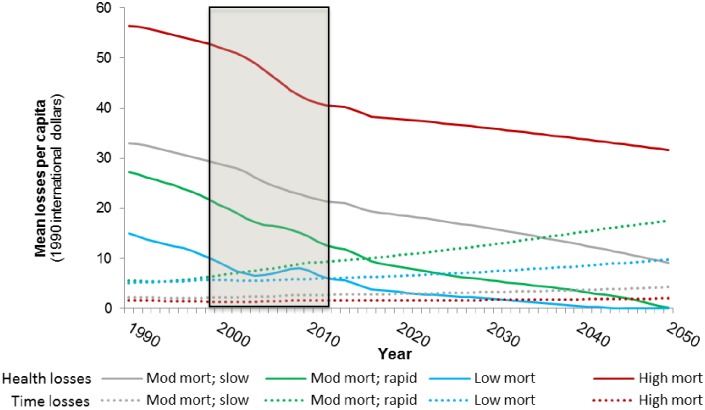
This paper presents country-level estimates of water, sanitation and hygiene (WASH)-related mortality and the economic losses associated with poor access to water and sanitation infrastructure in sub-Saharan Africa (SSA) from 1990 to 2050. We examine the extent to which the changes that accompany economic growth will "solve" water and sanitation problems in SSA and, if so, how long it will take. Our simulations suggest that WASH-related mortality will continue to differ markedly across countries in sub-Saharan Africa. In many countries, expected economic growth alone will not be sufficient to eliminate WASH-related mortality or eliminate the economic losses associated with poor access to water and sanitation infrastructure by 2050. In other countries, WASH-related mortality will sharply decline, although the economic losses associated with the time spent collecting water are forecast to persist. Overall, our findings suggest that in a subset of countries in sub-Saharan Africa (e.g., Angola, Niger, Sierra Leone, Chad and several others), WASH-related investments will remain a priority for decades and require a long-term, sustained effort from both the international community and national governments.
本文提供了有关水、环境卫生和个人卫生(WASH)相关死亡率的国家级估计数,以及撒哈拉以南非洲(SSA)获得水和环境卫生基础设施机会有限所造成的经济损失。我们研究了经济增长伴随的变化在多大程度上可以“解决”SSA 的水和环境卫生问题,如果可以解决,需要多长时间。我们的模拟表明,WASH 相关死亡率将继续在撒哈拉以南非洲的各个国家之间存在明显差异。在许多国家,仅预期的经济增长不足以消除 WASH 相关死亡率,也无法消除到 2050 年获得水和环境卫生基础设施的机会有限所带来的经济损失。在其他国家,WASH 相关死亡率将急剧下降,尽管预计与收集水有关的时间产生的经济损失将持续存在。总体而言,我们的研究结果表明,在撒哈拉以南非洲的一部分国家(例如安哥拉、尼日尔、塞拉利昂、乍得和其他一些国家),与 WASH 相关的投资仍将是未来几十年的重点,需要国际社会和各国政府长期、持续的努力。