Department of Pathology, Stanford School of Medicine, 300 Pasteur Drive, Stanford, CA 94305, USA.
Institute for Stem Cell Biology and Regenerative Medicine, Stanford School of Medicine, Stanford, CA 94305, USA; Department of Plastic and Reconstructive Surgery, Stanford School of Medicine, Stanford, CA 94305, USA.
Stem Cell Reports. 2020 Apr 14;14(4):603-613. doi: 10.1016/j.stemcr.2020.02.009. Epub 2020 Mar 19.
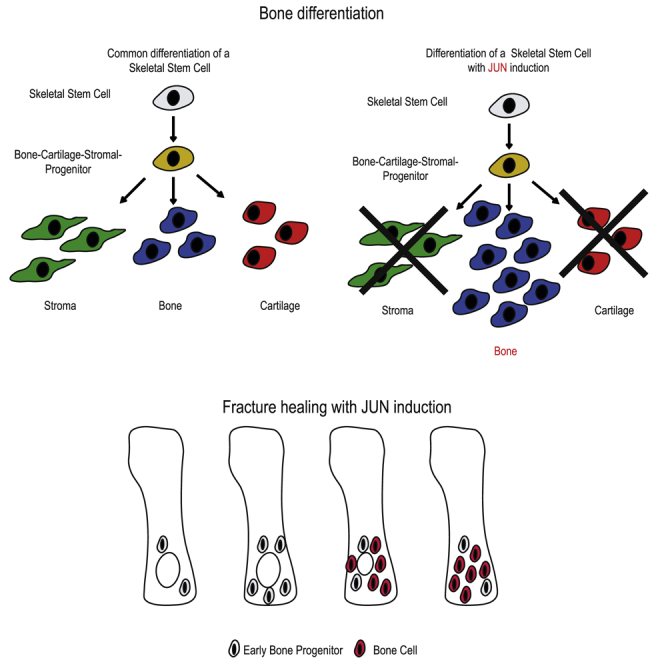
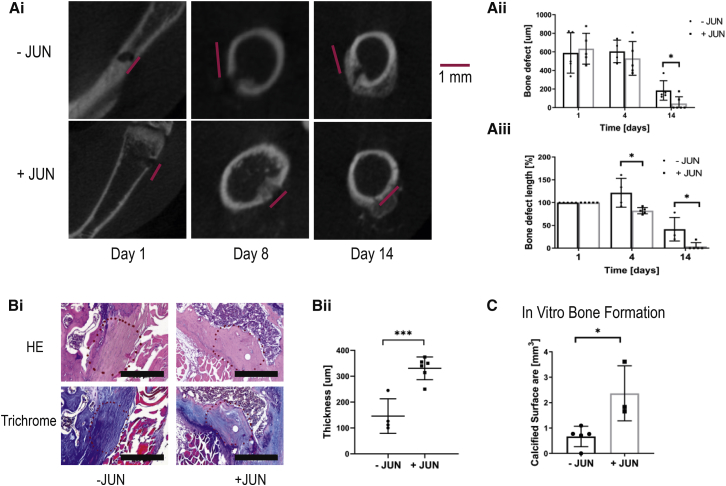
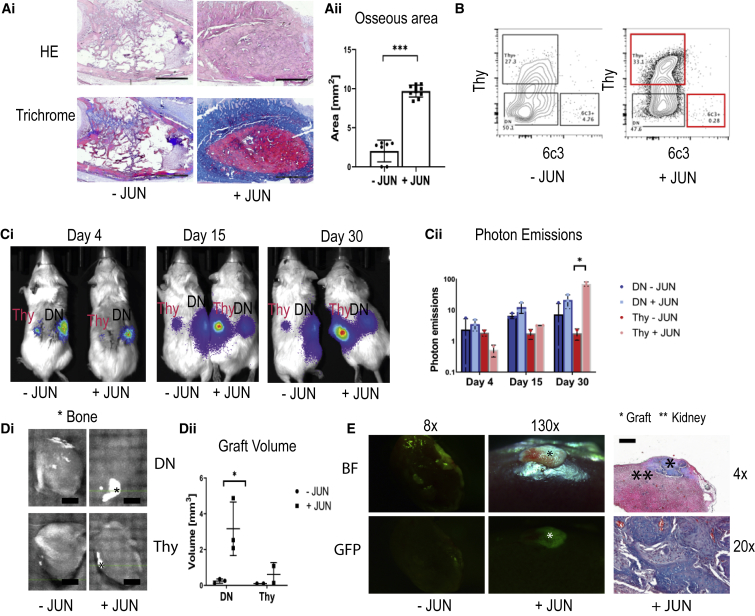
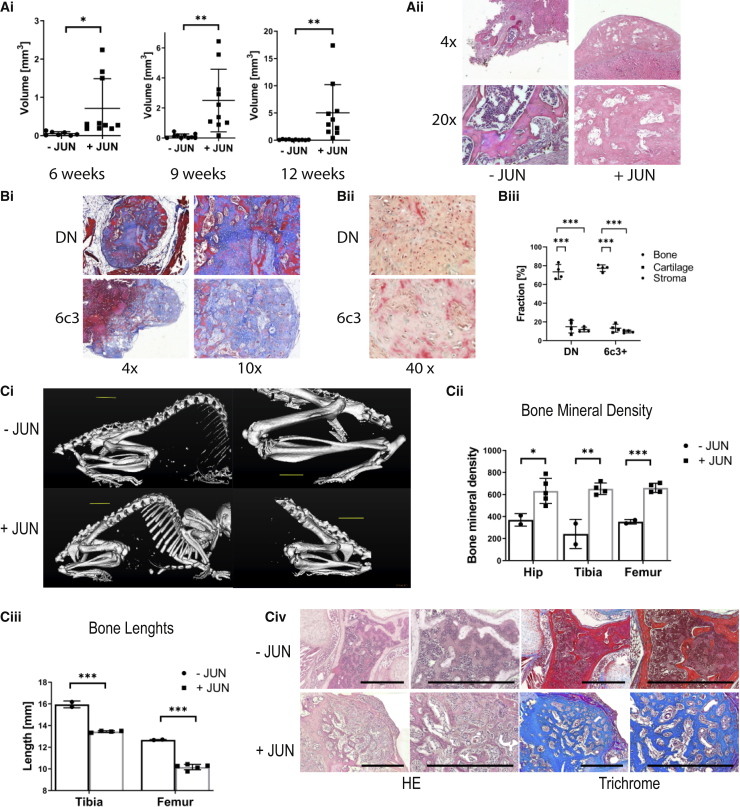
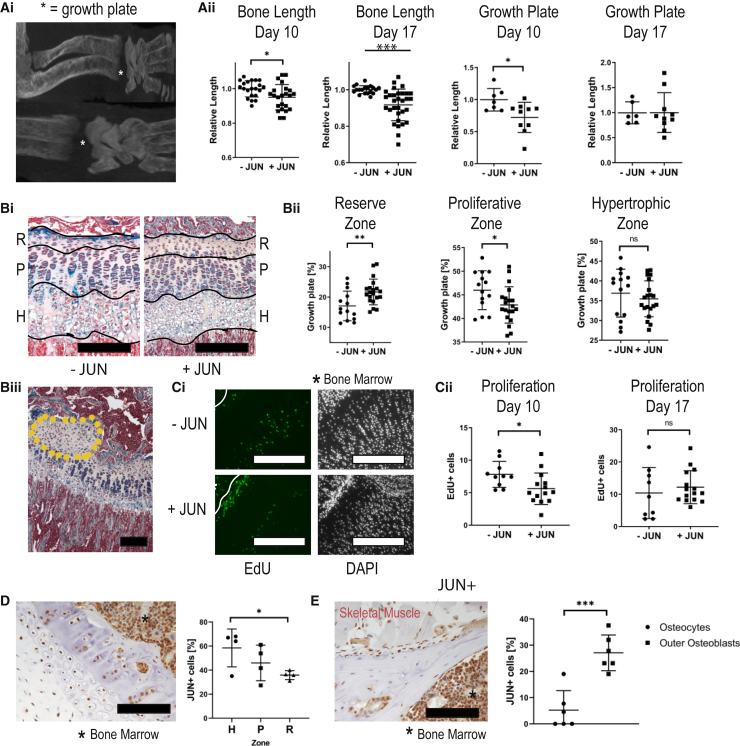
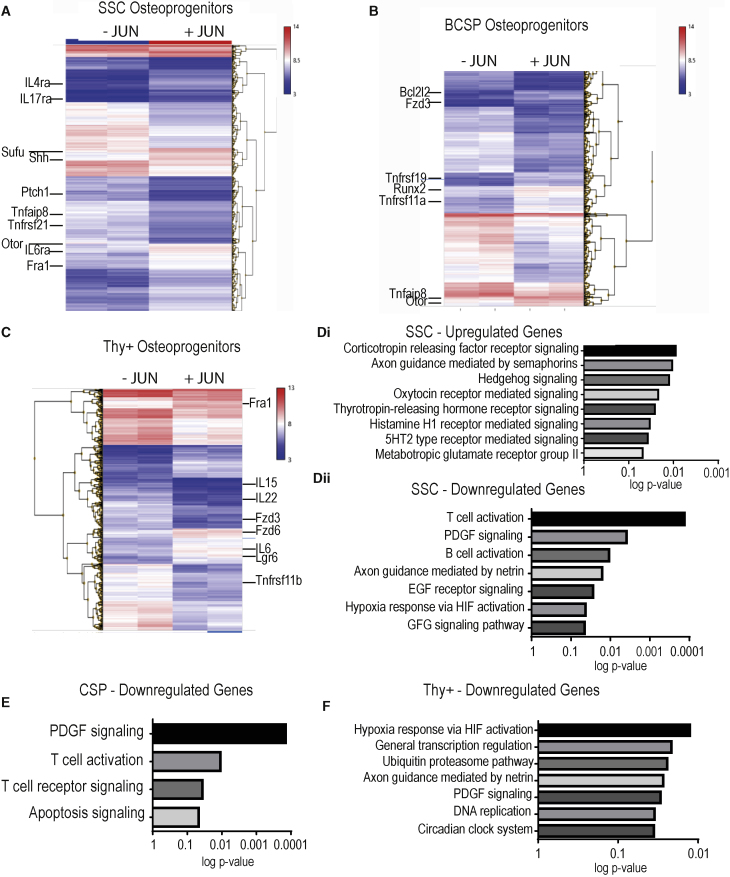
Osteoporosis and osteoporotic fractures lead to decreased life quality and high healthcare costs. Current treatments prevent losses in bone mass and fractures to some extent but have side effects. Therefore, better therapies are needed. This study investigated whether the transcription factor Jun has a specific pro-osteogenic potency and whether modulating Jun could serve as a novel treatment for osteoporosis-associated fractures. We demonstrate that ectopically transplanted whole bones and distinct osteoprogenitors increase bone formation. Perinatal Jun induction disturbs growth plate architecture, causing a striking phenotype with shortened and thickened bones. Molecularly, Jun induces hedgehog signaling in skeletal stem cells. Therapeutically, Jun accelerates bone growth and healing in a drilling-defect model. Altogether, these results demonstrate that Jun drives bone formation by expanding osteoprogenitor populations and forcing them into the bone fate, providing a rationale for future clinical applications.
骨质疏松症和骨质疏松性骨折导致生活质量下降和医疗保健费用高企。目前的治疗方法在一定程度上可以预防骨质流失和骨折,但也有副作用。因此,需要更好的治疗方法。本研究探讨了转录因子 Jun 是否具有特定的促成骨作用,以及调节 Jun 是否可以作为治疗与骨质疏松相关骨折的新方法。我们证明了异位移植的整个骨骼和不同的成骨前体细胞增加了骨形成。围产期 Jun 的诱导会破坏生长板的结构,导致骨骼缩短和增厚的明显表型。从分子水平上讲,Jun 在骨骼干细胞中诱导 hedgehog 信号。在治疗上,Jun 可加速钻孔缺陷模型中的骨生长和愈合。总的来说,这些结果表明 Jun 通过扩展成骨前体细胞群并迫使它们进入骨命运来驱动骨形成,为未来的临床应用提供了依据。