Woestemeier Anna, Harms-Effenberger Katharina, Karstens Karl-F, Konczalla Leonie, Ghadban Tarik, Uzunoglu Faik G, Izbicki Jakob R, Bockhorn Maximilian, Pantel Klaus, Reeh Matthias
Department of General, Visceral and Thoracic Surgery, University Medical Centre, Hamburg-Eppendorf, Martinistr. 52, 20246 Hamburg, Germany.
Department of Tumor Biology, University Medical Centre, Hamburg-Eppendorf, Martinistr. 52, 20246 Hamburg, Germany.
Cancers (Basel). 2020 Mar 18;12(3):718. doi: 10.3390/cancers12030718.
Current modalities to predict tumor recurrence and survival in esophageal cancer are insufficient. Even in lymph node-negative patients, a locoregional and distant relapse is common. Hence, more precise staging methods are needed. So far, only the CellSearch system was used to detect circulating tumor cells (CTC) with clinical relevance in esophageal cancer patients. Studies analyzing different CTC detection assays using advanced enrichment techniques to potentially increase the sensitivity are missing.
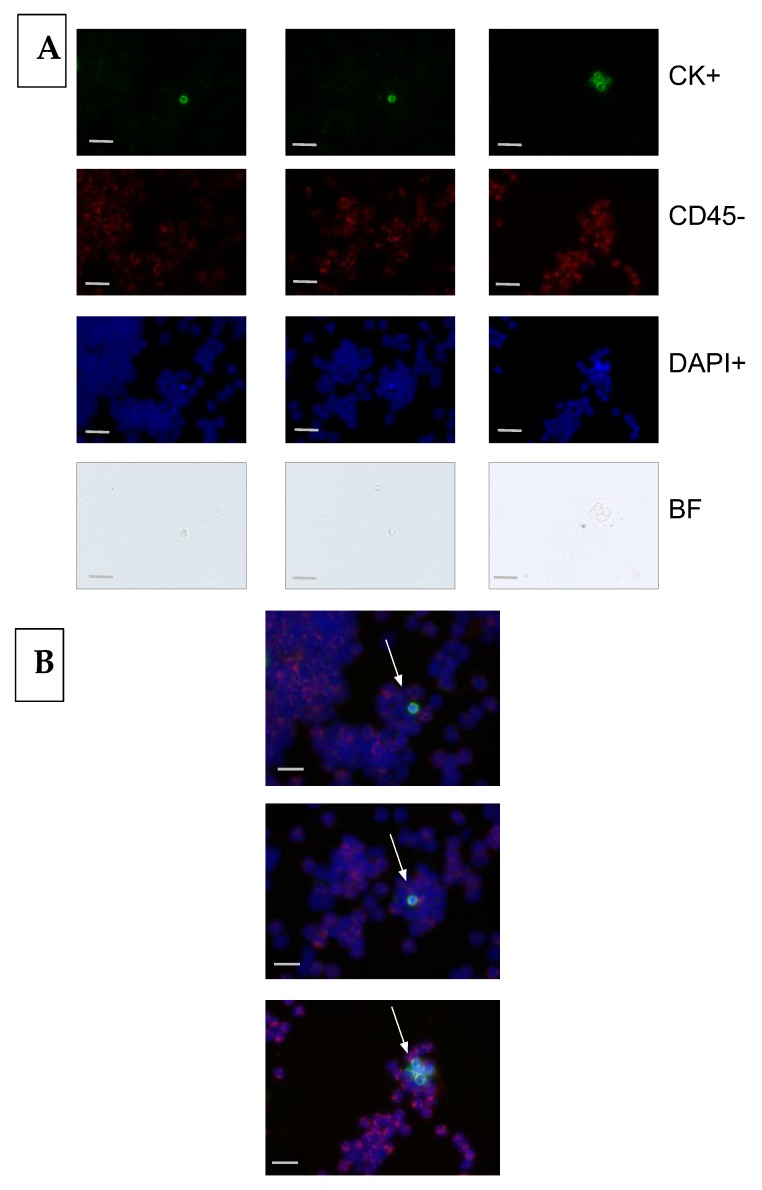
In this single-center, prospective study, peripheral blood samples from 90 esophageal cancer patients were obtained preoperatively and analyzed for the presence of CTCs by Magnetic Cell Separation (MACS) enrichment (combined anti-cytokeratin and anti-epithelial cell adhesion molecules (EpCAM)), with subsequent immunocytochemical staining. Data were correlated with clinicopathological parameters and patient outcomes.
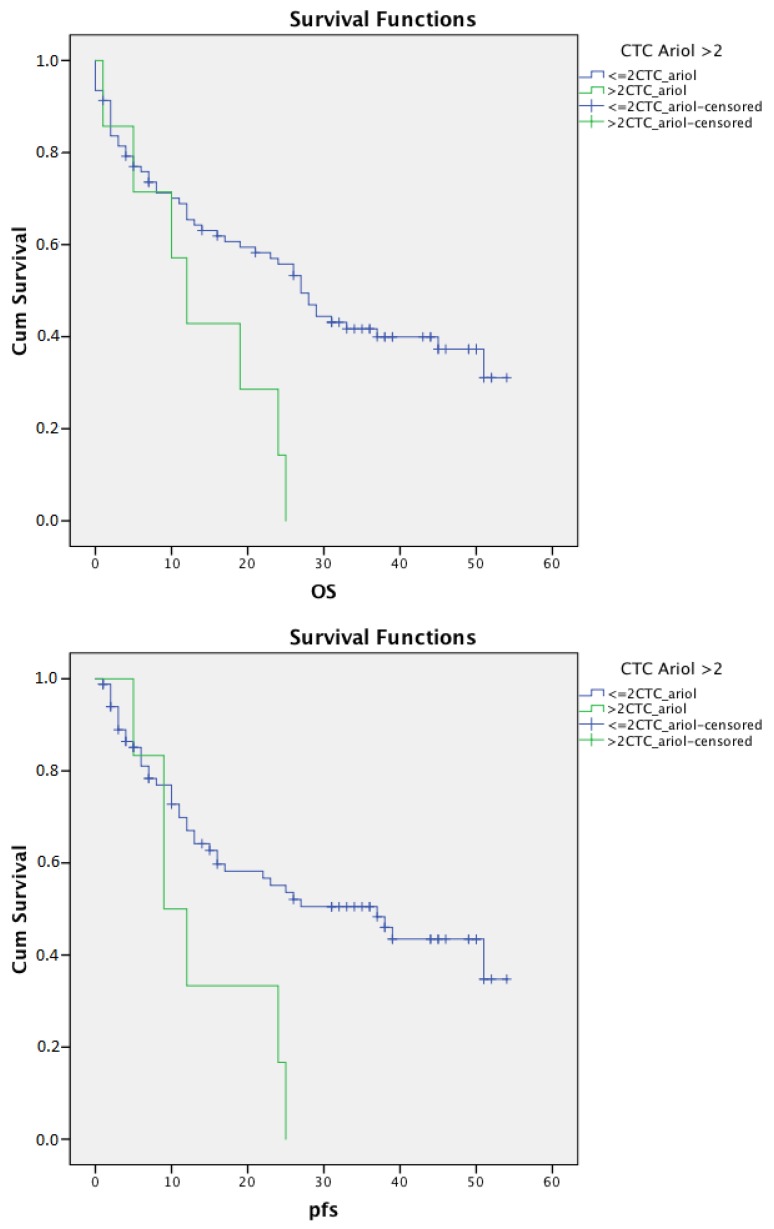
CTCs were detected in 25.6% (23/90) of the patients by combined cytokeratin/EpCAM enrichment (0-150 CTCs/7.5 mL). No significant correlation between histopathological parameters and CTC detection was found. Survival analysis revealed that the presence of more than two CTCs correlated with significantly shorter overall survival (OS) and progression-free survival (PFS).
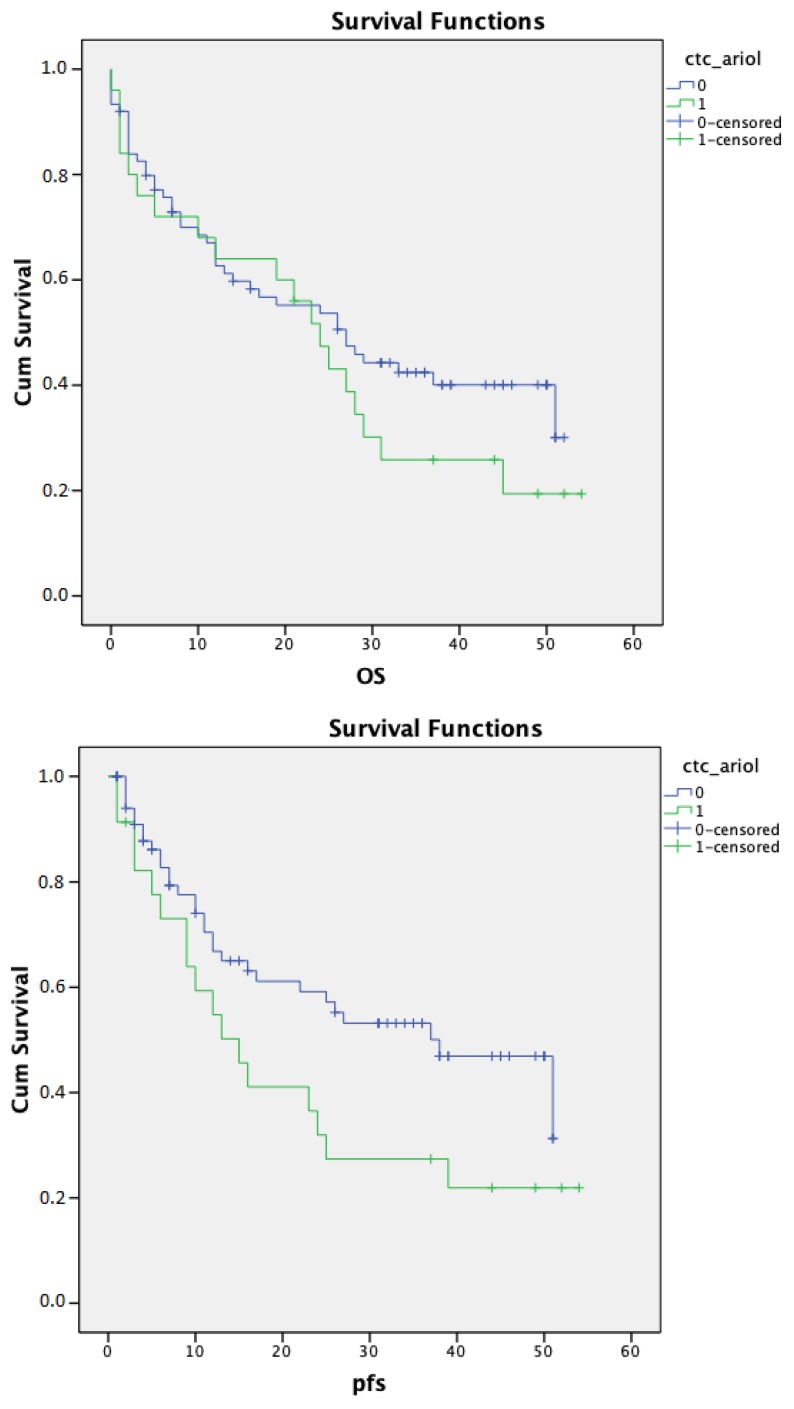
With the use of cytokeratin as an additional enrichment target, the CTC detection rate in esophageal cancer patients can be elevated and displays the heterogeneity of cytokeratin (CK) and EpCAM expression. The presence of >2CTCs correlated with a shorter relapse-free and overall survival in a univariate analysis, but not in a multivariate setting. Moreover, our results suggest that the CK7/8/EpCAM or CK7/8/EpCAM CTC subtype does not lead to an advanced tumor staging tool in non-metastatic esophageal cancer (EC) patients.
目前预测食管癌肿瘤复发和生存的方法并不充分。即使是淋巴结阴性的患者,局部区域和远处复发也很常见。因此,需要更精确的分期方法。到目前为止,在食管癌患者中,只有CellSearch系统用于检测具有临床相关性的循环肿瘤细胞(CTC)。缺乏使用先进富集技术分析不同CTC检测方法以潜在提高敏感性的研究。
在这项单中心前瞻性研究中,术前采集了90例食管癌患者的外周血样本,并通过磁珠细胞分选(MACS)富集(联合抗细胞角蛋白和抗上皮细胞粘附分子(EpCAM))分析CTC的存在情况,随后进行免疫细胞化学染色。数据与临床病理参数和患者预后相关联。
通过联合细胞角蛋白/EpCAM富集法在25.6%(23/90)的患者中检测到CTC(0 - 150个CTC/7.5 mL)。未发现组织病理学参数与CTC检测之间存在显著相关性。生存分析显示,超过两个CTC的存在与显著缩短的总生存期(OS)和无进展生存期(PFS)相关。
使用细胞角蛋白作为额外的富集靶点,可以提高食管癌患者的CTC检测率,并显示细胞角蛋白(CK)和EpCAM表达的异质性。在单变量分析中,>2个CTC的存在与较短的无复发生存期和总生存期相关,但在多变量分析中并非如此。此外,我们的结果表明,CK7/8/EpCAM或CK7/8/EpCAM CTC亚型并不能为非转移性食管癌(EC)患者带来先进的肿瘤分期工具。