Division of Internal Medicine, Department of Symptom Research, Laboratories of Neuroimmunology, The University of Texas MD Anderson Cancer Center, Houston, TX, 77030, USA.
Department of Neurobiology & Anatomy, The University of Texas McGovern Medical School, Houston, TX, 77030, USA.
Acta Neuropathol Commun. 2020 Mar 20;8(1):36. doi: 10.1186/s40478-020-00897-7.
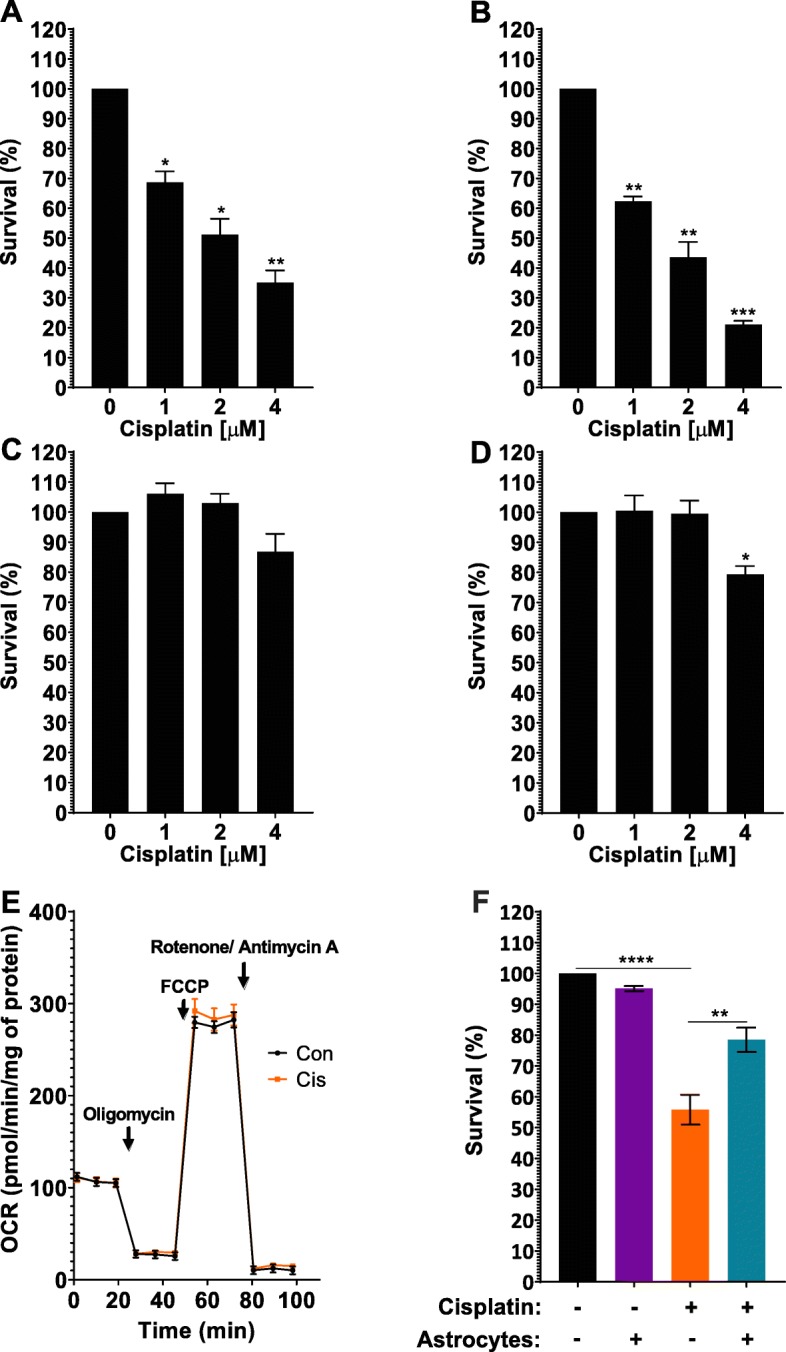
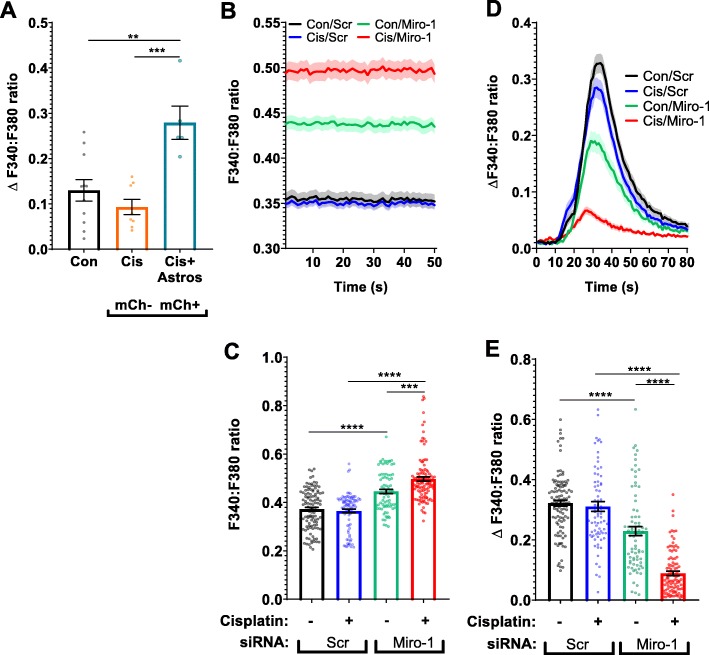
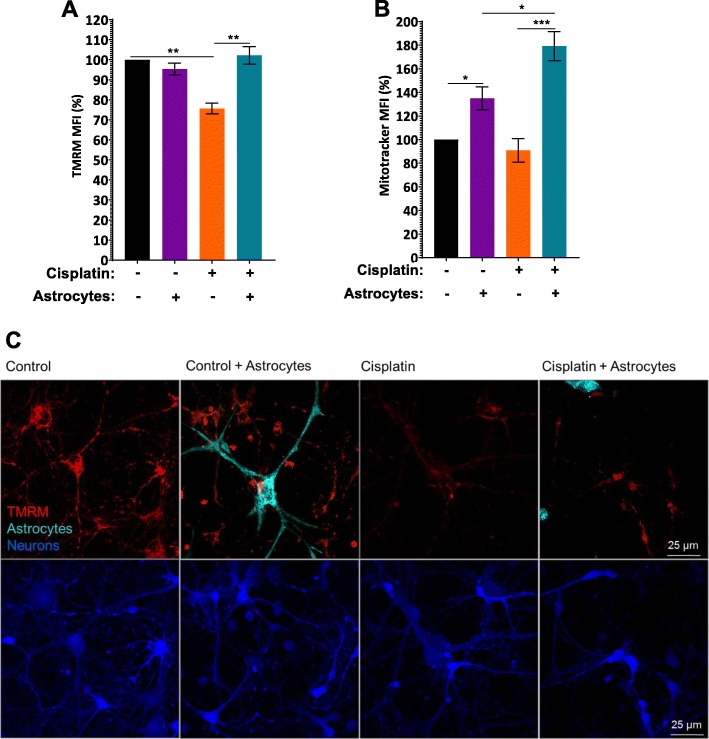
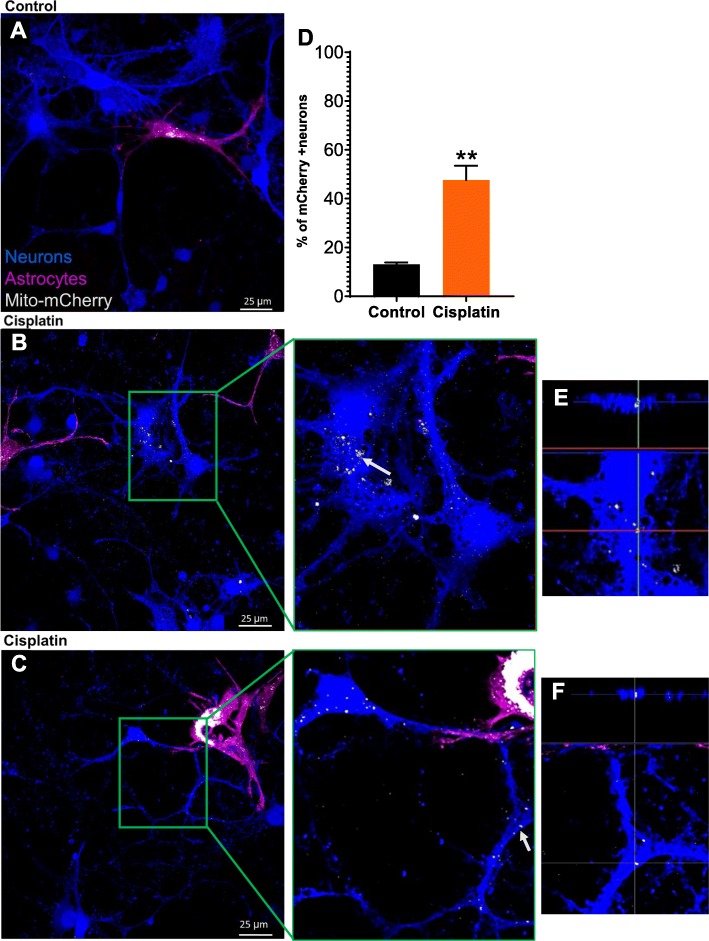
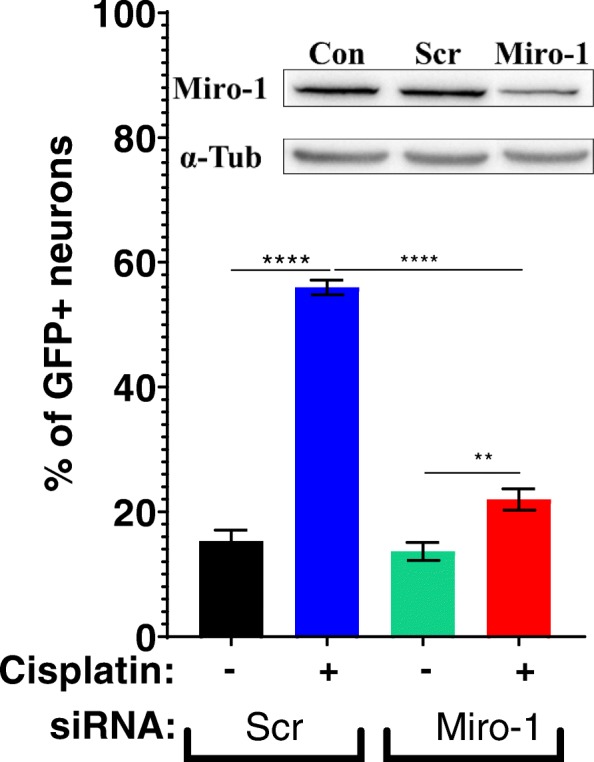
Neurodegenerative disorders, including chemotherapy-induced cognitive impairment, are associated with neuronal mitochondrial dysfunction. Cisplatin, a commonly used chemotherapeutic, induces neuronal mitochondrial dysfunction in vivo and in vitro. Astrocytes are key players in supporting neuronal development, synaptogenesis, axonal growth, metabolism and, potentially mitochondrial health. We tested the hypothesis that astrocytes transfer healthy mitochondria to neurons after cisplatin treatment to restore neuronal health.We used an in vitro system in which astrocytes containing mito-mCherry-labeled mitochondria were co-cultured with primary cortical neurons damaged by cisplatin. Culture of primary cortical neurons with cisplatin reduced neuronal survival and depolarized neuronal mitochondrial membrane potential. Cisplatin induced abnormalities in neuronal calcium dynamics that were characterized by increased resting calcium levels, reduced calcium responses to stimulation with KCl, and slower calcium clearance. The same dose of cisplatin that caused neuronal damage did not affect astrocyte survival or astrocytic mitochondrial respiration. Co-culture of cisplatin-treated neurons with astrocytes increased neuronal survival, restored neuronal mitochondrial membrane potential, and normalized neuronal calcium dynamics especially in neurons that had received mitochondria from astrocytes which underlines the importance of mitochondrial transfer. These beneficial effects of astrocytes were associated with transfer of mitochondria from astrocytes to cisplatin-treated neurons. We show that siRNA-mediated knockdown of the Rho-GTPase Miro-1 in astrocytes reduced mitochondrial transfer from astrocytes to neurons and prevented the normalization of neuronal calcium dynamics.In conclusion, we showed that transfer of mitochondria from astrocytes to neurons rescues neurons from the damage induced by cisplatin treatment. Astrocytes are far more resistant to cisplatin than cortical neurons. We propose that transfer of functional mitochondria from astrocytes to neurons is an important repair mechanism to protect the vulnerable cortical neurons against the toxic effects of cisplatin.
神经退行性疾病,包括化疗引起的认知障碍,与神经元线粒体功能障碍有关。顺铂是一种常用的化疗药物,可在体内和体外诱导神经元线粒体功能障碍。星形胶质细胞是支持神经元发育、突触发生、轴突生长、代谢和潜在线粒体健康的关键角色。我们假设星形胶质细胞在顺铂处理后将健康的线粒体转移到神经元中,以恢复神经元的健康。我们使用了一种体外系统,其中含有 mito-mCherry 标记线粒体的星形胶质细胞与被顺铂损伤的原代皮质神经元共培养。用顺铂培养原代皮质神经元会降低神经元的存活率,并使神经元线粒体膜电位去极化。顺铂诱导神经元钙动力学异常,其特征是静息钙水平升高、对 KCl 刺激的钙反应减少以及钙清除速度较慢。引起神经元损伤的相同剂量的顺铂不会影响星形胶质细胞的存活或星形胶质细胞的线粒体呼吸。用顺铂处理的神经元与星形胶质细胞共培养可提高神经元的存活率,恢复神经元线粒体膜电位,并使神经元钙动力学正常化,特别是在接受来自星形胶质细胞的线粒体的神经元中,这突出了线粒体转移的重要性。星形胶质细胞的这些有益作用与星形胶质细胞向顺铂处理的神经元转移线粒体有关。我们表明,星形胶质细胞中 Rho-GTPase Miro-1 的 siRNA 介导敲低会减少星形胶质细胞向神经元的线粒体转移,并阻止神经元钙动力学的正常化。总之,我们表明,星形胶质细胞向神经元的线粒体转移可挽救神经元免受顺铂处理引起的损伤。星形胶质细胞对顺铂的耐受性远高于皮质神经元。我们提出,星形胶质细胞向神经元转移功能正常的线粒体是一种重要的修复机制,可保护易受损伤的皮质神经元免受顺铂的毒性影响。