Kim Taejin, Viard Mathias, Afonin Kirill A, Gupta Kshitij, Popov Mary, Salotti Jacqueline, Johnson Peter F, Linder Charles, Heldman Eliahu, Shapiro Bruce A
RNA Biology Laboratory, National Cancer Institute, Frederick, MD 21702, USA.
Basic Science Program, Frederick National Laboratory for Cancer Research, Frederick, MD, USA.
Mol Ther Nucleic Acids. 2020 Jun 5;20:359-372. doi: 10.1016/j.omtn.2020.02.011. Epub 2020 Mar 4.
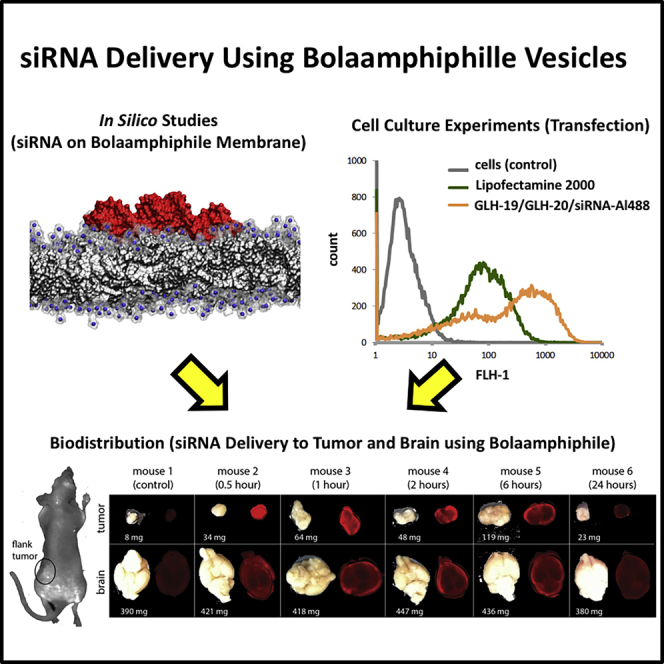
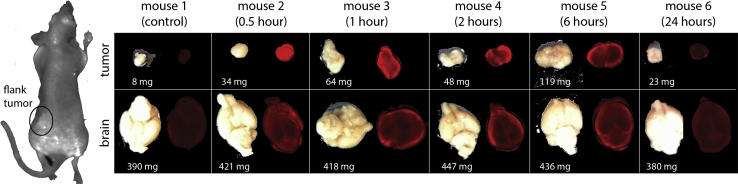
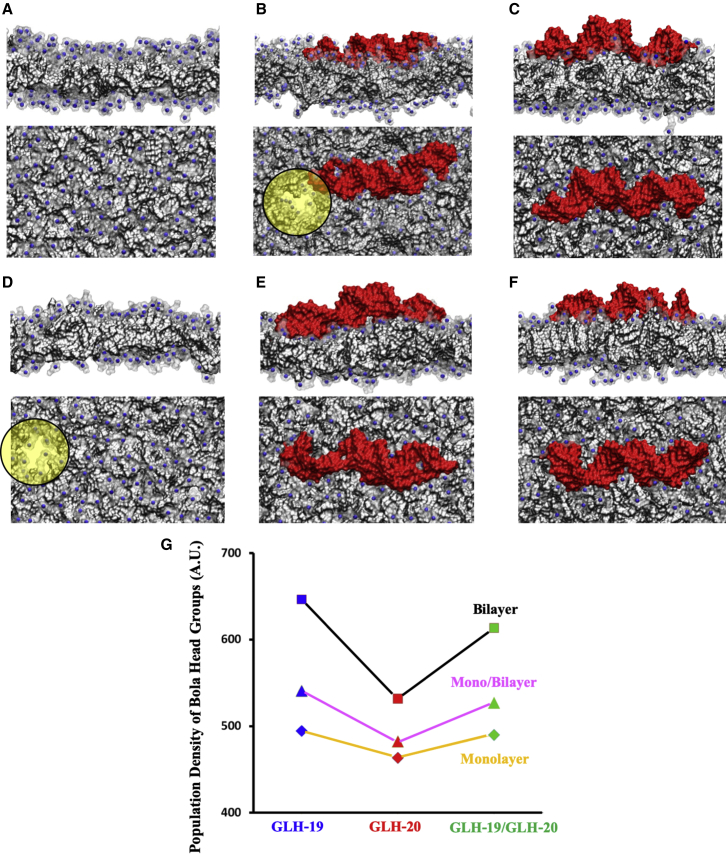
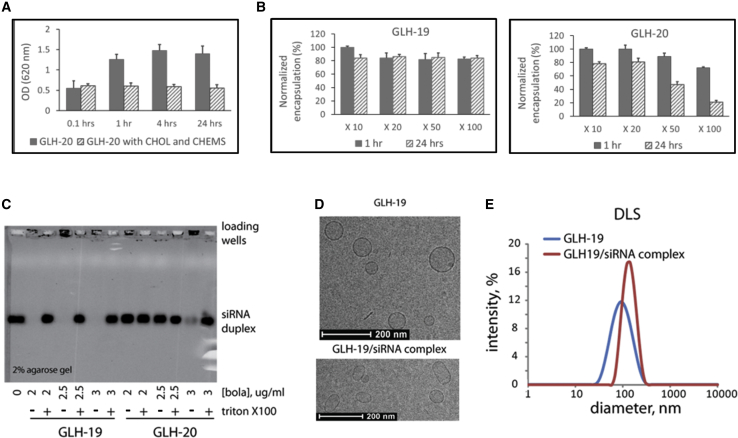
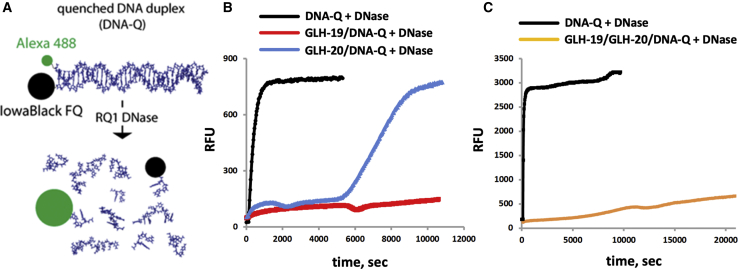
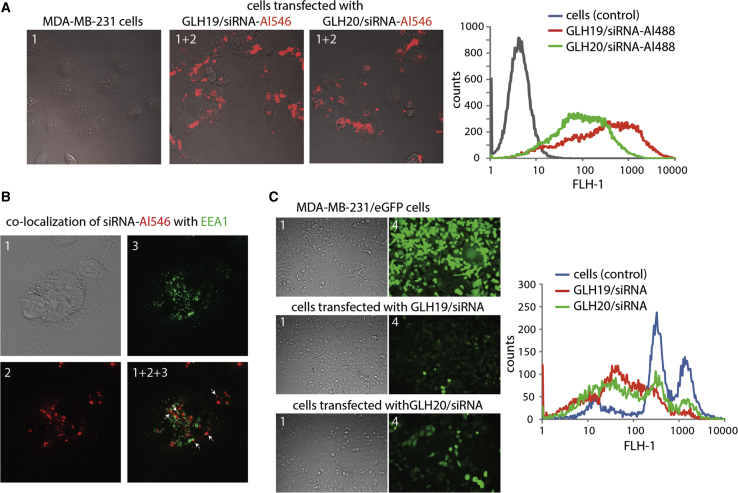
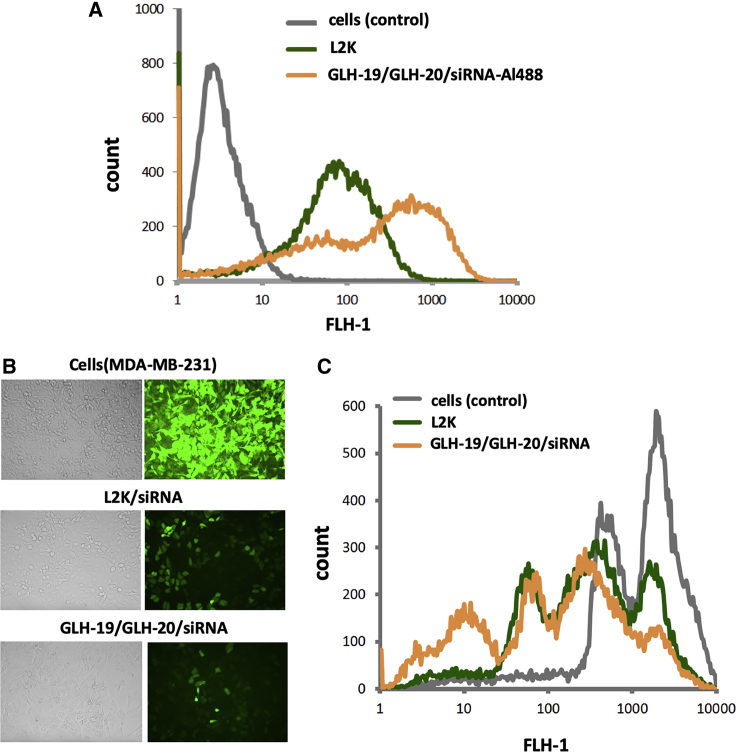
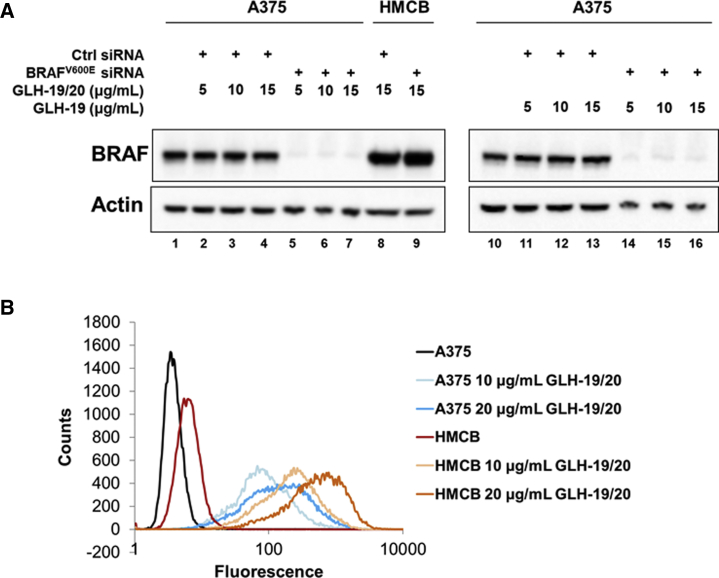
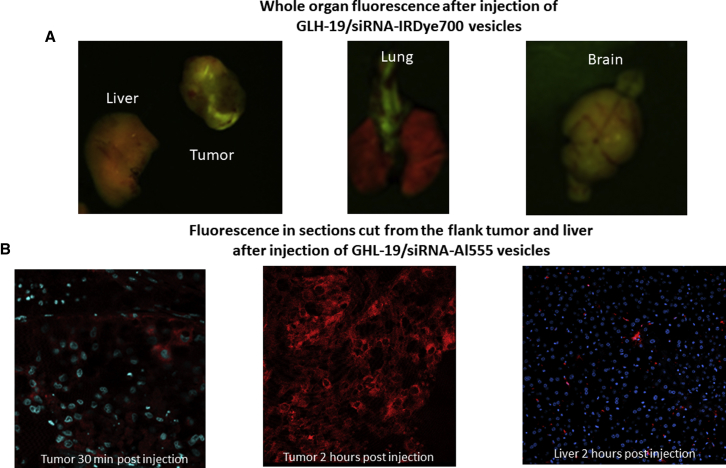
Small interfering RNAs (siRNAs) are potential therapeutic substances due to their gene silencing capability as exemplified by the recent approval by the US Food and Drug Administration (FDA) of the first siRNA therapeutic agent (patisiran). However, the delivery of naked siRNAs is challenging because of their short plasma half-lives and poor cell penetrability. In this study, we used vesicles made from bolaamphiphiles (bolas), GLH-19 and GLH-20, to investigate their ability to protect siRNA from degradation by nucleases while delivering it to target cells, including cells in the brain. Based on computational and experimental studies, we found that GLH-19 vesicles have better delivery characteristics than do GLH-20 vesicles in terms of stability, binding affinity, protection against nucleases, and transfection efficiency, while GLH-20 vesicles contribute to efficient release of the delivered siRNAs, which become available for silencing. Our studies with vesicles made from a mixture of the two bolas (GLH-19 and GLH-20) show that they were able to deliver siRNAs into cultured cancer cells, into a flank tumor and into the brain. The vesicles penetrate cell membranes and the blood-brain barrier (BBB) by endocytosis and transcytosis, respectively, mainly through the caveolae-dependent pathway. These results suggest that GLH-19 strengthens vesicle stability, provides protection against nucleases, and enhances transfection efficiency, while GLH-20 makes the siRNA available for gene silencing.
小干扰RNA(siRNA)因其基因沉默能力而成为潜在的治疗物质,美国食品药品监督管理局(FDA)最近批准的首个siRNA治疗药物(帕替拉韦)就是例证。然而,由于裸siRNA的血浆半衰期短且细胞穿透性差,其递送具有挑战性。在本研究中,我们使用了由双亲性分子(bola)GLH - 19和GLH - 20制成的囊泡,来研究它们在将siRNA递送至靶细胞(包括脑细胞)的同时保护其免受核酸酶降解的能力。基于计算和实验研究,我们发现,在稳定性、结合亲和力、抗核酸酶能力和转染效率方面,GLH - 19囊泡比GLH - 20囊泡具有更好的递送特性,而GLH - 20囊泡有助于所递送的siRNA有效释放,从而可用于基因沉默。我们对由这两种双亲性分子(GLH - 19和GLH - 20)的混合物制成的囊泡的研究表明,它们能够将siRNA递送至培养的癌细胞、侧腹肿瘤和脑内。这些囊泡分别通过内吞作用和转胞吞作用穿透细胞膜和血脑屏障(BBB),主要通过小窝依赖途径。这些结果表明,GLH - 19增强了囊泡稳定性,可以抗核酸酶,并提高了转染效率,而GLH - 20使siRNA可用于基因沉默。