Masui Kenta, Harachi Mio, K Cavenee Webster, S Mischel Paul, Shibata Noriyuki
Department of Pathology, Division of Pathological Neuroscience, Tokyo Women's Medical University, Tokyo 162-8666, Japan.
Ludwig Institute for Cancer Research, University of California San Diego, La Jolla, CA 92093, USA.
Acta Histochem Cytochem. 2020 Feb 28;53(1):1-10. doi: 10.1267/ahc.20002. Epub 2020 Feb 26.
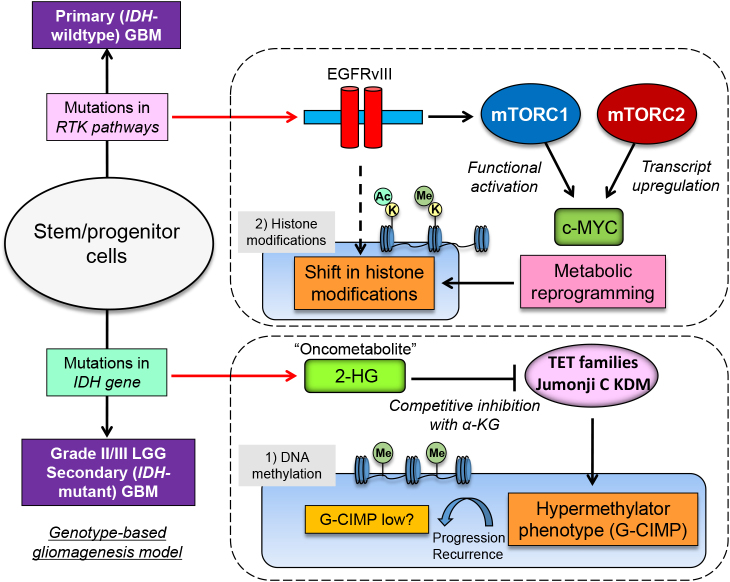
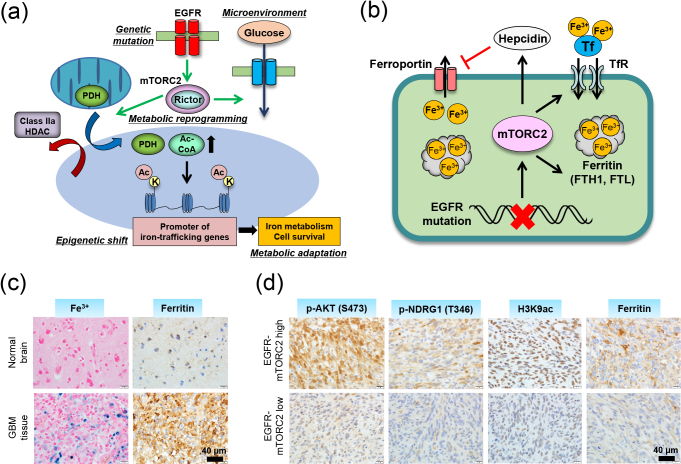
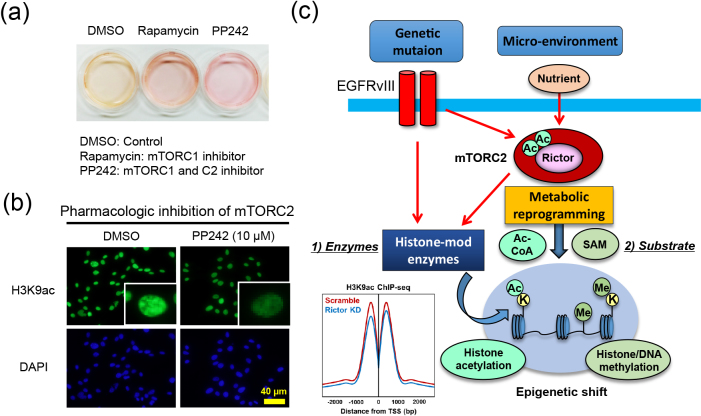
Cancer is widely considered to be a set of genetic diseases that are currently classified by tissue and cell type of origin and, increasingly, by its molecular characteristics. This latter aspect is based primarily upon oncogene gains, tumor suppressor losses, and associated transcriptional profiles. However, cancers are also characterized by profound alterations in cellular metabolism and epigenetic landscape. It is particularly noteworthy that cancer-causing genomic defects not only activate cell cycle progression, but regulate the opportunistic uptake and utilization of nutrients, effectively enabling tumors to maximize growth and drug resistance in changing tissue and systemic microenvironments. Shifts in chromatin architecture are central to this dynamic behavior. Further, changes in nutrient uptake and utilization directly affect chromatin structure. In this review, we describe a set of recent discoveries of metabolic and epigenetic reprogramming in cancer, and especially focus on the genomically well-characterized brain tumor, glioblastoma. Further, we discuss a new mode of metabolic regulation driven by epigenetic mechanisms, that enables cancer cells to autonomously activate iron metabolism for their survival. Together, these underscore the integration of genetic mutations with metabolic reprogramming and epigenetic shifts in cancer, suggesting a new means to identifying patient subsets suitable for specific precision therapeutics.
癌症被广泛认为是一组遗传性疾病,目前根据起源的组织和细胞类型进行分类,并且越来越多地根据其分子特征进行分类。后一个方面主要基于癌基因的获得、肿瘤抑制因子的缺失以及相关的转录谱。然而,癌症的特征还在于细胞代谢和表观遗传格局的深刻改变。特别值得注意的是,致癌基因组缺陷不仅激活细胞周期进程,还调节营养物质的机会性摄取和利用,有效地使肿瘤在不断变化的组织和全身微环境中实现生长最大化和耐药性增强。染色质结构的改变是这种动态行为的核心。此外,营养物质摄取和利用的变化直接影响染色质结构。在本综述中,我们描述了一组近期关于癌症中代谢和表观遗传重编程的发现,尤其关注基因组特征明确的脑肿瘤——胶质母细胞瘤。此外,我们讨论了一种由表观遗传机制驱动的新的代谢调节模式,这种模式使癌细胞能够自主激活铁代谢以维持生存。总之,这些强调了癌症中基因突变与代谢重编程和表观遗传变化的整合,提示了一种识别适合特定精准治疗的患者亚群的新方法。