Yu Tian, Cheng Lijia, Yan Xueling, Xiong Hang, Chen Jie, He Gang, Zhou Hui, Dong Hongbo, Xu Guangya, Tang Yong, Shi Zheng
School of Medicine & Sichuan Industrial Institute of Antibiotics & Department of Respiratory and Critical Care Medicine, Affiliated Hospital/ Clinical College of Chengdu University, Chengdu University, Chengdu 610015, China.
Central Laboratory of Clinical Medicine, Sichuan Academy of Medical Science and Sichuan Provincial People's Hospital, Chengdu, 610000, China.
J Cancer. 2020 Feb 19;11(9):2656-2666. doi: 10.7150/jca.40758. eCollection 2020.
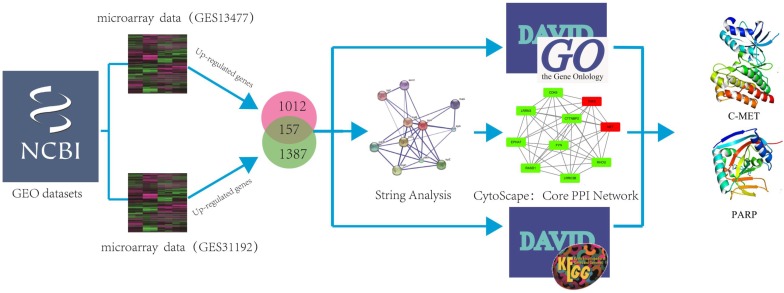
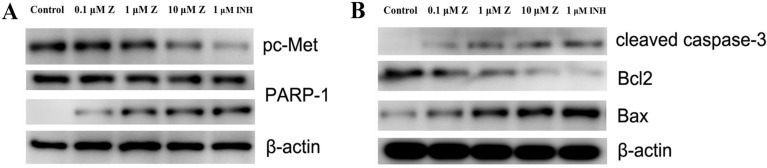
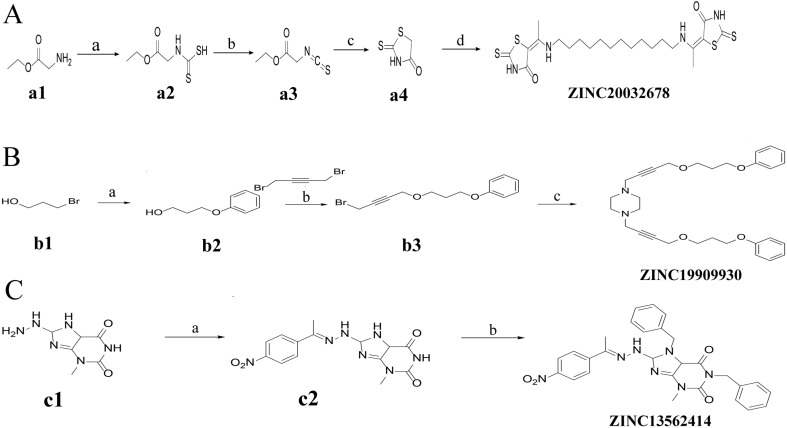
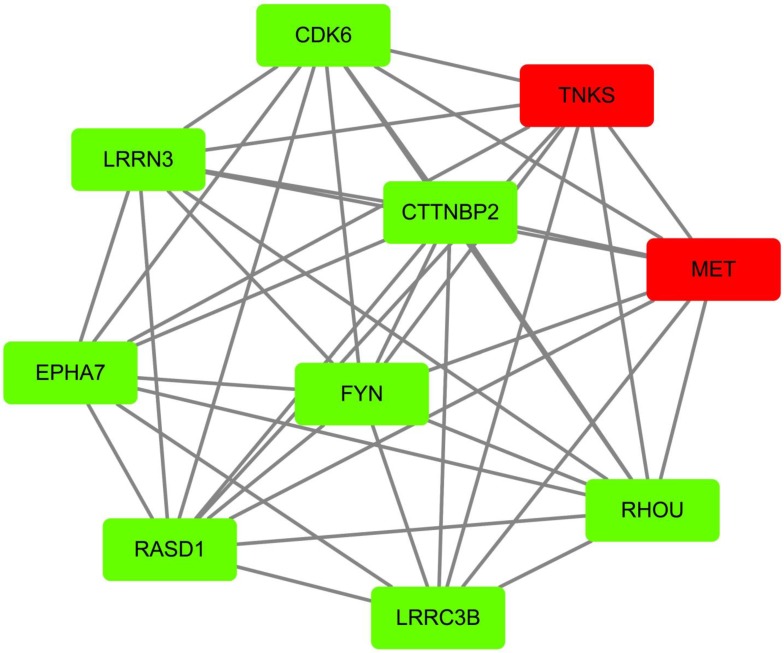
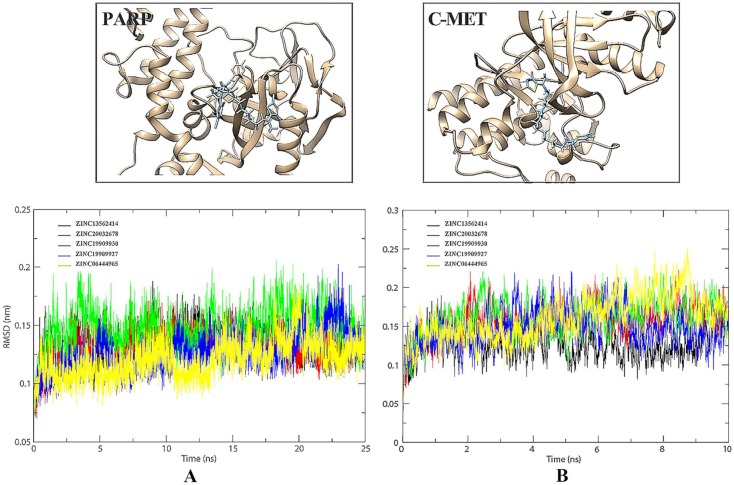
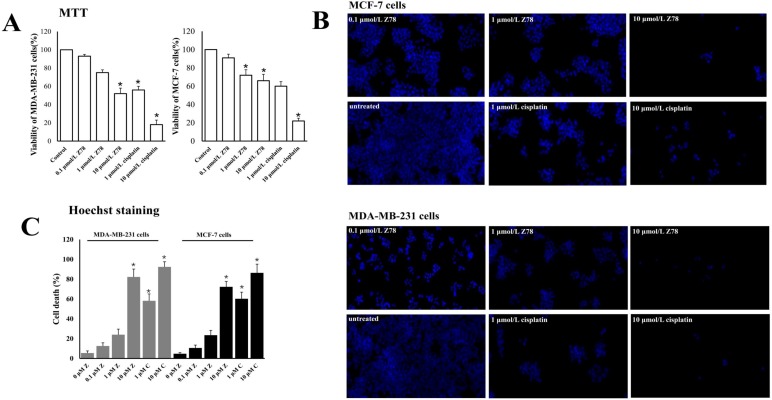
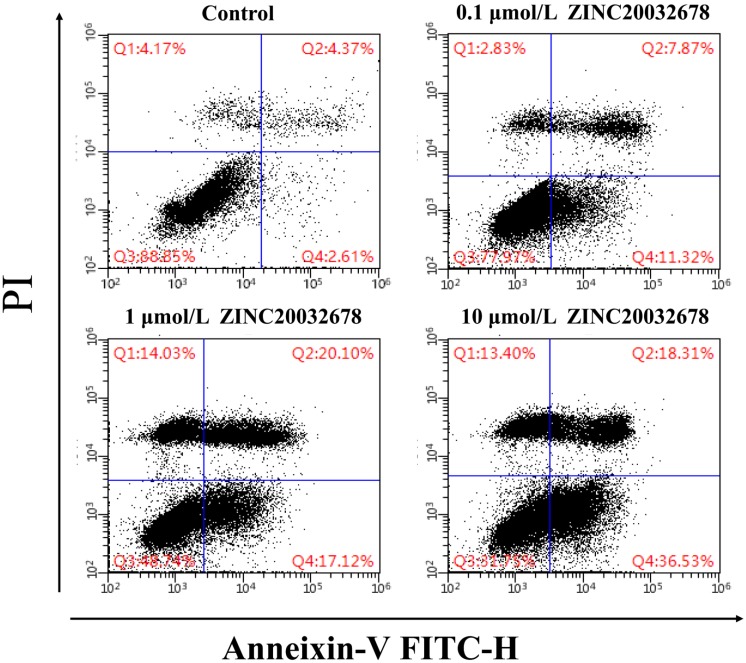
Breast cancer is the second most common types of cancer worldwide. Molecular strategies have developed rapidly; however, novel treatments strategies with high efficacy and lower toxicity are still urgently demanded. Notably, biological networks estimated from microarray data and functional activity network analysis could be utilized to identify and validate potential targets. In this study, two microarray data (GSE13477, GSE31192) were firstly selected, and analyzed by multi-functional activity network analysis to generate the core protein-protein-interaction (PPI) network. Several potential targets were subsequently identified and c-Met and poly (ADP-ribose) polymerase-1 (PARP-1) were manually chosen as the key targets in breast cancer. Furthermore, virtual screening and molecular dynamics (MD) simulations were utilized to recognize novel c-Met/PARP-1 inhibitors in Specs products database. Three small molecules, namely, ZINC19909930, ZINC20032678 and ZINC13562414 were selected. Additionally, these compounds were synthesized, and two breast cancer cell lines, MDA-MB-231 and MCF-7 cells were used to validate our bioinformatic findings . MTT assay and Hoechst staining showed that ZINC20032678 significantly induced breast cancer cell death, which was mediated through apoptosis by flow cytometry. Furthermore, ZINC20032678 was shown to target the active sites of the both targets and recruitment of downstream apoptotic signaling pathways, eventually inducing breast cancer cell apoptosis. Collectively, our findings not only offer systems biology approaches based drug target identification, but also provide the new clues for developing novel inhibitors for future breast cancer research.
乳腺癌是全球第二常见的癌症类型。分子策略发展迅速;然而,仍然迫切需要高效低毒的新型治疗策略。值得注意的是,从微阵列数据估计的生物网络和功能活性网络分析可用于识别和验证潜在靶点。在本研究中,首先选择了两个微阵列数据(GSE13477、GSE31192),并通过多功能活性网络分析进行分析,以生成核心蛋白质-蛋白质相互作用(PPI)网络。随后鉴定出几个潜在靶点,并手动选择c-Met和聚(ADP-核糖)聚合酶-1(PARP-1)作为乳腺癌的关键靶点。此外,利用虚拟筛选和分子动力学(MD)模拟在Specs产品数据库中识别新型c-Met/PARP-1抑制剂。选择了三个小分子,即ZINC19909930、ZINC20032678和ZINC13562414。此外,合成了这些化合物,并使用两种乳腺癌细胞系MDA-MB-231和MCF-7细胞来验证我们的生物信息学发现。MTT试验和Hoechst染色表明,ZINC20032678显著诱导乳腺癌细胞死亡,这是通过流式细胞术介导的细胞凋亡实现的。此外,ZINC20032678被证明靶向两个靶点的活性位点并募集下游凋亡信号通路,最终诱导乳腺癌细胞凋亡。总的来说,我们的发现不仅提供了基于系统生物学方法的药物靶点识别,也为未来乳腺癌研究开发新型抑制剂提供了新线索。