Magdy Tarek, Kuo Hui-Hsuan, Burridge Paul W
Department of Pharmacology, Northwestern University Feinberg School of Medicine, Chicago, IL 60611, USA; Center for Pharmacogenomics, Northwestern University Feinberg School of Medicine, Chicago, IL 60611, USA.
Department of Pharmacology, Northwestern University Feinberg School of Medicine, Chicago, IL 60611, USA; Center for Pharmacogenomics, Northwestern University Feinberg School of Medicine, Chicago, IL 60611, USA.
iScience. 2020 Apr 24;23(4):100971. doi: 10.1016/j.isci.2020.100971. Epub 2020 Mar 9.
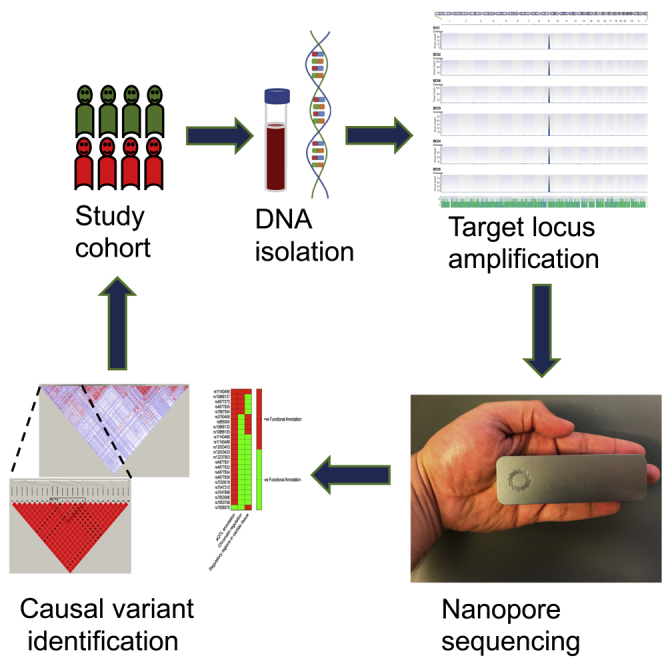
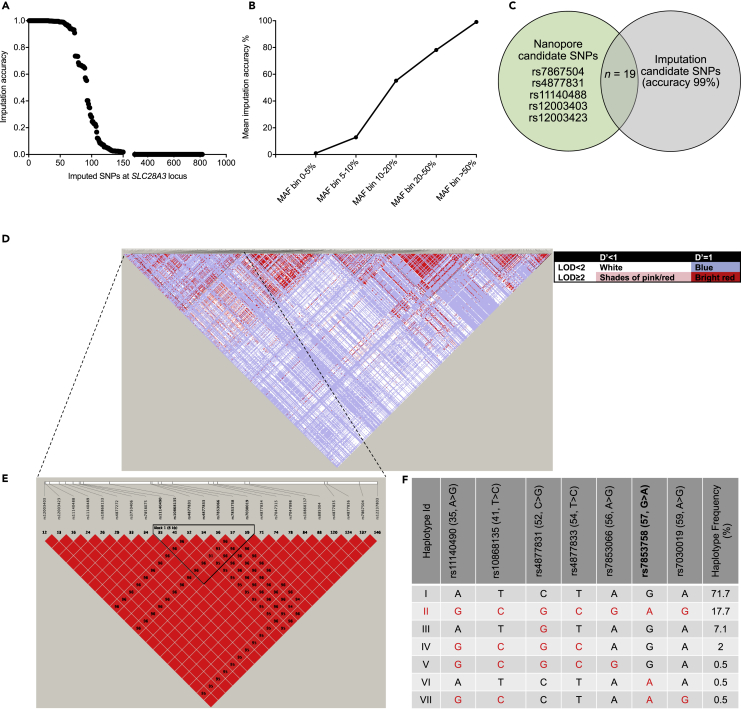
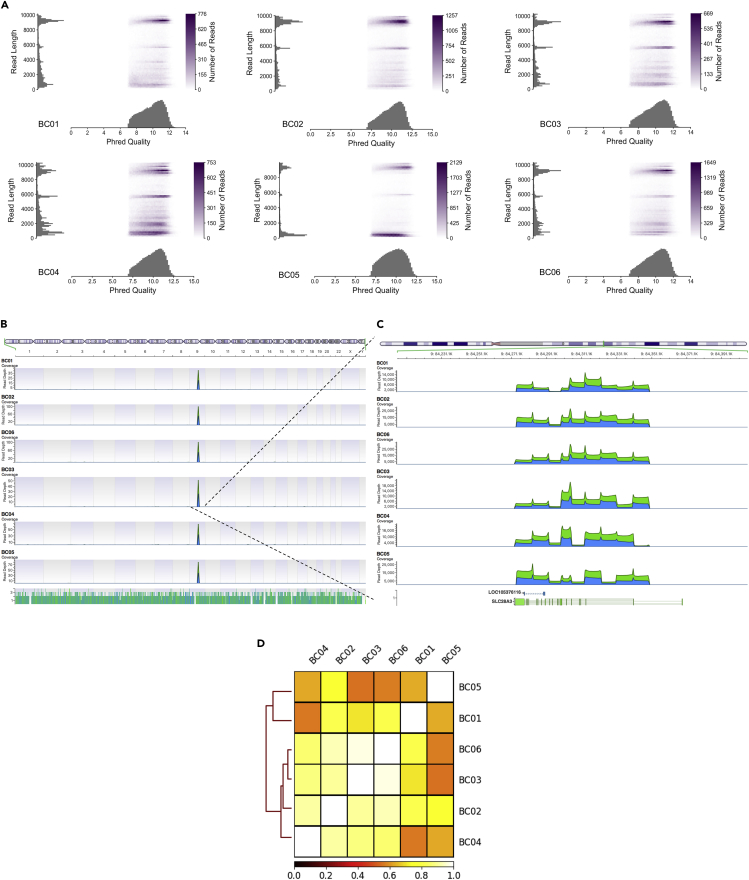
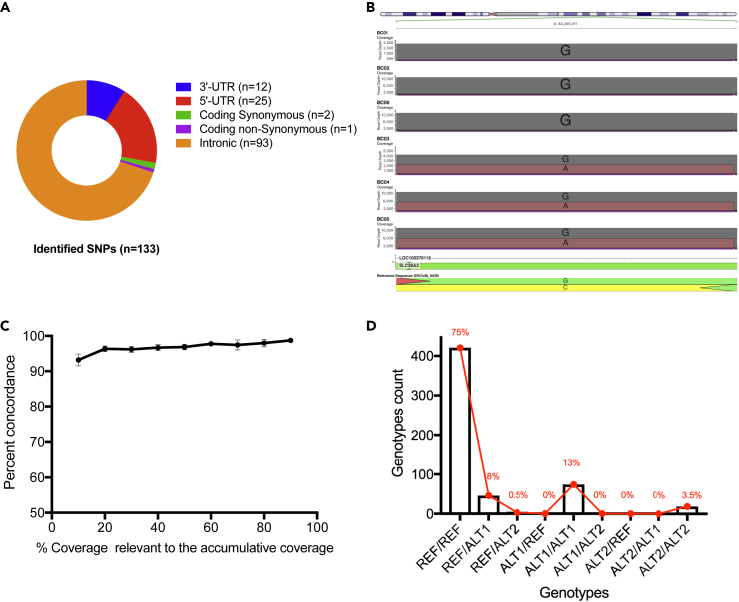
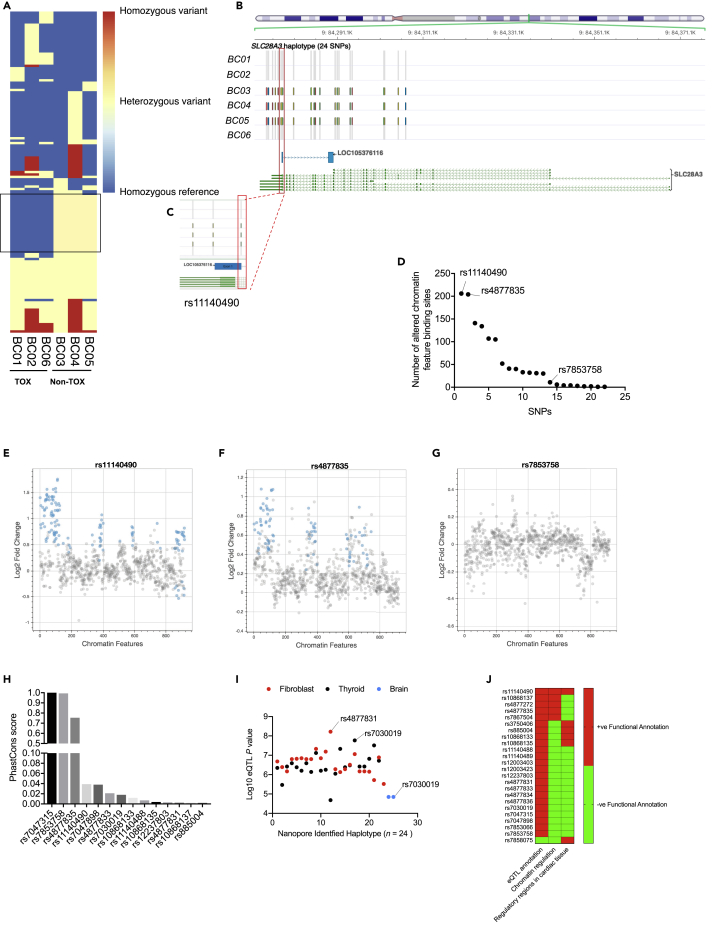
Fine-mapping of interesting loci discovered by genome-wide association study (GWAS) is mandatory to pinpoint causal variants. Traditionally, this fine-mapping is completed through increasing the genotyping density at candidate loci, for which imputation is the current standard approach. Although imputation is a useful technique, it has a number of limitations that impede accuracy. In this work, we describe the development of a precise and cost-effective Nanopore sequencing-based pipeline that provides comprehensive and accurate information at candidate loci to identify potential causal single-nucleotide polymorphisms (SNPs). We demonstrate the utility of this technique via the fine-mapping of a GWAS positive hit comprising a synonymous SNP that is associated with doxorubicin-induced cardiotoxicity. In this work, we provide a proof of principle for the application of Nanopore sequencing in post-GWAS fine-mapping and pinpointing of potential causal SNPs with a minimal cost of just ~$10/100 kb/sample.
对全基因组关联研究(GWAS)发现的感兴趣位点进行精细定位对于确定因果变异至关重要。传统上,这种精细定位是通过提高候选位点的基因分型密度来完成的,目前的标准方法是进行基因型填充。虽然基因型填充是一种有用的技术,但它有许多限制准确性的因素。在这项工作中,我们描述了一种基于纳米孔测序的精确且经济高效的流程的开发,该流程可在候选位点提供全面准确的信息,以识别潜在的因果单核苷酸多态性(SNP)。我们通过对一个GWAS阳性信号进行精细定位来证明该技术的实用性,该阳性信号包含一个与阿霉素诱导的心脏毒性相关的同义SNP。在这项工作中,我们提供了一个原理证明,即纳米孔测序在GWAS后精细定位和以最低成本(约10美元/100 kb/样本)确定潜在因果SNP中的应用。