Ma Danhui, Zou Yutian, Chu Yunxiang, Liu Zhengsheng, Liu Gaochao, Chu Jun, Li Mengdi, Wang Jiayu, Sun Shi-Yong, Chang Zhijie
State Key Laboratory of Membrane Biology, School of Medicine, National Engineering Laboratory for Anti-tumor Therapeutics, Tsinghua University, Beijing 100084, China.
College of Letters and Science, University of California, Berkeley, 101 Durant Hall, Berkeley, CA 94720.
Theranostics. 2020 Feb 19;10(8):3708-3721. doi: 10.7150/thno.41677. eCollection 2020.
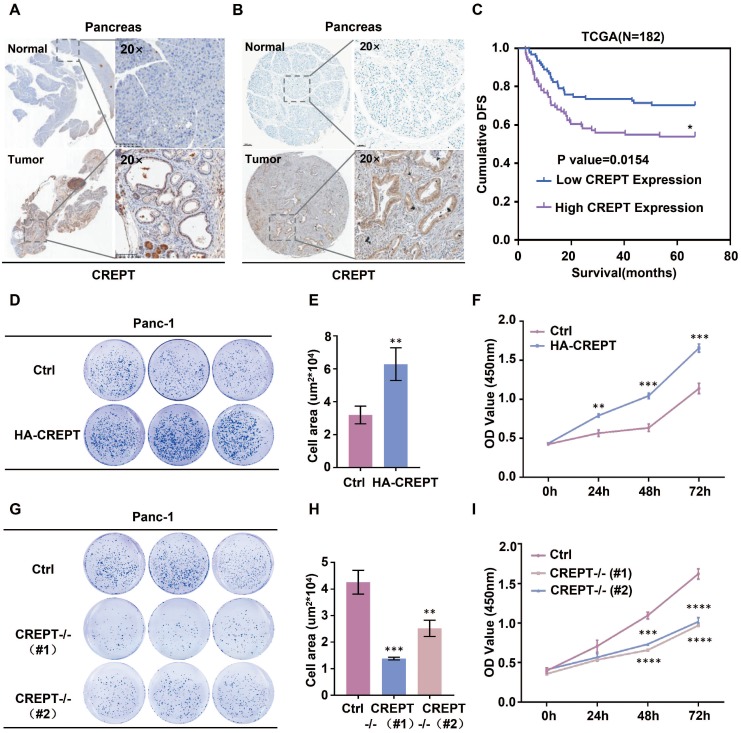
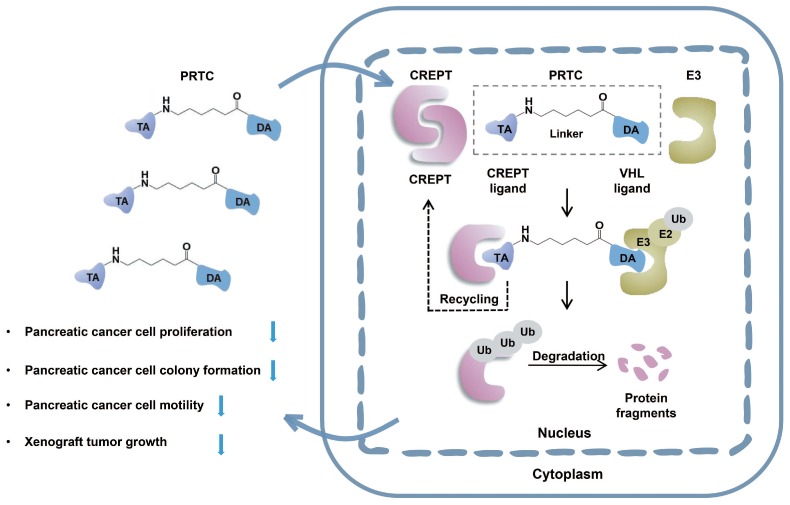
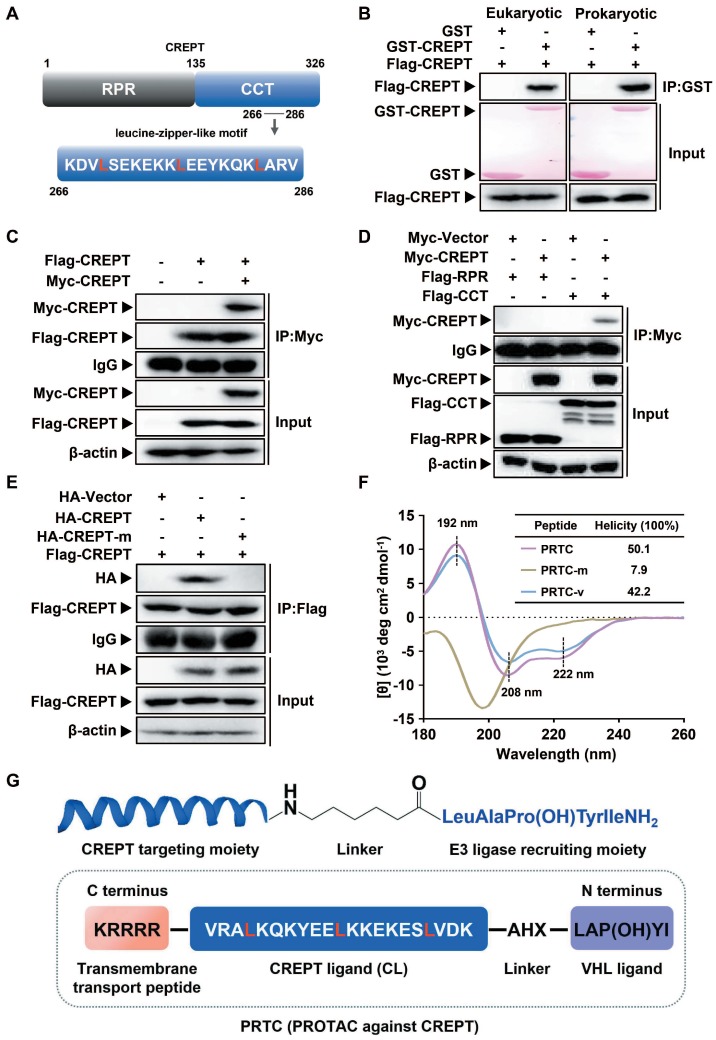
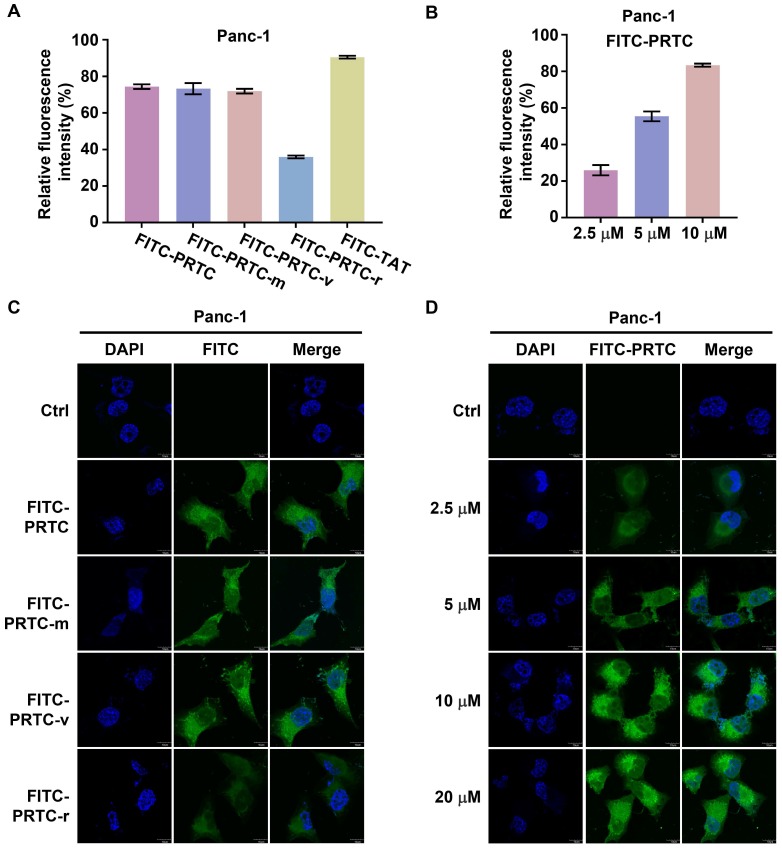
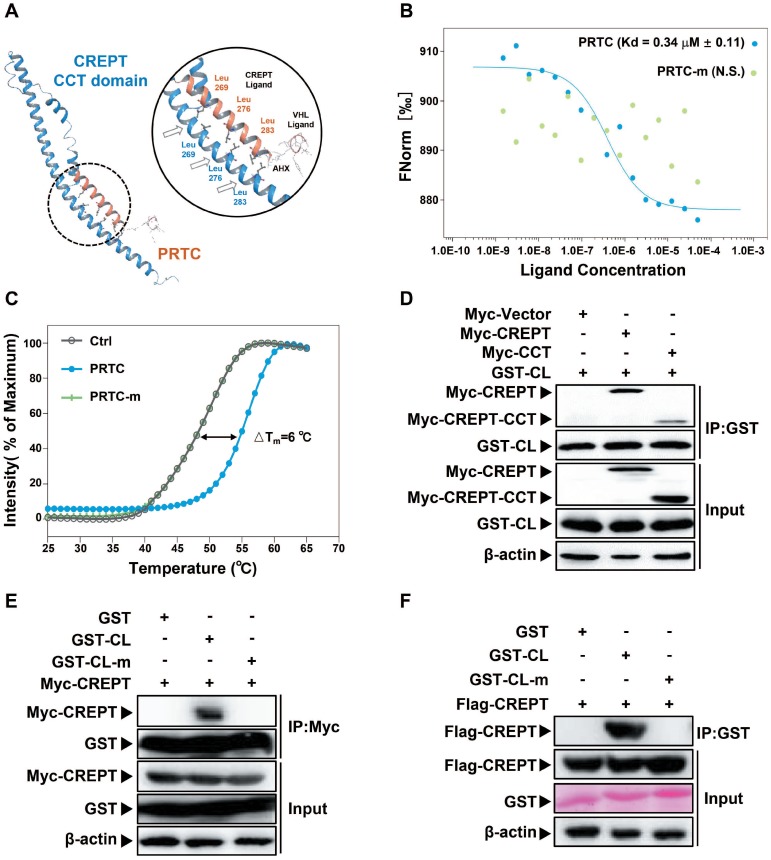
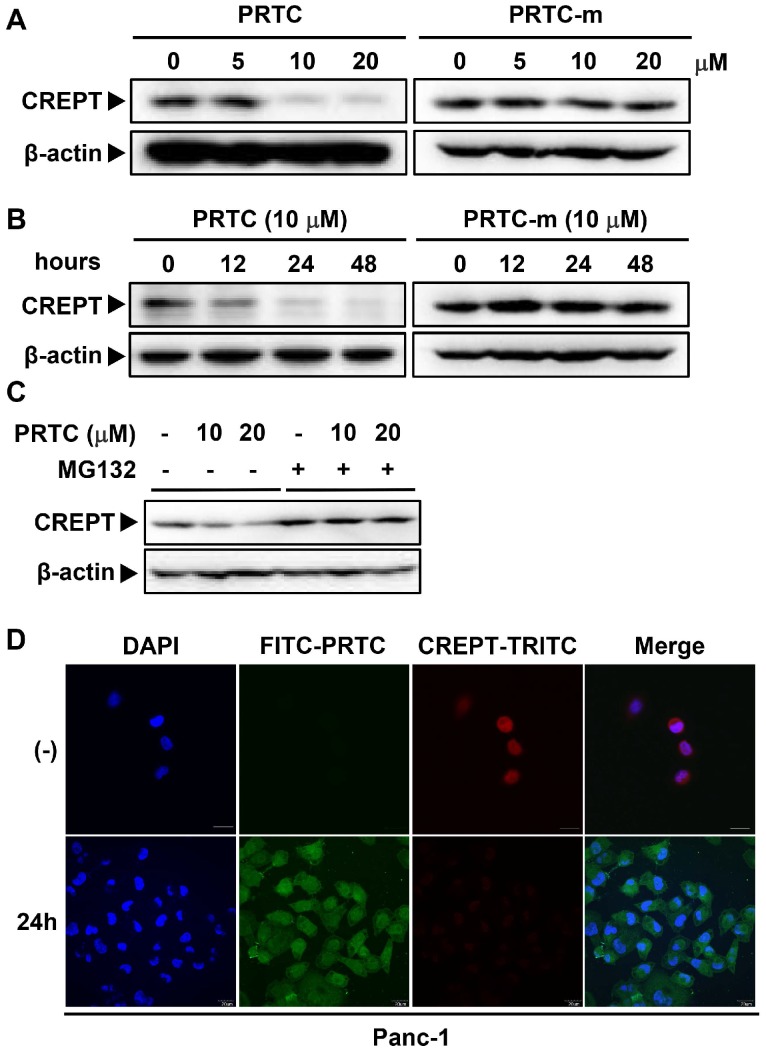
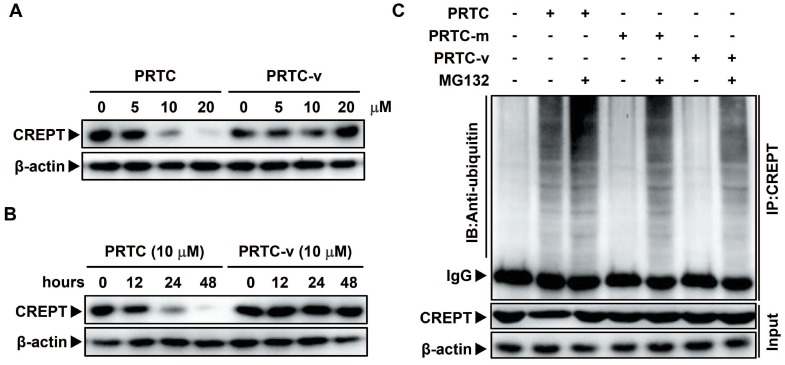
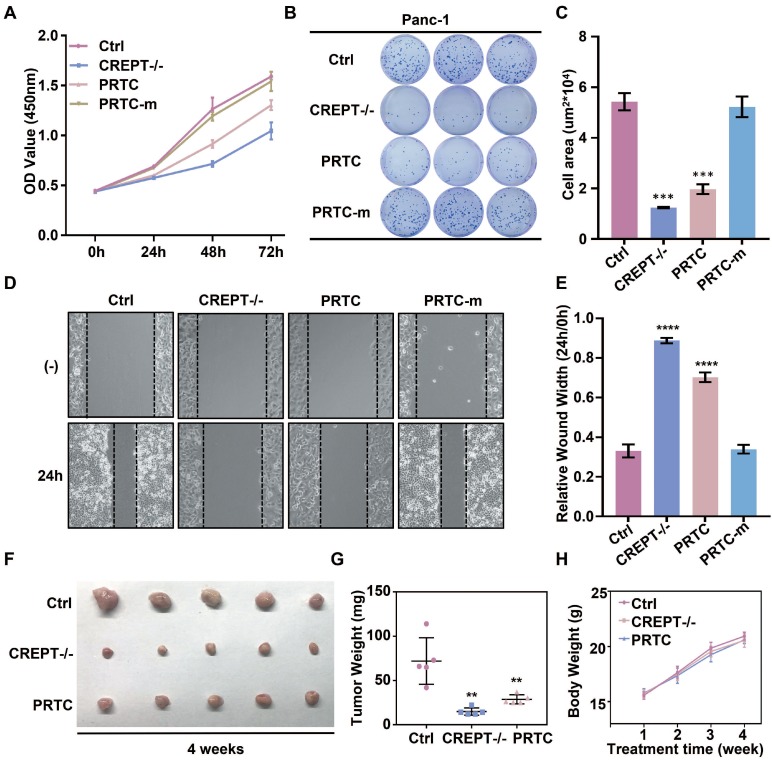
Cancers remain a threat to human health due to the lack of effective therapeutic strategies. Great effort has been devoted to the discovery of drug targets to treat cancers, but novel oncoproteins still need to be unveiled for efficient therapy. We show that CREPT is highly expressed in pancreatic cancer and is associated with poor disease-free survival. CREPT overexpression promotes but CREPT deletion blocks colony formation and proliferation of pancreatic cancer cells. To provide a proof of concept for CREPT as a new target for the inhibition of pancreatic cancer, we designed a cell-permeable peptide-based proteolysis targeting chimera (PROTAC), named PRTC, based on the homodimerized leucine-zipper-like motif in the C-terminus domain of CREPT to induce its degradation . PRTC has high affinity for CREPT, with Kd = 0.34 +/- 0.11 μM and is able to permeate into cells because of the attached membrane-transportable peptide RRRRK. PRTC effectively induces CREPT degradation in a proteasome-dependent manner. Intriguingly, PRTC inhibits colony formation, cell proliferation, and motility in pancreatic cancer cells and ultimately impairs xenograft tumor growth, comparable to the effect of CREPT deletion. PRTC-induced degradation of CREPT leads to inhibition of tumor growth, which is promising for the development of new drugs against pancreatic cancer. In addition, using an interacting motif based on the dimerized structure of proteins may be a new way to design a PROTAC aiming at degrading any protein without known interacting small molecules or peptides.
由于缺乏有效的治疗策略,癌症仍然对人类健康构成威胁。人们在发现治疗癌症的药物靶点方面付出了巨大努力,但仍需要发现新的癌蛋白以实现有效治疗。我们发现,CREPT在胰腺癌中高表达,且与无病生存期短有关。CREPT过表达促进而CREPT缺失则会阻断胰腺癌细胞的集落形成和增殖。为了证明CREPT作为抑制胰腺癌的新靶点的概念,我们基于CREPT C末端结构域中的同型二聚化亮氨酸拉链样基序设计了一种基于细胞可渗透肽的蛋白酶靶向嵌合体(PROTAC),命名为PRTC,以诱导其降解。PRTC对CREPT具有高亲和力,Kd = 0.34 +/- 0.11 μM,并且由于连接了可转运至细胞膜的肽RRRRK而能够渗透到细胞中。PRTC以蛋白酶体依赖性方式有效诱导CREPT降解。有趣的是,PRTC抑制胰腺癌细胞的集落形成、细胞增殖和迁移,并最终损害异种移植肿瘤的生长,这与CREPT缺失的效果相当。PRTC诱导的CREPT降解导致肿瘤生长受到抑制,这为开发抗胰腺癌新药带来了希望。此外,基于蛋白质二聚化结构使用相互作用基序可能是设计旨在降解任何没有已知相互作用小分子或肽的蛋白质的PROTAC的新方法。