Luo Hang, Tian Yuan, Abdullah Razack, Zhang Baoting, Ma Yuan, Zhang Ge
School of Chinese Medicine Faculty of Medicine The Chinese University of Hong Kong Hong Kong SAR China.
Law Sau Fai Institute for Advancing Translational Medicine in Bone &Joint Diseases, School of Chinese Medicine Hong Kong Baptist University Hong Kong SAR China.
MedComm (2020). 2025 Jun 25;6(7):e70258. doi: 10.1002/mco2.70258. eCollection 2025 Jul.
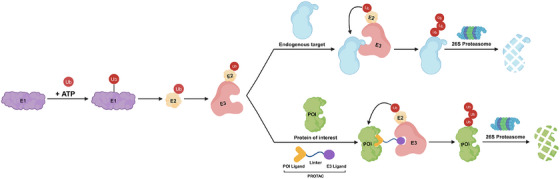
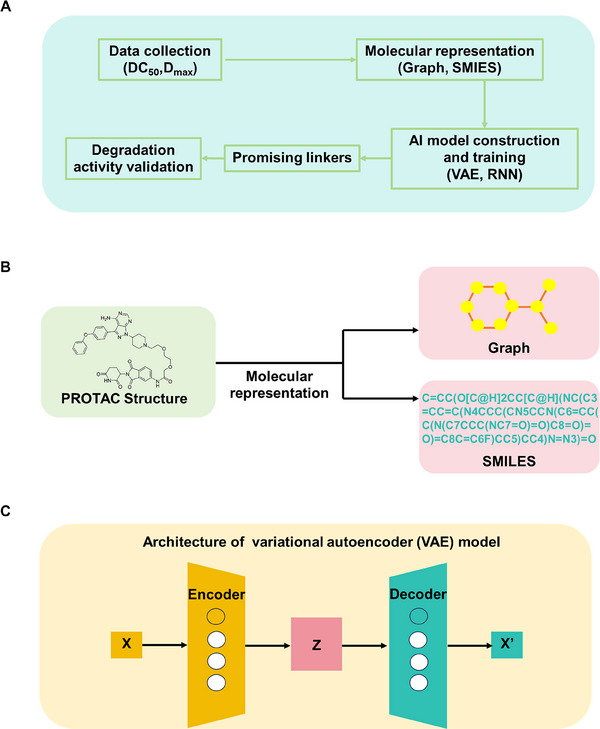
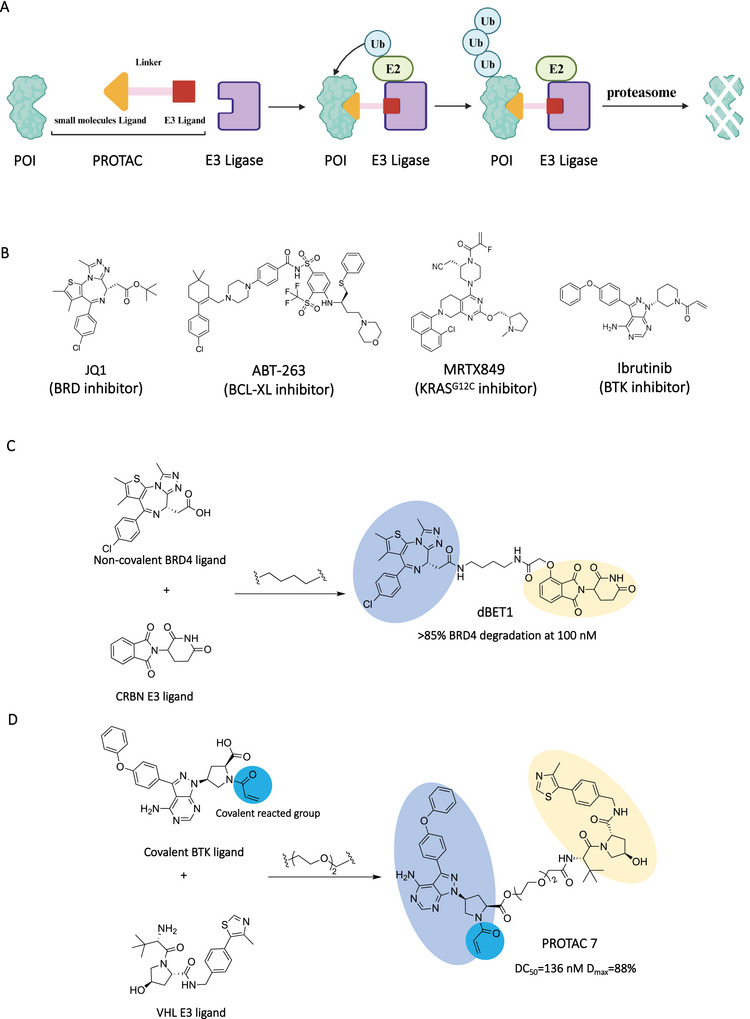
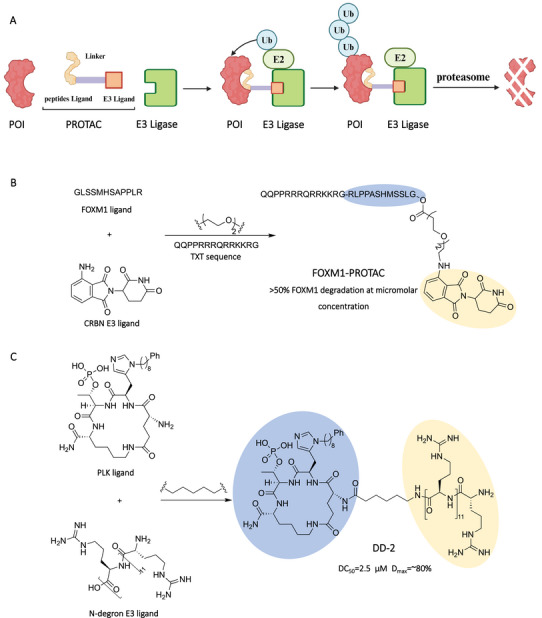
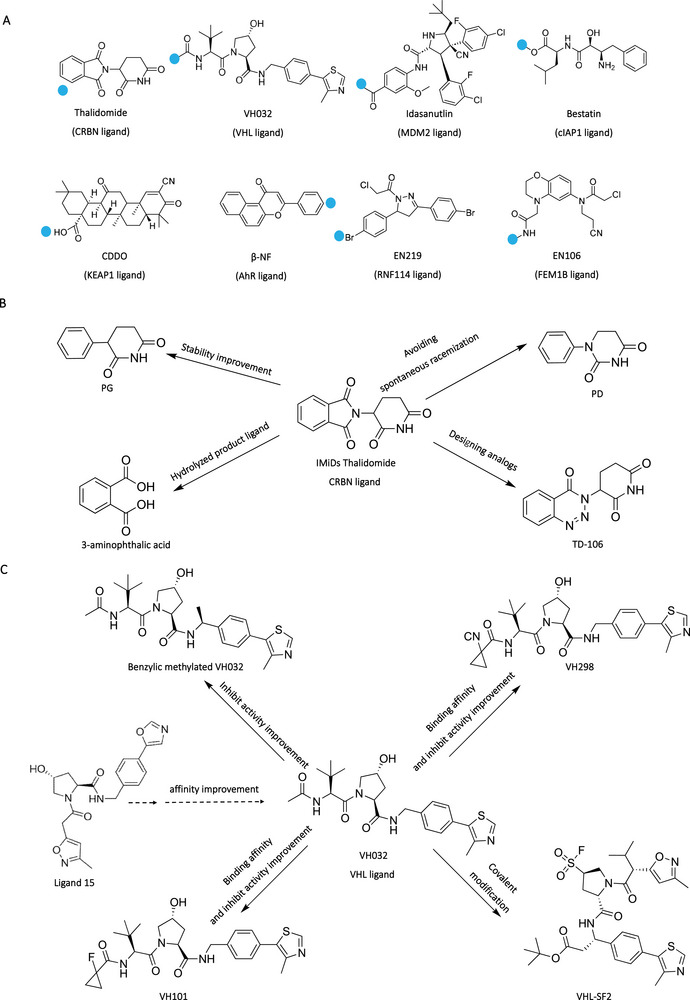
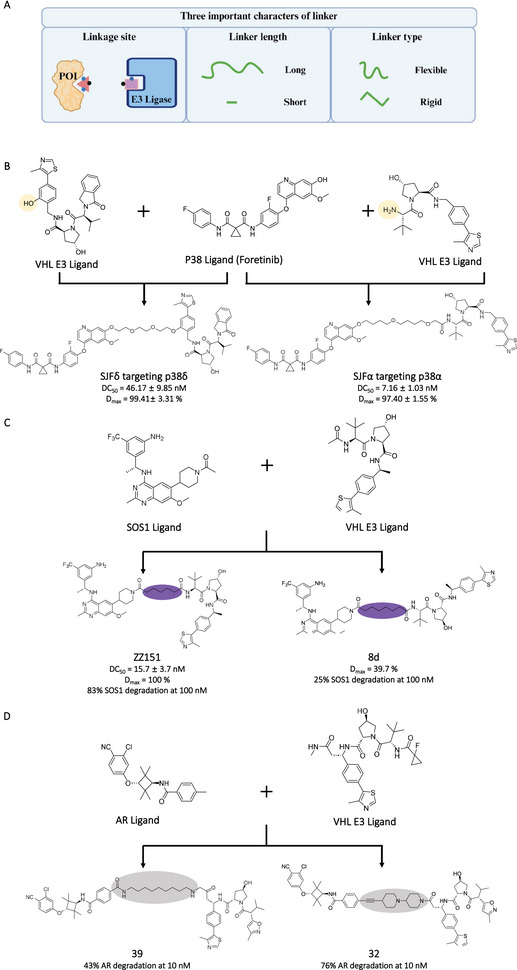
Proteolysis targeting chimeras (PROTACs) have emerged as a groundbreaking class of anticancer therapeutics. These bifunctional molecules harness the endogenous ubiquitin-proteasome system to facilitate the degradation of targeted proteins of interest (POIs). Notably, the clinical translation of PROTACs has gained substantial momentum, with many PROTAC candidates targeting various cancers currently undergoing clinical trials (Phase I-III). However, the rational design of high-efficacy PROTAC compounds remains a significant challenge. In this review, we presented a comprehensive overview of POI ligands, E3 ligands, and their interconnected linkers in PROTAC design, including their generation, structural optimization, and contribution to degradation efficiency and selectivity. Particularly, we analyzed the distinct preferences of various types of POI ligands (small molecule, nucleic acid, and peptide) toward specific targets. Furthermore, we emphasized the significant role of artificial intelligence technology in PROTAC design, including POI/E3 ligands discovery and linkers generation or optimization. We also summarized the applications and challenges of PROTACs in cancer therapy. Finally, we discussed the future development of PROTAC by combining multidisciplinary technologies and novel modalities for cancer therapy. Overall, this review aims to provide valuable insights for advancing PROTAC design strategies for cancer therapy.
蛋白酶靶向嵌合体(PROTACs)已成为一类具有开创性的抗癌治疗药物。这些双功能分子利用内源性泛素-蛋白酶体系统促进目标蛋白(POIs)的降解。值得注意的是,PROTACs的临床转化已取得显著进展,目前许多针对各种癌症的PROTAC候选药物正在进行临床试验(I-III期)。然而,高效PROTAC化合物的合理设计仍然是一项重大挑战。在本综述中,我们全面概述了PROTAC设计中POI配体、E3配体及其相互连接的接头,包括它们的产生、结构优化以及对降解效率和选择性的贡献。特别是,我们分析了各种类型的POI配体(小分子、核酸和肽)对特定靶点的不同偏好。此外,我们强调了人工智能技术在PROTAC设计中的重要作用,包括POI/E3配体发现以及接头生成或优化。我们还总结了PROTACs在癌症治疗中的应用和挑战。最后,我们讨论了通过结合多学科技术和新型癌症治疗方式实现PROTAC的未来发展。总体而言,本综述旨在为推进癌症治疗的PROTAC设计策略提供有价值的见解。